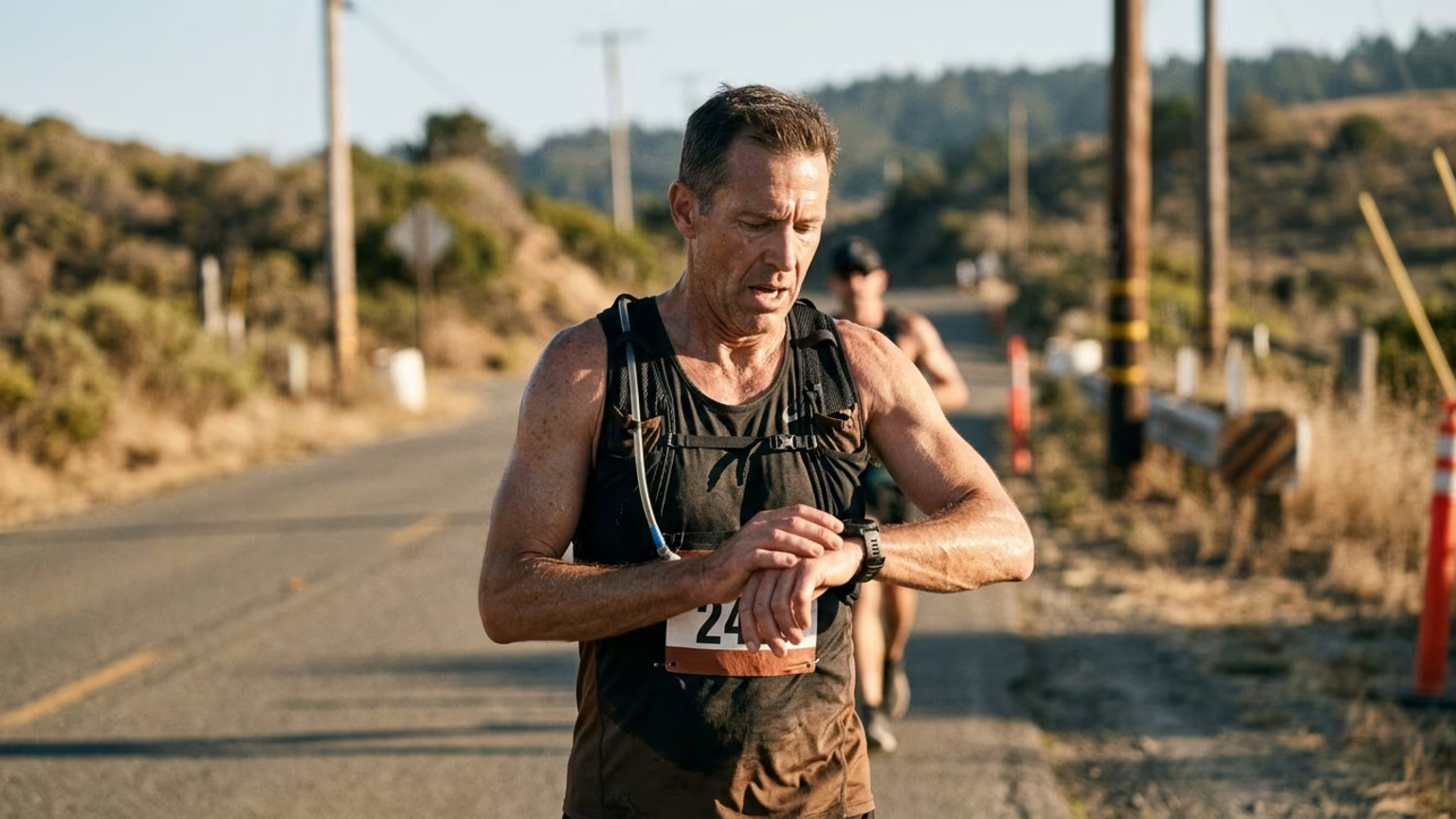

Understand effort-based pacing and use training references, perceived effort and race conditions to build an adaptable plan after 35.





Effort-based pacing is adjusting your race speed according to how hard the work feels, while using recent training and race conditions as guides. Your goal pace remains useful. It becomes a reference rather than an instruction that must survive every change in weather or circumstance.
This approach does not ask you to abandon a finish-time goal. It asks you to distinguish the result you want from the effort you are experiencing. A realistic plan connects those two things without assuming they will stay aligned throughout the event.
The central question becomes: does the pace still match the effort this race calls for?
A watch displays an outcome or a measurement. Perceived effort describes your experience of doing the work. Effort-based pacing puts those signals together instead of allowing one number to settle every decision.
Heat and humidity provide a useful example of why that distinction matters. A triathlon-focused article on humid racing reports a crossover study in which 14 trained adults completed a 20-km cycling time trial at 36°C. Performance was 3.4% slower in the more humid condition. That difference was additional to the slowdown associated with heat.
The practical point is that environmental conditions belong in the interpretation of a performance target. Holding onto the target alone leaves out part of the situation in which the body is working.
The same article cautions that humidity may add strain without an obvious early change in heart rate. It therefore recommends considering perceived effort alongside heart rate in humid racing.
This describes a mismatch worth understanding: the body may be experiencing additional strain before an early heart-rate reading makes that change obvious. A familiar number does not necessarily settle the question of whether an effort still feels appropriate.
The article's recommendation is to combine signals. Heart rate remains part of the picture. Your sense of effort and the conditions supply context for interpreting it.
For race planning, that means treating disagreement between signals as something to assess. The number and the sensation do not have to compete for sole authority.
The cycling findings were reported secondhand from controlled trials involving a small group of trained adults. They are not a personal slowdown formula and should not be generalized automatically to older athletes or other events.
A SpringerLink research page lists a systematic review and network meta-analysis comparing self-selected, fast-start, even, and slow-start pacing. The listing does not disclose conclusions that establish a best strategy.
These sources also do not establish an age-specific pacing protocol or validated breathing and speech thresholds for racing. The planning ideas below are practical synthesis and attributed coaching guidance. The effort questions are qualitative prompts rather than a scoring system.
For athletes over 35, a finish-time goal can sit beside another important ambition: staying competitive and active for years. Reendure's positioning gives immediate performance and long-term participation equal weight. An adaptable race plan fits that perspective without asking you to lower your ambitions in advance.
The useful shift is from defending a prediction to making sound decisions during the event. You can care deeply about the result while remaining willing to revise the route toward it.
That distinction also belongs in goals that support continued racing. A time target describes one outcome. A pacing plan describes how you intend to respond when the day is different from the one you expected.
The research synthesis supports building expectations from recent training and the demands of the event. Start with what your current training actually shows rather than the pace attached to a past result or an ideal day.
Useful planning questions include:
These questions organize the information you already have. They do not require a new calculation that converts every workout into a promised finish time.
The goal is a reference you can explain. If the reference depends mainly on hope, reviewing the fit between training and expectations is more useful than making the target more precise.
The research synthesis proposes starting at an effort that feels controlled and reassessing as the course and conditions reveal themselves. Here, a conservative opening means leaving room to make decisions rather than immediately committing to the most ambitious interpretation of the goal.
Before the race, decide what information will matter when you reassess. That can include perceived effort alongside the pace or power reference from training. In hot or humid conditions, include the weather in that assessment from the outset.
A controlled start is an editorial planning principle here. Its purpose is to make the opening consistent with the whole race you intend to complete.
There is no need to invent a universal opening split. The relevant question is whether your chosen start fits the event and the information available that day.
For runners, the practical synthesis is to keep trained pace as a reference while checking how the work feels. The pace target should help you interpret the race rather than end the conversation about it.
Qualitative prompts can include:
Breathing is a reflection prompt here rather than a pass-or-fail threshold. Its value in this framework is giving your experience a place beside the display.
If the effort feels different from the expectation, reassess the relationship between the target and today's conditions before treating the discrepancy as something to ignore.
For cyclists, the research synthesis suggests combining trained power or heart-rate references with perceived effort and changing conditions. The reported humidity findings give a concrete reason to include weather in that comparison.
Useful questions are whether the effort feels as expected and whether the conditions still support the original target. In humid racing, the article specifically recommends considering effort alongside heart rate.
That creates a more complete decision than asking whether a single reading is acceptable. You are comparing the planned work with the experience of doing it.
The planning choice is to allow a target to be revised when the full picture changes. A power or heart-rate reference can remain useful without becoming an obligation to disregard everything else.
The triathlon article advises riding conservatively in the heat to avoid beginning the run excessively hot. That recommendation places the bike effort within the demands of the whole event rather than treating the bike split as an isolated result.
The practical question is straightforward: does this bike effort still fit the run I intend to attempt?
Use the same combined view of perceived effort and training references. Include the heat in the decision before the run begins rather than waiting until transition to consider its relevance.
This is a whole-race perspective. The bike target serves the event you are racing, which includes the work that follows it. Restraint makes sense within that stated aim rather than as a rule that every athlete must apply identically.
The article also recommends setting a slower expectation before a hot race. That places adaptation in the planning stage rather than treating every departure from goal pace as an unexpected problem.
A useful race plan therefore contains both an initial target and permission to reassess it. Recent training supplies the reference. The event's demands and your experience supply the context for deciding whether that reference still fits.
For weather-specific preparation, considering pace and hydration together keeps the discussion broader than a finish-time calculation. Personal health concerns or symptom-related decisions belong with qualified clinical care rather than a pacing template.
The larger philosophy is to keep ambition separate from rigidity. An ambitious goal can remain meaningful even when the most sensible race-day decision is to change the pace used to pursue it.
For the veteran athlete, a strong race plan keeps the ambition steady and lets the pace answer to the effort.

Follow ReEndure for practical insights on endurance training, recovery, nutrition and healthy aging. Stay connected for new articles, research led guidance and ideas to help you perform better for longer.



Read practical ideas on endurance training, recovery, nutrition and healthy aging to keep progressing for years to come.
Read the Blog