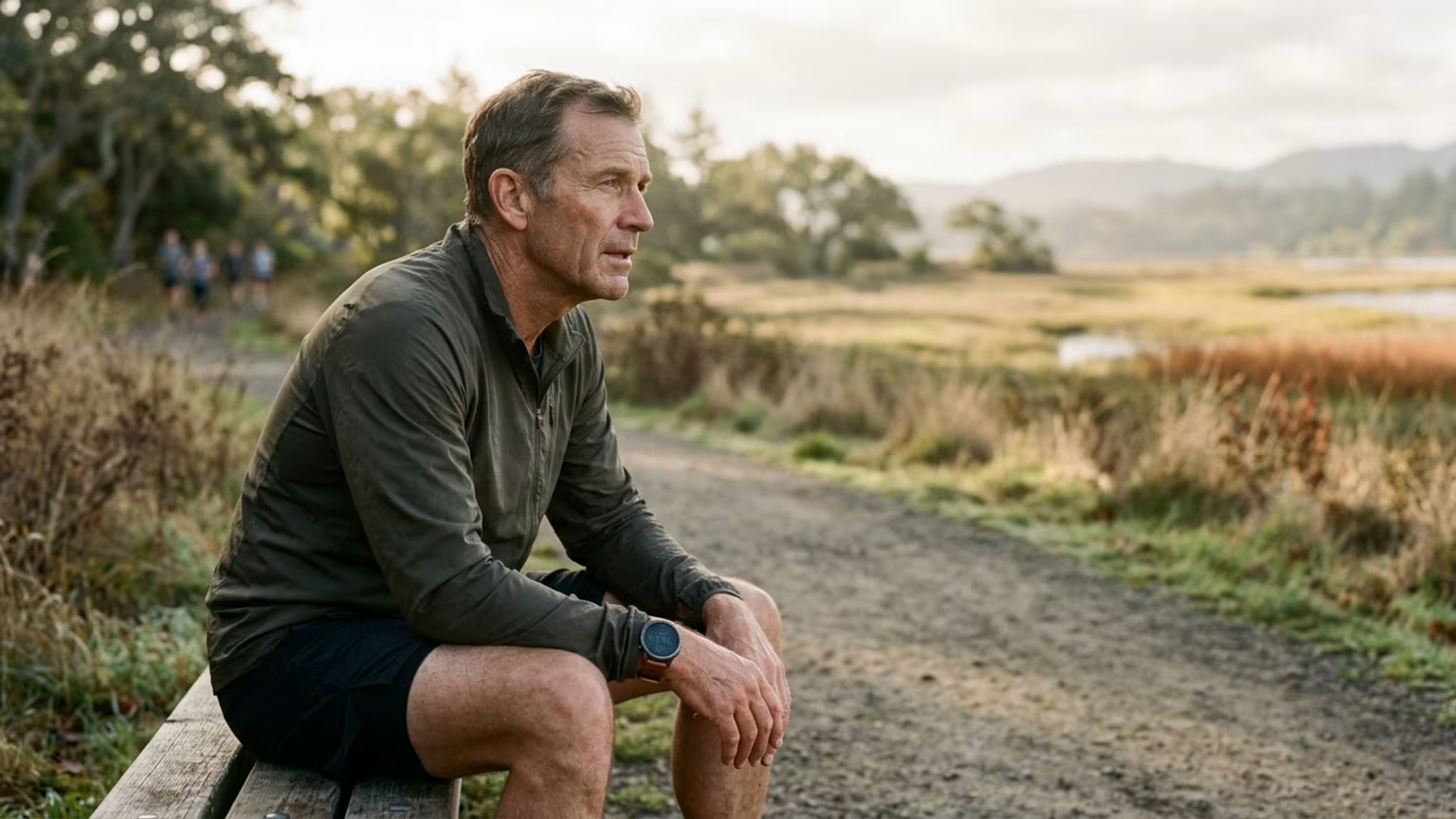

Garmin's latest software update brings lower-volume plans, adaptive Run Coach workouts, and automated climb detection to existing endurance smartwatches.





On September 22, 2026, Garmin announced a software update for selected endurance devices. The free release covers several existing hardware lines. Compatible devices include the fēnix 8-series, Forerunner 570, and Forerunner 970 watches. The update also extends to the Venu 4, the vívoactive 6, and compatible Edge cycling computers.
These free updates have begun rolling out progressively to existing owners. Users can install the new firmware through automatic updates by syncing with Garmin Connect. Alternatively, installation is available through the Garmin Express application.
This announcement details a software update rather than a new device launch. Its immediate value is extending the capabilities of existing watches and cycling computers. This means athletes can access new training and safety features without purchasing new hardware. Device availability may vary based on the specific model, regional software versions, and the rollout schedule.
The main running addition is an expanded Garmin Run Coach offering. New training plans now include run-walk workouts and lower-volume training options. Garmin says these plans adapt daily using integrated health and recovery metrics. This marks a shift from static training libraries to more flexible scheduling.
The update also adds a quick workout feature for runners. Athletes can request a suggested session by entering a desired duration and a specific intensity level. Garmin says these workout suggestions are dynamically tailored to the user’s current fitness level. This caters directly to time-constrained athletes needing immediate structure.
For cyclists, the update significantly enhances the Enduro ride profile on compatible Edge computers. The software can automatically detect and switch between climbing and descending modes. This automatic adjustment is designed to reduce physical interaction with the device during variable terrain.
Safety features also received attention in this release. The Venu 4 gains specific fall detection capabilities. Garmin says that when the watch detects a hard fall, it can send a message to preset assistance contacts. Garmin notes that fall detection can be enabled for all-day monitoring or restricted to selected activities.
The software release introduces hands-free voice controls to compatible smartwatches. Users gain the ability to start a timer, begin an activity, or activate a watch’s flashlight. This is accomplished by simply saying the required wake command. Users can also request their phone assistant to access the virtual assistant on a paired smartphone.
Winter sports athletes receive a minor update as well. An Indoor XC Ski activity profile is included in the new software. This profile includes dedicated support for compatible indoor ski trainers. Garmin is targeting multiple user profiles simultaneously with these diverse additions.
The endurance technology sector is experiencing a significant shift in functionality. Wearables are moving away from passive data recording and moving toward software-guided training systems. Garmin is actively combining workout recommendations, adaptive training plans, and health-related inputs within a single device ecosystem. The immediate value of this update is integrating these complex features without requiring new hardware.
For runners, this transition is not just about adding another prewritten workout library. It is the combination of quick suggestions, run-walk plans, lower-volume options, and daily adaptation algorithms. Garmin says these systems adapt based on ongoing health and recovery metrics. This shows a clear intent to manage the daily workload of the athlete rather than simply recording their completed miles.
This update also demonstrates Garmin targeting several distinct user profiles at the same time. The company is supporting structured runners through the expanded Run Coach features. It caters to time-constrained athletes through the new quick workout suggestions. Multisport and outdoor users receive support through the fēnix and Edge profile enhancements.
Before changing your training routine, you must check your device compatibility. The named smartwatch families in this release are limited to specific recent generations. These include the fēnix 8, Forerunner 570, Forerunner 970, Venu 4, and vívoactive 6. Edge support is described more generally as applying to compatible cycling computers.
Because the update is rolling out progressively, athletes should check their software version manually. Availability will depend heavily on your region and Garmin’s specific rollout process. Do not upgrade to a new watch solely because of this announcement unless the new functions solve a critical problem. Since the release is entirely free for compatible devices, existing owners should simply install the update first.
Garmin’s own description positions the Run Coach changes around training flexibility. The platform allows users to train toward an event, pursue a milestone, or improve general fitness. Crucially, athletes can now do this while choosing lower-volume training plans. This positioning is highly relevant to older athletes who know that physical tolerance changes over time.
Lower-volume and run-walk options may improve sustainability for athletes managing complex schedules. They give you a structured way to safely modify workout plans without abandoning your schedule entirely. When work, family, and the need for extended recovery time stack up, scaling back volume can preserve your overall consistency. You should treat these new device plans as useful options rather than evidence of weakness.
Hitting my forties brought a harsh reality check. The track workouts were not getting slower, but the days after them felt significantly heavier. Instead of forcing my old Tuesday and Thursday intensity schedule, I looked at the data on Masters athletes and muscle protein synthesis. I pushed my second hard session to Friday, allowing an extra forty eight hours of low intensity recovery.
My total weekly volume stayed the same, but the quality of my intervals skyrocketed. Having a wearable that supports lower-volume options aligns perfectly with this need for adaptability. A time-and-intensity prompt makes it easier to choose a structured session when a rigid training plan fails. However, the update does not establish that these quick suggestions are optimal for a specific race goal.
The term adaptive does not necessarily mean the software replaces individualized coaching. Garmin describes daily adaptation using health and recovery metrics. However, the announcement provides no independent comparison with coach-designed programming. The company did not disclose the specific algorithm, internal thresholds, or validation data behind these daily adaptations.
Similar to modern recovery tracking, a watch offers useful trend information. You must still treat these recovery metrics as decision-support tools rather than definitive measures of readiness. Athletes should cross-check device recommendations against subjective physical feedback. You must consider actual pain, unusual fatigue, sleep disruption, and overall life stress before training.
Safety and navigation updates require the same practical review before a major race. For mountain and gravel cyclists, automatic switching between climb and descent modes reduces manual distractions. Riders should still verify that the Enduro profile behaves correctly on their usual terrain before relying on it completely. Automatic features work best when they solve a real problem without creating new navigational errors.
The Venu 4 fall detection feature is a helpful addition for risk-conscious athletes. However, it should serve as a supplement to your safety planning rather than a guaranteed emergency response. Always confirm that emergency contacts are properly configured and that the watch is securely paired. You must also ensure cellular connectivity is available in your typical training areas.
The broader endurance technology landscape is shifting rapidly from passive recording toward software-guided training. Garmin is aggressively combining workout recommendations, adaptive plans, and health inputs in the same ecosystem. However, Garmin’s announcement did not include independent sports-science experts validating that these features improve performance. There is zero evidence in the cited coverage that this specific update improves race times or extends healthy lifespan.
Ultimately, these free software updates offer valuable flexibility for aging athletes, provided you treat the device as a tool for consistency rather than an absolute coaching authority.

Follow ReEndure for practical insights on endurance training, recovery, nutrition and healthy aging. Stay connected for new articles, research led guidance and ideas to help you perform better for longer.




Read practical ideas on endurance training, recovery, nutrition and healthy aging to keep progressing for years to come.
Read the Blog