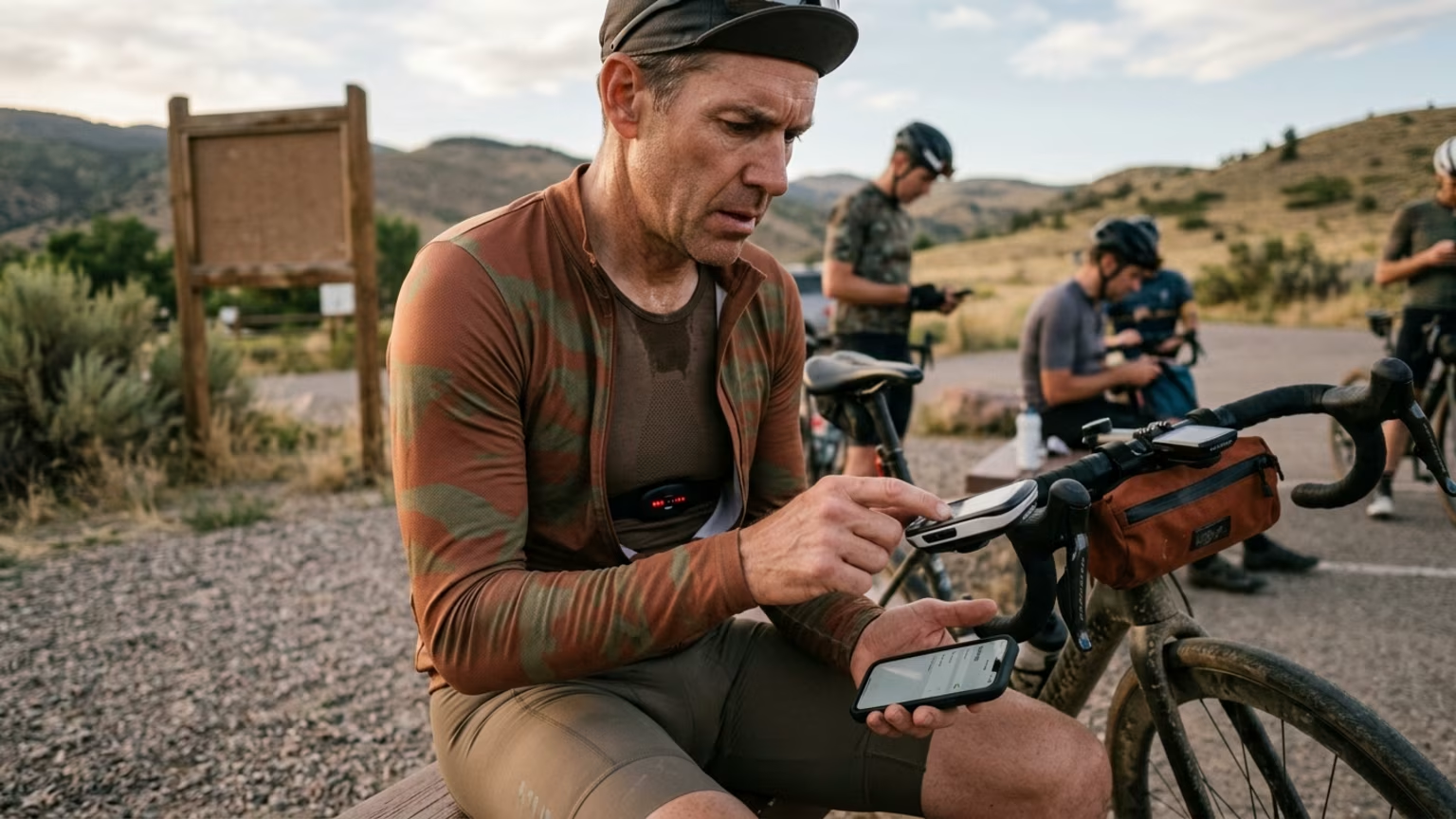

Garmin CIRQA firmware 2.50 disrupts Bluetooth heart-rate broadcasting to Edge devices and iOS platforms. Learn how to troubleshoot using the ANT+ workaround.





An indoor cyclist mounts the trainer for a highly structured threshold workout. They pair their Garmin (the fitness technology company) CIRQA screenless fitness tracker to the cycling computer. Instead of a steady pulse reading, the screen flashes a continuous loop of connected and disconnected alerts. The session loses critical data before the warmup even ends.
Bluetooth heart-rate broadcasting is a wireless communication function that allows a wearable device to transmit live pulse data to an external screen. For the Garmin CIRQA screenless fitness tracker, this feature turns a simple wrist monitor into an active external sensor. It continuously sends your current beats per minute to compatible displays, cycling computers, and smart exercise equipment. This live data feed lets you monitor precise physiological effort during demanding endurance sessions.
Notebookcheck reports that Garmin released CIRQA firmware 2.50 on August 20, 2026. The software update was originally intended to improve the performance of the screenless tracker. Instead, reports indicate that firmware 2.50 has disrupted Bluetooth heart-rate broadcasting for some CIRQA owners. The core optical heart-rate measurement itself has not been reported as broken.
The specific technical failure occurs when the device attempts to transmit data over the Bluetooth protocol. Following the update, owners have reported Bluetooth connections that repeatedly cycle between connected and disconnected states on Garmin Edge devices. Other external devices reportedly fail to receive heart-rate data altogether. This instability transforms a reliable data stream into an unusable feed.
Garmin has acknowledged the issue through its official forums, according to the reporting. The company stated that the problem had been forwarded to its engineering team for investigation. However, Garmin had not provided a specific timetable for a corrective firmware release at the time of the reports. Athletes are currently left waiting for a permanent technical resolution.
The reported problem heavily affects the use of CIRQA with popular third-party training platforms. Notebookcheck identified reported failures involving iOS use with Zwift, TrainerRoad, Rouvy, and Strava. These interruptions potentially remove real-time heart-rate overlays during crucial workout segments. Missing this visual feedback makes endurance race pacing strategies incredibly difficult to execute indoors.
For athletes relying entirely on Bluetooth, this disruption fundamentally alters their digital training environment. Many modern tablets, smartphones, and smart trainers do not support alternative wireless protocols natively. When the Bluetooth connection drops, the athlete loses their primary window into their cardiovascular strain. A sensor that appears in the pairing menu may still drop its signal once the session actually begins.
This software incident follows a turbulent early period for the CIRQA product line. Notebookcheck reported that Garmin faced community criticism in July 2026 after attempting to place a basic fitness-tracking feature behind a paywall. The company eventually reversed that decision following the backlash. While these are separate issues, both highlight the heavy dependence of modern connected fitness products on stable software support.
For a casual runner using CIRQA only as a standalone activity tracker, a Bluetooth broadcasting failure might feel like a minor inconvenience. For a master athlete relying on structured intervals, it disrupts a critical daily feedback loop. Older endurance athletes use precise physiological data to balance progressive overload with necessary fatigue management. Heart rate provides an objective look at internal stress during these demanding workouts.
Athletes between 35 and 65 cannot afford to guess their intensity during complex indoor cycling sessions. You need to read your heart rate accurately to pace long intervals and monitor recovery between hard efforts. When a sensor repeatedly drops its connection, you lose the trace needed to ensure you are training in the correct physiological zone. Consistent training data tracking is essential for maintaining longevity in endurance sports.
A missing or unreliable signal makes it harder to compare your planned workout effort against your actual physical execution. If you cannot see your pulse, you might push too hard during an active recovery block. Conversely, you might fail to reach the necessary threshold intensity during a key interval session. These small daily pacing errors compound over a long training block.
Some athletes argue that power meters and perceived exertion can replace a broken heart-rate monitor. While power data provides an objective measure of external work, heart rate reveals how your body actually responds to that work. Losing this metric means losing crucial visibility into your internal stress levels on any given day. Your cardiovascular response often highlights hidden fatigue before your muscles actually fail.
Master athletes must constantly monitor how quickly their pulse drops during rest intervals. This recovery metric is heavily compromised when the Bluetooth feed is continually looping or dropping out. Reliable active recovery strategies depend on understanding exactly how hard your cardiovascular system worked. Without that clarity, managing your long-term fatigue becomes a dangerous guessing game.
You should not substitute a broken heart-rate feed with pure guesswork about your effort. Use power, pace, and perceived exertion as temporary cross-checks during this firmware disruption. However, you must recognize that none of these metrics perfectly replaces a reliable, continuous heart-rate signal. Your internal biological response remains the ultimate arbiter of training stress.
If you depend on your Garmin CIRQA as an external sensor, you should verify your current firmware version immediately. The reported broadcasting issue is specifically associated with the version 2.50 release. If your device has not yet installed this software, experts advise avoiding the update entirely. You should wait to update until Garmin provides a confirmed, stable correction.
Treat any unofficial rollback information found online very cautiously. The available sources advise avoiding the update but do not document a confirmed, Garmin-supported rollback procedure. You should not assume that downgrading your firmware is possible or safe. Attempting an unverified rollback could potentially cause further instability in your wearable device.
You should thoroughly test your exact combination of hardware and software before starting a demanding workout. Confirm that live heart-rate data is reaching the Edge device or training platform continuously. Do not assume that a successful initial pairing means the problem is fixed for the duration of the ride. A quick pre-workout test can save you from losing data during a critical interval block.
Athletes who have already updated their devices can test an alternative connection path using the ANT+ protocol. Users have reported that ANT+ heart-rate broadcasting continues to function normally despite the firmware 2.50 update. This makes ANT+ a highly valuable temporary alternative for data-driven athletes. The receiving bicycle computer, indoor trainer, or exercise platform must natively support that standard.
To use this workaround, you must intentionally pair the CIRQA through the ANT+ menu rather than the Bluetooth menu. If you are using a dual-protocol setup, check your device settings to ensure it defaults to the ANT+ signal. This alternative connection path bypasses the reported Bluetooth transmission bug entirely. It allows you to maintain continuous data collection during critical testing blocks or structured indoor rides.
If your training setup relies entirely on iOS platforms or Bluetooth receivers, the ANT+ workaround will not help you. In these cases, you should keep a backup chest strap or optical armband nearby. Using a separate, reliable sensor is the safest choice for workouts where uninterrupted data is absolutely required.
The current firmware issue serves as a stark reminder about the vulnerability of single-protocol hardware setups. When a critical device update fails, athletes who only use Bluetooth are left completely stranded. This incident highlights the practical importance of supporting more than one wireless protocol in your home training environment. Investing in dual-protocol receivers provides a vital safety net for dedicated athletes.
When purchasing future gear, endurance athletes should assess more than just basic sensor accuracy. You must also evaluate protocol support, backup connectivity options, and manual software update controls. The manufacturer’s response process to major software bugs is equally critical for long-term product viability. A robust training ecosystem requires reliable hardware backed by consistently stable software updates.
Evaluate your technical setup today and keep a backup heart-rate sensor on hand to ensure unbroken training progression while awaiting a firmware fix.

Follow ReEndure for practical insights on endurance training, recovery, nutrition and healthy aging. Stay connected for new articles, research led guidance and ideas to help you perform better for longer.





Read practical ideas on endurance training, recovery, nutrition and healthy aging to keep progressing for years to come.
Read the Blog