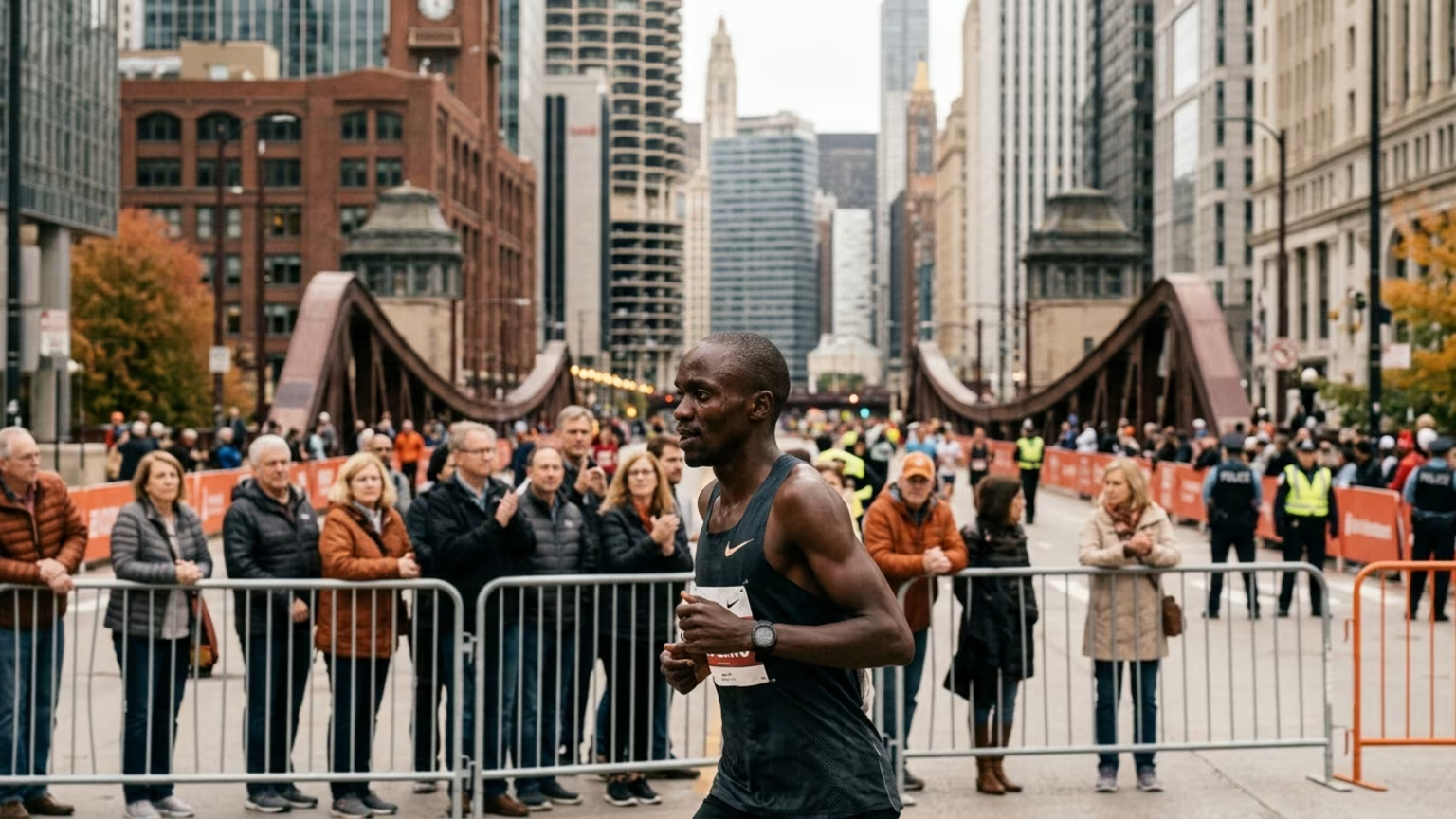

Analyzing Jacob Kiplimo's return to the Chicago Marathon and how veteran endurance athletes can apply professional lessons in pacing and distance progression.





On October 9, 2026, EFE reported that Jacob Kiplimo returned to defend his title at the Chicago Marathon against a massive field of more than 55,000 runners. The international coverage highlighted his ongoing dominance across major global endurance events. His title defense in Chicago establishes a clear timeline of sustained elite athletic progression. The reporting confirms his status as a premier competitor in the marathon distance.
For ambitious older athletes, observing this level of professional performance offers valuable perspective. While the sheer speed of an elite runner is physically unattainable for the amateur, their approach to the sport remains highly instructive. Analyzing how a professional manages their physical transition into the marathon distance provides actionable lessons for everyday training. The focus must always shift from copying their exact performance to understanding their underlying methodology.
The central takeaway from the race coverage focuses on Kiplimo’s remarkable consistency and continued improvement at the full marathon distance. Local reporting from WBEZ confirmed that he previously won the 2025 Chicago Marathon with an exceptional finish time of 2:02:23. EFE noted that he followed that victory by running a personal best of 2:00:28 to secure third place at the 2026 London Marathon. This timeline demonstrates a highly successful and deliberate transition from shorter road races to the ultimate endurance distance.
The scale of the Chicago event highlights a major difference between elite racing and amateur participation. When Kiplimo lines up to race, he is surrounded by a small, carefully selected field of professional peers. The EFE report noted that the broader Chicago Marathon field was expected to include more than 55,000 runners. That staggering number creates logistical and physical challenges that professionals never have to manage.
For the amateur athlete, the race begins long before crossing the starting line. Standing in a densely packed corral for an hour before the race deeply affects your physical readiness. Your legs become stiff, your core temperature drops, and your hydration status shifts. Once the race begins, you must navigate thousands of other bodies just to find your natural stride.
This chaotic environment forces many older runners to waste precious lateral energy dodging slower traffic. Staying calm and prioritizing a straight running line is critical in these massive fields. Furthermore, the energy of 55,000 excited participants is highly contagious. It is remarkably easy to get swept up in the collective surge of the crowd during the opening miles.
Amateur runners frequently discard their planned pace charts because the initial effort feels entirely effortless. You must completely ignore the runners around you and strictly monitor your own physical feedback. Running your own race is the only way to ensure you have power left for the final miles.
The progression from a half marathon world record to major marathon victories requires immense physiological adaptation. When Kiplimo ran 57:20 in Lisbon, he demonstrated absolute mastery of the one hour race threshold. However, racing for two hours introduces entirely new metabolic demands on the human body. The primary fuel source shifts dramatically, and the muscular endurance required is exponentially higher.
Many ambitious veterans achieve a fast half marathon and immediately assume they are ready to conquer the full distance. They falsely believe that doubling their longest run is sufficient preparation. This mindset completely ignores the compounding fatigue that occurs after ninety minutes of continuous running. Moving up to the marathon distance demands a complete restructuring of your training architecture.
It requires months of dedicated aerobic development to prepare your connective tissue for the sustained impact. Older athletes must recognize that patience is their greatest performance asset. Attempting to force a rapid transition from shorter road races to the marathon usually results in chronic overuse injuries. You should prioritize steady structural adaptation over a period of years rather than weeks.
Rethinking your marathon readiness involves understanding that consistent weekly frequency provides a safer training stimulus than isolated, massive weekend efforts. Consistent and manageable daily mileage provides a much safer foundation for aging muscles.
Securing a personal best of 2:00:28 in London required Kiplimo to execute a mathematically perfect race. At the absolute front of the field, even minor pacing errors compound into catastrophic finishing times. Elite marathon runners understand exactly how to portion their energy output from the very first step. They do not rely on aggressive surges or emotional pushes to carry them through the final stages of the race.
Instead, they rely on disciplined effort management and precise execution of their race plan. Amateur athletes frequently lack this disciplined execution on race day. Many veterans fall into the trap of banking time in the early miles, hoping it will cushion a late race fade. This strategy fundamentally misunderstands human physiology.
Running faster than your trained threshold early in the race exponentially increases your rate of glycogen depletion. This early enthusiasm virtually guarantees a painful and slow finish. Adopting strategic effort management secures your best possible finishing time on challenging marathon courses.
Proper race execution also depends heavily on managing your physical intake. Fading in the final miles is rarely just a matter of weak leg muscles. It is almost always a direct consequence of inadequate carbohydrate fueling. Following nutritional strategies based on clinical evidence ensures that your body has the necessary fuel to maintain your pace through the finish line.
Kiplimo’s race calendar provides a vital final lesson in managing physical stress over the long term. He won the Chicago Marathon in late 2025. He then raced the London Marathon in early 2026. Finally, he returned to defend his Chicago title in late 2026.
This deliberate schedule highlights the necessity of spacing out major marathon efforts. Elite athletes understand that they cannot race the full distance every single month without risking severe injury. For the ambitious veteran athlete, recovery is the ultimate performance metric. As we age, our bodies require significantly more time to repair muscle tissue after a maximum effort.
Racing a marathon deeply depletes your central nervous system and severely damages your muscular architecture. If you attempt to rush back into heavy training too soon after a race, your performance will inevitably stagnate. You must respect the recovery phase just as fiercely as you respect your peak training weeks. True athletic longevity requires confidently stepping away from intense training after a goal race.
Using dedicated recovery blocks allows your body to fully absorb the work you have completed. This disciplined approach prevents systemic burnout and keeps you healthy for your next major training cycle. Consistently showing up to the start line healthy is the single biggest competitive advantage an older athlete can cultivate. Focus on the long term journey rather than rushing into your next starting corral.
Elite marathon performances provide spectacular inspiration, but ambitious masters athletes must prioritize gradual distance progression and disciplined recovery to achieve their own athletic goals.

Follow ReEndure for practical insights on endurance training, recovery, nutrition and healthy aging. Stay connected for new articles, research led guidance and ideas to help you perform better for longer.


Read practical ideas on endurance training, recovery, nutrition and healthy aging to keep progressing for years to come.
Read the Blog