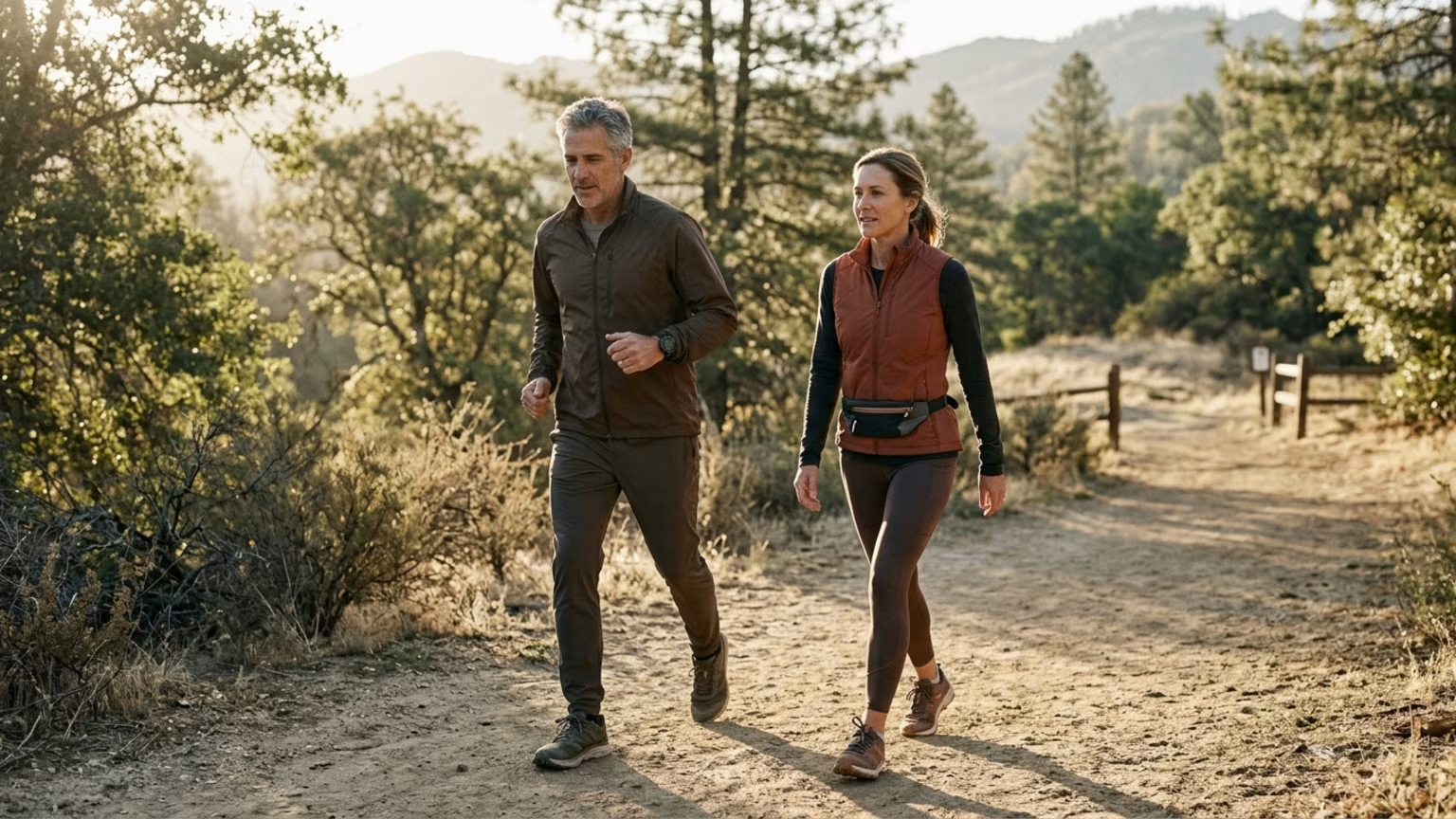

A 2026 wearable device study reveals that short bursts of brisk walking provide longevity benefits comparable to high daily step counts for veteran athletes.





On September 8, 2026, the British Journal of Sports Medicine published a significant new analysis of daily movement patterns. The paper is titled “Combinations of stepping intensity and daily step counts against all-cause and cardiovascular disease mortality.” Researchers Wei, Ahmadi, Koemel and colleagues analyzed expansive wearable device data to evaluate how stepping intensity impacts human health. They reported that short bursts of vigorous movement at a brisk pace can deliver longevity benefits comparable to consistently hitting high daily step counts.
The central conclusion of this research shifts the focus from simple movement volume to a combination of volume and pace. For decades, traditional health guidelines have prioritized high daily step counts for adults. This new study demonstrates that people taking fewer than 5,000 steps per day can partially offset their lower volume by walking faster. In an NPR and KERA report, researcher Matthew Ahmadi explained that people averaging roughly 5,000 steps per day could obtain comparable health benefits to those reaching higher step targets simply by intermittently increasing their walking pace.
The data revealed a very practical comparison for busy individuals trying to maintain their health. Participants accumulating fewer than 5,000 steps per day at roughly 80 steps per minute experienced mortality risk reductions similar to those taking 5,000 to 7,500 steps per day at a slower 60 steps per minute. This finding indicates that a deliberate and brisk pace can compensate for a lack of available time. Across all evaluated step categories, achieving a peak 30-minute cadence of approximately 90 to 100 steps per minute was associated with a lower mortality risk.
This peak cadence metric does not require a single continuous half hour of uninterrupted exercise. Instead, the metric represents the average pace across a person’s 30 most active minutes of the entire day. Intermittent bursts of brisk walking are entirely effective for achieving this standard.
However, the study did not dismiss the established value of high movement volume for general health. The lowest modeled all-cause mortality risk still appeared among participants taking roughly 7,500 to 10,000 steps per day, regardless of their walking speed. Expert commentary surrounding the study reinforces the importance of incorporating brief vigorous efforts into daily life. John Mitchell, a University College London researcher, noted in the NPR report that the largest health return generally comes from more vigorous activities.
This category of vigorous movement includes very ordinary actions such as walking briskly or climbing stairs. Loretta DiPietro of George Washington University added that familiar strategies like taking the stairs or parking farther away become more beneficial when performed at a faster pace. Ahmadi also emphasized that slower walking was still associated with health benefits, although people may need more total movement to obtain similar associations. His broader message was that people have more than one way to improve health and should find an approach that fits their daily lives.
The study aligns with a broader scientific shift toward recognizing the immense value of short movement intervals. In a related analysis of nearly 94,000 UK adults, researchers found that more time spent in movement bouts shorter than five minutes was associated with a lower death risk. Conversely, that same UK study found that more time spent in completely sedentary blocks of ten minutes or longer was associated with a higher risk. A separate device-based study reported that health benefits were observable with as little as 15 to 20 minutes per week of vigorous activity. These benefits were especially prominent when accumulated in bouts of two minutes or less.
The methodology of this study utilized a massive dataset to identify these health associations objectively. The research team analyzed detailed wearable device data from 64,743 participants. These individuals ranged in age from 40 to 69 years old. The cohort represented a wide spectrum of daily activity habits, with daily totals ranging from fewer than 5,000 steps to well over 10,000 steps.
Participants wore their activity trackers continuously for seven consecutive days to establish a clear baseline of their normal movement patterns. Following this initial measurement period, the research team tracked the health outcomes of the participants for approximately eight years. This reliance on continuous wearable data represents a major methodological improvement over older research models. The broader sector is currently shifting away from relying exclusively on self-reported exercise questionnaires.
As noted in the NPR report, activity trackers have become smaller, cheaper and vastly more reliable over the past fifteen years. This technological evolution enables large-scale studies that can accurately follow tens of thousands of participants over extended periods. Wearable device studies allow scientists to examine exactly how movement and sedentary behavior interact across the entire day. This comprehensive daily view provides much clearer insights into how minor habit changes influence long-term disease risk.
For the ambitious endurance athlete between 35 and 65, this research provides a highly practical framework for managing active recovery. Time is often the most significant limiting factor for aging athletes balancing careers, families and structured training plans. When a full aerobic session is simply not possible, several short periods of brisk walking can maintain metabolic health. This approach preserves your baseline fitness without adding the heavy mechanical load of another long run or cycling session.
Master athletes can seamlessly integrate these micro-bouts into their easiest training days or busiest work days. Instead of remaining completely sedentary on a scheduled rest day, you can use commuting or daily errands to accumulate short intervals of purposeful walking. Taking the stairs or walking deliberately during work breaks provides a valuable and low-impact physiological stimulus. This light movement supports tissue health and joint function without compromising your physical readiness for tomorrow's difficult interval session.
Incorporating short walking intervals complements other foundational daily routines like a consistent floor mobility practice for maintaining functional movement. Both habits require minimal time investment but deliver substantial long-term returns for your physical independence. It is crucial, however, to view these short walking bursts as a supplement rather than a complete replacement for structured training. The research supports adding brief pace-focused movement to an existing endurance plan, but it does not suggest abandoning sport-specific workouts.
The study evaluated mortality associations across a general adult population rather than measuring specific athletic performance metrics. It did not evaluate endurance capacity, maximum oxygen uptake or muscular fatigue resistance. A 50-year-old marathon runner, cyclist or trail runner still requires appropriate sport-specific volume and structured progressive overload to improve their race times. Short brisk walks are a tool for general longevity, not a substitute for proper aerobic conditioning or heavy resistance training.
Older athletes must also monitor their cumulative fatigue carefully when adding any new movement patterns to their day. Even brief periods of brisk walking contribute to your overall daily stress load, especially when repeated many times. While the total volume of a short walk is low, a rapid walking pace still demands neurological and muscular engagement. Athletes should monitor their subjective soreness, sleep quality and daily heart rate trends to ensure these short bursts do not interfere with recovery.
Individualizing your walking pace is just as important as managing your total daily volume. The study identified approximately 90 to 100 steps per minute as a potentially useful population reference point for lower mortality risk. However, this cadence is not a rigid or universal prescription for every single athlete. You must adjust your walking pace based on your personal injury history, current footwear, local terrain and the ambient temperature.
A highly conditioned athlete might perceive a brisk walk as a very light effort, while a less conditioned person might find it vigorous. Nutrition and hydration also remain critical components of healthy aging and recovery management. Just as you might adapt a high carbohydrate endurance fueling strategy to match the intense demands of race day, you should carefully scale your daily movement to match your current energy levels. Maintaining structural health is paramount as we age, and adequate nutrition supports this goal alongside proper movement.
Many athletes closely monitor their dietary intake to promote tissue repair, similar to how they evaluate short term muscle recovery supplements during heavy training blocks. For veteran athletes returning from a layoff or a specific injury, these findings offer a conservative path back to consistent training. The research clearly emphasized that slower walking was still associated with significant health benefits. You can start with very comfortable walking and gradually introduce short bursts of increased pace over several weeks.
This progressive and measured approach safely rebuilds your tissue tolerance without risking a secondary injury from an immediate return to excessive volume. Ultimately, the absolute flexibility of this movement approach is its greatest asset for master athletes. You do not need to stress over missing a rigid 10,000 step target on a demanding travel day or a scheduled rest day. By simply walking with intent and purpose during your available time windows, you can still secure meaningful longevity benefits.
This practical strategy protects your cardiovascular health while keeping your legs fresh and rested for your primary sport.
Brief periods of brisk walking provide a highly time-efficient way for veteran athletes to protect their long-term health without accumulating excessive fatigue.

Follow ReEndure for practical insights on endurance training, recovery, nutrition and healthy aging. Stay connected for new articles, research led guidance and ideas to help you perform better for longer.



Read practical ideas on endurance training, recovery, nutrition and healthy aging to keep progressing for years to come.
Read the Blog