

Nix Biosensors raised $10 million to embed hydration algorithms into consumer wearables. We explain what sensor-free sweat tracking means for veteran athletes.





On September 15, 2026, Nix Biosensors announced a $10 million Series A financing round. This new investment brings the total funding for the company to $17 million. The round included prominent backers like Shorewind Capital and Great Oaks Venture Capital. Investors also included owners of the Boston Celtics, St. Louis Blues, and Texas Rangers.
The company intends to use this capital to accelerate Nix Health. This new product is a business-to-business hydration algorithm platform. Nix plans to license this technology directly to consumer health and fitness brands. The goal is to embed these predictive tools into the sports watches athletes already use.
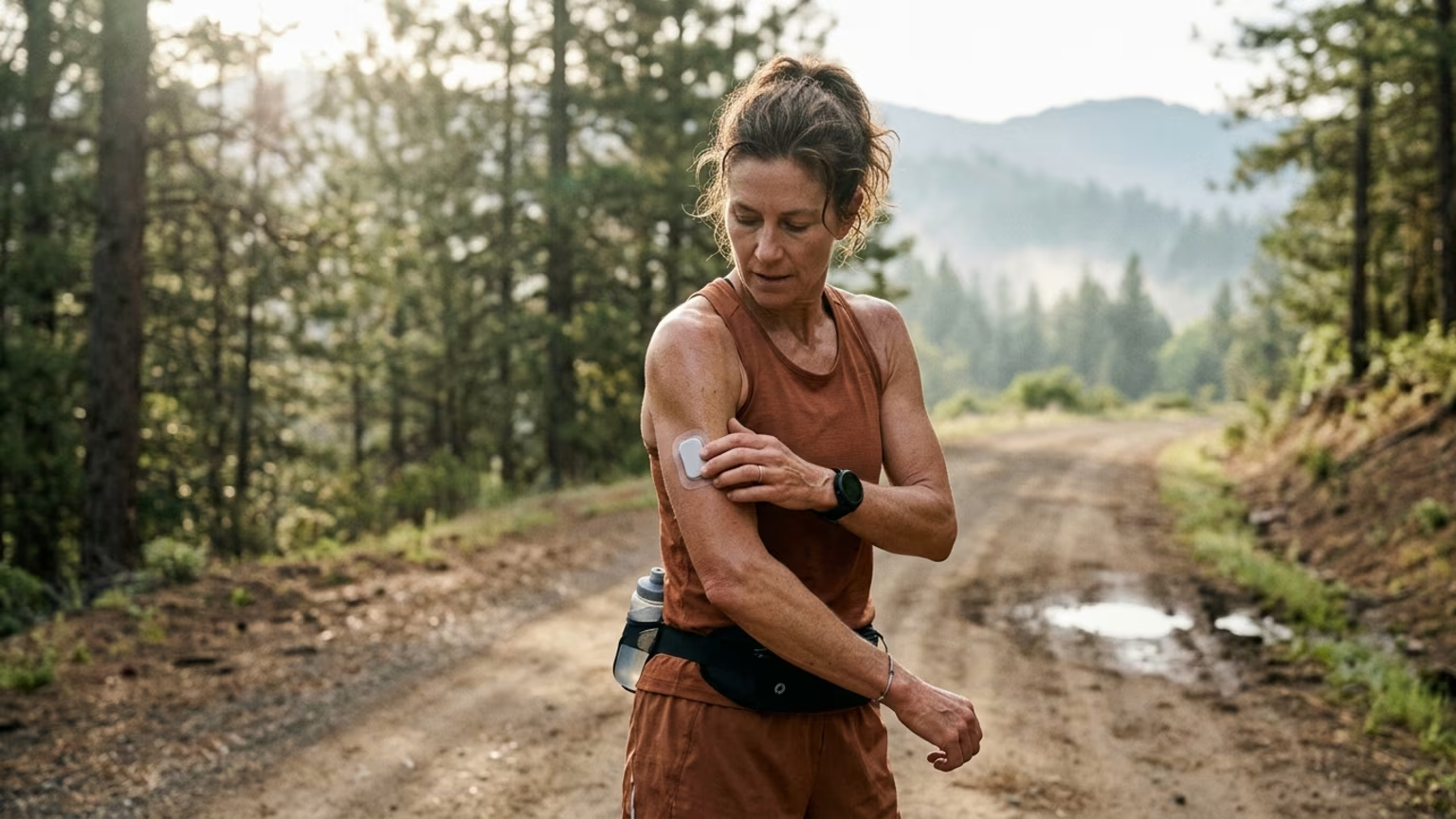
Unlike previous products from the company, Nix Health provides hydration intelligence without a dedicated sweat sensor. The proposed system relies on a predictive algorithm rather than a physical skin patch. Nix says the algorithm uses inputs like age, sex, body weight, and activity type. It also factors in exercise duration, intensity, temperature, and humidity.
By combining these data points, the platform aims to predict the onset of sweating. It also estimates the overall sweat rate and the specific electrolyte content lost during exercise. Nix is currently testing these algorithms with beta partners. The company targets a full launch and wearable integration in the first quarter of 2027.
The technology has already drawn attention from established voices in sports science. Bob Murray, a Nix adviser and former director of the Gatorade Sports Science Institute, praised the technology. He noted that early testing required substantial scientific due diligence because the product had no viable predecessor. Publicly identified partners already include LSU Football, USA Triathlon, US Speedskating, and EF Pro Cycling.
Predicting sweat loss without a physical sensor requires a massive amount of baseline data. Nix describes its foundational information as the most comprehensive field-based dataset of its kind. The company built this model from sweat measurements collected across sports, military, labor, and consumer settings. This broad collection aims to capture how different bodies react to various environmental stresses.
According to CEO Meridith Cass, Nix Pro grew 93 percent in the previous year. The enterprise business grew another 42 percent year to date. These company-reported figures highlight the expanding reach of their existing business models. Nick Fragnito of Shorewind Capital stated that this dataset would be extraordinarily difficult to recreate.
The company is not stopping at basic fluid and sodium loss. Nix is also investigating sweat-based measurements for other biological markers. These development areas include lactate, cortisol, glucose, and vitamin D. While these are not announced commercial products yet, they signal a broader ambition for the company.
For the ambitious endurance athlete over 35, hydration is a complex puzzle. Individual sweat sodium concentration and sweat rates vary substantially from person to person. Universal hydration formulas often fail older athletes during long training blocks. If Nix Health performs as intended, athletes could soon receive individualized fluid estimates directly from their watch.
However, athletes must treat these algorithmic recommendations as starting points rather than unquestionable prescriptions. A recent Frontiers in Physiology editorial noted that wearable sweat sensors are practical field tools. The editorial also noted that these tools do not yet match true laboratory precision. The outputs of any algorithm will depend heavily on the quality of the user inputs provided.
Hitting my forties brought a harsh reality check. The track workouts were not getting slower, but the days after them felt significantly heavier. Instead of forcing my old Tuesday and Thursday intensity schedule, I looked at the data on Masters athletes and muscle protein synthesis. I pushed my second hard session to Friday, allowing an extra forty eight hours of low intensity recovery.
My total weekly volume stayed the same, but the quality of my intervals skyrocketed. That same willingness to adapt must apply to how we use new hydration technology. The environment dictates fluid needs just as much as your effort level does. A plan that works well during a cool session can quickly fail in a hot race.
Athletes should validate any future wearable estimate gradually during their regular training cycle. Compare the watch data against simple metrics like body mass changes before and after a run. Learning how to adjust race pacing in severe heat requires respecting the environment over a strict digital target. Technology can refine a well tested strategy, but it cannot invent a safe one from scratch.
We must also remember that drinking more fluid is not always the safest choice. According to established health guidelines, athletes should avoid treating maximum fluid replacement as the absolute goal. Drinking beyond actual losses can contribute to exercise-associated hyponatremia. This dangerous condition is a real threat that endurance athletes must actively manage during long events.
Better estimates from a watch could help athletes find the right balance safely. This is especially true if they also listen to their subjective thirst and physical symptoms. Understanding evidence-based marathon hydration strategies remains a fundamental skill regardless of the device you wear. A smart watch feature should complement your knowledge rather than completely replacing it.
Furthermore, we must separate practical performance guidance from broad medical claims. Cass argued that hydration may have implications for longevity, cognitive health, and disease prevention. While these ideas are interesting, they are executive interpretations rather than established clinical conclusions. Athletes should focus on the immediate performance benefits of informed hydration pacing.
The shift from separate devices to platform licensing is a major trend in sports technology. The industry is moving toward combining physiological data with contextual information like temperature and humidity. By licensing the software layer, Nix avoids forcing athletes to buy yet another single purpose gadget. Your existing fitness platform could soon analyze your hydration alongside your daily heart rate data.
This integration matters deeply for veteran endurance athletes who already track multiple data streams. We are often overwhelmed by separate apps for sleep, recovery, and daily fueling routines. Consolidating hydration intelligence into a primary wearable reduces friction and mental fatigue. It allows athletes to see how fluid loss correlates with a drop in next day recovery scores.
The realities of why muscle recovery slows down after 35 make accurate fueling critical for long term progress. If a runner consistently under fuels during long efforts, the resulting fatigue will bleed into subsequent workouts. Having an algorithmic estimate readily available might prompt an athlete to grab an extra bottle. Small adjustments in fluid and sodium intake can significantly influence how well the body repairs itself overnight.
Yet, caution is required before entirely outsourcing our sports nutrition strategy to an algorithm. Wearable technology is excellent at identifying broad patterns, but it cannot account for every unique biological variable. Athletes with specific kidney, heart, or endocrine conditions must be particularly careful. Any algorithmic recommendation should be treated as unsuitable for unsupervised medical decision making.
While predictive hydration algorithms offer a promising tool for refining race-day fueling, veteran endurance athletes must continue relying on personal testing, environmental awareness, and their own physiological feedback to stay safe and perform at their best.

Follow ReEndure for practical insights on endurance training, recovery, nutrition and healthy aging. Stay connected for new articles, research led guidance and ideas to help you perform better for longer.




Read practical ideas on endurance training, recovery, nutrition and healthy aging to keep progressing for years to come.
Read the Blog