

A sports science breakdown explaining why endurance athletes over 35 should prioritize basic sleep and nutrition over ice baths and recovery machines.





On October 1, 2026, the Hindustan Times published a comprehensive feature on the practices of athletic recovery. The article by Samreen Razzaqui details how elite competitors manage their bodies during compressed competition schedules. The piece examines a variety of popular methods from ice baths to cupping. It ultimately concludes that basic human needs remain the most critical factors for athletic longevity and performance.
The primary conclusion of the publication is that true recovery begins with sleep, nutrition, and mental well-being. Samuel Pullinger is the Head of Performance Science at Inspire Institute of Sport. He refers to sleep as the absolute foundation of the recovery process. He clarifies that specialized modalities only become relevant after athletes address these basic needs.
The article emphasizes that managing limited time between events requires a targeted sequence. Pullinger outlines a specific post-competition timeline for athletes. He recommends light active recovery within 10 to 15 minutes of an event. This could involve a small jog or a short session of cycling.
Nutrition and hydration should follow immediately afterward. When appropriate, athletes might use cold-water immersion within 30 to 60 minutes after competing. Wayne Lombard is an athletic performance specialist from South Africa. He notes that this cold-water method serves a narrow, specific purpose.
Lombard advises athletes to use cold to recover rather than using it to adapt. Ice baths might suit competitors returning quickly for another event. However, they often hinder the biological adaptation required for heavy strength training. The consensus is that no single intervention works for every physical situation.
The feature also assesses the role of modern wearable devices like Oura rings, Fitbit, and Whoop. These tools provide monitoring indicators such as training load, sleep metrics, and heart-rate variability. Coaches and sports scientists use these data points to determine if an athlete is ready for a hard session. Reendure consistently notes that consistent sleep and injury prevention form the true bedrock of sustainable training.
While the publication discusses tools like pneumatic compression systems and massage, it does not supply numerical outcomes for these methods. The discussion relies on expert commentary rather than controlled study results. Lombard argues that improving athlete readiness requires qualified experts to interpret information. Adding more technology without expert guidance provides little physical benefit.
For ambitious adults over 35, physical recovery often feels like a moving target. We experience slower physical bounce-back times, chronic overuse issues, and the daily stress of adult life. It is tempting to look for advanced tools to solve these physical problems. However, the latest review confirms what veteran athletes already know.
Older athletes must focus their energy on food-first nutrition and consistent sleep schedules. Pullinger estimates that optimal recovery could provide a performance advantage of one to five percent. This is merely an estimate depending on the sport and method. Nailing your basics allows you to keep competing and stay active for decades.
The general recovery window spans zero to 24 hours after a competition or heavy session. Reendure translates this concept into a practical routine for everyday training. The feature recommends initiating light active movement very quickly after you stop competing. A simple cool-down jog or an easy spin helps flush the legs.
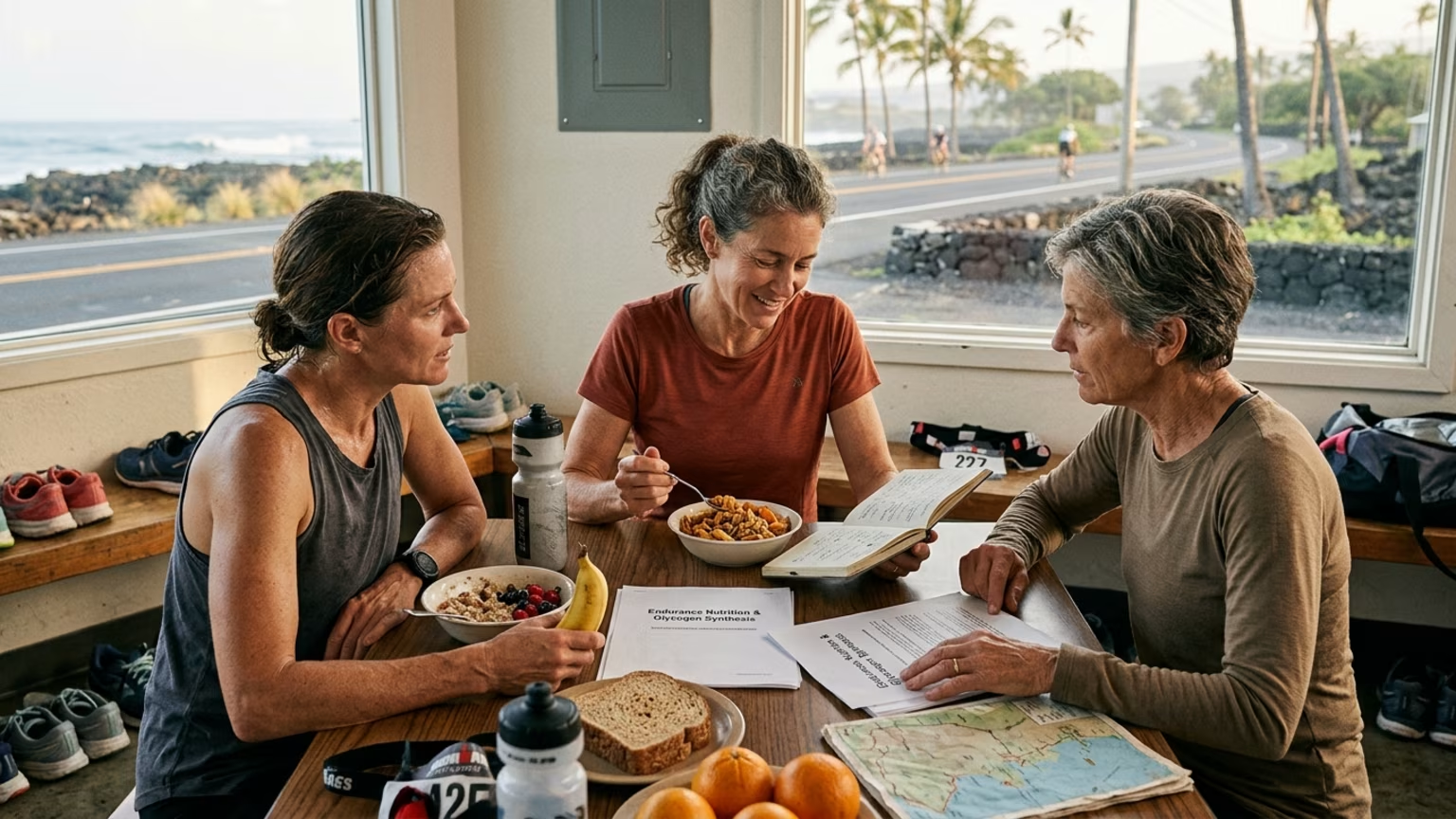
We strongly advocate for easy training as a recovery tool to maintain mobility without adding structural stress. Following this light movement, hydration and nutrition become the immediate priorities. You need to replenish glycogen and supply macronutrients for muscle repair. Proper hydration regulates your core temperature and ensures efficient nutrient delivery throughout your aging body.
The Hindustan Times article provides crucial context for cold-water immersion. Many athletes assume that an ice bath is a mandatory step after every hard effort. Lombard clarifies that this specific intervention should match your immediate objective. If you are racing in a multi-stage event, cold exposure can help you return to the starting line quickly.
The article notes extreme examples of compressed schedules, such as PV Sindhu playing three matches within 18 hours. Endurance athletes over 35 rarely face this level of event congestion. Most of us are training for long-term adaptation and gradual physical improvement. Using cold therapy after a heavy strength session can actually blunt the adaptation you are trying to achieve.
We live in an era of abundant physiological data. Wearables track our sleep stages, resting heart rate, and training strain every single night. The publication rightly points out that these devices are helpful indicators for coaches and sports scientists. Over-reliance on one specific metric can create unnecessary anxiety for older athletes.
You should view your heart-rate variability and sleep data as pieces of a larger puzzle. Evaluate these metrics alongside your perceived training load and mental well-being. If your wearable says you are recovered but your mental fatigue is high, you should take an easy day. Reendure aims to clarify the realities of endurance training and recovery by teaching athletes to trust their physical sensations alongside their technology.
The article mentions that some elite competitors race again within 24 to 48 hours. Gulveer Singh raced three long events over four consecutive days. Vithya Ramraj anchored a relay team the day after competing in the 400-meter hurdles. The feature also notes that a 13-year-old swimmer named Yu Zidi won three individual events.
These are phenomenal athletic feats, but they do not represent a sustainable model for the masters athlete. As we age, our cellular repair mechanisms naturally slow down. Expecting to mirror the bounce-back rate of a teenage swimmer is entirely unrealistic. Older athletes must prioritize a longer runway between maximum efforts.
Food-first nutrition is highlighted as a core necessity for tissue repair. Older athletes face unique challenges with protein synthesis and carbohydrate absorption. While extreme race fueling trends dominate the headlines, everyday physical recovery relies on simple consistency. You must provide your system with adequate fuel to manage the damage caused by heavy endurance work.
Hydration is equally critical for cardiac output and basic recovery functions. As the body ages, our natural thirst mechanism often becomes less sensitive. This means you might be under-hydrated without even realizing it. Maintaining strict habits around water and electrolyte intake ensures your body can properly circulate the nutrients you consume.
The sports science community constantly evaluates new methods for muscle repair. Yet, the foundational elements remain unchanged across every generation of athletes. Intermittent interventions like cupping or specialized massage might offer temporary relief for sore tissues. The feature notes that cupping marks are common, but it provides no concrete evidence for their physical efficacy.
Ambitious adults must stop treating physical maintenance as a passive activity. It requires the same dedication and planning as your interval workouts or long runs. This proactive mindset separates athletes who continue to improve from those who constantly battle chronic injuries. You must manage your training load carefully and respect the stress of your outside life.
The inclusion of mental well-being alongside sleep and nutrition is a critical point. Mental fatigue dramatically reduces physical output and delays restorative processes. Older athletes frequently juggle demanding careers, family obligations, and high athletic ambitions. This combination creates a heavy cognitive load that requires deliberate management.
You must actively build periods of psychological rest into your weekly schedule. This means stepping away from training data and allowing yourself to simply enjoy the outdoors. Reendure encourages athletes to detach their personal self-worth from their daily readiness scores. A calm and positive relationship with your training yields better biological results than a stressed obsession over perfect execution.
The article also notes that some physical recovery infrastructure is less common in regions like India. Lombard points out a lack of temperature-controlled hydrotherapy pools and intermittent pneumatic compression systems. He notes that dedicated sleep spaces are also a rarity for many athletes. Despite these limitations, athletes from these regions continue to achieve extraordinary physical results.
This observation proves that human biology does not strictly require modern technological intervention. You can build your own effective physical maintenance infrastructure using entirely basic tools. A dark room and a cool ambient temperature create an ideal sleep environment. Strategic meal prepping ensures that your nutrition is ready immediately after a grueling weekend run.
Endurance athletes over 35 will achieve their best long-term results by treating sleep, nutrition, and mental health as strict daily requirements rather than optional accessories.

Follow ReEndure for practical insights on endurance training, recovery, nutrition and healthy aging. Stay connected for new articles, research led guidance and ideas to help you perform better for longer.



Read practical ideas on endurance training, recovery, nutrition and healthy aging to keep progressing for years to come.
Read the Blog