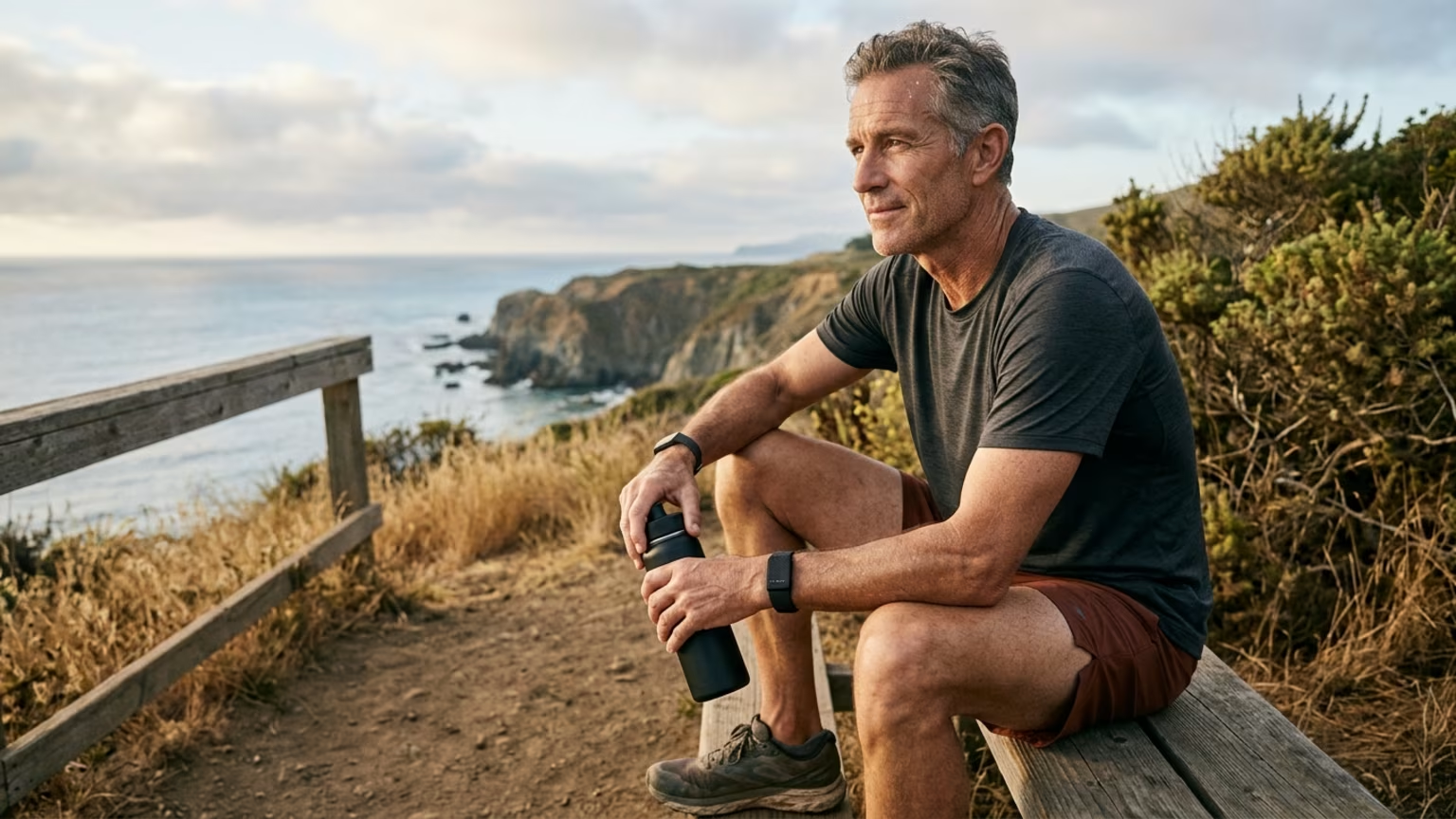

Screenless wearables like WHOOP and the Garmin Cirqa are changing recovery tracking. Learn how moving biometric data off your wrist can reduce digital stress.





On September 6, 2026, IndulgeExpress published a feature analyzing the shift toward screenless wearables in the health monitoring market. The report argued that lower distraction devices are increasingly designed to track sleep, stress, and recovery without adding another bright display to the user's daily life. It named prominent competitors in this premium space like WHOOP and Oura. Other highlighted devices included the Garmin Cirqa, Dexcom G7, and the Ultrahuman Ring AIR.
The central premise of the report is that traditional smartwatches have partly reversed their original promise of reducing phone dependence. Instead of freeing users from alerts, smartwatches have simply moved those digital interruptions to our wrists. IndulgeExpress cited unspecified tech sentiment surveys claiming that more than 60% of smartwatch owners feel annoyed by or under utilize their devices. The feature describes a growing condition it calls wrist buzz anxiety, where continuous checking and notification fatigue actively detract from the user's mental well being.
By removing the screen entirely, companies aim to shift biometric interpretation to a smartphone app for later review. This allows the devices to gather continuous background data without demanding immediate attention at inconvenient moments. For ambitious adult athletes, this structural change directly targets the stress of modern training regimens. You can wear a sensor to monitor overnight physiological changes without turning every minor heart rate fluctuation into an immediate decision.
To understand the science behind these tools, we can look at a 2026 systematic review of 22 competitive athlete monitoring studies. This review identified autonomic load, sleep, and individualized monitoring as major themes in wearable technology. The researchers noted that heart rate variability is the dominant physiological measure used to assess how well an athlete is handling their training load. They also concluded that person specific models are much more informative than broad group level interpretations.
A separate review aimed at practitioners by SVEXA provides more detail on how these metrics are actually gathered. SVEXA explains that heart rate variability serves as a common non invasive marker for physical readiness. Meanwhile, consumer wearables estimate sleep stages indirectly through signals like photoplethysmography and accelerometry. These devices do not directly measure brain activity like a clinical polysomnography test would.
Because of this indirect measurement, SVEXA reports that consumer devices generally perform better for sleep versus wake detection. They are highly reliable for calculating total sleep time, but they struggle to accurately differentiate between specific sleep stages. This distinction matters deeply for athletes who might otherwise panic over a poor deep sleep score. Recognizing the limits of these optical sensors helps athletes avoid overreacting to single night data anomalies.
The push toward minimal visible hardware is clearly visible in recent market growth numbers. IndulgeExpress attributes a 6% quarter over quarter increase in the global wristband category during the third quarter of 2025 to Counterpoint data. The feature noted that screenless wristbands outperformed the wider category, with WHOOP specifically growing 18% quarter over quarter. Furthermore, IDC forecasted that smart ring shipments would reach 4.9 million units in 2026, representing a 12.8% annual growth rate.
This commercial success is driving traditional GPS watch brands to adapt their product lines. AthletechNews reported that Garmin introduced the Cirqa as a $200 screen free device that tracks 24/7 health and fitness metrics. The Garmin Cirqa offers HRV status, sleep tracking, stress monitoring, and Body Battery insights with up to 10 days of battery life. Instead of displaying these metrics on the wrist, the device requires users to view all their detailed health information through the Garmin Connect app.
For athletes already invested in the Garmin ecosystem, checking out the Garmin Cirqa provides an integrated way to monitor recovery without switching software platforms. However, many of these screen free platforms operate on subscription models that require careful consideration before purchasing. The IndulgeExpress feature states that Oura charges $5.99 per month for its subscription software alongside its physical hardware. WHOOP operates on a similar recurring revenue model, having been founded in 2012 by Will Ahmed to track his own physiological recovery as a Harvard student athlete.
The financial scale of these companies is massive, with the IndulgeExpress article reporting that Oura reached an $11 billion valuation. Additionally, the report notes that WHOOP raised $575 million at a $10.1 billion valuation, highlighting strong investor confidence in the screenless recovery market.
Screenless does not necessarily mean data free or entirely private. The IndulgeExpress article explicitly describes biometric tracking as a form of personal surveillance. However, the report does not provide detailed evidence about data ownership, security protocols, or sharing practices for each named company. Athletes must recognize that a quieter device can still collect extensive personal health information in the background.
Furthermore, moving the data off the wrist does not guarantee an end to compulsive checking behavior. A screenless device may successfully reduce wrist notifications, but it cannot eliminate smartphone dependence. The user may simply shift their attention burden from their arm to their phone screen. This is especially true when a companion app produces frequent readiness alerts, recovery warnings, or automated coaching prompts throughout the day.
Consumers should also manage their expectations regarding the actual health benefits of these devices. The IndulgeExpress feature does not establish that screenless wearables independently improve athletic performance, reduce injury risk, or extend your healthy lifespan. The article also lacks independent accuracy comparisons, age specific evidence for older adults, or sport specific intervention trials. A wearable device is simply a mirror reflecting your habits, and it remains up to the athlete to make meaningful changes to their routine.
For the endurance athlete over 35, training is a constant balancing act between ambition and physical reality. We want to keep racing, but our bodies demand more deliberate downtime than they did in our twenties. Hitting my forties brought a harsh reality check. The track workouts were not getting slower, but the days after them felt significantly heavier.
Instead of forcing my old Tuesday and Thursday intensity schedule, I looked at the data on Masters athletes and muscle protein synthesis. I pushed my second hard session to Friday, allowing an extra forty eight hours of low intensity recovery. My total weekly volume stayed the same, but the quality of my intervals skyrocketed. Respecting that recovery curve is where daily biometric tracking becomes incredibly valuable.
However, the last thing an aging athlete needs is more cognitive stress from a buzzing wrist computer. A screenless tracker allows you to prioritize trends over single night scores without the anxiety of constant notifications. The 2026 systematic review found that physiological measurements and subjective feelings are often directionally similar, but they can differ significantly in timing and magnitude. The researchers concluded that dual channel monitoring is the most defensible approach.
This means you should combine physiological data from your device with a subjective assessment of how you actually feel. If you wake up feeling fully rested but your app says your recovery is low, you should not automatically cancel your workout. You should use screenless hardware to reduce digital interruptions, not to outsource your own athletic judgment. A recovery score is a helpful decision support tool, but it is not a direct biological measurement of muscle damage.
First, you should review your data at scheduled times rather than checking it compulsively. You might inspect your overnight trends once in the morning while drinking coffee. This prevents you from repeatedly checking your stress levels during a busy workday or right before you try to sleep. The evidence supports using these devices to lower distractions, so you must establish firm boundaries around when you open the companion app.
Second, you should treat total sleep duration as your primary recovery metric. Since consumer devices use indirect signals for staging, remembering that elite recovery starts with sleep duration will keep you focused on the metrics that actually matter. You should use your wearable to ensure you are getting enough total hours in bed. If you need a plan to balance this tracking with your workouts, reading a longevity guide for endurance athletes can help you structure your weekly routine.
Finally, keep a visible training watch for your actual outdoor sessions. Screenless wearables are excellent for background monitoring, but they cannot replace a display for live navigation or heart rate zone control. You will still want a dedicated GPS watch to manage your physical effort during a tempo run or a long interval session. The goal is simply to take that screen off your wrist when the workout is finished.
Ultimately, screenless wearables offer a quieter way to track daily physiological trends, but they remain most effective when used strictly as background tools to support your own hard earned athletic intuition.

Follow ReEndure for practical insights on endurance training, recovery, nutrition and healthy aging. Stay connected for new articles, research led guidance and ideas to help you perform better for longer.






Read practical ideas on endurance training, recovery, nutrition and healthy aging to keep progressing for years to come.
Read the Blog