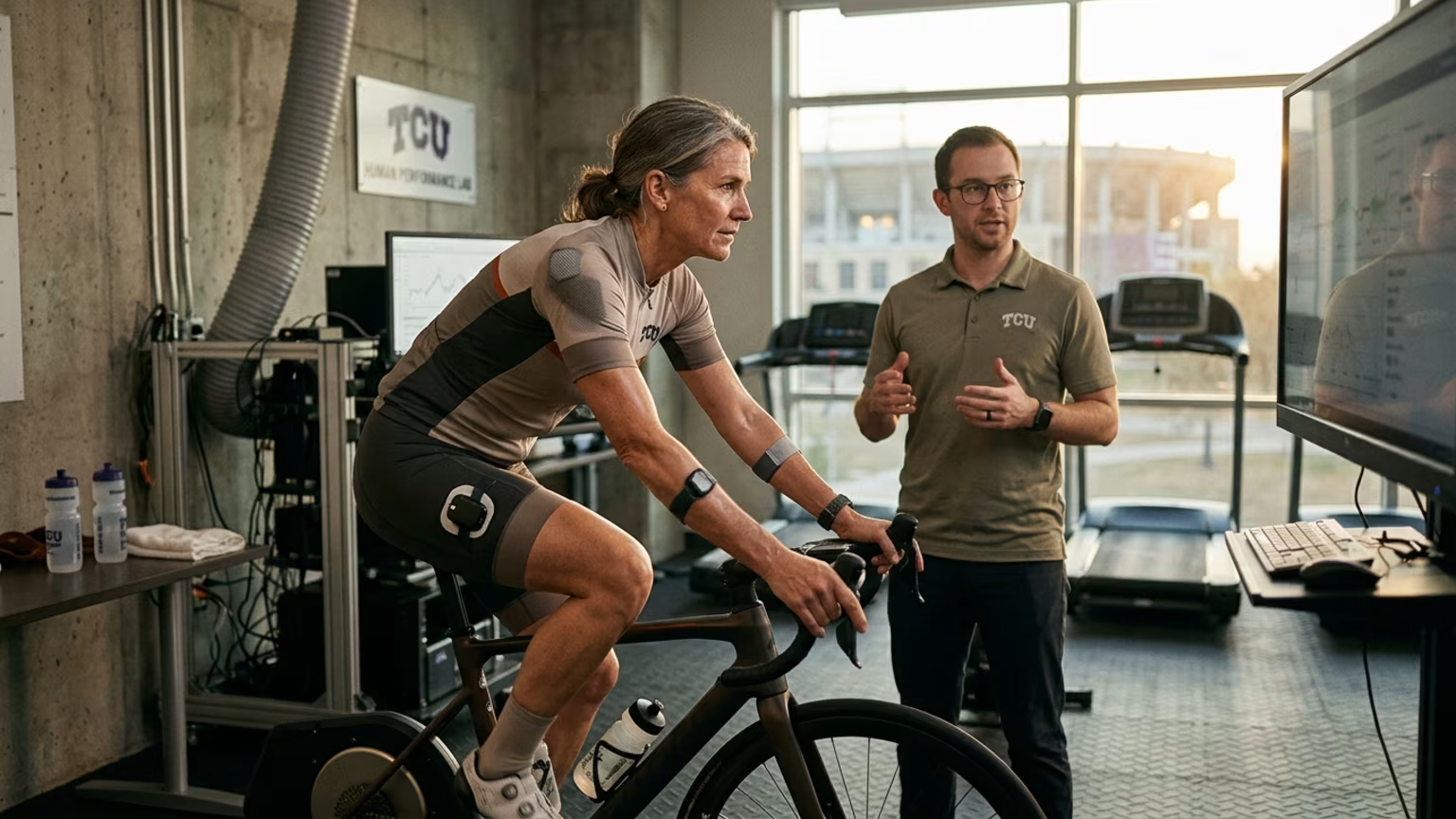

Texas Christian University recently opened a lab to test endurance gear under physical stress. We explain how this impacts data reliability for older athletes.





In fall 2026, Texas Christian University launched the Athlete Equipment and Materials Design Lab through its Department of Fashion Merchandising and College of Fine Arts. The facility is designed to test how apparel, equipment, and wearable materials perform in highly demanding physical conditions. Reuben Burch, the vice provost for research at the university, noted that this expands research beyond human performance directly into the equipment worn by different types of athletes. This development marks a serious step toward independent verification of the physical gear endurance athletes rely on every single day.
The university clearly stated that they built an industry lab rather than a purely academic research center. Charles Freeman, professor and chair of fashion merchandising, explained that the goal is to familiarize students with professional equipment before they enter the workforce. This practical focus is exactly what the sports technology market needs right now. We see constant releases of new smart watches, biometric rings, and recovery garments. However, rigorous third party testing of how these products physically interact with the human body remains rare.
What Exactly Will This New Facility Test?
The primary objective of the facility is to examine how materials manage sweat and heat. Researchers will also test gear against movement, friction, pressure, and water exposure. These are the precise environmental variables that matter during a hot marathon or a long century ride. Jim Weinstein is the director of the Roach Institute for Athlete Engineering at the university. He stated that researchers will connect measurements of the body with the equipment closest to it. They will track movement, heat strain, fatigue, and overall performance.
The applications cover athlete performance, wearable health technology, and recovery products. The lab will also test adaptive equipment and rehabilitation tools. By evaluating the physical interface between an athlete and their gear, researchers can assess durability and comfort under stress. A device might have a highly accurate internal sensor. However, if the strap slips when covered in heavy sweat or the fabric causes severe friction, the data becomes useless and the athlete suffers.
How Will The University Conduct This Research?
A ten million dollar gift from the Roach Foundation of Fort Worth made the Roach Institute for Athlete Engineering possible. The new testing lab will collaborate closely with this institute. It will also work with engineering, physics, and kinesiology programs. Finally, it will partner with the university’s Limb Loss & Difference Lab. This multidisciplinary approach ensures that the gear is tested across various physical requirements and body types.
The Roach Institute focuses on the interaction between people, technology, and data as a connected human performance system. This systems approach is highly relevant to older athletes. We do not just wear a watch in a vacuum. We wear it while managing environmental stress, perceived exertion, and mechanical fatigue. The lab is also expected to support a planned doctoral program in advanced soft goods and textile systems. That academic program is currently scheduled to launch in 2027.
How Does This Shift the Landscape for Endurance Athletes?
For the ambitious endurance athlete over 35, the conversation around wearables is often clouded by aggressive marketing. We frequently hear that a new sensor will prescribe the exact training load we need. However, recent evidence paints a much more nuanced picture of what these devices can actually do. A 2026 review of wrist worn physical activity trackers concluded that these devices are sufficiently accurate for heart rate and step count. Yet, accuracy in measuring a single variable does not automatically mean a device can dictate your training schedule.
Hitting my forties brought a harsh reality check regarding recovery and training stress. The track workouts were not getting slower, but the days after them felt significantly heavier. Instead of forcing my old Tuesday and Thursday intensity schedule, I looked at the data on Masters athletes and muscle protein synthesis. I pushed my second hard session to Friday, allowing an extra forty eight hours of low intensity recovery. My total weekly volume stayed the same, but the quality of my intervals skyrocketed.
I used wearable data to support that decision, but I did not let a single recovery score dictate my entire week. This approach aligns with the scientific consensus that views wearable devices as monitoring tools rather than autonomous coaching systems. A 2026 analysis cautioned against using isolated readings, such as one night of sleep data, to make training or recovery decisions. Single point health readings simply carry too much normal physiological noise to be reliable on their own.
Why Context Matters More Than Single Metrics
When analyzing the role of wearables and AI in healthy aging, the focus must remain on gathering long term context. When a facility tests a wearable against sweat, friction, and heat, they are trying to ensure the baseline data is consistent. But how you apply that consistent data requires experience and subjective awareness. A reliable heart rate monitor is a great tool. However, it cannot tell you if you are feeling mentally burned out from work or dealing with poor sleep quality from stress.
This highlights why independent facilities like the one at Texas Christian University are necessary. We need to test whether a heavily marketed recovery garment actually manages heat and pressure better than standard rest. Athletes need proven validation, not just polished marketing materials. As we age, our margins for error in training load and recovery narrow significantly. We cannot afford to base our training cycles on flawed data or restrictive gear that fails halfway through a long run.
What Should Masters Athletes Do Differently Now?
First, we must demand better evidence for the gear we buy. The testing parameters at the new facility highlight the exact factors that ruin a long race. Friction, heat accumulation, and sweat saturation are the true enemies of endurance performance. When a brand claims their wearable improves recovery, look for independent testing that proves it works under those specific physical stressors. If a device cannot maintain sensor contact through heavy sweat and repetitive motion, its data will inevitably let you down.
Second, older athletes should deliberately integrate wearable data with their own internal feedback. If your wrist sensor says you are fully recovered but your legs feel heavy, you should trust your physical sensation. We recommend using simple methods like assessing cardiovascular fitness through field tests alongside your digital metrics. Combining subjective fatigue, pain, and sleep quality with objective data trends creates a much safer training environment. You want technology to inform your adjustments, not dictate your ambition.
Third, stop obsessing over daily fluctuations in your metrics. The 2026 analysis clearly warns against acting on single point health readings. Instead, look at the rolling averages of your resting heart rate or sleep duration over a two week period. This perfectly complements rethinking traditional weekly schedules for older athletes. If your baseline trends are moving in the wrong direction, then it is time to add an extra rest day or reduce intensity.
Finally, treat your body and your equipment as one connected system. The Roach Institute takes this approach, and it is a smart model for everyday athletes. Your shoes, your clothing, your wearable sensors, and your nutrition all interact with your physical readiness. Focus on garments and gear that manage heat effectively and fit comfortably under stress. A comfortable athlete who stays cool will almost always perform better than a hot, chafed athlete wearing the most advanced sensor on the market.
The launch of independent testing facilities gives veteran athletes a stronger foundation of reliable gear, but true performance longevity still requires you to interpret those metrics through the lens of your own physical experience.

Follow ReEndure for practical insights on endurance training, recovery, nutrition and healthy aging. Stay connected for new articles, research led guidance and ideas to help you perform better for longer.



Read practical ideas on endurance training, recovery, nutrition and healthy aging to keep progressing for years to come.
Read the Blog