
Learn how context consistency, sleep, and practical daily systems reduce friction and build long-term endurance habits for athletes over 35.





The alarm sounds at five in the morning. The house is completely dark and entirely quiet. A prepared water bottle sits on the counter next to a charged watch. The workout begins before a conscious decision is even required.
Context consistency is the practice of linking your training to stable daily routines so that exercise becomes easier to repeat. This approach relies on predictable times, specific locations, and steady social settings rather than raw motivation. Researchers track how these recurring signals build physical activity habits over time. It shifts the primary focus from how hard you train to how smoothly you can start a session.
A 2026 systematic review and meta-analysis combined 14 independent studies involving 6,069 participants to examine physical activity behavior. The review found small positive associations between context consistency and both physical activity behavior and habit strength. Researchers reported that temporal consistency and routine consistency were the cue dimensions most clearly associated with positive behavioral outcomes. When athletes align their workouts with stable locations and regular times, they build stronger and more resilient habits.
Interestingly, the research shows that cue consistency links more strongly to the frequency of activity rather than the overall duration. This suggests that protecting the regular occurrence of sessions is highly important for long-term adherence. Completing a short fallback workout preserves the routine when a full session is impossible. Maintaining this high frequency of action is critical for following structured training and performance plans.
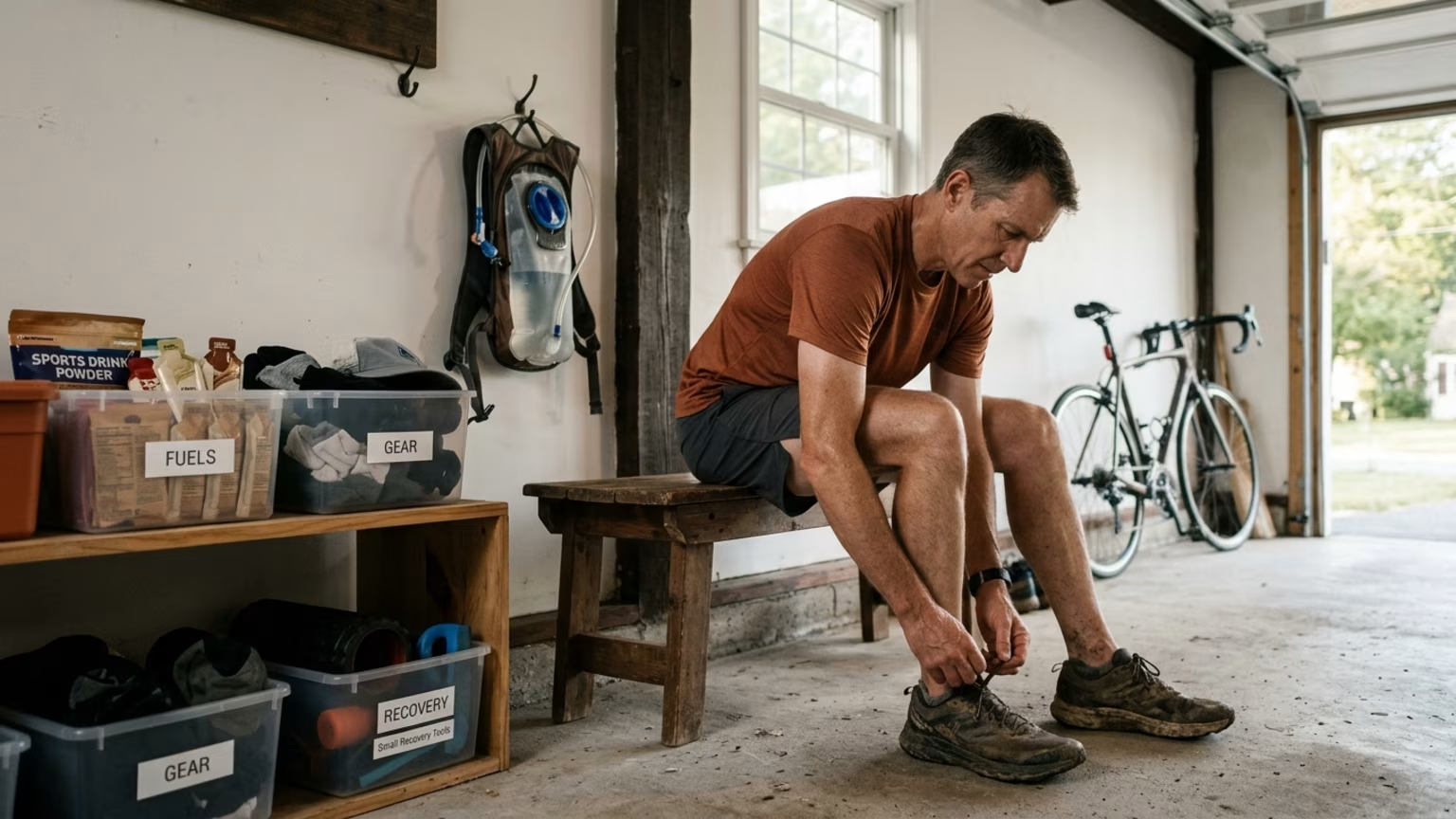
Many athletes lay out visible equipment to reduce friction before a demanding session. The 2026 review noted that available studies have not yet examined these specific object cues directly. However, the broader strategy of reducing pre-workout decisions helps athletes maintain their momentum during stressful weeks. Creating a predictable environment lowers the barrier to entry for early morning or late evening workouts.
Proper rest is another foundational element of this invisible preparation system. A 2021 expert consensus review treats sleep as a critical driver of perceptual, cognitive, physical, and recovery outcomes for athletes. Protecting your sleep schedule makes the physical demands of daily training much easier to manage. A predictable evening routine can help you prioritize this critical recovery phase.
As athletes age, the physical requirements for maintaining cardiovascular health and physical durability evolve. A 2026 UK Biobank analysis followed more than 11,500 adults whose cardiorespiratory fitness was assessed twice over roughly four years. The study found that people whose fitness improved by at least 1 mL/kg/min per year had a 16% lower risk of developing cardiovascular disease than those whose fitness remained stable. Participants whose fitness declined by that same amount faced a 33% higher risk.
These observational findings highlight the immense value of sustainable progression and long-term fitness maintenance. Maintaining this level of fitness requires a comprehensive and highly reliable weekly schedule. For adults aged 18 to 64, widely cited public health guidance recommends at least 150 minutes of moderate aerobic activity weekly. The guidance notes that 75 minutes of vigorous activity or an equivalent combination is also acceptable.
Athletes seeking additional health benefits can increase their moderate aerobic activity to 300 minutes per week. However, consistency must extend beyond basic aerobic mileage to fully support healthy aging. The public health guidance also recommends muscle strengthening activity involving major muscle groups on at least two days per week. For older athletes, building a structured weekly system ensures that aerobic volume does not crowd out essential strength work.
As athletes pass the age of 65, the physical activity recommendations expand further. The guidance additionally emphasizes balance and multicomponent activity alongside the aerobic and strengthening foundation. Incorporating these varied sessions requires careful scheduling and a commitment to broad physical capability. Treating these different sessions as fixed appointments is the core of an effective healthy aging framework.
Structuring your day around predictable habits removes unnecessary decision fatigue from your athletic life. The 2026 meta-analysis identified time and routine consistency as especially relevant targets for physical activity interventions. This finding supports the practical strategy of attaching your workouts to stable anchors in your daily schedule. A morning coffee, a commute home, or the end of a workday can all serve as reliable triggers.
Your evening preparation is the critical first step in this predictable chain of events. Deciding the exact start time and location of your next workout removes morning hesitation. Preparing your clothing and charging your devices are practical extensions of routine building that minimize stress. You can also define a full version of your planned workout and a shorter fallback option for busy days.
Active commuting offers another logistical opportunity to embed consistent movement into a crowded schedule. Attaching a ride or a run to a necessary transition minimizes the extra time required for exercise. The training value of a commute depends heavily on traffic, terrain, and overall safety conditions. Treating the commute as a reliable habit cue rather than a strict performance test keeps the routine sustainable.
Nutrition and fueling also benefit immensely from highly predictable and simple daily systems. Preparing repeatable meal components prevents you from attempting complicated cooking every single day of the week. Keeping reliable carbohydrate and protein options readily available removes the stress of post-workout meal planning. This systematic approach allows time-crunched athletes to support their concurrent training without adding mental fatigue.
Consistency is not the same thing as total rigidity. The 2026 meta-analysis found small positive effects for context consistency, but it did not ensure that a fixed schedule prevents all disruptions. Shift work, caregiving responsibilities, travel obligations, and seasonal weather changes can all force a change in your daily plans. A rigid system that breaks under minor pressure is not a truly sustainable routine.
Building flexibility into your schedule is essential for long-term athletic success. Having a documented fallback workout allows you to maintain your physical activity habit even when conditions are poor. A short mobility session or an easy stationary ride can preserve your temporal consistency without adding excessive fatigue. This approach protects your baseline habit strength while allowing your body to manage temporary stress.
A well-designed behavioral system cannot compensate for an inappropriate training load. The available research supports consistency and recovery as important themes for overall health. However, these sources do not establish that a particular preparation ritual will magically prevent overtraining, injury, or illness. Experienced athletes must constantly balance their desire for routine with the physical feedback their body provides.
Public health guidance provides population-level activity ranges rather than race-specific prescriptions for heavily trained individuals. An experienced runner, cyclist, or swimmer requires highly individualized decisions about intensity distribution and rest. More activity is not automatically better for an older athlete managing systemic fatigue. Modifying your structured training plan during periods of high stress is a critical skill.
The broader health sector is moving toward a definition of training success that emphasizes sustainable systems. The American College of Sports Medicine reinforces the importance of structure through its Exercise is Medicine initiative. This initiative advocates integrating physical activity assessment and promotion directly into regular clinical care. It highlights that exercise adherence relies heavily on evidence-based resources and supportive medical structures.
This shift moves the focus away from simply asking patients to try harder. Instead, it prioritizes identifying the exact conditions under which physical activity becomes much easier to repeat. Connecting athletes with structured systems acknowledges that long-term fitness is not merely a matter of personal discipline. Proper environmental design and medical support play massive roles in lifelong athletic participation.
Closing the loop after a demanding workout is just as critical as the initial preparation. A brief post-training reset can involve recording the session, noting how the effort felt, and cleaning your equipment. Refilling water bottles and checking the schedule for the next day prepares your environment for the next cycle. This brief sequence creates immediate feedback on whether your current training load is truly manageable.
Protecting the entire training cycle requires viewing rest, nutrition, and preparation as equal partners to the exercise itself. Relying on established routines protects you from the inevitable fluctuations in daily motivation and energy. Designing your environment to support your goals quietly guides you toward better decisions over the long term. Reendure promotes this balanced approach to help older athletes stay competitive and resilient.
Long-term athletic performance is not built on random bursts of motivation, but on the quiet routines that make showing up the path of least resistance.

Follow ReEndure for practical insights on endurance training, recovery, nutrition and healthy aging. Stay connected for new articles, research led guidance and ideas to help you perform better for longer.





Read practical ideas on endurance training, recovery, nutrition and healthy aging to keep progressing for years to come.
Read the Blog