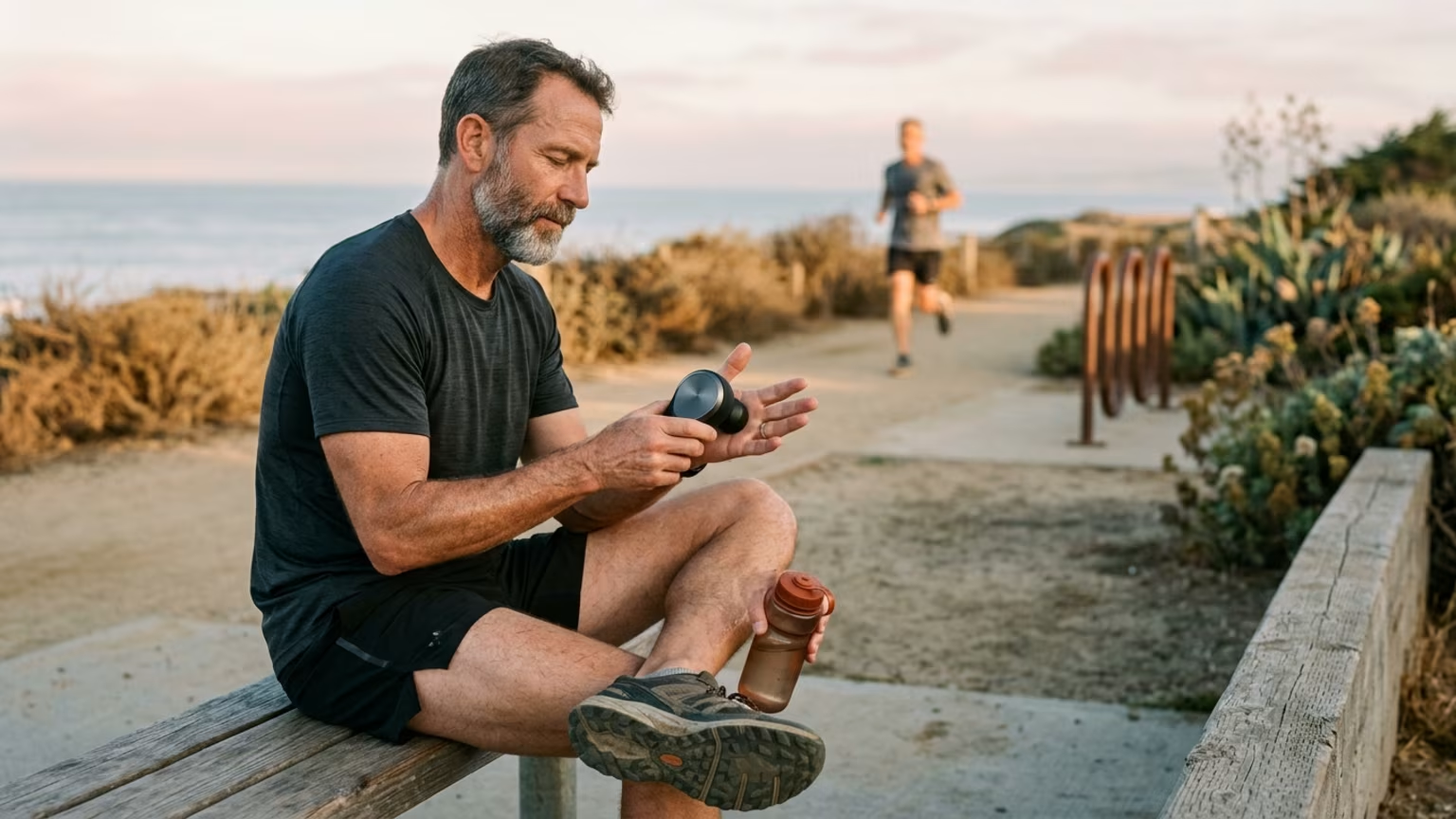

Learn the science behind palm cooling and how Therabody's CryoTherm Palm helps endurance athletes manage heat stress and fatigue during interval sessions.





Ice baths after a grueling summer workout are not the ultimate solution for heat management. The most effective time to cool the body is actually during the workout itself. For decades, athletes treated heat stress as an unavoidable penalty of hard training. Today, tools like Therabody's CryoTherm Palm are shifting our focus toward active thermoregulation between intervals.
Where did we get this wrong? Historically, endurance culture glorified suffering through rising temperatures. Coaches taught older generations of athletes to push past the discomfort of heat. The traditional approach relied entirely on post-exercise recovery to bring the heart rate down.
This delayed cooling method ignored basic human physiology. When the body overheats, it diverts blood away from working muscles. The blood moves toward the skin in a desperate attempt to shed heat. That diversion creates a massive spike in cardiovascular strain and perceived fatigue.
Athletes were sacrificing their training quality simply because they lacked practical tools. We accepted reduced sprint velocities as the inevitable cost of training in warm weather. The focus on post-workout recovery masked the immediate benefits of mid-session interventions. Sports science eventually showed that reducing perceived effort during the workout yields better muscular output.
Practical applications for mid-session cooling remained clunky for years. Athletes tried gripping messy ice packs or draping wet towels over their necks. These primitive methods offered momentary relief but lacked consistency and temperature control. We needed a better way to drop our body temperature during intense efforts.
The underlying concept of palm cooling relies on the unique vascular structure of human hands. Blood vessels run extremely close to the skin surface in the palms. SFGATE reports that using the palms as a heat-transfer point may help the body shed heat during intense exercise. When applied correctly, this targeted cooling helps delay the onset of severe fatigue.
Therabody recently packaged this physiological concept into a portable device. Their new product is designed to cool both palms during rest intervals between sets or high-intensity efforts. The device uses dual aluminum contact plates to deliver consistent temperatures. According to SFGATE, it keeps the user's hands dry while cooling.
As core temperature rises, the heart must work significantly harder to sustain the same pace. The cardiovascular system is forced to split its resources between fueling muscles and cooling the body. This split demand is what causes athletes to hit a wall prematurely on hot days. Palm cooling targets the venous return in the hands to quickly circulate cooler blood back to the heart.
Athletes need tools that are both effective and easy to manage during breathless recovery intervals. The CryoTherm Palm offers three specific cold settings. These settings are 8°C, 12°C, and 16°C. Those temperatures are equivalent to 46.4°F, 53.6°F, and 60.8°F.
Speed is critical when your rest interval is only two minutes long. SFGATE reports that the device reaches its therapeutic cold temperature in under 60 seconds. The unit operates wirelessly and weighs a highly portable 1.1 pounds. It includes a built-in stopwatch for tracking one- to three-minute rest intervals.
The device's design emphasizes portability and repeatability above all else. It is advertised with up to two hours of active runtime per charge. Because it is cordless and requires no messy ice, it is highly practical for trackside use. Athletes training away from large facilities can easily keep this in a gym bag.
The performance claims surrounding palm cooling are rooted in specific athletic environments. Sharp Magazine notes that the product was supported by two controlled athlete studies. The first study observed Division I athletes at the University of Southern California during strength training. The second involved elite football players at IMG Academy performing repeated sprint efforts.
In the resistance-training study reported by Sharp Magazine, the results were highly favorable. The group using palm cooling achieved 28% more total work volume than the control group. These participants also completed 58% more repetitions in the final set. Additionally, they recorded a 7% increase in post-session grip strength compared with controls.
The repeated-sprint study demonstrated similar advantages for high-intensity efforts. Sharp Magazine reports that these athletes felt 60% cooler than the control group. They also achieved a 2.45% increase in top sprint speed. Furthermore, they maintained a 4.7% better sprint velocity across repeated all-out efforts.
These figures suggest that palm cooling can significantly preserve power output. For endurance athletes, maintaining velocity in the final intervals of a track session is challenging. Reducing perceived exertion can help an athlete execute the prescribed workout without failing early. This fits seamlessly into a broader strategy for training load management for endurance athletes looking to optimize their performance.
By keeping the hands cool, athletes send a reassuring signal to the central nervous system. This helps override the brain's natural instinct to slow the body down. Maintaining a high work rate deep into a session is exactly how aging athletes preserve top-end speed. Consistently hitting those target paces is crucial for long-term physiological adaptation.
While the reported metrics are impressive, older endurance athletes must view them cautiously. A 28% increase in work volume and a 2.45% increase in sprint speed are not universal guarantees. The available coverage does not provide comprehensive methodological details about the studies. Without knowing the sample sizes or blinding methods, we cannot verify the generalizability of these findings.
Furthermore, the existing evidence base focuses heavily on resistance training and short sprints. The supplied reports do not establish that these performance effects occur during continuous distance running. Masters athletes aged 35 to 65 often differ in thermoregulatory responses compared to collegiate athletes. Therefore, athletes should not assume these percentage improvements will translate directly to a marathon.
It is also vital to distinguish between subjective comfort and physiological core temperature. The repeated-sprint study noted that athletes felt 60% cooler. However, perceived cooling is not necessarily the same as a massive reduction in physiological heat strain. The available reporting does not publish the actual core-temperature changes achieved during these intervals.
For the veteran endurance athlete, the most defensible use case involves structured interval training. Track intervals, hill repeats, and strength circuits offer ideal natural breaks for palm cooling. Using the device during short recovery windows could help athletes manage heat stress effectively. This prevents the severe cardiovascular drift that typically ruins a summer workout.
Athletes attempting a cautious trial should introduce the device systematically. You might use the tool exclusively during planned recovery intervals while keeping all other variables constant. Record your heart rate, pace, perceived exertion, and next-day soreness to evaluate the actual impact. This analytical approach forms the backbone of a solid recovery troubleshooting framework for endurance athletes.
However, athletes must not treat palm cooling as a replacement for foundational safety practices. The available coverage does not show that the device prevents heat exhaustion or other illnesses. Athletes must continue to prioritize hydration, proper clothing, and sensible pacing. Recognizing when to back off is a critical part of how athletes safely modify workout plans during periods of high environmental stress.
Technology in sports science often comes with a premium price tag. The reported retail price for the CryoTherm Palm is $399.99. SFGATE describes the product as a specialized device aimed at competitive or dedicated athletes. It is not necessarily meant to replace conventional recovery tools entirely.
Athletes must weigh this cost against alternative cooling strategies. Ice towels and cold water bottles provide some relief at a fraction of the price. Still, the precise temperature control and portability of the CryoTherm Palm offer distinct conveniences. For athletes who consistently struggle with heat fatigue, the investment might be justifiable.
Older athletes often have more disposable income to invest in recovery technology. However, they must also be more discerning about which tools actually provide a measurable return. A specialized device should directly address a known limitation in your current training environment. If excessive heat consistently limits your summer interval quality, a targeted tool becomes highly relevant.
We are seeing professional organizations begin to experiment with active palm cooling. Sharp Magazine reports that England's national football team incorporated the CryoTherm Palm into pre-tournament preparations. This highlights a growing interest among top-tier organizations in marginal temperature gains. It shows that thermoregulation is becoming a priority at the highest levels of sport.
However, an elite team's adoption is an anecdote rather than clinical proof for recreational athletes. Professional soccer players operate under entirely different physiological demands than a 50-year-old amateur. Ambitious runners should look to these trends for inspiration while carefully testing the methods themselves. Proper self-monitoring is key to optimizing any new routine for your specific body.
The ambitious athlete must actively shift their mindset away from passive heat survival. Waiting until the workout concludes to address thermal strain severely limits your potential output. Integrating brief cooling periods into hot interval sessions is an evidence-backed way to maintain intensity. It allows the older athlete to train smarter and manage perceived exertion without compromising the workload.
This proactive approach aligns seamlessly with a broader focus on longevity. By managing internal stress during the workout, we potentially reduce the heavy recovery burden that follows. Establishing sensible goals based on intelligent training is how masters athletes set race goals for longevity. We can stop viewing that post-workout ice bath as our only defense against the brutal summer heat.
Ultimately, active cooling during a session offers a profound advantage over passive recovery later. By aggressively targeting thermal strain between our hardest intervals, we gain a powerful new mechanism. We can push more volume with less perceived effort when the temperatures rise. Instead of suffering through the heat, we can manage it before the workout even ends.

Follow ReEndure for practical insights on endurance training, recovery, nutrition and healthy aging. Stay connected for new articles, research led guidance and ideas to help you perform better for longer.





Read practical ideas on endurance training, recovery, nutrition and healthy aging to keep progressing for years to come.
Read the Blog