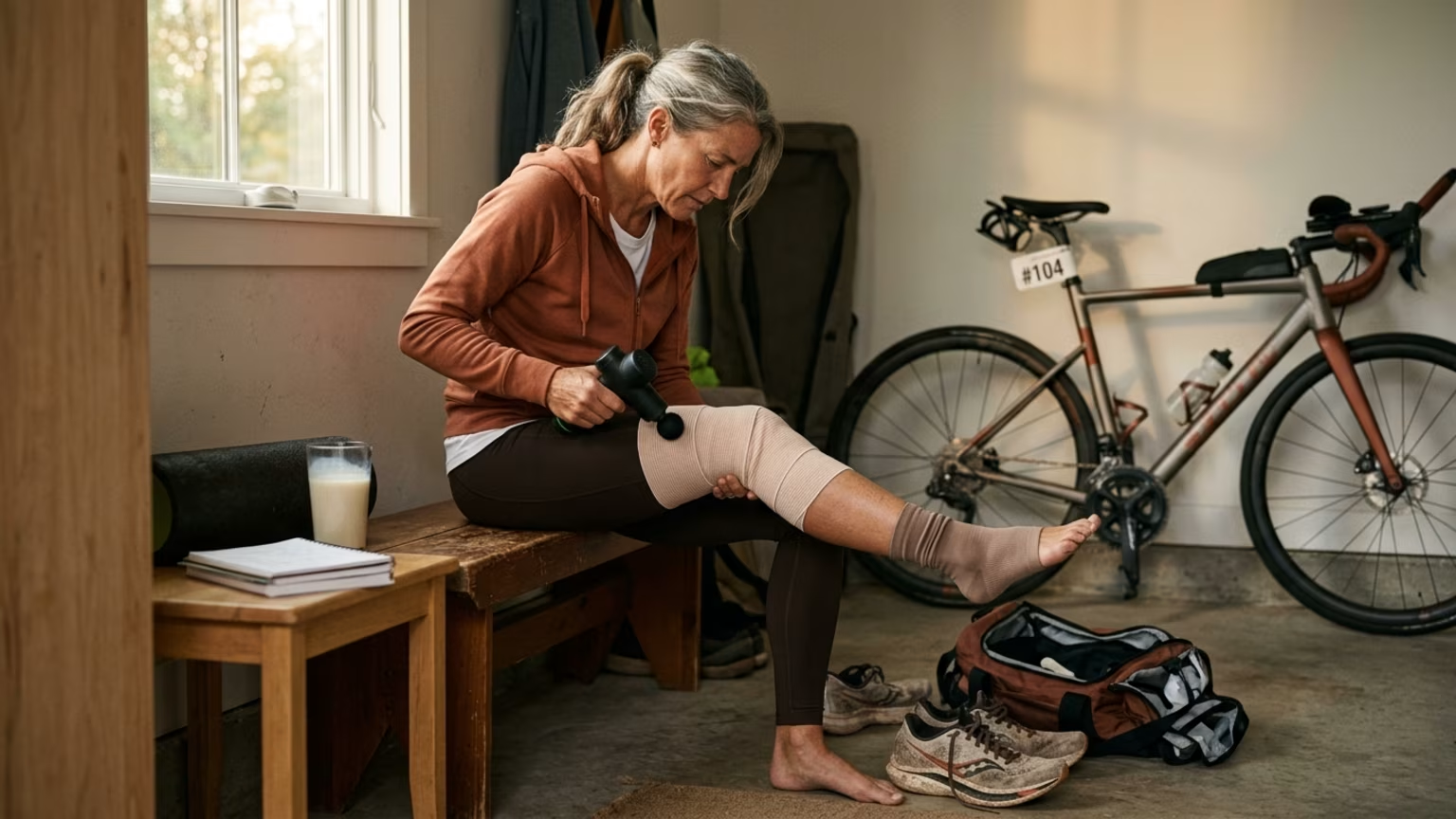

A detailed 15-day recovery report from Swiss Peaks 2026 reveals why deep tissue stiffness and wearable metrics outlast basic muscle soreness after an ultra.





On September 19, 2026, a detailed post-race recovery report from an ultra-distance trail athlete was published. The athlete finished ninth overall and third in their age group at the Swiss Peaks 2026 event. Placing in the top ten overall confirms this was a high-intensity, maximum physical effort. The 2026 SwissPeaks Trail programme ran from August 25 to September 6 and included several varying distances.
For context on the event's severe difficulty, the 100-mile race covered 168 kilometers and 10,990 meters of ascent. Covering massive elevation changes over uneven terrain damages muscle fibers and places extreme stress on tendons. The published account tracked daily biometric data, subjective soreness, and functional performance for 15 days following the race. It highlighted a stark contrast between how the athlete felt initially and what their objective metrics displayed over time.
The primary conclusion of the recovery report is that different biological signals normalize on vastly different timelines after an extreme physical effort. The athlete noted that conventional muscle soreness was nearly gone just two days after the race. However, deep stiffness in the thighs lingered for approximately 10 days. Local symptoms in the lower legs persisted even longer.
Stiffness around the right ankle and tibialis anterior was still slightly present two weeks later. The functional data demonstrates that the absence of basic pain does not equal a return to full physical capacity. When the athlete resumed light weight training on day 10, their pull-up capacity had fallen significantly. They dropped from six repetitions before the race to just two repetitions during this early return phase.
A four-kilometer jog attempted on day 11 felt poorly coordinated, and running simply did not feel normal. Even on day 15, a 50-minute session on an exercise bike left the athlete feeling like their hamstrings were close to cramping. These performance deficits emerged days after the primary muscle soreness had vanished entirely.
Additionally, the athlete reported experiencing an unusually strong appetite immediately after the race. This intense hunger only began to settle by the two-week point. A clear sense of overall recovery was merely beginning to return after 14 complete days. This prolonged timeline proves that structural and nervous system fatigue widely outlasts the obvious aches.
This observational report relies on one unnamed athlete's consistent self-tracking following the mountain event. It is not a controlled clinical study of Swiss Peaks competitors, but rather a practical case study. The athlete used an Oura Ring Gen3 to capture daily sleep scores and monitor their sleep-time minimum resting heart rate.
Before the race, the athlete recorded a sleep-time minimum heart rate of 33 beats per minute. This metric spiked to 48 beats per minute immediately after the event. An increase of 15 beats per minute in a resting state indicates massive nervous system activation. By the two-week mark, the sleeping heart rate had declined to 43 beats per minute.
The athlete's sleep score followed a similar extended trajectory. It fell from a pre-race baseline of 80 down to 59 after the finish. A drop to 59 in a sleep score reflects heavily compromised restorative sleep stages. The score eventually recovered to 72 after two weeks.
These numbers show improvement, but they also show that the athlete had not returned fully to baseline after 14 days. The Oura score is a proprietary device-derived metric. The article does not report the specific algorithm, potential measurement error, or sleep-stage accuracy.
A 2026 scoping review identified 111 studies examining mobile-health applications in sport. These applications monitored training load, physical performance, athlete recovery, and injury risk. The review indicates that digital wearable tracking is an active research area rather than a settled measurement standard.
The available evidence does not establish a validated universal threshold for converting one wearable score into a safe return-to-training decision. Therefore, this individual account serves as a guide for monitoring overall trends rather than a strict medical protocol for every athlete.
Aging endurance athletes often experience a growing gap between when a muscle stops hurting and when it can safely absorb heavy training again. This athlete's experience provides a valuable framework for older competitors navigating the critical weeks after crossing the finish line. It shows why older competitors need structured movement rather than total inactivity to promote proper healing. It also highlights the need to treat normalized daily soreness and wearable metrics as completely separate signals.
Do not rely on one isolated metric to dictate a return to full training volume. A wearable sleep score might improve steadily, but that does not guarantee your connective tissues are prepared for intensity. Athletes must learn how to interpret daily biometrics correctly to avoid resuming intense workouts too early. Track subjective soreness, minimum resting heart rate, perceived energy, and movement quality together.
The Swiss Peaks report clearly demonstrates that these distinct signals will likely recover on completely different timelines. Before trusting any wearable device, remember that consistent sleep habits form the true foundation of tissue repair. Use your wearable data to confirm your subjective feelings rather than letting the device override your physical symptoms.
The near-resolution of muscle soreness should never be treated as proof of neuromuscular recovery. After extreme efforts, plan a conservative 10 to 14-day window before introducing any demanding sessions. Make your first return sessions deliberately easy, brief, and low-impact. The athlete's first four-kilometer jog on day 11 felt highly uncoordinated.
This suggests that the physical ability to complete a short session is not the same as being physiologically ready for normal volume. Maintain conservative training loads while multiple biological signals remain abnormal. If an early workout feels disjointed or excessively difficult, your central nervous system likely needs more uninterrupted recovery time.
Because local stiffness often outlasts generalized soreness, active tissue care remains essential for long-term athletic health. The athlete in the report struggled with ankle and shin tightness long after their quadriceps stopped aching. Integrate gentle range-of-motion routines to address these specific lingering symptoms safely. Avoid aggressive loading of painful tissues, but keep moving gently to support necessary joint health.
Older competitors naturally experience a longer timeline for complete muscular healing, making this targeted mobility work even more critical. Keep dedicated mobility blocks in your schedule for at least two weeks following a major race. If symptoms worsen or fail to improve over time, seek assessment from a qualified sports-medicine professional rather than relying solely on wearable data.
Use low-impact strength checks to evaluate your true systemic recovery status carefully. The reported drop from six pre-race pull-ups to two during the early return phase is highly instructive. It offers a clear, objective signal that systemic fatigue remains high even when standard soreness fades. Find simple movements you can test safely before lacing up your running shoes for a hard workout.
This approach protects vulnerable tendons while giving you honest feedback about your muscular capacity. Simple bodyweight exercises can reveal lingering fatigue that your resting heart rate might not capture. Only return to heavy lifting or intense intervals once these baseline functional checks feel smooth and strong.
Endurance athletes should treat the disappearance of muscle soreness as the start of their post-race recovery monitoring phase rather than the finish line.

Follow ReEndure for practical insights on endurance training, recovery, nutrition and healthy aging. Stay connected for new articles, research led guidance and ideas to help you perform better for longer.




Read practical ideas on endurance training, recovery, nutrition and healthy aging to keep progressing for years to come.
Read the Blog