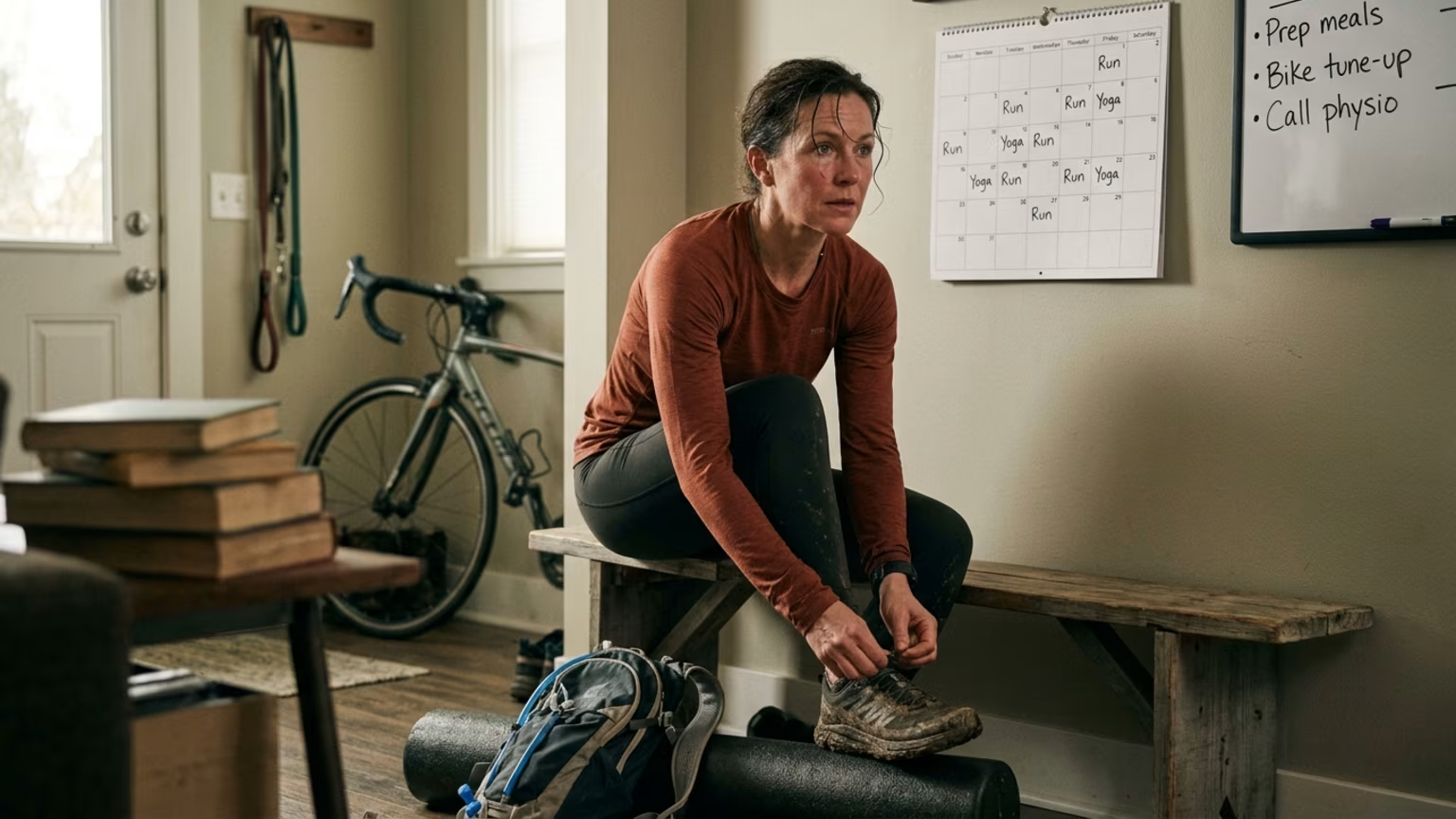

A recent newsletter breaks down how work, family, and poor sleep impact an endurance athlete's total load. Learn how to adjust your weekly training plan.





On September 29, 2026, Feisty Media published an edition of its Feisty Women’s Performance newsletter titled "Your training calendar doesn't show your whole training load." The publication examined the complex interaction between physical workouts and daily life stress. It offered practical guidance on how athletes should manage their schedules. The central premise is that training sessions represent only a single part of an athlete's total load.
The newsletter argues that work, family pressures, deadlines, and poor sleep belong in an athlete's picture of total load. The primary conclusion is that non-training stress impacts recovery just as much as physical exertion. Athletes often judge their fatigue strictly by the intervals or miles they complete. This narrow view ignores the biological toll of professional and personal responsibilities.
Instead of providing a rigid prescription, the publication offers a flexible approach to managing these overlapping demands. It advises athletes to treat biometric data like heart rate variability and sleep scores as context rather than absolute authority. The guidance shifts the focus toward identifying individual stress signals. These signals include fatigue, exhaustion, hyperactivity, and irritability.
The newsletter included a research roundup that touched on fueling, post-swim appetite, and strength training. It reported a 19-watt, or 12 percent, reduction in first ventilatory-threshold power under reduced carbohydrate availability. This specific finding was observed among nine well-trained female cyclists. A separate 32-person study showed greater post-exercise food intake after swimming than after rest.
Additionally, the roundup highlighted a study on midlife female lifters. It noted a larger post-workout increase in small-vessel function among experienced midlife female lifters than among untrained women. The publication described this strength-training study as small and clarified that it did not examine the heart directly. The newsletter page did not identify the underlying papers by title, authors, journal, or date.
This information changes how the ambitious endurance athlete over 35 should plan their week. The physiological cost of a stressful workday competes for the same recovery resources as a hard track session. As athletes age, the margin for error in balancing these stressors narrows significantly. We can no longer pretend that a missed night of sleep will simply vanish with a cup of coffee.
The newsletter quotes an unnamed Olympian on this topic. The athlete stated that if sleep were not something your body naturally did, it would be the most banned substance on the planet. This highlights the critical nature of rest for endurance longevity. We must view our recovery habits with the same discipline we apply to our interval times.
A 2026 FasterSkier article reinforces this concept for older competitors. It discusses recovery and training for masters skiers. The article argues against assuming that short-term training load must continually increase. It describes balancing sufficient training stimulus with the ability to recover and adapt over time.
Feisty Media suggests setting weekly priorities and moving the line between training and other responsibilities as circumstances change. In a week focused on a goal race, workouts might take precedence over other tasks. During a heavy week at the office, work or family can move up while training moves down. This framework helps older athletes audit and adjust an endurance training plan without feeling a sense of failure.
This flexible prioritization is crucial for long term athletic development. Missing a workout to manage a family emergency does not reflect poor discipline. It reflects a realistic understanding of an athlete's total capacity. Adjusting the plan ensures that you can train consistently over the next ten years.
Athletes who stubbornly push through high life stress often face overuse injuries or severe burnout. The shifting priority line allows for periods of maintenance when life demands peak. Once the external stress subsides, the athlete can safely increase their training volume again.
The newsletter recommends using heart rate variability and sleep data as context. It cautions against letting a single score dictate how an athlete feels on a given morning. Biometrics are useful tools for training load management for endurance athletes. However, they should not override common sense or physical sensations.
A low sleep score might simply reflect a restless night rather than deep systemic fatigue. If you feel energetic and ready to train, a single bad metric should not cancel your session. Conversely, a perfect readiness score does not mean you should ignore nagging joint pain. Data provides a baseline for reflection rather than a strict set of rules.
When unusual fatigue persists, the publication suggests reviewing sleep trends. It gives two weeks of fatigue as a practical example of when to look deeper. The article does not specify precise threshold cutoffs for these metrics. This emphasizes that athletes must learn to interpret their own baselines over time.
The publication proposes trying two minutes of movement as a practical self-check before a workout. If the movement helps you feel better, you should continue with the planned session. If the initial movement worsens feelings of irritation, you should consider stopping. This simple test acts as an adaptive training decision tree for busy athletes.
Irritability is a highly accurate indicator of central nervous system fatigue. Many athletes mistake this mood shift for a lack of motivation. The two-minute check separates ordinary laziness from genuine physiological exhaustion. It gives you permission to alter the session based on immediate feedback.
This practitioner style suggestion is not a validated diagnostic test. It is simply a practical tool to help athletes listen to their bodies. Older athletes benefit greatly from this self awareness. It prevents a manageable state of fatigue from becoming a serious overtraining issue.
The newsletter's research roundup specifically highlighted the impact of nutrition on training output. The reported 19-watt reduction in first ventilatory-threshold power shows the tangible cost of reduced carbohydrate availability. A 12 percent drop in power is significant for any competitive cyclist. This underscores the reality that fueling is a major component of an athlete's total stress profile.
When athletes undereat while managing high life stress, their performance suffers rapidly. The body requires adequate energy to manage both physical exertion and cognitive demands. This small study of nine well-trained female cyclists proves that skipping meals directly harms endurance output. Managing your total load means ensuring your nutritional intake matches your daily output.
The study on post-swim appetite also provides valuable context for endurance competitors. Observing greater post-exercise food intake after swimming than after rest in 32 people makes physiological sense. Swimming demands high energy expenditure and thermal regulation in the water. Athletes must account for these specific demands when planning their weekly fueling strategies.
The publication also touched on the benefits of lifting for older athletes. It reported a larger post-workout increase in small-vessel function among experienced midlife female lifters than among untrained women. This highlights the cardiovascular and vascular benefits of resistance training as we age. Stronger muscles and better vessel function contribute directly to overall endurance durability.
Endurance athletes often view strength work as an entirely separate category of effort. However, this physiological adaptation proves that lifting supports the same systems we use for running and cycling. Midlife athletes must factor this resistance work into their weekly total load calculation. The nervous system taxation from heavy lifting requires dedicated recovery time.
While the study was small and did not examine the heart directly, the implications are clear. Building strength improves resilience against the repetitive stress of endurance sports. When you add strength sessions to a busy week, you must monitor your overall fatigue carefully. The priority line may need to shift to accommodate the extra recovery required.
The 2026 FasterSkier article provides an excellent framework for masters athletes managing high life stress. It argues that older athletes must balance training stimulus with recovery over a longer timeline. The traditional seven-day schedule often forces athletes to cram too much work into too little time. This creates an artificial pressure that ignores the reality of external life demands.
A master athlete might need ten days to safely complete a cycle of hard workouts. If a work deadline consumes three days of the week, the athlete should stretch the training cycle. Attempting to make up missed workouts only compounds the existing life stress. This rigid adherence to a calendar is precisely what leads to chronic overuse injuries.
Understanding your total load requires honest self assessment. You must evaluate your sleep quality, your mood, and your physical energy before starting a hard session. If your irritability is high and your sleep is poor, the best training decision is often active recovery. This mature approach separates successful lifelong athletes from those who burn out early.
For athletes between 35 and 65, balancing high ambition with aging realities requires nuance. The assumption that progress requires constant upward momentum is flawed. Recognizing the impact of professional deadlines and family pressures is a requirement for longevity. We must schedule our recovery with the same intention we bring to our long runs.
Training plans are written in a vacuum, but they are executed in the real world. Your body does not differentiate between the stress of a tight work deadline and the stress of a tempo run. It all draws from the same physiological well. By acknowledging total load, athletes can make smarter decisions about when to push and when to rest.
Reendure focuses on translating complex sports science into practical habits for older competitors. Our approach emphasizes realistic adjustments rather than demanding perfection from busy adults. We know that athletes between 35 and 65 face unique challenges that younger competitors do not. A demanding career and family responsibilities require a highly adaptable training mindset.
The guidance from Feisty Media aligns perfectly with our core philosophy on healthy aging. We believe that acknowledging life stress is a competitive advantage for the modern endurance athlete. Ignoring these factors does not make you tougher. It simply increases your risk of forced time off due to injury or illness.
Consistency remains the most important variable for long term performance gains. You achieve consistency by avoiding the deep valleys of exhaustion and overtraining. By treating your biometric data as context and listening to your own stress signals, you stay in the game. This intelligent approach allows you to perform at your best today and keep racing for decades.
Older endurance athletes must evaluate their total weekly load, treat biometric data as flexible context, and freely adjust their training calendar to accommodate the unavoidable physical toll of daily life stress.

Follow ReEndure for practical insights on endurance training, recovery, nutrition and healthy aging. Stay connected for new articles, research led guidance and ideas to help you perform better for longer.






Read practical ideas on endurance training, recovery, nutrition and healthy aging to keep progressing for years to come.
Read the Blog