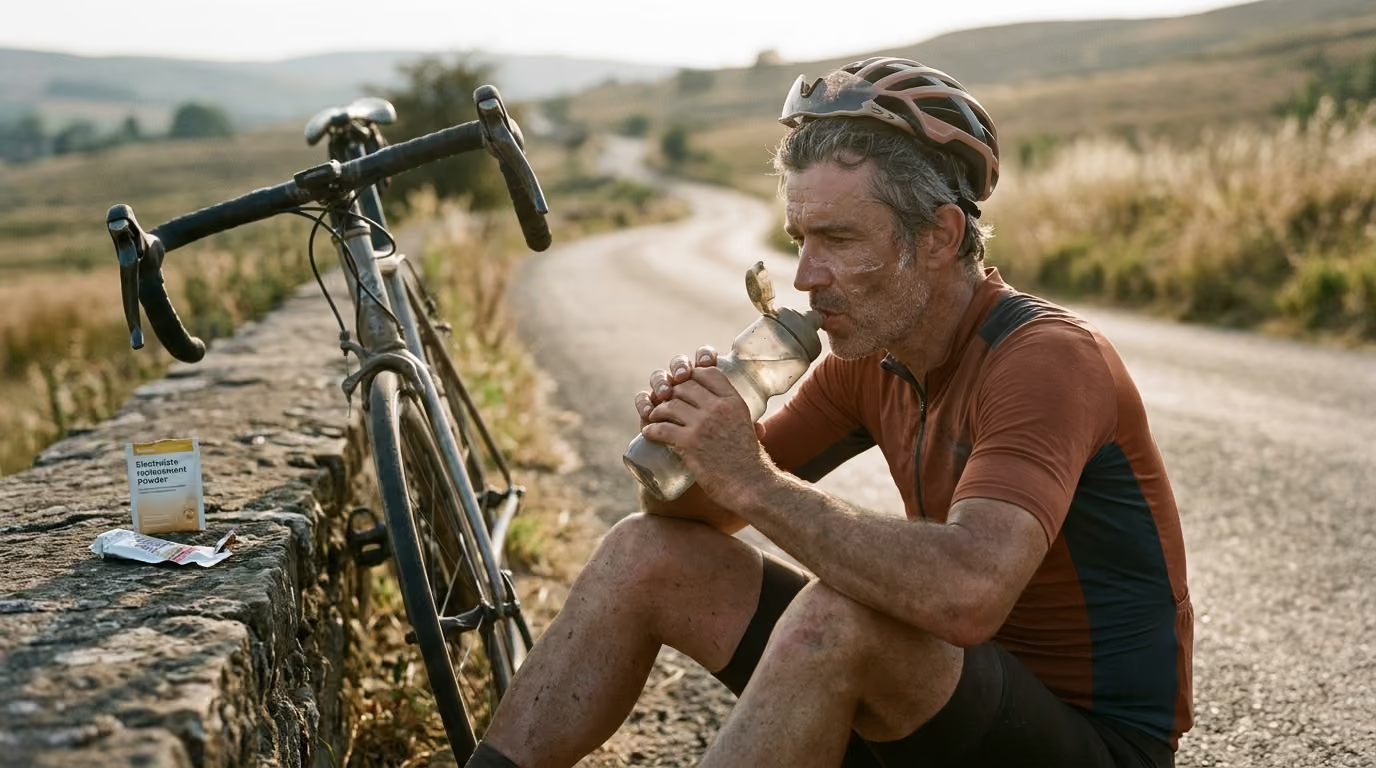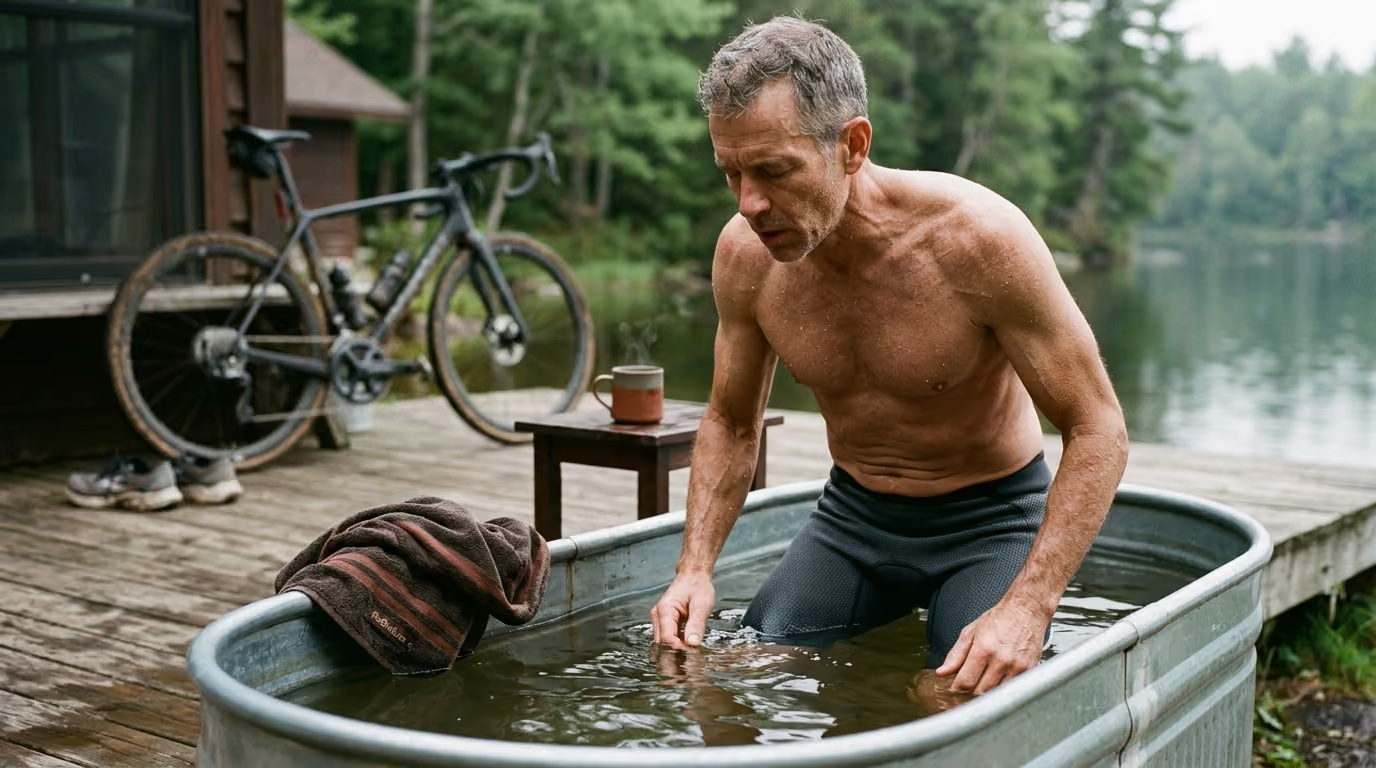

Stepping into an ice bath after an exhausting marathon session helps manage acute muscle soreness when applied with evidence-based temperature protocols.





Does cold water immersion actually speed up endurance recovery, or does it just numb tired legs? Many athletes type this question into search bars after brutal weekend workouts. This guide provides a definitive, science-based breakdown of how cold therapy works, where it fails, and how to use it safely.
You finish a four-hour supported ride or an aggressive marathon pace simulation on Saturday morning. Your quadriceps feel swollen, your calves are tight, and a demanding interval run sits on your calendar for Sunday afternoon. You stand in your kitchen, wondering whether sitting in a tub full of ice will save your legs for tomorrow.
The modern endurance market promotes ice baths as essential tools for daily athletic hygiene. Portable plunge tubs, branded ice barrels, and boutique cryotherapy studios suggest that cold exposure is necessary after every hard effort. The sensation of stepping into icy water is undeniably intense. It creates an immediate sense of discipline, and it leaves your skin numb and tingling.
When you exit the water, your legs often feel lighter, and your deep muscular aches temporarily recede. You might wake up the following morning with noticeably less stiffness when walking down the stairs. However, subjective comfort does not always equal true physiological restoration.
Endurance athletes frequently mistake temporary pain relief for genuine metabolic recovery and tissue repair. You might feel ready to attack a high-intensity workout because your perceived soreness is low, but your underlying muscle fibers, energy systems, and connective tissues may still carry substantial residual fatigue. Understanding what cold water immersion can and cannot do is essential for building an intelligent recovery strategy across your season.
Cold water immersion involves submerging the body, or specific exercised limbs, in water typically kept below 15 degrees Celsius. Water conducts thermal energy away from human skin roughly twenty-four times faster than air at an identical temperature. This rapid heat transfer produces widespread systemic and localized physiological reactions that alter circulation, nerve signaling, and cellular stress.
When you lower your body into a tub of water, the fluid exerts physical force across your submerged tissues. This hydrostatic pressure increases progressively with water depth. The external pressure compresses peripheral veins and interstitial spaces in the lower extremities.
This mechanical compression encourages the displacement of pooled venous blood and interstitial fluid back toward the central circulation. At the same time, the sudden drop in temperature causes profound peripheral vasoconstriction. Smooth muscle cells within cutaneous arterioles and muscular capillary beds contract sharply.
This dual action of vasoconstriction and hydrostatic compression reduces localized swelling, limits fluid leakage into extracellular spaces, and alters blood flow dynamics. When you exit the cold environment, reactive vasodilation occurs, allowing fresh, oxygenated blood to recirculate through the warmed tissues. This shifting blood volume is one reason why immersion produces distinct sensations compared to stationary rest.
The most rapid effect of cold water immersion is the alteration of sensory feedback. As local muscle and subcutaneous tissue temperatures drop, nerve conduction velocity decreases significantly. Both sensory afferent signals and motor neuron transmissions slow down across the cooled peripheral nerves.
This cooling blunts the firing rate of nociceptors, which are the specialized pain receptors that transmit mechanical and chemical distress signals to the brain. By dampening these afferent pain signals, cold water acts as a potent acute analgesic. The brain perceives a sharp reduction in localized muscular throbbing, stiffness, and discomfort.
This numbing mechanism explains why athletes experience immediate relief from delayed-onset muscle soreness. The underlying microtrauma in the sarcomeres remains present, but the sensory pathways communicating that damage are temporarily muted.
Popular fitness culture often asserts that ice baths actively flush out inflammatory chemicals. Sports science paints a much more nuanced picture regarding systemic inflammatory pathways. Exercise-induced muscle damage naturally initiates an immune response, releasing specific cytokines, attracting neutrophils, and mobilizing macrophages to clear cellular debris and facilitate long-term tissue remodeling.
Research indicates that cold water immersion inconsistently alters systemic markers of inflammation such as C-reactive protein, interleukin-6, and tumor necrosis factor-alpha. In studies examining athletes after extreme endurance challenges, including the Kona Ironman World Championship, cold water immersion failed to meaningfully shift circulating inflammatory markers or muscle-damage biomarkers at 24 and 48 hours post-race.
While cold immersion restricts local edema and limits excess capillary permeability immediately after trauma, it does not erase the systemic inflammatory cascade. Some degree of natural inflammatory signaling is vital for initiating training adaptations. Attempting to suppress every post-exercise biological reaction may be both impossible and counterproductive for overall athletic development.
Decades of peer-reviewed sports science provide clear boundaries regarding what cold water immersion accomplishes across different physiological domains. Distinguishing between subjective comfort, blood biomarkers, and functional movement output is essential for interpreting recovery research.
The strongest and most consistent scientific support for cold water immersion centers on subjective recovery metrics. A systematic review and meta-analysis of 52 randomized controlled trials found that cold water immersion significantly reduced delayed-onset muscle soreness 24 hours after strenuous exercise. The same analysis reported meaningful improvements in self-reported feelings of recovery and freshness.
Athletes who soak in cold water consistently report that they feel less stiff, less tired, and more prepared to train again compared to athletes who sit passively. This psychological boost is valuable. If an athlete approaches a demanding session with greater mental confidence and lower perceived discomfort, training execution often improves.
However, subjective readiness can diverge from true physical capacity. A 2026 regional-dose meta-analysis revealed that while cold water immersion reliably lowered subjective soreness, its effect on circulating creatine kinase, an indirect marker of structural muscle damage, was statistically small. Feeling fully recovered does not guarantee that your muscular structures are ready for maximal power production.
When examining objective endurance performance, the benefits of cold water immersion are highly conditional. Cold water is particularly effective when athletes must perform in warm or humid environments, or when successive events take place within a compressed timeframe.
A meta-analysis evaluating physical recovery showed that cold water immersion improved short-term endurance capacity one hour after an initial exhausting bout, primarily when the exercise occurred in high ambient temperatures. Lowering core body temperature and reducing thermal strain allows cardiovascular parameters to normalize rapidly. This provides clear advantages during multi-race weekend regattas, hot stage races, or same-day tournament heats.
In temperate conditions, however, the performance benefits are far less pronounced. A controlled trial evaluated endurance-trained men who performed a twelve-minute immersion at 12 degrees Celsius immediately following an intense interval running session. The cold immersion failed to produce any performance improvement in a 5,000-meter time trial performed 24 hours later compared to passive recovery. If you are training in cool weather and have adequate rest scheduled, cold immersion provides minimal direct improvement for your next-day aerobic pace.
The impact of cold water immersion on muscular strength, sprinting, and power development requires careful attention. Cooling a muscle significantly impairs its contractile speed, rate of force development, and short-term elasticity. Systematic reviews show that sprint speed is consistently impaired one hour after cold immersion, while jump power remains blunted up to six hours later.
For long-term muscular adaptations, regular cold water immersion can be counterproductive. Systematic reviews focusing on post-exercise cooling after resistance training demonstrate that routine cold immersion blunts muscle hypertrophy and type II muscle fiber adaptations. Cold exposure suppresses the intracellular anabolic signaling cascades, such as the mTOR pathway, and reduces the activation of satellite cells needed for muscle fiber remodeling.
For an endurance athlete, maintaining lean muscle mass, tendon stiffness, and absolute force output is vital for running economy and fatigue resistance. If your weekly schedule includes heavy strength training or explosive plyometrics, jumping into an ice bath immediately after the gym can diminish the neuromuscular adaptations you worked hard to stimulate.
To gain the targeted benefits of cold water immersion without interfering with your overall training and performance, you must treat water temperature, duration, and scheduling as precise variables.
The common belief that water must be freezing to be effective is not supported by scientific literature. Extreme cold increases cardiovascular shock without offering additional recovery benefits. Research shows that moderate temperatures are often optimal for reducing soreness and preserving comfort.
A practical, evidence-backed baseline protocol is:
Dose-response analyses suggest that colder water between 5 and 10 degrees Celsius can influence neuromuscular measures, but it carries higher risks of thermal distress. Staying within the 10 to 15 degrees Celsius window provides the analgesic and hydrostatic benefits while keeping physiological stress manageable. Submerging up to the mid-torso optimizes hydrostatic pressure around the lower extremities while avoiding sudden thermal shock to the deep chest and neck.
Strategic timing dictates whether cold water immersion helps or hinders your seasonal goals. You should intentionally separate recovery-focused blocks from adaptation-focused blocks.
Use cold water immersion during these specific scenarios:
Avoid cold water immersion during these scenarios:
If you complete a hard morning run followed by an afternoon lower-body lifting session, keep the cold plunge away from the lifting session. If you choose to use cold water for your running recovery, complete the immersion hours before the strength session, or save the cold exposure exclusively for days dedicated purely to aerobic fatigue management.
How you exit the cold water and rewarm your body directly affects your comfort and safety. Rapid, aggressive heating, such as jumping straight into a scalding hot shower, can cause peripheral blood vessels to dilate abruptly. This sudden drop in peripheral resistance can trigger lightheadedness, dizziness, and sudden drops in blood pressure.
Follow a structured, progressive rewarming procedure:
Allow your internal muscular shivering mechanisms and natural metabolic activity to restore normal tissue temperatures over 20 to 30 minutes before exposing yourself to high external heat sources.
Athletes over the age of 40 face distinct recovery challenges. Age-related changes in connective tissue compliance, muscular repair rates, and cardiovascular mechanics require a thoughtful approach to cold therapy. You can read more about age-related training adjustments in our healthy aging resources.
As blood vessels age, arterial walls naturally lose a degree of their youthful elasticity. This gradual stiffening means that peripheral arterioles may react to sudden cold with a sharper, more sustained spike in systemic vascular resistance.
When a master athlete enters cold water, the sudden peripheral vasoconstriction forces a rapid volume of blood back into the central thoracic cavity. This displacement causes a more pronounced transient rise in systolic and diastolic blood pressure compared to younger runners.
Older athletes should prioritize gradual water entry rather than sudden plunges. Lowering yourself slowly over 30 to 60 seconds gives the cardiovascular system time to balance the shift in central blood volume.
Sarcopenia, the gradual, age-related loss of skeletal muscle mass and strength, is a primary concern for veteran endurance competitors. Older athletes must work harder in the gym to stimulate muscle protein synthesis and maintain functional strength.
Because cold water immersion suppresses anabolic signaling pathways and blunts muscle growth, older athletes must be cautious with post-workout cooling. Using cold tubs after resistance workouts can neutralize the stimulus needed to preserve lean mass.
Masters athletes should avoid cold water immersion after strength-building sessions. Reserve cold therapy strictly for high-mileage running blocks, extreme heat events, or back-to-back racing schedules where joint comfort takes temporary precedence over muscle growth.
Cold water immersion carries real physiological risks that extend beyond simple discomfort. Treating cold therapy as a casual activity without understanding basic aquatic and thermal safety can lead to severe medical emergencies.
The immediate physiological response to entering water below 15 degrees Celsius is the cold shock reflex. This involuntary neurogenic reaction is triggered by the rapid stimulation of cold-sensitive thermoreceptors in the skin.
Cold shock produces an immediate, uncontrollable gasp reflex, followed by profound hyperventilation, a rapid spike in heart rate, and acute hypertension. If your head is submerged or if you enter the water suddenly, this involuntary gasp can cause direct water inhalation into the lungs, creating an immediate drowning hazard.
The cold shock response typically peaks within the first 30 seconds and subsides after two to three minutes. To manage this safely, never dive, jump, or plunge backward into cold water. Enter feet first, keep your head, neck, and hands completely above the surface, and focus consciously on slow, controlled, diaphragmatic breathing until the initial hyperventilation passes.
The combination of intense cold shock and hydrostatic pressure places significant acute demands on the cardiovascular system. The sudden surge in stress hormones, including adrenaline and noradrenaline, causes the heart to beat rapidly against constricted peripheral blood vessels.
In individuals with underlying or undetected cardiovascular conditions, this autonomic conflict can provoke dangerous cardiac arrhythmias, severe chest pain, or hypertensive crises. The British Heart Foundation and the American Heart Association emphasize that cold water exposure presents meaningful risks for anyone with cardiovascular disease, structural heart abnormalities, or irregular heart rhythms.
Athletes with a personal or family history of heart disease, uncontrolled high blood pressure, peripheral artery disease, or fainting episodes should obtain comprehensive medical clearance before attempting cold water immersion. Anyone experiencing Raynaud phenomenon must protect their extremities, as cold exposure can cause severe, painful vasospasms in fingers and toes.
Hypothermia occurs when your core body temperature drops below 35 degrees Celsius (95 degrees Fahrenheit). Because water conducts heat away from the body rapidly, prolonged immersion can cause core temperatures to decline quickly, leading to impaired motor control, muscle weakness, confusion, and loss of consciousness.
Even after you exit the water, your core temperature can continue to decline for several minutes. This phenomenon, known as afterdrop, occurs as cold, stagnant blood from the peripheral limbs returns to the central core once circulation begins to normalize.
To protect yourself from hypothermia and accidental drowning:
Many athletes commit procedural mistakes that waste time, compromise safety, or directly hinder training adaptations. Reviewing these common pitfalls helps you optimize your recovery and mobility routines.
Many athletes treat cold exposure as a contest of mental toughness, assuming that water at 2 degrees Celsius provides twice the benefit of water at 12 degrees Celsius. Scientific analyses do not support this assumption. Excessively frigid water accelerates cardiovascular strain, increases hypothermia risk, and can cause superficial tissue damage without improving soreness markers or functional recovery. A stable range of 10 to 15 degrees Celsius is sufficient to elicit the desired therapeutic responses.
Because cold water numbs sensory nerve endings, athletes frequently mistake the absence of pain for total muscular healing. An athlete who feels completely refreshed after an ice bath may attempt a high-intensity workout with compromised muscle fibers. This can lead to acute muscle strains, tendon irritation, or compensatory biomechanical faults. Always adhere to your structured training plan rather than letting post-immersion numbness dictate your workout volume.
Athletes often ask whether standing under a cold shower provides the same recovery advantages as sitting in a plunge tub. While a cold shower can offer psychological alertness and surface skin cooling, it lacks the hydrostatic pressure provided by water immersion.
A shower does not compress the peripheral limbs, nor does it maintain consistent, uniform thermal heat transfer across large muscle groups. A cold shower remains an invigorating daily habit, but it does not reproduce the physiological effects of full immersion.
The most damaging pitfall is using cold water immersion to compensate for poor sleep, inadequate fueling, and chronic overtraining. An ice bath cannot replace seven to nine hours of quality sleep, sufficient carbohydrate replenishment, adequate daily protein intake, or smart workout periodization.
Cold water immersion is an optional, secondary tool. If your foundational lifestyle habits are disorganized, soaking in cold water will not prevent chronic fatigue or systemic under-recovery.
To determine whether cold water immersion actually benefits your specific training program, you should monitor concrete physiological and performance data rather than relying purely on subjective impressions.
The true test of any recovery modality is the quality of your subsequent training session. Keep an objective training log to compare workouts completed with and without post-exercise cold immersion.
Track these operational variables:
If incorporating cold water immersion after Friday sessions consistently allows you to hit target power outputs during Saturday long rides with lower perceived exertion, the intervention is serving your goals. If your power numbers remain depressed and your legs feel heavy despite the cold bath, the modality is offering little practical value.
Wearable technology and heart rate monitors provide valuable insight into how your autonomic nervous system responds to cold exposure. Cold water immersion initially causes a surge in sympathetic activity, followed by a rebound in parasympathetic tone once the body has successfully rewarmed.
Track these specific biometric markers:
Compare baseline trends across weeks where cold immersion is used versus weeks where passive recovery, gentle active recovery, or mobility work is prioritized. Use our library of endurance resources to explore additional ways to track and interpret your daily training data.
Use this actionable checklist to determine whether and how to apply cold water immersion to your endurance routine this week.

Follow ReEndure for practical insights on endurance training, recovery, nutrition and healthy aging. Stay connected for new articles, research led guidance and ideas to help you perform better for longer.


Read practical ideas on endurance training, recovery, nutrition and healthy aging to keep progressing for years to come.
Read the Blog