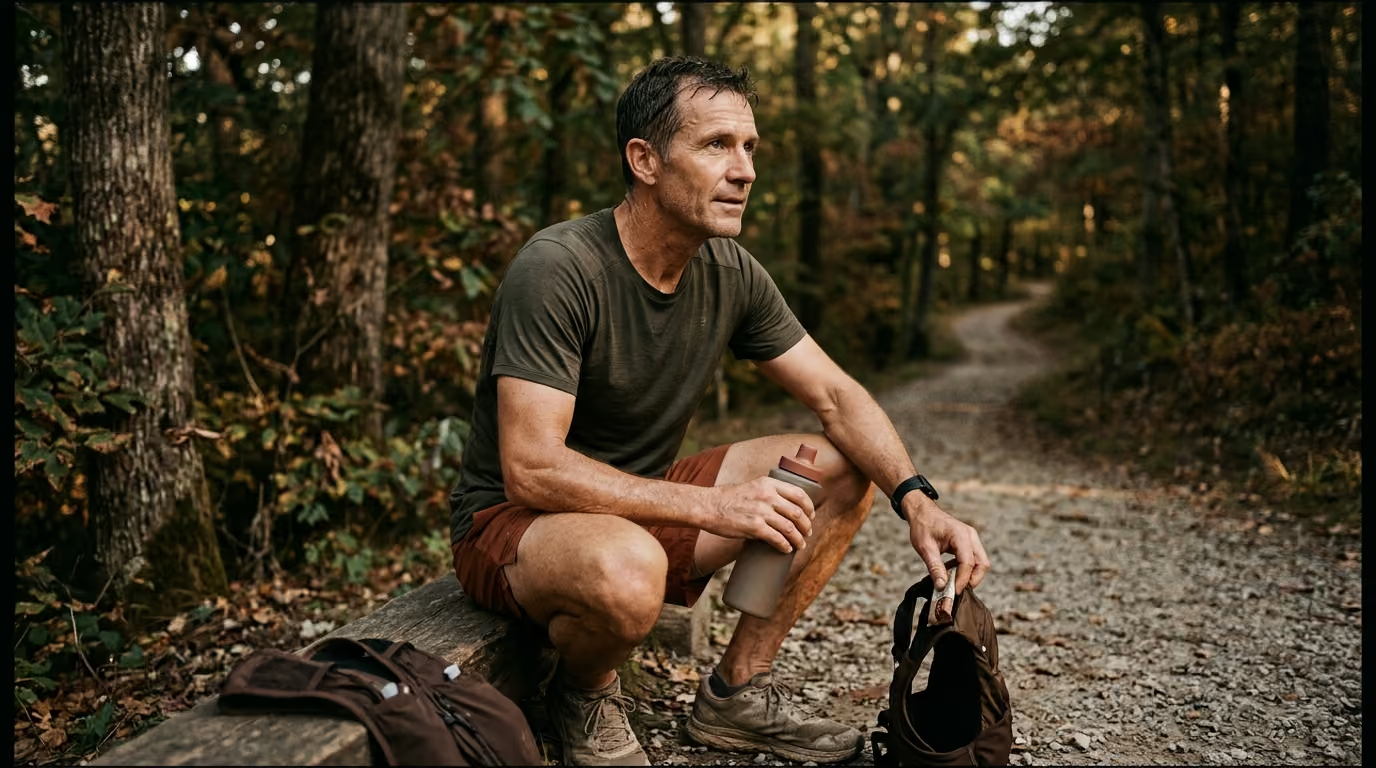

Waking up with sudden congestion right before a peak long run reveals how strategic fueling and sleep protect hard endurance training blocks.





Endurance training does not inherently damage your immune system. For decades, popular fitness culture warned that hard workouts open a dangerous window of biological vulnerability. Modern sports immunology tells a completely different story. Regular, vigorous exercise actually acts as a powerful immune stimulant that improves cellular surveillance and long term tissue defense.
Yet countless athletes still find themselves sick right before their most important events. The breakdown does not occur because exercise is toxic. It occurs because heavy training creates a fragile equilibrium where physiological strain, energy deficits, sleep disruption, and pathogen exposure collide.
Understanding how to navigate this equilibrium is essential for anyone training for marathon, ultramarathon, or triathlon goals. When you understand the true mechanisms of immune regulation, you can build heavy training blocks that stimulate progress without landing you in bed with a respiratory infection.
Consider a familiar scenario that plays out across endurance sports every season. You are twelve weeks into a sixteen-week marathon build. Your long runs feel smooth, your interval pacing is precise, and your target race pace feels sustainable. You are logging sixty miles per week while juggling a full-time career, family commitments, and early morning wake-up calls.
On Thursday morning of your highest-volume week, you wake up with a scratchy throat. You tell yourself it is just dry air or seasonal allergies. By Friday afternoon, nasal congestion sets in, accompanied by generalized lethargy and an elevated resting heart rate.
By Saturday morning, your planned twenty-mile long run is impossible. You are forced to spend the weekend resting on the couch, watching your hard-earned momentum stall. You wonder how you could become so sick when you were physically fitter than ever before.
This frustration is common among ambitious endurance athletes. Fitness and immune resilience are not identical metrics. High aerobic capacity does not grant automatic immunity against circulating pathogens. When training volume reaches its peak, the margin for recovery error shrinks dramatically.
To protect your health during intense training, you must first discard outdated concepts of exercise-induced immune suppression. In the late twentieth century, researchers proposed the classic open-window hypothesis. This theory suggested that strenuous, prolonged exercise caused a temporary collapse in immune function lasting several hours to days. During this presumed window, opportunistic viruses and bacteria were thought to easily enter the body and cause infection.
Modern clinical reviews have thoroughly challenged this simplistic model. The primary evidence historically used to support the open-window theory was a sharp drop in circulating lymphocytes in the bloodstream following hard workouts. Early researchers interpreted this drop as cellular death or systemic immune failure.
Sports scientists now recognize that this post-exercise drop represents rapid cellular redistribution rather than destruction. During a vigorous workout, mechanical stress and adrenaline drive immune cells into the bloodstream. Once the session ends, these lymphocytes leave the blood vessels and travel to peripheral tissues, especially the lungs, gut, and mucosal linings.
This process is known as enhanced immune surveillance. The immune cells migrate directly to the frontline barrier tissues where pathogen entry is most likely. A low white blood cell count in a routine blood draw immediately after exercise simply shows that your defenders have deployed to their duty stations.
Acute exercise also triggers a transient increase in anti-inflammatory cytokines and metabolic stress hormones. These temporary fluctuations are normal adaptive signals that stimulate muscular remodeling and cardiovascular growth. They do not render you immunologically defenseless.
The genuine risk of upper-respiratory tract illness does not stem from a single hard workout. Instead, it arises from cumulative systemic fatigue. When high training volume combines with persistent recovery deficits, mucosal barrier integrity weakens and chronic stress hormones remain elevated. This sustained imbalance, rather than an acute open window, creates vulnerability to clinical illness.
Illness susceptibility in endurance athletes is multifactorial. It cannot be predicted by looking at weekly mileage alone. A practical way to assess your vulnerability is through the five-part immune load model.
Physiological stress encompasses the total external and internal work performed by your body. External load includes mileage, vertical gain, pace, power, and session duration. Internal load reflects heart rate response, blood lactate accumulation, and perceived exertion.
The primary danger zone is not high chronic training volume, but rapid spikes in acute training load. Athletes who maintain a consistent, high chronic training base often show robust immune defenses. In contrast, suddenly doubling your weekend volume or introducing high-intensity intervals without adequate preparation spikes your systemic stress response.
Recovery debt represents the gap between biological stress and tissue repair. This debt accumulates when you string together multiple hard days without restorative easy days. It also compounds when non-training life stressors, such as professional deadlines, family responsibilities, and emotional strain, remain high.
Your central nervous system does not separate physical training strain from psychological stress. Both draw upon the same finite pool of autonomic and endocrine resources. When recovery debt accumulates, your body struggles to maintain mucosal antibody production and systemic homeostasis.
Energy availability is the amount of dietary energy remaining for basic physiological functions after accounting for the energy expended in training. Low energy availability occurs when caloric intake fails to match daily energy expenditure.
When energy availability drops, the body enters a state known as Relative Energy Deficiency in Sport. In this state, the brain downregulates non-essential functions to preserve immediate survival. Reproductive hormones, bone remodeling, metabolic rate, and immune defenses are suppressed. An athlete may consume what looks like a large amount of food, yet still remain in a severe energy deficit relative to their extreme training output.
You cannot contract an infectious illness from cold air, rain, or hard training alone. A clinical infection requires exposure to a viable pathogen, such as a virus or bacterium. Exposure risk escalates during travel, large mass-participation races, crowded expos, and enclosed gym environments.
When you fly to an event, navigate crowded airports, and sleep in dry hotel rooms, your exposure to diverse pathogen strains increases significantly. If this heightened exposure coincides with high training fatigue and travel-induced sleep loss, your odds of developing an upper-respiratory infection rise sharply.
Every athlete possesses a unique biological baseline. Factors such as underlying asthma, allergic rhinitis, airway reactivity, and gastrointestinal sensitivities influence how you respond to training strain.
Mucosal immunity serves as your primary physical barrier. Salivary immunoglobulin A is an antibody protein found in saliva and respiratory mucus that neutralizes viruses before they can penetrate deeper tissues. Athletes with chronic airway inflammation or chronically low salivary immunoglobulin secretion face higher baseline vulnerability during heavy training blocks.
Nutrition is your most powerful tool for preserving immune health during high-volume endurance training. While many athletes search for specialized immune supplements, baseline macronutrient availability provides the actual foundation for immune defense. You can review detailed fueling strategies in our endurance nutrition and fueling resources.
Carbohydrates play an essential role that extends far beyond muscle glycogen replenishment. Prolonged, strenuous exercise without adequate carbohydrate intake leads to falling blood glucose concentrations. When blood glucose drops, your adrenal glands release large surges of cortisol and catecholamines to stimulate hepatic glucose production.
High circulating cortisol suppresses immune cell activity and amplifies post-exercise inflammatory cytokine release. Consuming carbohydrates before and during long workouts stabilizes blood glucose, which blunts excessive cortisol and adrenocorticotropic hormone spikes. This nutritional support helps maintain normal circulating lymphocyte counts and supports neutrophil function after demanding sessions.
For endurance sessions lasting longer than sixty minutes, aim to consume 30 to 60 grams of rapidly digestible carbohydrates per hour. During intense sessions extending past two and a half hours, increasing intake toward 60 to 90 grams per hour provides additional metabolic stability if your digestive system is trained to absorb it.
Daily carbohydrate availability must also scale with training volume. Athletes training more than two hours per day generally require 6 to 10 grams of carbohydrate per kilogram of body weight each day. Restricting carbohydrates while attempting to sustain high mileage creates an environment of elevated chronic stress hormones and depressed mucosal antibody production.
Total caloric balance is equally critical. Low energy availability impairs the production of salivary immunoglobulin A and reduces circulating T-cell populations. Female athletes experiencing menstrual irregularities and male athletes experiencing suppressed morning testosterone should treat these signs as critical indicators of energy deficiency. Ensure that every hard session is followed promptly by a meal containing both carbohydrates and high-quality protein to support cellular repair.
Sleep is the master regulator of both immune competence and tissue restoration. During deep non-rapid eye movement sleep, your body releases growth hormone and prolactin while circulating cortisol reaches its lowest 24-hour concentration. This hormonal environment supports the consolidation of immune memory and promotes the migration of immune cells to lymph nodes.
Athletic consensus research demonstrates that habitual sleep durations of less than seven hours per night significantly increase susceptibility to upper-respiratory infections. During intense training blocks, your sleep requirement often expands beyond your baseline needs to account for accelerated tissue repair.
Many ambitious athletes make the mistake of stealing hours from sleep to fit in high-volume training sessions. Waking up at 4:30 AM for a long run after going to bed at 11:00 PM creates an unsustainable sleep deficit. Over several weeks, this chronic sleep fragmentation impairs cellular immunity and blunts your adaptive response to training.
To protect sleep quality during demanding blocks, establish a consistent sleep opportunity window of eight to nine hours. Maintain a cool, dark, and quiet bedroom environment, ideally keeping ambient temperatures below 68 degrees Fahrenheit. Avoid heavy meals, alcohol, and bright screens within ninety minutes of bedtime.
If your schedule forces an early morning workout that truncates nighttime sleep, integrate a strategic twenty to thirty-minute afternoon nap. Brief daytime naps can reduce systemic cortisol, restore alertness, and supplement total daily sleep duration. When persistent insomnia, morning fatigue, or frequent nighttime awakenings occur, treat them as indicators of autonomic overload rather than isolated sleep issues. You can explore structured recovery protocols in our comprehensive recovery and mobility guides.
High fitness levels do not shield you from viral particles circulating in a crowded environment. Large athletic events concentrate thousands of international travelers into tightly packed spaces, creating an ideal setting for pathogen transmission.
Research on marathon runners has revealed a striking pattern. In a large study of over 2,300 endurance runners, 13.0 percent of participants reported respiratory illness in the week following the Los Angeles Marathon, compared to only 2.2 percent of similarly trained control runners who did not race. This dramatic increase in post-race illness stems from the combination of maximal physical exertion, acute muscle damage, travel exhaustion, and intense crowd exposure.
Protecting yourself requires proactive behavioral hygiene, especially during the final two weeks of race taper and the immediate week following competition:
The immediate post-race period requires dedicated management. As soon as you cross the finish line, prioritize dry clothing, immediate fluid replacement, and a balanced meal containing carbohydrates and protein. Treat the days immediately following a key race as a recovery phase focused on sleep, gentle movement, and strict hygiene rather than celebrating with late nights and poor nutrition.
As endurance athletes advance through their masters years, the immune system undergoes subtle, natural changes known as immunosenescence. The thymus gland gradually reduces its production of naive T-cells, and the mucosal lining of the respiratory tract can become slightly more susceptible to environmental dryness and irritation. You can read more about age-specific training adaptations in our healthy aging endurance performance resources.
For athletes over forty and fifty, recovery kinetics change. While aerobic capacity can remain remarkably high, the time required to clear systemic inflammation and restore muscle glycogen often lengthens. When masters athletes attempt to follow the high-frequency training schedules of their twenties, chronic recovery debt accumulates more rapidly.
When my Achilles flared up right before a major marathon build, the standard advice was total rest. But diving into the clinical research on tendon loading changed my approach entirely. I swapped complete rest for heavy slow resistance training, specifically utilizing heavy calf raises on a deficit. It felt counterintuitive to load an injured tendon, but the science was clear. Within six weeks, the morning stiffness faded, and I was back to building mileage without the chronic ache.
In our experience at ReEndure, the exact same counterintuitive logic applies to masters immune health. When fatigue mounts, athletes assume they need aggressive detoxes or passive rest. In reality, the solution lies in intelligent, structured loading paired with disciplined recovery.
Masters athletes must pay meticulous attention to daily protein distribution. Aim for 1.6 to 2.0 grams of protein per kilogram of body weight each day, distributed evenly across four or five feeding opportunities. This supports both muscle protein synthesis and the continuous production of immune proteins and antibodies.
Hydration and airway care also require closer attention with age. Cold, dry winter air dries out the mucosal lining of the upper airways, diminishing the effectiveness of cilia in sweeping away trapped viruses. Masters runners training in cold climates should consider wearing a light buff or mask over the mouth to warm and humidify inspired air.
Athletes often adopt counterproductive habits in their attempts to stay healthy. Recognizing these common errors will save you from unnecessary interruptions in your training plan.
A widespread mistake is consuming massive doses of vitamin C, zinc, echinacea, or commercial immune gummies while failing to meet basic daily caloric and carbohydrate needs. Sports science reviews consistently show that isolated megadoses of vitamins do not prevent upper-respiratory tract infections in well-nourished athletes.
In fact, excessive antioxidant supplementation can interfere with the natural cellular signaling required for mitochondrial adaptation. Supplements cannot compensate for a 500-calorie daily deficit or six hours of broken sleep. Focus your resources on real food, sufficient carbohydrates, and consistent sleep before turning to the supplement aisle.
For decades, coaches have repeated the traditional neck check heuristic. This rule suggests that if symptoms are located above the neck, such as a mild runny nose or sneezing, it is safe to proceed with normal training. If symptoms are below the neck, such as chest congestion, coughing, or body aches, the athlete should rest.
While useful as a broad starting point, the neck check is overly simplistic. A localized sore throat or nasal drip accompanied by profound systemic fatigue, elevated resting heart rate, or loss of appetite signals systemic viral involvement. Blindly executing a hard interval workout simply because you do not have a chest cough can turn a mild two-day viral illness into a multi-week fatigue state.
With the rise of commercial testing, some athletes constantly measure salivary immunoglobulin A, cortisol levels, or white blood cell counts. They panic and cancel workouts over minor fluctuations in laboratory values.
A single depressed salivary IgA result or elevated cortisol reading does not mean you will develop an infection. Biological markers fluctuate based on hydration, time of day, menstrual cycle phase, and psychological stress. Making erratic changes to your training based on single data points creates unnecessary anxiety. Track long-term trends and prioritize real-world physical symptoms over isolated laboratory metrics.
Endurance athletes are conditioned to embrace discomfort and push through fatigue. However, training through systemic viral infections is biologically counterproductive. Exercise during an active fever or systemic infection accelerates muscle protein breakdown, impairs cardiac recovery, and dramatically increases the risk of post-viral fatigue syndromes.
Cardiovascular fitness does not disappear over four or five days of rest. Pushing through an active fever will cost you weeks of lost training downstream, whereas resting immediately often limits the interruption to a few days.
Managing immune health requires a systematic framework for monitoring daily fatigue and responding to emerging symptoms. Using structured tracking tools allows you to make calm, objective decisions before an illness derails your training. You can implement these frameworks within our structured training and performance plans.
Establish a simple morning check-in that tracks three primary domains:
When symptoms appear, use the following progressive triage decision tree:
If you have an active fever (body temperature above 100.4 degrees Fahrenheit or 38 degrees Celsius), generalized muscle aches, chills, chest pain, palpitations, or shortness of breath at rest, stop all exercise immediately. These are absolute contraindications to training. Rest completely, stay hydrated, and consult a medical professional if cardiac or severe respiratory symptoms exist.
If symptoms are strictly localized to the upper airways, such as a mild runny nose or slight sinus fullness, and you have no fever or body aches, perform a gentle 15-minute low-intensity test. Keep your heart rate well below your aerobic threshold. If you feel comfortable, you may complete thirty to forty-five minutes of light aerobic spinning or walking. If you feel dizzy, exhausted, or congested in your chest, stop the session immediately and return to rest.
Once systemic symptoms completely resolve and you are free of fever for at least twenty-four hours without fever-reducing medications, follow this progressive return-to-sport pathway. Advance to the next stage only if you remain completely symptom-free during and after each step.
If symptoms reappear at any stage, drop back to the previous stage for at least twenty-four hours before attempting to progress again.
Staying healthy during demanding endurance training is not a matter of luck or aggressive supplement stacks, but the direct result of respecting your body's total biological capacity.

Follow ReEndure for practical insights on endurance training, recovery, nutrition and healthy aging. Stay connected for new articles, research led guidance and ideas to help you perform better for longer.


Read practical ideas on endurance training, recovery, nutrition and healthy aging to keep progressing for years to come.
Read the Blog