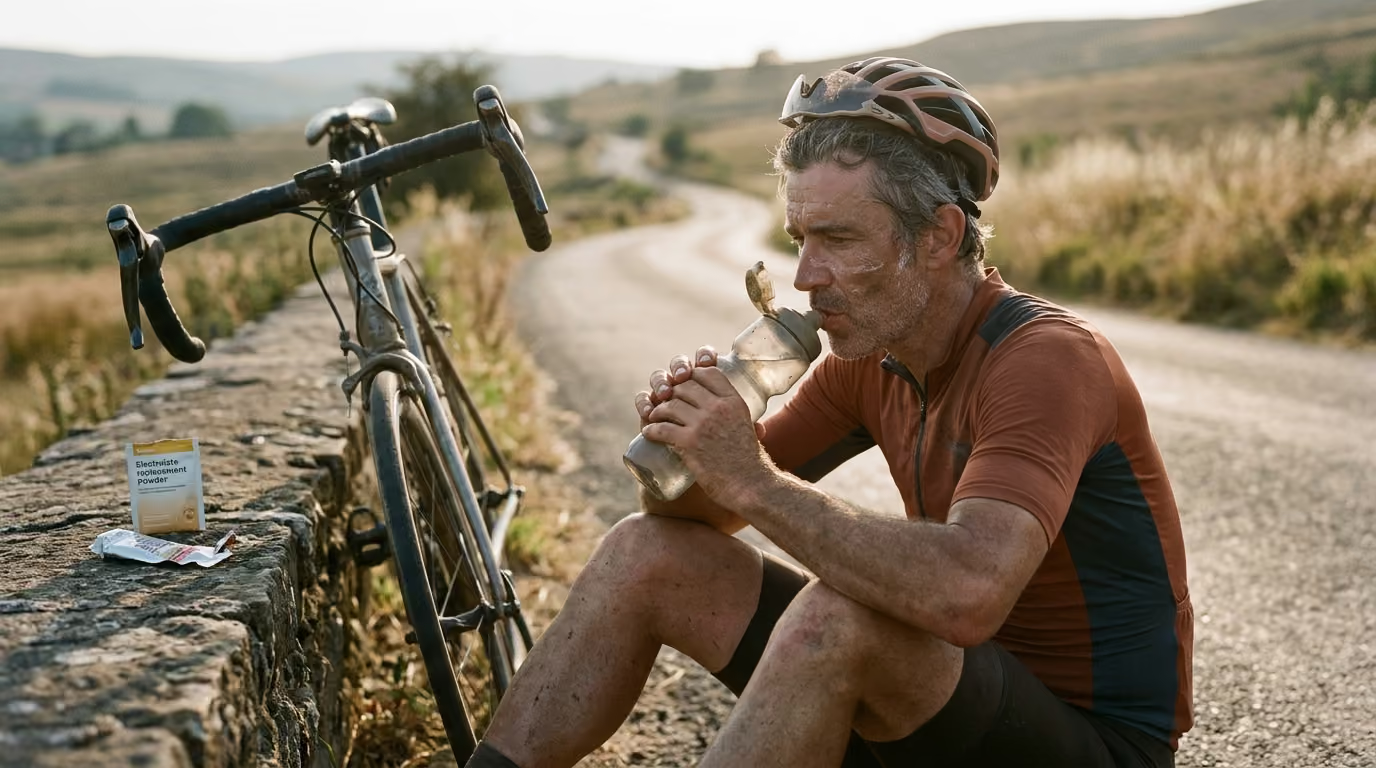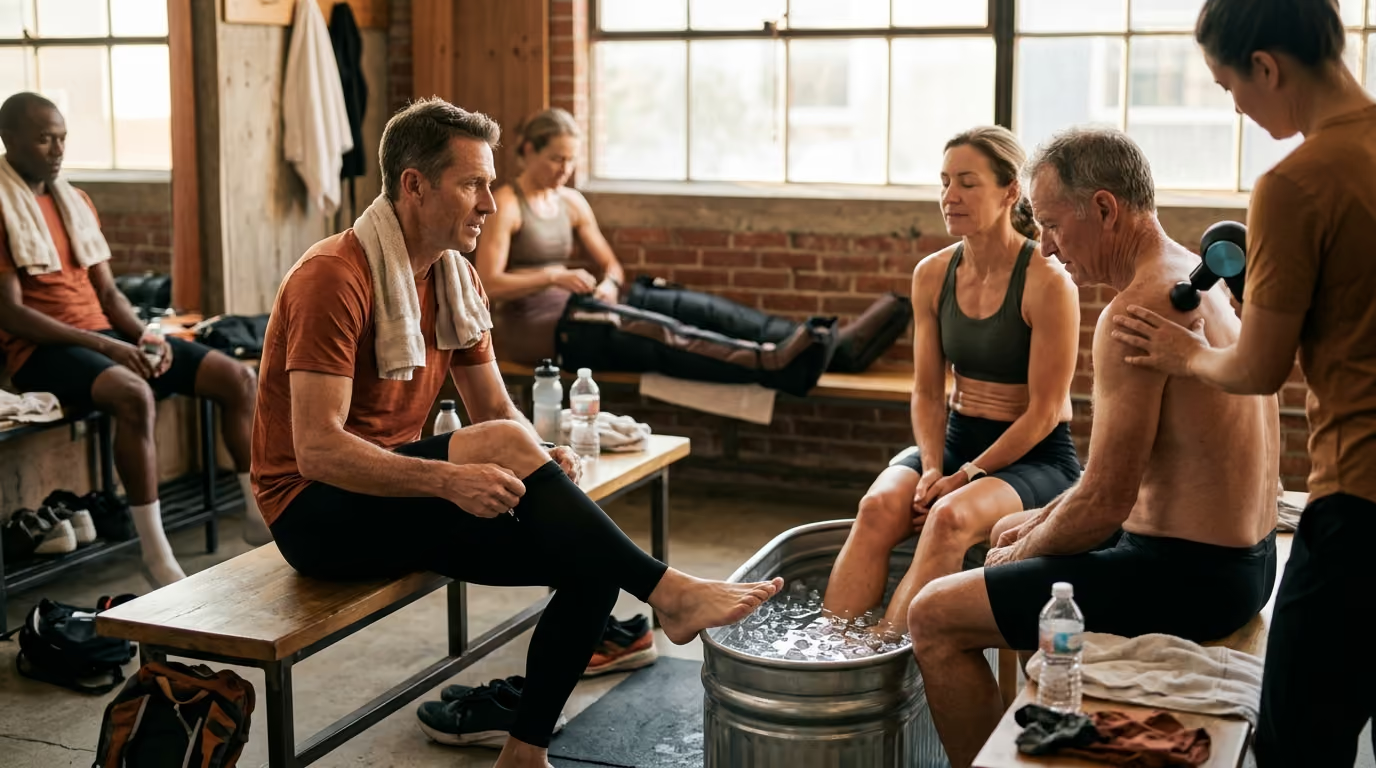

Sore legs after a brutal weekend training block require targeted recovery methods instead of guesswork to restore performance.





Spending sixty minutes rotating through ice tubs, sauna sessions, and compression sleeves can often leave you less prepared for tomorrow than taking a simple nap. Many athletes invest tremendous energy into post-workout tools while misunderstanding what these tools actually do. They assume that eliminating muscle soreness is the same thing as repairing muscle tissue. In reality, numbing your pain receptors is not the same as biological adaptation.
Consider a familiar Sunday afternoon scenario. You complete a grueling three-hour long run or a heavy tempo ride. Your legs throb with fatigue, and your calendar shows another demanding workout in forty-eight hours. Eager to speed up your readiness, you plunge into fifty-degree water, spend thirty minutes sweating in an infrared sauna, and spend another hour zipped into pneumatic compression boots. You feel temporarily refreshed and lighter on your feet. Yet, two days later, your legs feel surprisingly flat, your power numbers lag, and your deep muscular fatigue remains unresolved.
This disconnect happens because passive recovery tools manage immediate symptoms rather than underlying physiology. When used correctly, targeted modalities can reduce perceived soreness, restore joint range of motion, and help you handle multi-day competitions. When used incorrectly, they can add unnecessary physiological stress or even blunt the muscular gains you worked hard to stimulate.
Understanding how each modality works allows you to make informed decisions for your training block. You can browse our dedicated recovery resources to see how these techniques fit into a comprehensive training year. To build an effective routine, you must first separate the sensation of feeling recovered from the biological reality of cellular repair.
Athletes often treat recovery as a single, uniform process. In sports science, recovery is multidimensional and consists of several distinct physiological systems repairing at different rates. Treating recovery as a single variable leads athletes to choose the wrong tool for their specific fatigue.
The first dimension is perceived recovery, which reflects how ready and energized an athlete feels mentally. The second is delayed-onset muscle soreness, which stems from micro-tears in muscle fibers and local inflammatory responses. The third is neuromuscular performance, which measures the ability of the nervous system to recruit muscle fibers for maximal force and power. The fourth is metabolic recovery, which involves replenishing depleted muscle glycogen and restoring cellular energy stores.
The remaining dimensions focus on long-term structural and systemic health. Tissue recovery involves the physical remodeling of damaged structural proteins and collagen within muscles and tendons. Autonomic recovery reflects the return of resting heart rate and heart rate variability to baseline levels. Sleep recovery involves achieving sufficient slow-wave and rapid eye movement stages to support hormonal balance. Finally, training adaptation represents the actual structural improvements, such as mitochondrial density and muscle hypertrophy, stimulated by exercise.
A modality can improve one dimension while leaving another completely unchanged. Cold immersion can reduce muscle soreness and lower subjective fatigue, yet leave neuromuscular power impaired for hours. Similarly, reducing systemic markers like creatine kinase does not prove that a muscle fiber has fully rebuilt its contractile proteins. To optimize your routine, you must always evaluate whether an intervention restores immediate function or supports long-term athletic adaptation.
Cold-water immersion involves submerging the body in water typically maintained between 10 and 15 degrees Celsius for roughly ten to twenty minutes. Whole-body cryotherapy uses chambers cooled by liquid nitrogen or refrigerated air to expose the skin to sub-zero temperatures for two to four minutes. The physiological goal of cold exposure is rapid tissue cooling, vasoconstriction, and the reduction of localized metabolic activity.
The primary evidence-supported benefit of cold-water immersion is the reduction of acute muscle soreness and perceived fatigue. A systematic review published in the Journal of Applied Physiology evaluated 28 studies and found that cold-water immersion consistently outperformed passive rest for reducing delayed-onset muscle soreness. It alters sensory nerve conduction velocity, which acts as a mild local anesthetic and dulls pain perception.
Cold exposure also aids short-term recovery under specific environmental conditions. A systematic review in Sports Medicine analyzed 68 studies and reported that cold-water immersion improved endurance performance measured one hour after an initial exhausting bout. This benefit was particularly pronounced when the exercise took place in hot, humid environments where lowering core body temperature was the primary physiological hurdle.
The same analysis found that cold-water immersion supported the recovery of jumping performance at 24 and 96 hours post-exercise. It also aided muscular strength recovery at 24 hours in selected athletic settings. When you need to back up a hard performance within a short window, cold exposure can effectively restore short-term functional capacity.
Despite its ability to reduce soreness, routine cold-water immersion carries a significant downside for strength and muscular growth. Hypertrophy and strength gains rely on the post-exercise inflammatory cascade to signal muscle protein synthesis and activate satellite cells. Applying cold water immediately after lifting suppresses this critical adaptive signal.
A meta-analysis published in the European Journal of Sport Science confirmed that regular post-exercise cold immersion blunts long-term muscular strength gains, displaying a small but statistically significant negative effect size of minus 0.23. Further clinical research shows that post-exercise cooling directly suppresses muscle fiber hypertrophy by impairing the anabolic signaling pathways that regulate protein creation.
While cold exposure helps you feel better tomorrow, using it after every gym session reduces the long-term return on your hard work. Endurance adaptations like mitochondrial biogenesis appear less sensitive to this blunting effect than muscular hypertrophy. However, cold exposure still should not be viewed as a mandatory post-workout habit during regular base training phases.
To apply cold exposure intelligently, match the timing to your immediate competitive priorities:
Heat modalities include dry Finnish saunas, infrared cabins, hot-water immersion tubs, and localized heating pads. Unlike cold, which constricts blood vessels, heat causes systemic vasodilation, increases heart rate, and promotes blood flow to peripheral tissues. Heat can be applied locally to target specific stiff joints or systemically across the entire body.
The clinical evidence supporting post-exercise heat as a direct tool for muscular repair remains mixed. A systematic review examining acute post-exercise whole-body heating found substantial inconsistency across trials. Some investigations demonstrated slight benefits in muscle relaxation, several showed no measurable impact on performance recovery, and select studies showed lingering fatigue from excessive heat stress.
A comprehensive review of hydrotherapy protocols similarly showed that hot-water immersion does not consistently lower delayed-onset muscle soreness compared to passive rest. Raising muscle temperature does not automatically speed up the cellular reconstruction of damaged myofibrils. Heat should not be viewed as a reliable shortcut for repairing physical muscle damage caused by heavy eccentric loading.
Where heat therapy excels is in supporting autonomic balance and nocturnal sleep quality. A review published in the International Journal of Sports Medicine demonstrated that evening hot-water immersion reliably improves sleep continuity and perceived sleep quality.
Soaking in a hot tub or taking a warm bath roughly ninety minutes before bed raises core body temperature. When you exit the water, your body rapidly radiates heat through dilated blood vessels in your hands and feet. This rapid drop in core temperature mimics the natural circadian signal for sleep onset, helping you fall asleep faster and reach deeper sleep stages. Because slow-wave sleep is when the body releases the majority of its natural growth hormone, evening heat exposure serves as a powerful indirect recovery habit.
Heat adds thermal and cardiovascular strain to an already tired body. When utilizing saunas or hot baths, manage the exposure carefully:
Contrast water therapy involves alternating between submersion in cold water and hot water over several cycles. A standard session consists of one to two minutes in cold water followed by two to four minutes in warm water, repeated for three to six rounds. The historical theory claimed that alternating temperatures acts as a vascular pump, alternating between vasoconstriction and vasodilation to flush metabolic waste from tired limbs.
Sports physiology research has largely retired the mechanical vascular pump hypothesis. Lactic acid and metabolic byproducts clear naturally via the bloodstream within an hour after exercise, regardless of water exposure. Contrast therapy does not physically squeeze toxins out of muscle compartments.
However, contrast therapy remains effective for managing perceived soreness. A meta-analysis of 13 studies found that contrast water therapy produced significantly greater improvements in muscle soreness than passive rest. These benefits were observed within six hours of exercise and lasted up to 96 hours post-workout.
A comprehensive physiology review noted that while contrast therapy reliably reduces soreness, its objective effects on muscle damage markers, systemic inflammation, and rapid strength recovery are modest. Contrast therapy acts primarily on the central nervous system by altering sensory input, distracting the brain from pain, and promoting systemic relaxation.
Contrast therapy is a comfortable, low-stress alternative to purely freezing ice baths:
Compression therapy uses graded elastic fabrics or sequential pneumatic chambers to apply external pressure to the limbs. Graduated compression socks, tights, and calf sleeves apply continuous mechanical pressure, with the highest compression at the ankle and decreasing pressure up the leg. Pneumatic compression boots use motorized air pumps to inflate and deflate overlapping chambers sequentially from the feet upward.
Static compression garments possess some of the strongest objective evidence among non-invasive recovery tools. A systematic review and meta-analysis published in the British Journal of Sports Medicine evaluated the effects of compression garments worn after exercise-induced muscle damage. The pooled results showed statistically significant, moderate benefits across several major markers:
A broader review in the International Journal of Sports Physiology and Performance confirmed that compression garments consistently reduce perceived muscle tightness while supporting peripheral venous return and resting arterial blood flow. The external mechanical pressure reduces the space available for intramuscular swelling and edema, which helps limit post-exercise stiffness.
Pneumatic boots have surged in popularity, but the scientific literature does not show clear superiority over inexpensive compression socks. Narrative reviews place pneumatic compression sleeves in a category with lower and more variable evidence than static garments.
Pneumatic boots offer a relaxing, enjoyable experience that encourages athletes to sit quietly and rest their legs. That forced stillness is genuinely valuable for busy adults. However, you should not assume that a thousand-dollar pneumatic machine provides a dramatically different biological repair signal than a well-fitted pair of thirty-dollar compression socks.
Manual therapies apply mechanical pressure, shear forces, and vibration to soft tissues. Athletes have used hands-on massage, foam rollers, and massage guns for decades to loosen tight muscles and speed up post-workout recovery. Examining the exact physiological impact of these techniques helps set realistic expectations for their use.
Massage is one of the most effective tools for reducing subjective fatigue and delayed-onset muscle soreness. A large meta-analysis published in Frontiers in Physiology evaluated various recovery techniques and identified sports massage as the single most effective method for reducing perceived DOMS and perceived fatigue.
However, massage does not automatically speed up the recovery of structural work capacity. A systematic review examining endurance athletes found that while cryotherapy and compression garments accelerated functional performance recovery, sports massage showed no statistically significant effect on reducing the time required to regain baseline endurance power. Massage changes central pain perception, lowers systemic cortisol, and enhances feelings of well-being, but it does not physically rebuild micro-torn muscle fibers.
Foam rolling uses your own body weight to roll over a dense foam cylinder. A comprehensive meta-analysis in Sports Medicine demonstrated that foam rolling produces a large, reliable increase in acute joint range of motion, with a pooled effect size of 0.76. Importantly, this mobility improvement occurs without causing the temporary reductions in muscle strength and power output often seen with prolonged static stretching.
Research shows that an acute dose of 90 to 120 seconds of rolling per muscle group effectively increases local pressure-to-pain thresholds and eases muscle tightness. The mechanism is neurological rather than structural. Rolling does not physically smash scar tissue or break up stubborn adhesions. Instead, it stimulates mechanical receptors in the skin, fascia, and muscle tissue, which signals the central nervous system to reduce resting muscle tone and down-regulate local pain sensitivity.
Percussive massage guns deliver rapid, pulsating pressure deep into muscle tissue. A systematic review on vibration foam rolling and percussive devices found potential benefits for raising pressure-pain thresholds and improving acute range of motion. However, broader reviews classify percussive massage guns as having lower-quality evidence compared to standard foam rolling and manual massage.
Percussive tools are portable, convenient, and excellent for quick pre-workout warm-ups. They help stimulate blood flow and provide rapid pain relief to tight areas. You can incorporate them into your routine by visiting our recovery and mobility guides, but keep in mind that they do not replace foundational movement and tissue preparation.
Relying entirely on passive soft-tissue treatments can sometimes distract athletes from the active loading required to fix stubborn connective tissue issues. When my Achilles flared up right before a major marathon build, the standard advice was total rest and aggressive massage. But diving into the clinical research on tendon loading changed our team's approach entirely.
I swapped complete rest for heavy slow resistance training, specifically utilizing heavy calf raises on a deficit. It felt counterintuitive to load an injured tendon, but the science was clear. Within six weeks, the morning stiffness faded, and I was back to building mileage without the chronic ache. Passive rubbing can reduce pain temporarily, but structural remodeling in connective tissues requires progressive, mechanical load.
High-tech recovery gadgets dominate social media, but low-cost biological fundamentals drive virtually all meaningful athletic adaptation. Active recovery and quality sleep form the foundation of athletic longevity, while external modalities serve as minor adjustments on top.
Active recovery involves performing low-intensity exercise, such as easy cycling, light swimming, or gentle walking, below 55 percent of your maximum heart rate. Active recovery increases systemic cardiac output and capillary blood flow without creating additional cellular muscle damage.
This gentle increase in circulation delivers fresh oxygenated blood to recovering tissues and assists the lymphatic system in clearing accumulated inflammatory fluid. Unlike aggressive cooling or mechanical compression, active recovery maintains healthy neuromuscular signaling and helps ease joint stiffness naturally. An easy 20-minute spin on an indoor bike often provides superior active readiness for tomorrow compared to sitting completely stationary in a pair of compression boots.
No recovery gadget can compensate for chronic sleep deprivation or inadequate caloric intake. A comprehensive review of athlete sleep architecture published in the International Journal of Sports Physiology and Performance notes that adult athletes require seven to nine hours of high-quality sleep nightly, with heavy training blocks frequently demanding more.
Research tracking athletic injuries found that athletes who consistently slept fewer than eight hours per night faced a 1.7 times higher risk of sustaining an injury compared to those who slept eight hours or more. During non-rapid eye movement slow-wave sleep, the pituitary gland releases human growth hormone, which drives tissue protein synthesis, cellular repair, and immune system restoration.
Similarly, muscles cannot repair without adequate dietary amino acids and carbohydrates to restore spent glycogen. If you skip post-workout nutrition and sleep only six hours, using cold plunges and massage guns will not prevent systemic overreaching. You can study structured approaches to athletic progression in our training performance resources, which emphasize prioritizing recovery habits before adding supplementary training volume.
Athletes over the age of forty and fifty face distinct physiological shifts that alter how they respond to both training stress and recovery modalities. As we age, systemic muscle protein synthesis rates decline, tendon cross-sectional compliance drops, and capillary density in skeletal muscle slightly diminishes. These biological changes require older endurance athletes to apply recovery tools thoughtfully.
Masters athletes must be particularly cautious with routine post-exercise cold immersion. Because older muscle tissue experiences a slower anabolic response following resistance training, regular cold immersion can further suppress muscle protein synthesis. Preserving lean muscle mass and structural strength is essential for lifelong athletic performance. Masters athletes should reserve cold exposure for rare situations, such as extreme heat management or acute competition turnarounds, rather than making it a daily habit.
In contrast, heat therapy and foam rolling provide elevated benefits for the aging athlete. Tendons and joint capsules lose water content and viscoelasticity with age, leading to pronounced morning stiffness and reduced dynamic range of motion. Utilizing evening warm baths or targeted heat pads improves tissue extensibility, eases joint discomfort, and supports restorative sleep.
You can read more about age-specific training adjustments in our healthy aging resources. Masters runners, cyclists, and swimmers should prioritize warm-up mobility, evening heat, compression socks, and dedicated protein intake over aggressive cooling modalities.
Athletes frequently waste time, money, and energy by falling into predictable traps with recovery gadgets. Recognizing these common errors ensures that your post-workout routine supports your actual physiological needs.
The most widespread error in endurance sports is assuming that an absence of muscle soreness means your body is fully recovered. Cold immersion, contrast therapy, and massage can effectively numb pain receptors and lower subjective perception of fatigue. However, the micro-tears in your muscle fibers, depleted glycogen stores, and central nervous system fatigue may still require another 24 to 48 hours to resolve. Pushing through a hard interval workout simply because an ice bath eliminated your soreness is a fast path to overtraining.
More is not better when it comes to thermal stress. Some athletes sit in near-freezing water for thirty minutes, believing it multiplies the healing effect. Clinical reviews show that medium immersion durations of 10 to 15 minutes at 11 to 15 degrees Celsius produce the most favorable outcomes, while excessively long exposures cause peripheral shivering, severe sympathetic stress, and prolonged muscle stiffness.
Foam rollers, massage guns, ice baths, and compression garments are designed to manage normal exercise-induced muscle fatigue in healthy tissue. They are not medical treatments for structural pathology. If you have sharp, focal tendon pain, localized joint swelling, bone tenderness, or neurological numbness, do not attempt to roll or freeze it away. Review our injury prevention guides and consult a qualified sports medicine physician or physical therapist for an accurate clinical diagnosis.
Waking up forty-five minutes early to foam roll or staying up late to sit in compression boots works against your core recovery goals. Sleep is the single most potent restorative process available to the human body. Never reduce your sleep opportunity to make time for an external recovery gadget.
To determine whether a specific recovery modality actually improves your athletic readiness, you must measure your response using objective data alongside subjective feedback. Tracking simple metrics over several weeks reveals whether an intervention is genuinely helping or simply taking up valuable time.
Heart rate variability measures the variation in time between consecutive heartbeats and reflects autonomic nervous system balance. A stable or rising baseline rMSSD (root mean square of successive differences), combined with a low resting heart rate, indicates strong parasympathetic tone and healthy recovery. If adding a new modality correlates with improved morning heart rate variability and lower resting heart rates over a four-week block, your autonomic nervous system is responding favorably.
Keep a simple daily log rating three variables on a scale from 1 to 5 each morning:
If you introduce compression garments or contrast therapy after hard weekend sessions, watch for a sustained reduction in your 48-hour soreness scores. If your numbers do not improve after three weeks, that specific tool may not be worth your daily time investment.
Objective performance testing is the ultimate measure of athletic readiness. Pick a simple, repeatable benchmark once a week during your warm-up:
If your performance at fixed submaximal workloads returns to baseline faster after incorporating active recovery or compression garments, you have objective proof that your routine is supporting functional readiness.
Select recovery modalities based on your immediate training priorities, preserve your sleep above all else, and allow your body the necessary time to adapt to the training loads you impose.

Follow ReEndure for practical insights on endurance training, recovery, nutrition and healthy aging. Stay connected for new articles, research led guidance and ideas to help you perform better for longer.


Read practical ideas on endurance training, recovery, nutrition and healthy aging to keep progressing for years to come.
Read the Blog