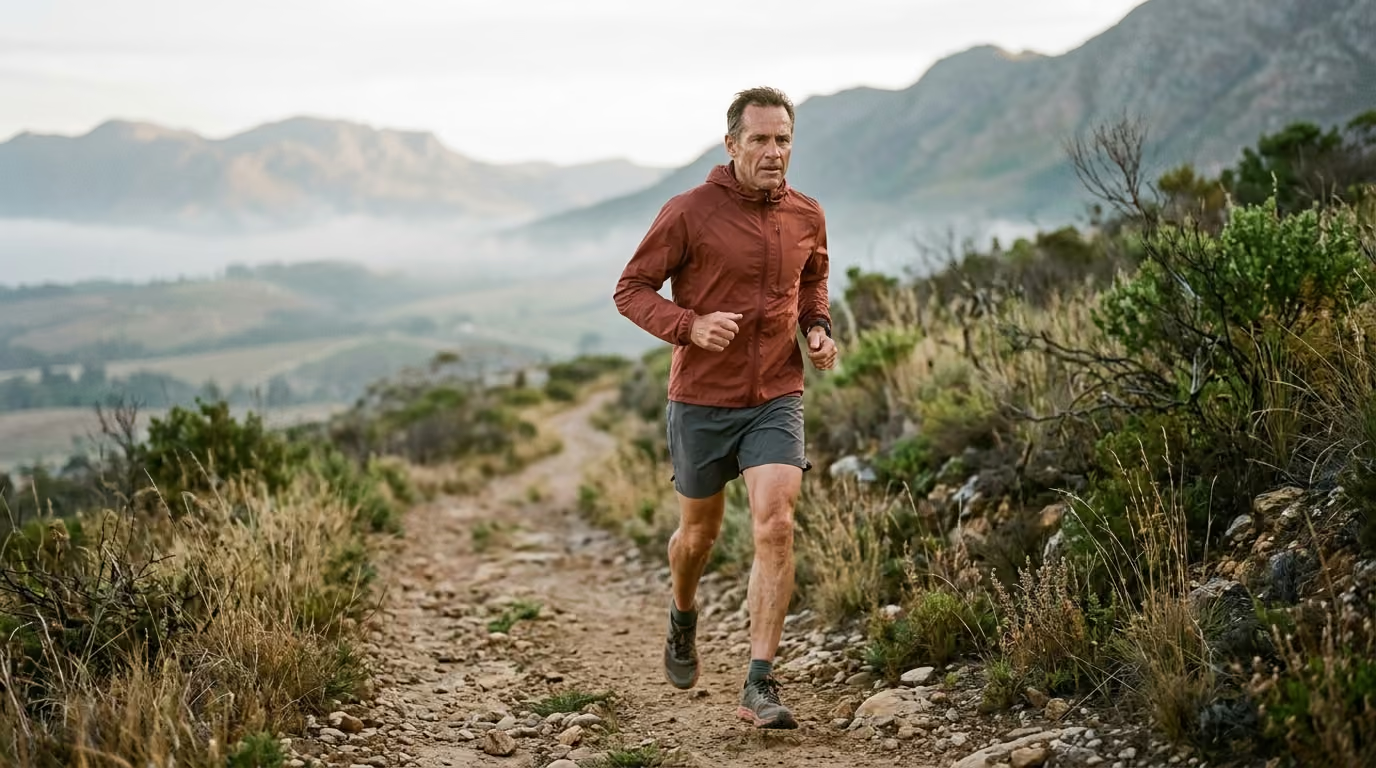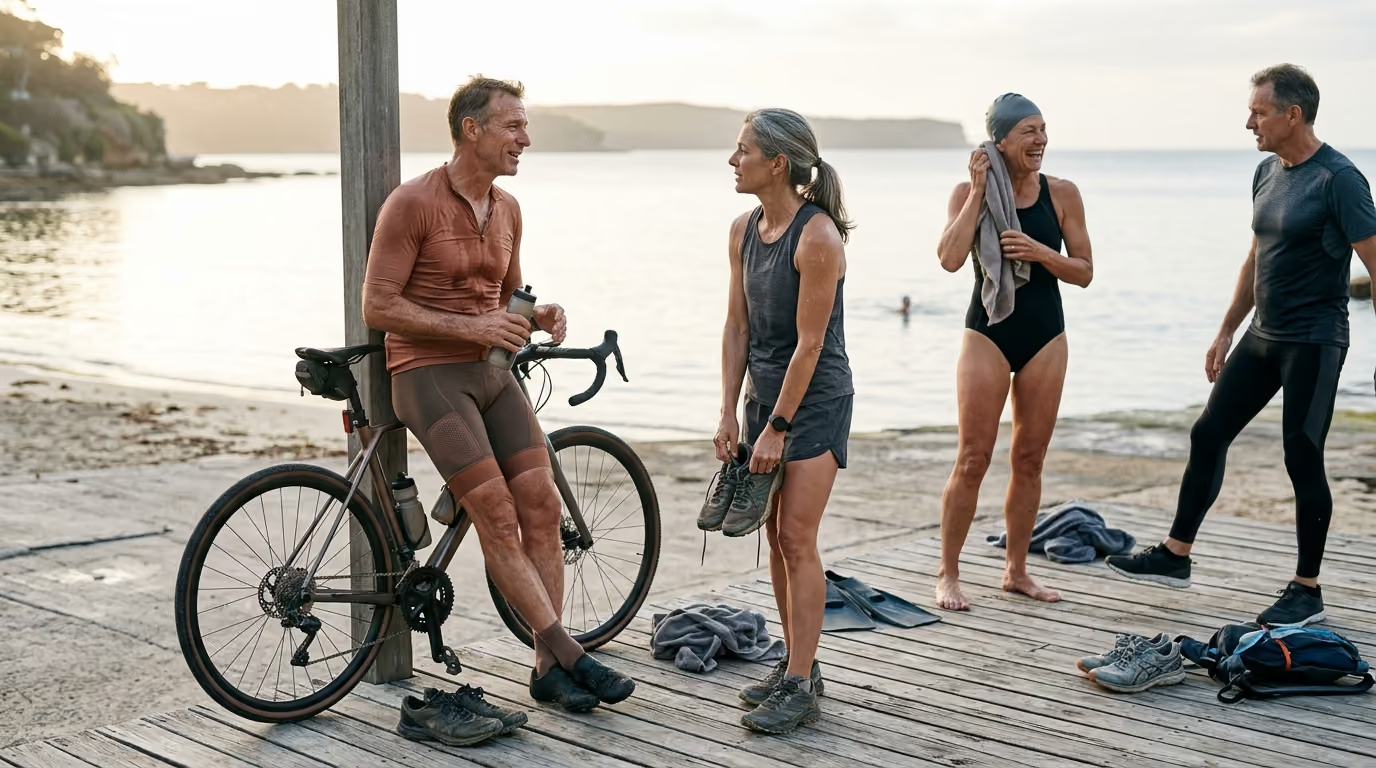

Different endurance sports provide unique mechanical and cardiovascular benefits that help preserve bone density, joint resilience, and functional mobility as you age.





Endurance training for healthy aging is not a search for a single sport that does everything. It is the deliberate application of cardiovascular stress, mechanical loading, and neuromuscular challenge to keep your body resilient over decades. It is not an attempt to outrun biological aging through endless mileage, nor is it a mandate to abandon high-intensity effort in favor of passive rest.
True athletic longevity requires balancing aerobic development with skeletal preservation, joint integrity, and functional power. Each major endurance discipline creates a distinct physiological stimulus. Running provides high skeletal loading and dynamic stability, while cycling and swimming offer high-volume cardiorespiratory work with minimal impact.
Understanding how to compare, select, and combine these modalities allows you to build a weekly routine that maintains high performance without breaking down your tissues. This guide examines the peer-reviewed evidence behind running, cycling, swimming, hiking, and rowing, giving you the practical tools to design an endurance protocol built for a lifetime of competition and health.
Many dedicated athletes encounter an unexpected physical crossroads in their forties or fifties. An experienced runner might notice that weekly mileage that once felt invigorating now produces lingering Achilles stiffness, knee swelling, or deep hip soreness. To protect their joints, they might shift entirely to road cycling or pool laps, relieved to find they can push their heart rate high without joint pain.
Over several seasons, their aerobic fitness remains exceptional. Yet when they attempt to hike a steep, rocky descent, jog across a crosswalk, or lift a heavy travel bag into an overhead bin, they suddenly feel surprisingly vulnerable. Their balance may feel tentative on uneven ground, and their joints might ache after minimal impact.
This scenario highlights a fundamental principle of endurance physiology. Your cardiorespiratory system adapts differently than your bones, tendons, and muscular support systems. When you switch exclusively to non-impact exercise, your heart and lungs retain their high processing capacity, but your skeletal structures slowly adapt down to the lower mechanical demands.
Choosing the right discipline is not about declaring one activity superior to all others. The goal is matching the physiological stimulus of each sport to your specific musculoskeletal tolerance, your medical history, and your goals for long-term functional independence.
To make informed training decisions, you must look closely at what each endurance modality demands from your cardiovascular and muscular systems. Every sport engages unique movement arcs, muscle recruitment patterns, and joint loading rates.
Running is an elastic, high-impact activity characterized by repeated single-leg landings. Every foot strike sends ground reaction forces through your feet, ankles, shins, knees, and hips, requiring rapid force absorption and return from your tendons.
This mechanical demand makes running extraordinarily time-efficient for developing cardiorespiratory endurance, running economy, and single-leg balance. Observational cohort research on older individuals published in preventive medicine journals indicates that regular running is associated with a fifteen percent reduction in all-cause mortality risk compared to inactivity.
The primary limitation of running is tissue fatigue. Tendons, joint cartilage, and cortical bone require far more time to adapt and repair than your cardiovascular system. If your training volume or speed rises faster than your connective tissues can remodel, overuse injuries are inevitable.
Cycling is a closed-chain, weight-supported activity that places substantial endurance demands on the quadriceps, gluteals, and calves without ground impact. Because your body weight rests on the saddle, you can accumulate large volumes of Zone 2 aerobic work and lactate threshold training with very low risk of impact-induced joint trauma.
A systematic review and meta-analysis examining cycling behavior found an association with a twenty-two percent lower risk of cardiovascular disease. Furthermore, long-term cohort data confirms cycling offers significant protection against premature all-cause mortality.
The physiological trade-off in cycling involves posture and muscle contraction type. Extended cycling locks the spine and hips into sustained flexion, which can lead to tight hip flexors and lower back discomfort. Additionally, cycling consists almost entirely of concentric muscle actions, offering minimal preparation for the eccentric shock absorption required in daily life and field sports.
Swimming utilizes the buoyant properties of water to eliminate nearly all compressive joint stress. It requires continuous, rhythmic contractions of the upper body, core, and respiratory musculature while challenging horizontal cardiovascular delivery.
In large observational health studies, regular swimming participation is associated with a twenty-eight percent lower risk of all-cause mortality and a forty-one percent reduction in cardiovascular mortality. It serves as an exceptional training tool for athletes managing joint osteoarthritis or recovering from acute lower-limb trauma.
However, swimming technique places heavy mechanical stress on the glenohumeral joint and rotator cuff tendons. The lack of ground contact also means swimming provides virtually zero transfer to upright gait mechanics, standing balance, or vertical shock absorption.
Brisk walking and trail hiking offer weight-bearing endurance stimuli with significantly lower peak impact forces than running. Hiking introduces variable terrain, which trains ankle proprioception, single-leg stability, and lateral balance reactions.
Cohort research evaluating physical activity in aging adults demonstrates that routine brisk walking provides a nine percent reduction in all-cause mortality. When hills are introduced, downhill hiking creates substantial eccentric loading for the quadriceps, building functional knee stability and descent tolerance.
While hiking may not always push cardiovascular intensity to maximal levels, its accessibility and high transfer to everyday mobility make it a foundational movement pattern for lifelong health.
Indoor and on-water rowing engages over eighty percent of the body's skeletal muscle mass across a coordinated drive phase involving the legs, hips, trunk, and arms. It delivers intense aerobic and anaerobic conditioning while remaining entirely non-impact.
The primary limitation of rowing relates to technical execution and spinal mechanics. Under fatigue, athletes often allow their lumbar spine to flex excessively at the catch and finish, shifting mechanical strain from the powerful hip extensors onto the lower back. For athletes with sound form, rowing provides exceptional cardiorespiratory and posterior chain conditioning.
To learn more about structuring your workouts effectively, review our guides on endurance training and performance.
The most critical distinction among endurance activities is their ability to stimulate bone remodeling. Bone tissue is dynamic and responds directly to the magnitude, rate, and novelty of mechanical strain placed upon it.
When your skeleton experiences dynamic impact or heavy resistance, mechanical signals trigger cellular cascades that stimulate osteoblasts to lay down new mineral matrix. Activities that lack high ground forces or heavy muscular pull do not generate sufficient skeletal strain to improve bone mineral density.
A comprehensive systematic review evaluated the structural effects of various exercise modes on skeletal health. The researchers concluded that non-weight-bearing activities like swimming and weight-supported activities like cycling do not produce positive improvements in bone mineral density. The authors determined that neither swimming nor cycling serves as an adequate standalone intervention for preventing or managing osteopenia and osteoporosis.
Cross-sectional investigations of competitive masters cyclists demonstrate concerning trends regarding spinal and hip bone density. Highly trained cyclists who ride ten to twenty hours weekly often exhibit lower lumbar spine bone mass than recreationally active non-cyclists. This occurs because road cycling, while metabolically demanding, provides almost no vertical osteogenic loading.
For the aging endurance athlete, this scientific reality demands a clear strategy:
Relying exclusively on non-impact cardio to maintain your health as you age can inadvertently leave your skeletal frame under-mineralized and vulnerable to fragility fractures.
Endurance athletes often view high cardiorespiratory fitness as the ultimate marker of vitality. While a robust VO2max correlates strongly with reduced cardiovascular risk, aerobic endurance alone does not preserve physical independence or prevent debilitating falls.
Healthy aging requires five distinct physiological domains:
A systematic review examining physical function in older adults revealed that targeted resistance training increased maximal strength by up to thirty-seven percent, muscle mass by over seven percent, and functional movement capacity by up to fifty-eight percent. Furthermore, clinical trials confirm that power training, which emphasizes moving resistance quickly, improves physical reaction time and reduces fall risk far more effectively than traditional slow aerobic training.
The World Health Organization and the Centers for Disease Control and Prevention both emphasize that older adults must participate in multicomponent physical activity. These global guidelines require at least two dedicated strength sessions weekly alongside balance-focused training, rather than relying solely on aerobic minutes.
When an older athlete trips over a curb or slips on ice, cardiorespiratory endurance cannot prevent the fall. What arrests the fall is rapid neuromuscular power in the hip stabilizers and dynamic strength in the lower limbs. Incorporating comprehensive injury prevention strategies ensures that your aerobic engine is matched by a strong physical structure.
Designing an intelligent endurance schedule requires combining disciplines so that they complement one another rather than compounding systemic fatigue. The goal is to maximize aerobic stimulus while keeping mechanical tissue stress within a tolerable threshold.
Hitting my forties brought a harsh reality check. The track workouts were not getting slower, but the days after them felt significantly heavier. Instead of forcing my old Tuesday and Thursday intensity schedule, I looked at the data on Masters athletes and muscle protein synthesis. I pushed my second hard session to Friday, allowing an extra forty eight hours of low intensity recovery. My total weekly volume stayed the same, but the quality of my intervals skyrocketed.
Below are evidence-based weekly structures designed for specific athletic profiles.
This framework suits runners who want to maintain running performance while protecting their joints and building bone density.
This schedule allows dedicated cyclists to accumulate high aerobic volume while systematically reinforcing bone density and hip stability.
Designed for swimmers who want to preserve land-based movement skills, hip strength, and upright stability.
For personalized program design and practical advice, explore our healthy aging resources.
As athletes advance through their fifth, sixth, and seventh decades, fundamental biological shifts alter the timeline for training adaptations and tissue recovery. Connective tissues lose a portion of their water-binding proteoglycans, making tendons stiffer and slower to remodel following high-impact strain. Simultaneously, muscle protein synthesis rates decline, requiring greater attention to dietary protein intake and longer recovery intervals between intense workouts.
To optimize longevity while sustaining high performance, older athletes must adjust their training variables systematically.
In younger decades, an athlete can often perform hard workouts on Tuesday and Thursday with minimal disruption. For an older athlete, muscle damage and central nervous system fatigue take longer to resolve.
Spacing intense interval workouts seventy-two hours apart ensures that motor unit recruitment remains crisp. Placing low-intensity, non-impact cycling or swimming between hard running days allows the cardiovascular system to train while connective tissues heal.
Older runners do not necessarily need to stop running, but they benefit from managing their impact density. Transitioning a portion of weekly mileage to soft trails, well-maintained dirt roads, or low-friction tracks significantly reduces peak skeletal shock.
Utilizing structured run-walk intervals, such as running for nine minutes and walking briskly for one minute, allows older athletes to sustain long endurance outings with substantially less joint inflammation and soft tissue degradation.
Age-related declines in the vestibular system, vision, and lower-limb proprioception reduce reactive balance. Linear sports like running, cycling, and rowing do not challenge lateral stability.
Athletes over fifty should perform standing single-leg balance drills, lateral band walks, and backward walking two to three times each week. These simple drills reinforce hip abductor control, preserving the ability to correct unexpected postural disruptions on uneven terrain.
For detailed protocols on keeping your joints functioning smoothly, browse our recovery and mobility guides.
Integrating multiple sports into a cohesive weekly routine requires careful management of volume and mechanical load. Athletes frequently make critical programming errors that derail their progress.
A common misconception is that non-impact sports cannot cause overuse injuries. While cycling and swimming spare your joints from ground impact, their high repetition rates create distinct overuse risks.
A cyclist pedaling at ninety revolutions per minute completes over ten thousand revolutions in a two-hour ride. If bike fit is incorrect or pelvic mechanics are unstable, this volume can cause severe patellar tendinopathy, iliotibial band friction, or lumbar facet irritation. Similarly, poor swim technique can quickly overload the supraspinatus tendon in the shoulder.
Athletes often fall in love with the smooth, fluid sensation of swimming or cycling and assume they are building total-body fitness. While both sports build exceptional cardiovascular engines, neither develops the mechanical strength, bone mineral density, or balance needed to thrive on land.
Treating swimming or cycling as a standalone health strategy leaves significant gaps in your physical foundation. Every athlete must ground their routine with upright, load-bearing movements.
Fit cyclists and swimmers returning to running often suffer severe calf strains, plantar fasciitis, or bone stress reactions within a month. Because their aerobic capacity is fully developed, running feels metabolically easy, tempting them to run for forty-five or sixty minutes immediately.
However, their Achilles tendons and shin bones have not adapted to absorb ground reaction forces. Aerobic fitness must never dictate running volume after a layoff; mechanical tissue tolerance must lead the progression.
Masters athletes frequently misinterpret joint stiffness or tendon warmth as normal aging symptoms that should be trained through. Tendons operate with limited blood supply and adapt slowly.
Ignoring early localized pain transforms minor collagen disorganization into chronic, degenerate tendinopathy. When persistent pain alters your movement mechanics, the correct response is modifying intensity, substituting a non-impact modality, and adjusting the load before tissue damage escalates.
Monitoring your athletic health requires looking beyond simple weekly mileage or average pace. You need functional metrics that verify whether your cross-training approach is successfully maintaining both your aerobic capacity and your musculoskeletal durability.
Track your heart rate relative to power output on the bike, pace in the pool, or speed on a flat running route. A healthy, well-adapted cardiovascular system exhibits a steady or declining heart rate at a fixed submaximal workload. If your heart rate spikes unusually high at an easy pace, it often signals incomplete systemic recovery or emerging illness.
Calf and Achilles tendon capacity are crucial for upright locomotion, running longevity, and fall avoidance. Stand barefoot on a flat surface, balance on one leg, and perform smooth, full-range calf raises at a controlled tempo.
An active adult should comfortably achieve twenty-five to thirty continuous repetitions per leg without losing height or using their hands for balance. A significant deficit between limbs identifies an asymmetry that warrants targeted strength work.
The five-times sit-to-stand test measures functional lower-body power and hip extension capacity. Sit on a standard armless chair with your arms crossed over your chest. Stand up fully and sit down five times as quickly as possible while maintaining control.
Completing this assessment in under ten seconds indicates robust lower-body strength and dynamic hip control, both of which correlate strongly with long-term functional independence.
Remove your shoes, cross your arms over your chest, stand on one foot, and close your eyes. Maintain your balance without uncrossing your arms, moving your standing foot, or letting your lifted leg touch the ground.
Holding this position steadily for twenty to thirty seconds demonstrates healthy proprioceptive integration and deep foot-ankle stabilization. A sudden drop in balance time highlights a need for dedicated balance training.
Learn more about our philosophy and research-backed methodologies by visiting our about page.
Cyclists can safeguard their skeletal health by adding two forty-five-minute heavy resistance training sessions to their weekly schedule. These sessions should emphasize multi-joint movements like barbell squats, trap-bar deadlifts, and overhead presses, which apply direct axial loading through the spine and hips. Additionally, swapping one easy recovery ride for a brisk thirty-minute weighted ruck or trail hike provides the vertical ground impact that cycling lacks.
A runner with mild knee osteoarthritis does not automatically need to quit running entirely. Instead, they can transition half of their weekly running volume to a road bike, rowing machine, or lap pool to maintain cardiorespiratory fitness without repetitive impact. When running, choosing level dirt trails or synthetic tracks reduces peak joint shock. Pairing this with a progressive strength program focused on quadriceps, hamstring, and hip abductor strength improves joint tracking and shock absorption.
Swimmers can protect their shoulders by incorporating land-based rotator cuff and scapular stabilization exercises twice weekly, using resistance bands for external rotations and face pulls. In the pool, avoiding excessive use of large hand paddles reduces torque on the glenohumeral joint. Swimmers should also ensure their weekly program includes upright walking, hiking, or strength training to maintain the lower-body bone density and balance that swimming does not develop.
Yes, but the return must be exceptionally gradual to allow bone and connective tissue remodeling. Even if your cardiovascular fitness is high, begin with a structured run-walk program, such as running for one minute followed by walking for two minutes for a total of fifteen minutes. Limit running sessions to two days per week on soft surfaces, keeping the remainder of your aerobic training on the bicycle. Gradually increase continuous running time over three to four months as your calf, Achilles, and shin tissues adapt.
If you have specific training inquiries or want to connect with our endurance team, visit our contact page.

Follow ReEndure for practical insights on endurance training, recovery, nutrition and healthy aging. Stay connected for new articles, research led guidance and ideas to help you perform better for longer.


Read practical ideas on endurance training, recovery, nutrition and healthy aging to keep progressing for years to come.
Read the Blog