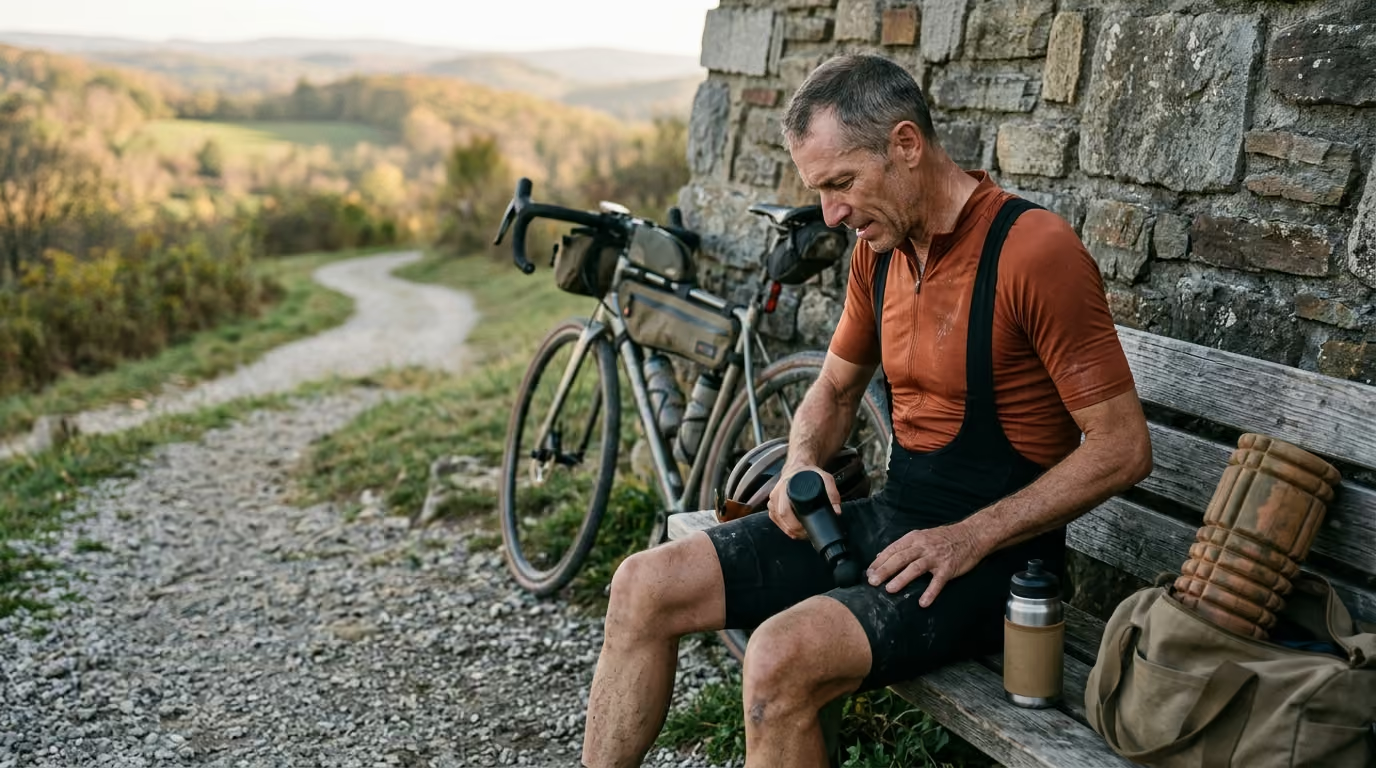

Eighty to ninety degree sauna sessions expand blood plasma volume and trigger vital cellular repair to boost your endurance training recovery.





You finish a demanding three-hour weekend training session in cool morning air. Your legs are heavy, your glycogen stores are depleted, and your central nervous system feels drained. As you walk past the locker room sauna, you wonder if stepping inside will speed up your muscular repair or simply add unnecessary fatigue. Many athletes view the sauna as a luxurious post-workout indulgence, while others fear it causes dehydration and hinders soft tissue rebuilding.
The truth sits in the physiological details. When applied with intention, thermal stress triggers cellular cascades that support muscular remodeling, plasma volume expansion, and cardiovascular efficiency. When misapplied, it compounds systemic fatigue, disrupts sleep, and compromises workout quality the next day.
Understanding how to balance thermal stress with your training load is essential. This guide covers the physiological mechanisms of heat exposure, practical protocols for adaptation, age-related thermoregulatory shifts, and reliable tracking metrics.
Passive heat exposure acts as an exercise mimetic. When you sit in a hot environment, your body works hard to prevent your core temperature from rising to dangerous levels. This thermoregulatory challenge initiates a series of acute adjustments and long-term cellular adaptations.
When skin and core temperatures increase, your autonomic nervous system directs blood toward the skin surface to dissipate heat through sweat evaporation. This cutaneous vasodilation reduces systemic vascular resistance.
To maintain blood pressure and cardiac output, your heart rate increases substantially. In a traditional dry sauna operating at 80 to 90 degrees Celsius, heart rate can climb from resting levels to 120 or even 150 beats per minute. This response mimics moderate-intensity cardiovascular exercise.
Repeated passive heat exposures trigger the kidneys to reabsorb sodium and water through the actions of aldosterone and vasopressin. Over several weeks, this mechanism leads to an expansion of resting blood plasma volume.
A larger plasma volume improves stroke volume, which is the amount of blood the heart pumps with each beat. This cardiovascular improvement enhances cardiac efficiency, lowers resting heart rate, and supports oxygen delivery to working skeletal muscle during heavy training.
At the cellular level, thermal stress activates a family of protective chaperone molecules known as heat shock proteins, specifically HSP70 and HSP90. Strenuous endurance exercise creates micro-tears in muscle fibers and generates reactive oxygen species that damage cellular structures.
Heat shock proteins detect misfolded or damaged proteins, refolding them into functional shapes or directing them toward proper degradation pathways.
By facilitating rapid protein refolding, heat shock proteins reduce the extent of exercise-induced muscle damage and accelerate structural repair. Research indicates that regular heat exposure preserves muscular integrity during periods of high volume.
These proteins also play a role in mitochondrial biogenesis by protecting the structural enzymes responsible for aerobic energy production inside muscle cells.
Heat exposure produces an acute sympathetic state characterized by elevated adrenaline, noradrenaline, and cortisol. Your body perceives the thermal load as an immediate physiological stressor.
However, once you exit the heat and return to a neutral temperature, the body compensates with a strong rebound into a parasympathetic state. This shift promotes relaxation, lowers muscle tone, and facilitates restorative rest.
Heat exposure also stimulates the release of growth hormone from the anterior pituitary gland. Growth hormone plays a key role in collagen synthesis, tendon remodeling, and tissue repair.
While growth hormone spikes from heat exposure do not build substantial new muscle mass on their own, they provide an anabolic environment that supports the restoration of connective tissues after taxing workouts.
Athletes have access to several heat modalities, each offering distinct temperature profiles, humidity levels, and physiological demands. Choosing the right tool depends on your access, tolerance, and specific training goals. Exploring evidence-based tools inside our broader recovery resources library can help you pair these modalities effectively.
Traditional Finnish saunas operate at dry ambient temperatures between 80 and 100 degrees Celsius with low humidity, usually between 10 and 20 percent. The dry environment allows sweat to evaporate quickly, provided air circulation is adequate.
Pouring water over heated rocks creates brief bursts of steam that raise humidity and slow evaporative cooling, creating a rapid increase in core temperature.
Steam rooms operate at lower temperatures, typically between 40 and 50 degrees Celsius, but maintain 100 percent relative humidity. Because the air is saturated with moisture, sweat cannot evaporate from the skin surface.
This prevents your primary cooling mechanism from working. As a result, your core temperature rises very quickly in a steam room despite the lower ambient air temperature.
Infrared saunas use light waves to heat the body directly rather than heating the surrounding air. Far-infrared saunas operate at lower ambient temperatures, usually between 50 and 65 degrees Celsius.
The infrared spectrum penetrates human tissue to a depth of several millimeters, promoting sweating and cutaneous vasodilation without the intense environmental heat of a dry sauna.
Near-infrared saunas combine mild thermal stress with specific wavelengths of light intended to stimulate mitochondrial chromophores.
For athletes who find traditional high-heat saunas claustrophobic or excessively draining, far-infrared setups offer a gentle way to promote blood flow, relieve joint stiffness, and induce parasympathetic relaxation without severe cardiovascular strain.
Hot water immersion involves sitting in a bath or hot tub heated to 38 to 40 degrees Celsius, submerged up to the neck. Water conducts heat approximately twenty-four times faster than air, making hot water immersion an aggressive thermal tool.
Evaporative cooling cannot occur under water, meaning core temperature climbs steadily.
Hot water immersion also adds hydrostatic pressure. The weight of the water around your lower limbs helps push fluid from extracellular spaces back into circulation.
This combination of thermal vasodilation and hydrostatic pressure aids in clearing metabolic waste from fatigued muscles after endurance training sessions.
Applying thermal stress requires clear timing based on your primary objective. Heat can be used either as an adaptive stimulus to enhance aerobic fitness or as a recovery modality to calm the nervous system.
To expand plasma volume and trigger heat shock protein synthesis, apply heat immediately after an endurance session. At this point, your core temperature is already elevated and glycogen stores are partially depleted.
Stepping into a sauna for 20 to 30 minutes directly after training extends this thermal window, signaling the cardiovascular system to initiate long-term adaptations.
When using heat for adaptation, avoid taking cold showers or jumping into cold plunge pools immediately afterward. Rapidly cooling the skin halts the thermal signaling cascade and blunts the adaptive stimulus.
Sit at room temperature for ten to fifteen minutes, sip water with electrolytes, and allow your body to cool down gradually through natural circulation.
When your goal is purely restorative, heat exposure belongs on rest days or light recovery days, scheduled well away from hard workouts. In this context, lower-temperature infrared saunas or moderate hot baths work best.
The goal is to increase peripheral blood flow, relieve tight connective tissues, and trigger a parasympathetic rebound without accumulating cardiovascular fatigue.
Keep rest-day sessions to 15 or 20 minutes at moderate temperatures. Pair the session with deep nasal breathing, progressive muscle relaxation, and thorough hydration.
If a rest-day sauna leaves you feeling drained or lightheaded, the exposure was too long or too hot for your current recovery status.
If you are preparing for an event in warm or humid conditions, passive heat sessions serve as an effective acclimation strategy. You can build heat tolerance without adding extra running or cycling mileage to your training plan.
Begin heat acclimation three weeks before your goal race. Complete three to four post-workout sauna sessions each week, spending 20 to 30 minutes in the heat per session.
Over 10 to 14 total exposures, your body will lower its sweating threshold, increase sweat rate, retain sodium more effectively, and reduce resting core temperature. These physiological shifts make racing in the heat far more manageable.
To use heat safely and effectively, you need structured protocols tailored to specific training blocks. Below are three tested approaches designed for different phases of your endurance calendar.
Use this protocol during a base or build phase to increase plasma volume and improve heat tolerance.
Use this protocol on designated rest days to relieve muscle tension and encourage nervous system relaxation.
Use this protocol 24 to 48 hours after an intense muscular effort, such as a heavy strength session or a hilly long run, to relieve localized stiffness.
Sweating during heat exposure depletes both water and critical electrolytes, primarily sodium, potassium, and magnesium. Endurance athletes who train hard already lose significant fluid volume, making precise rehydration essential. Reviewing balanced strategies in our fueling and hydration articles can help fine-tune your fluid replacement strategy.
For years, I capped my mid ride fueling at around sixty grams of carbs per hour, convinced that taking in more would wreck my stomach. Then I read a series of recent studies on gut training and higher oxidation limits for endurance athletes. I spent a three month base phase gradually increasing my intake up to ninety grams using a mix of glucose and fructose.
The difference during my next Gran Fondo was staggering. I had a late race surge that I had never experienced before, completely avoiding the usual energy crash. In our experience, applying that same systematic, patient approach to heat adaptation yields equally profound dividends for performance and stamina.
Weigh yourself naked immediately before entering the heat and again after toweling dry upon exit. For every kilogram of body weight lost, consume 1.25 to 1.5 liters of fluid containing 500 to 700 milligrams of sodium per liter over the next two to three hours. Plain water is not enough, as it dilutes plasma sodium and triggers the kidneys to excrete water, slowing true rehydration.
As we pass age forty, our physiology experiences subtle shifts in thermoregulatory function, cardiovascular compliance, and fluid balance. Masters endurance athletes must account for these changes to use heat therapy safely and effectively. You can read more about age-specific training adjustments in our healthy aging resources section.
Aging is naturally accompanied by a slight decrease in sweat gland output and reduced microvascular reactivity in the skin. The capillary beds supplying the skin do not dilate quite as rapidly, which can slow evaporative cooling.
Older athletes may experience a faster rise in core body temperature under the same environmental heat load compared to their younger peers.
This does not mean athletes over forty should avoid thermal conditioning. Rather, it means masters athletes should progress their exposure times gradually, starting with shorter sessions and allowing an extra week or two to develop full heat acclimation.
The rapid vasodilation induced by heat causes blood to pool in the extremities, leading to a temporary drop in blood pressure. When standing up quickly in a hot sauna, older athletes are more susceptible to orthostatic hypotension, which can cause dizziness or fainting.
Masters athletes with a history of hypertension, cardiovascular disease, or those taking medications such as beta-blockers or ACE inhibitors must consult their physician before starting a heat protocol. Beta-blockers limit the heart rate increases necessary to maintain cardiac output in hot environments, making thermal stress riskier.
The central nervous system of an athlete over forty often requires more time to recover from combined stressors. Hard interval work, strength training, work stress, and heat exposure all draw from the same systemic recovery budget.
If you are a masters athlete in a high-volume training block, limit intense sauna sessions to two days per week. Avoid scheduling heavy sauna sessions the evening before key workout days.
Preserving quality on your primary running or cycling sessions must remain the priority, with heat acting as a supplemental tool rather than an added physical burden.
Many athletes approach heat therapy with an aggressive mindset, treating it as an endurance test rather than a measured training stimulus. Avoiding these common mistakes will keep your sessions safe and productive. You can cross-reference these principles with our training and performance articles to align your overall workload.
Using a sauna to drop weight quickly through extreme sweating is counterproductive and dangerous. The weight lost in a sauna is water and electrolyte mass, not body fat.
Purposely dehydrating yourself impairs muscle protein synthesis, degrades subsequent workout quality, and places unnecessary strain on your kidneys. Always enter the sauna hydrated and rehydrate immediately afterward.
Stepping into an 85-degree Celsius sauna after a hard, twenty-mile long run when you are completely depleted of carbohydrates and fluids creates severe systemic stress.
Your core temperature is already elevated, and your blood volume is reduced from hours of heavy sweating. Adding an aggressive thermal load on top of severe exercise fatigue increases the risk of heat illness and extends your recovery timeline.
After long, draining sessions, focus entirely on rehydration, carbohydrate replenishment, and gentle resting. Reserve post-workout heat exposure for shorter, moderate training days.
Athletes often sit in a sauna for a fixed amount of time without paying attention to their internal cardiovascular response. If your heart rate continues to climb past 140 or 150 beats per minute while you are sitting still, your cardiovascular system is under heavy strain.
Use a simple pulse check or a chest strap monitor if permitted. When your heart rate drifts significantly higher than your baseline zone one aerobic range, exit the heat. The adaptive stimulus has been achieved, and continuing the session only adds unnecessary fatigue.
Completing four sauna sessions in a single week followed by three weeks of zero heat exposure yields very little long-term adaptation. Plasma volume expansions and heat shock protein elevations begin to decay within several days of stopping thermal sessions.
Consistency is far more valuable than occasional, extreme sessions. Two modest, 20-minute sessions per week maintained across an entire training cycle provide far better physiological stability than sporadic, intense blocks of heat.
To ensure your heat therapy protocol is producing positive physical adaptations rather than chronic fatigue, track several objective and subjective markers over time.
An expanding plasma volume and improving cardiovascular efficiency lead to a lower resting heart rate and higher baseline heart rate variability (HRV) over time.
Measure your resting heart rate and morning HRV daily upon waking. A steady downward trend in resting heart rate alongside stable or rising HRV indicates successful adaptation to your combined training and heat load.
If your morning HRV drops sharply and your resting heart rate spikes by five to eight beats per minute for several consecutive days, your total stress load is too high. Remove heat sessions immediately until your autonomic balance returns to baseline.
As you acclimate to regular heat exposure, your sweat glands become more efficient. You will notice that you begin sweating sooner during your workouts, and your overall sweat volume increases.
At the same time, your sweat will taste noticeably less salty, and you will see fewer white salt rings on your technical running shirts or cycling kits. This shift occurs because aldosterone signals your sweat ducts to reabsorb sodium and chloride before sweat leaves the skin, preserving your body's electrolyte reserves.
One of the clearest indicators of successful heat adaptation is a lower heart rate at a fixed, submaximal running pace or cycling wattage in warm conditions.
For example, if running at five minutes per kilometer previously drove your heart rate to 155 beats per minute in 25-degree Celsius weather, effective heat acclimation may lower that response to 146 or 148 beats per minute. This cardiac sparing effect leaves you with more aerobic reserve for harder race efforts.
Keep track of your perceived thermal discomfort during training sessions on warm days. Rate your thermal sensation on a scale from one to ten, where one is completely comfortable and ten is unbearable heat stress.
As thermal adaptation takes hold, workouts in moderate warmth that once felt like an eight on the discomfort scale will feel like a four or five. This psychological resilience allows you to maintain focus, execute race nutrition plans, and sustain steady pacing when environmental conditions get tough.
The following breakdown summarizes how common heat modalities compare across practical metrics:
While passive heat therapy is safe for most healthy endurance athletes, heat is an active physiological stressor that requires respect. If you are managing nagging muscular issues alongside your training, reviewing our injury prevention resources will help you integrate heat without aggravating acute soft-tissue damage.
Do not use high-heat saunas or hot water immersion under any of the following conditions:
Always listen to your body's immediate signals. Exit the heat right away if you experience any of the following symptoms:
If any of these warning signs appear, leave the hot room slowly to avoid orthostatic dizziness. Sit down in a cool, well-ventilated space, sip water with electrolytes, and allow your body temperature to decline naturally.
Return to this guide whenever you are structuring a dedicated heat acclimation block ahead of a warm-weather race, transitioning into a high-volume base training phase, or noticing persistent signs of autonomic fatigue on your recovery tracking apps.
Heat is a potent training tool that yields dependable cardiovascular and cellular adaptations when applied with patience, proper timing, and strict hydration habits.

Follow ReEndure for practical insights on endurance training, recovery, nutrition and healthy aging. Stay connected for new articles, research led guidance and ideas to help you perform better for longer.


Read practical ideas on endurance training, recovery, nutrition and healthy aging to keep progressing for years to come.
Read the Blog