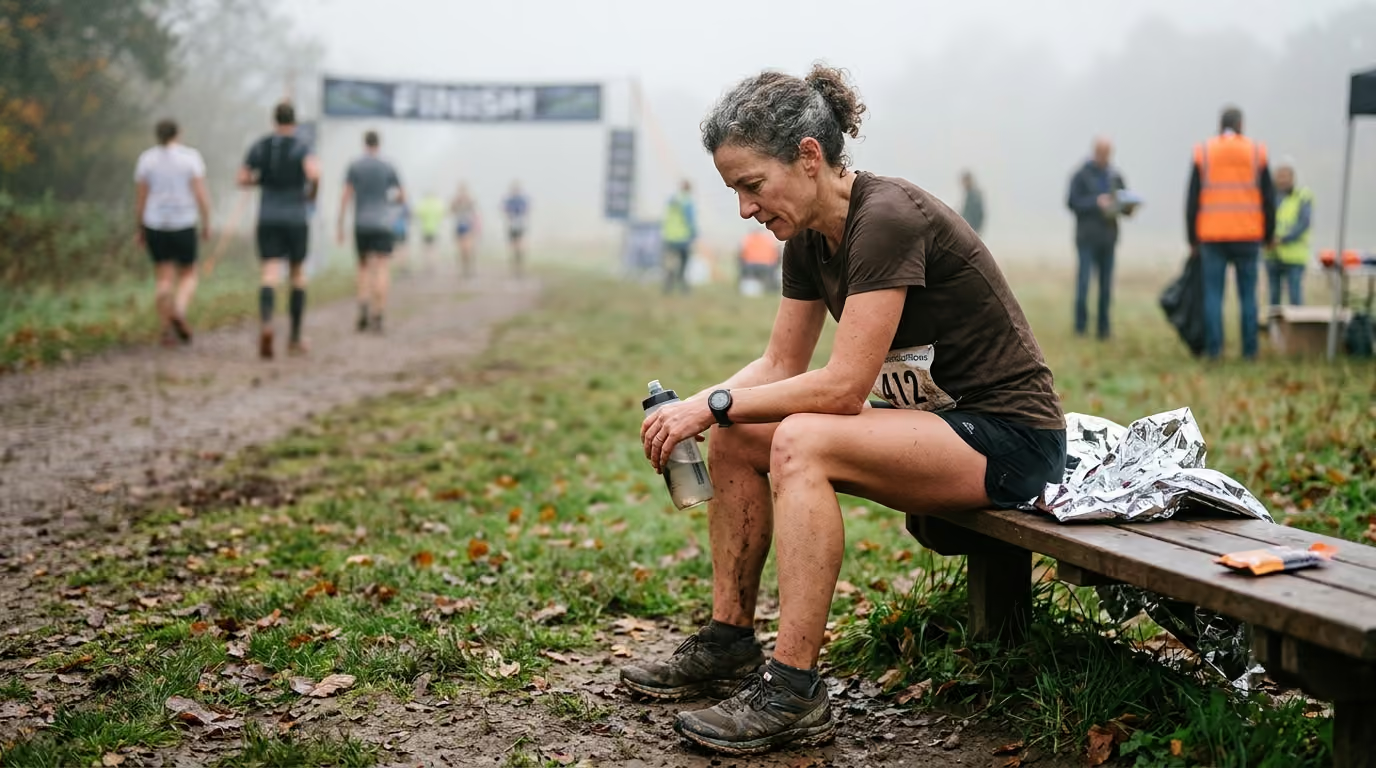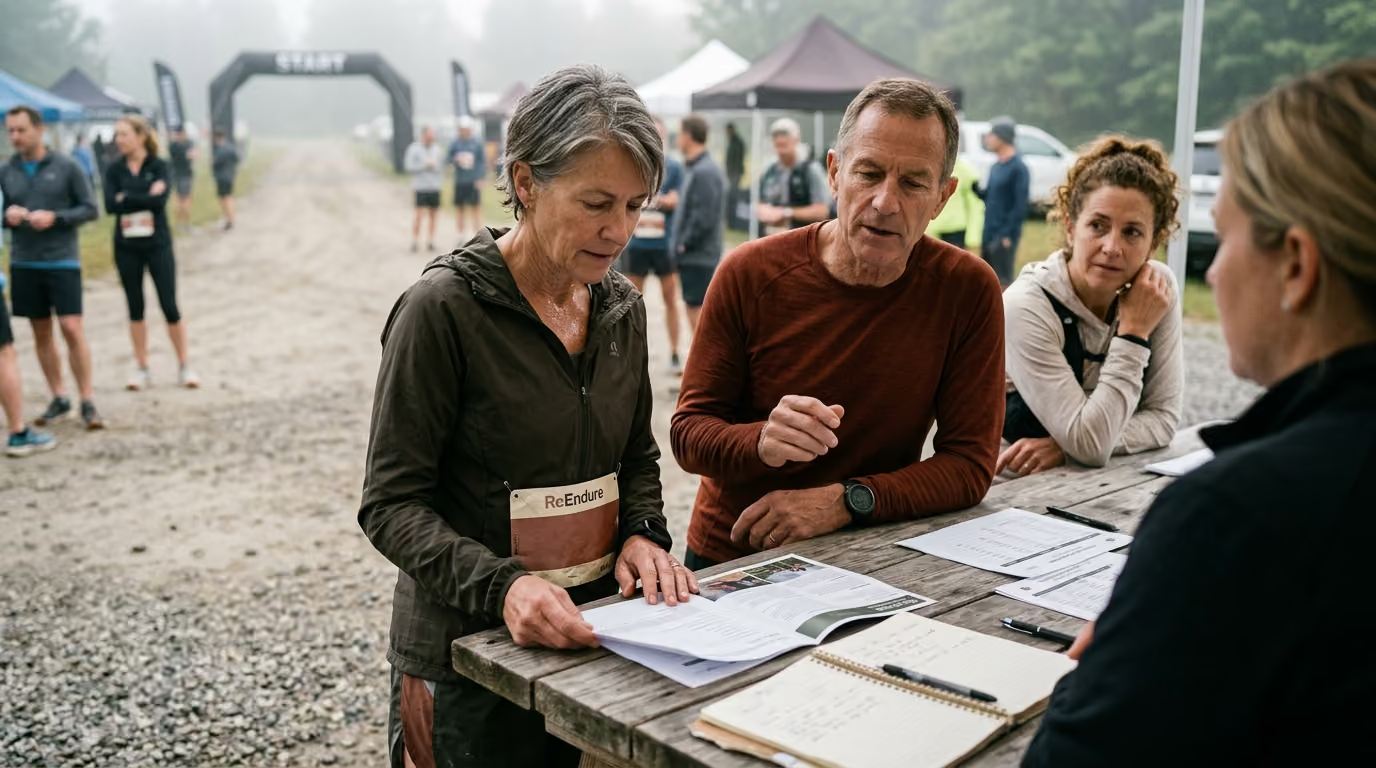

Pinning on your race bib following a major rehabilitation milestone becomes safe when guided by progressive loading phases and objective readiness metrics.





"Can I race this weekend with a healing tendon?"
If you have typed that question into a search engine, you already know the frustration of being caught between recovery and competition. You may have completed several training runs without acute pain, or finished a series of structured cycling sessions on the trainer. Yet standing on a start line with a timing chip introduces physical forces, tactical decisions, and psychological pressures that do not exist during controlled rehabilitation.
Returning to racing requires a deliberate, evidence-based progression rather than a simple medical clearance date on a calendar. This guide provides a definitive framework to evaluate your readiness, select appropriate events, communicate with your clinical team, and protect your long-term athletic longevity.
Many athletes treat recovery as a binary switch. In this flawed model, you are either injured and resting, or fully healed and cleared to compete. Sports medicine research shows that returning to high-demand athletics is an ongoing continuum.
The 2016 Bern Consensus on Return to Sport established a three-stage model that clarifies these distinctions. The first stage is return to participation. Here, an athlete resumes modified training, rehabilitation drills, or low-intensity exercise below their previous baseline. The injured tissue adapts to initial loads without full sport-specific stress.
The second stage is return to sport. In this phase, the athlete resumes endurance training or enters events, but not at their former volume, intensity, or performance expectations. A runner might complete a local five-kilometer event using scheduled walk breaks, or a cyclist might complete a flat gran fondo at an easy endurance pace.
The final stage is return to performance. This occurs when the athlete matches or exceeds their pre-injury competitive standard. Many competitors make the mistake of attempting to jump directly from return to participation into return to performance. Understanding where you sit on this continuum prevents the premature loading that causes secondary breakdowns.
A safe return to competition relies on shared decision-making. No single individual possesses all the information required to assess competitive readiness. Your orthopedic surgeon or sports physician understands tissue biology, structural integrity, and radiographic healing. Your physical therapist understands functional movement quality, joint stability, and force production.
You understand your fatigue levels, daily symptom fluctuations, and internal motivation. The Panther Symposium Consensus on return to sport emphasizes that clearance should be a collaborative process. Rather than asking your clinician for a passive yes or no, you should bring structured, specific questions to your appointments.
To establish clear operational parameters, ask your healthcare team the following questions:
Vague medical instructions such as "listen to your body" or "take it easy" offer little practical guidance when adrenaline spikes at a race start. Request precise boundaries regarding permitted intensity, duration, elevation change, and recovery intervals. This creates clear rules that protect you from impulsive decisions. You can learn more about managing structural health through our dedicated injury prevention resources.
Being cleared to train does not guarantee you are prepared for the chaotic demands of a race. Full competitive readiness requires an objective evaluation across six interrelated domains.
Tissue healing follows biological timelines that cannot be bypassed through sheer willpower. A repaired ligament, a remodeling bone-stress injury, a healed muscle tear, and a recovering tendon each possess unique mechanical properties. Pain levels often drop before the underlying collagen matrix or bone cortex has rebuilt full tensile strength.
Relying entirely on the absence of pain to judge tissue readiness is dangerous. Your clinician must verify that structural healing is sufficient to withstand the repetitive, high-peak ground reaction forces of competition.
Symptom tracking must extend beyond the workout itself. In endurance sports, tissue irritation often presents as a delayed inflammatory reaction. You must evaluate how the injured site feels during the session, one hour after finishing, before bed, and the following morning.
Different pathologies require different symptom models. A clinical guideline from Sanford Health notes that running with stable, low-level discomfort (up to 3 or 4 on a 10-point scale) may be acceptable for certain chronic tendinopathies, provided gait mechanics remain normal and symptoms return to baseline within 24 hours. Conversely, bone-stress injuries require strict zero-pain tolerance during and after loading. Your clinician should define the specific symptom rules for your diagnosis.
Controlled clinic tests rarely match the total workload of an actual race. Before entering an event, you must demonstrate measurable strength, single-leg stability, and force-absorption capacity. For runners, this includes single-leg calf raises, single-leg squats, and pain-free hopping drills.
For cyclists and swimmers, it requires muscular endurance under sustained postural fatigue. Research on anterior cruciate ligament rehabilitation demonstrates that limb symmetry indexes above 90 percent in strength and hop testing significantly reduce reinjury rates upon return to sport.
A race introduces variables that exceed nominal distance, including travel fatigue, tactical surges, warm-up volume, and competitive adrenaline. You must demonstrate that your body can handle progressive training loads over weeks without accumulating excessive residual fatigue.
The International Olympic Committee consensus on training loads highlights that rapid workload spikes elevate injury risk. Rather than rushing to race after completing a single long workout, you need a documented history of consistent training. Review our principles for structured progression within our training and performance guides.
Physical healing does not automatically create mental readiness. Research published in sports medicine journals confirms that fear of reinjury, low self-efficacy, and high movement anxiety are primary factors preventing athletes from returning to prior performance levels.
Athletes who pass physical tests but experience high kinesiophobia often alter their movement patterns unconsciously. This protective guarding shifts mechanical stress onto other joints and tissues. Objective psychological inventories, such as the Athlete Fear Avoidance Questionnaire, help determine whether your mind is ready to handle competitive stress.
An athlete might possess the functional capacity to race a flat, paved 10-kilometer event while remaining unready for a technical trail race with steep descents. The mechanical demands of downhill running increase eccentric loading on the quadriceps and patellar tendon by more than 30 percent compared to flat ground.
Race selection must account for environmental factors such as surface firmness, ambient temperature, elevation profiles, and access to medical support. Matching your current rehabilitation capacity to the specific demands of the course is a fundamental risk-management skill.
Your first race after an injury should serve as a controlled rehabilitation test rather than a showcase for a personal record. Selecting an event with high reversibility allows you to gain competitive experience while minimizing structural risk.
Treating your return as a stepping stone allows you to gather objective feedback about your physical response. Learn more about navigating event logistics in our comprehensive racing and events articles.
Progressing from clinical rehabilitation to competitive racing requires a structured pathway. Each phase must be completed without adverse symptoms before advancing to the next tier.
Before introducing sport-specific loading, you must perform all normal daily activities without symptoms or gait alterations. This baseline ensures that resting inflammation has subsided and basic joint range of motion is restored.
This phase rebuilds baseline cardiovascular fitness and neuromuscular coordination without imposing full sport-specific impact. Cross-training modalities preserve aerobic capacity while target tissues continue to remodel.
During this phase, sport-specific loads are reintroduced in a controlled, interval-based manner. For runners, this involves structured walk-run progressions on flat, soft surfaces. For cyclists, it means introducing seated zone-two intervals on smooth roads.
Before pinning on a race number, you must rehearse the exact physical and psychological demands of your target event. This rehearsal identifies hidden capacity gaps in a safe training environment.
Enter your chosen event with strict, non-negotiable behavioral and physiological constraints. The objective of this phase is successful participation and process execution rather than maximal performance.
The return process is not complete when you cross the finish line. The critical test is how your tissues tolerate the accumulated load over the subsequent 48 to 72 hours.
Navigating a return to racing requires clear rules on what symptoms are manageable and what signs demand an immediate halt. Misinterpreting symptom signals is one of the most common causes of long-term setbacks.
You must stop physical activity, withdraw from a race, or consult your clinician if you experience any of the following warning flags:
Returning to endurance competition following a mild traumatic brain injury or concussion requires strict adherence to international safety protocols. The Amsterdam 2022 Consensus Statement on Concussion in Sport clearly states that athletes must be completely symptom-free at rest and during exertion before returning to competitive events.
Unlike mild tendon discomfort, you must never push through concussion symptoms. If you experience headaches, dizziness, visual disturbances, light sensitivity, cognitive fog, or nausea during exertion, stop immediately.
CDC guidelines require resting until symptoms resolve, followed by stepping back to the previous asymptomatic stage under direct medical supervision. The presence of focal neurological deficits, worsening headaches, neck pain, or repeated vomiting requires immediate emergency medical evaluation.
Athletes aged 35 and older experience distinct physiological shifts that influence tissue healing, structural remodeling, and race readiness. Understanding these biological realities allows masters athletes to structure intelligent return progressions without lowering their competitive standards.
Connective tissues undergo structural changes as we age. Tenocyte activity declines, leading to reduced collagen synthesis and slower remodeling of tendons, ligaments, and cartilage. A 50-year-old athlete requires longer recovery windows between high-impact sessions than a 25-year-old recovering from an identical injury. Rushing the interval between hard training bouts often leads to chronic tissue degradation.
Muscular power and eccentric strength also decline faster than baseline aerobic endurance. A master athlete may possess the cardiovascular engine to sustain a fast half-marathon pace while their lower-leg musculature lacks the force-absorption capacity to protect recovering joints.
Incorporating heavy, slow resistance training alongside structured running rebuilds structural durability. For comprehensive strategies on balancing competitive goals with aging physiology, explore our healthy aging resources.
Athletes frequently encounter predictable psychological and physical traps when attempting to resume competitive racing. Recognizing these common errors helps you protect your progress.
Believing you are fully ready simply because eight or twelve weeks have passed since an injury is a major mistake. Time is a necessary component of biological healing, but it does not equal functional capacity. Your progression must be verified by objective physical criteria rather than arbitrary calendar dates.
Cross-training on an indoor trainer or in the pool maintains your heart, lungs, and metabolic efficiency. However, cardiovascular fitness recovers much faster than skeletal tissue can adapt to ground impact forces. Arriving at a race start line with high aerobic fitness and low musculoskeletal conditioning often leads directly to secondary overuse injuries.
Many athletes enter their first post-injury event with an emotional desire to prove that the injury did not change them. This mindset encourages risky behaviors, such as chasing aggressive paces, ignoring early warning signs, and racing hard down steep hills. Treat the first event as a diagnostic field test rather than an ego validation.
A protocol that works for an Achilles tendinopathy can cause catastrophic failure if applied to a bone-stress injury. Tendons often tolerate monitored, low-grade mechanical loading during rehabilitation.
Bone-stress injuries require strict, symptom-free loading to prevent progression to a full cortical fracture. Never apply a generic return-to-run guideline without confirming its appropriateness for your specific tissue diagnosis.
Examining practical case patterns illustrates how to apply these return-to-racing principles across various injuries and competitive scenarios.
A 42-year-old marathon runner sustained a tibial bone-stress injury eight weeks ago. She maintained high cardiovascular conditioning through pool running and stationary cycling. She wants to run a local half-marathon in two weeks because she feels zero pain during cross-training.
The underlying risk is that high aerobic capacity can easily overload remodeling bone tissue that has not adapted to repetitive ground impact. The appropriate path requires completing a pain-free walk-to-run progression on flat surfaces, followed by objective symptom tracking over 24-hour windows.
Her first event should be downgraded to a flat 5-kilometer race with pre-planned walk breaks. The metric of success is remaining completely symptom-free during the run and the following morning.
A 38-year-old trail runner suffered a grade-two biceps femoris strain six weeks ago. He can jog easily on flat terrain without discomfort, but he has not tested high-speed running, steep climbing, or fast downhill descents. Research indicates that hamstring reinjury rates range between 12 and 33 percent, with most recurrences occurring in the first month of returning to full sport.
Before entering an event, this athlete must complete progressive eccentric strength testing, high-speed sprint mechanics, and fast downhill running drills in training. His initial race should feature moderate elevation changes and a strict ban on all-out sprint finishes.
A 45-year-old multisport athlete is nine months post-ACL reconstruction. Objective strength testing and hop tests show 92 percent limb symmetry, and her orthopedic surgeon has provided medical clearance. However, she experiences intense anxiety and apprehension when running on uneven ground or descending hills.
This athlete presents a mismatch between physical capacity and psychological readiness. Forcing a high-stakes trail race would likely trigger protective muscle guarding and abnormal movement patterns.
The correct strategy involves graded exposure to uneven terrain, deliberate practice in race-like environments, and choosing a low-pressure, flat road event. Measuring her confidence using validated psychological readiness scales ensures her mental confidence matches her physical healing.
A 36-year-old gravel cyclist sustained a concussion during a race crash five weeks ago. He feels completely normal during desk work and light daily activities. However, when his heart rate exceeds 150 beats per minute during hard training intervals, he develops a mild frontal headache and slight visual fatigue.
CDC and international consensus guidelines state clearly that new or returning symptoms during exertion indicate excessive physiological stress. The athlete must immediately stop the exertion session and rest until symptom-free for at least 24 hours.
He must resume his progression at the previous asymptomatic stage under medical guidance. He cannot enter a competitive race until he demonstrates complete tolerance to sustained high-intensity efforts and tactical maneuvers without any neurological symptoms.
A 54-year-old runner completes a 10-kilometer event six months after recovering from chronic plantar fasciopathy. He experiences no discomfort during the event and finishes within his target time. However, 24 hours later, he wakes up with marked heel pain and morning stiffness that lasts for over an hour.
This delayed inflammatory response indicates that the cumulative mechanical load of the race exceeded his tissue's current tolerance envelope. Rather than panic or attempt to run through the discomfort, the athlete must regress his training load for several days.
He should return to baseline physical therapy exercises, evaluate shoe cushioning and surface firmness, and consult his clinician to adjust his recovery timeline before planning another event. Discover more about managing post-event adaptation in our recovery resources.
Objective tracking removes emotional bias from your return-to-racing decisions. Monitoring physical metrics alongside subjective sensations provides a clear picture of your adaptation.
Maintain a daily training log that records more than simply mileage and pace. For every session, record the following data points:
If your morning symptom scores show an upward trend over three consecutive days, your training load is outpacing tissue remodeling. Immediate load reduction prevents minor inflammation from becoming a chronic setback.
Modern wearable technology offers practical insights into your running and cycling symmetry. While laboratory force plates remain the gold standard, consumer wearables provide useful directional trends.
Tracking psychological recovery is just as valuable as monitoring heart rate or weekly mileage. Periodic self-assessment using validated questions helps identify hidden apprehension.
Use this practical checklist to guide your decisions over the next seven days:

Follow ReEndure for practical insights on endurance training, recovery, nutrition and healthy aging. Stay connected for new articles, research led guidance and ideas to help you perform better for longer.


Read practical ideas on endurance training, recovery, nutrition and healthy aging to keep progressing for years to come.
Read the Blog