

Learn why true endurance resilience requires adaptable training, individualized recovery, and listening to your body rather than pushing through pain.





A runner grimaces through a track session, refusing to stop despite a sharp pain in their Achilles. They cross the line feeling victorious, completely unaware they just bought themselves three months of forced rest.
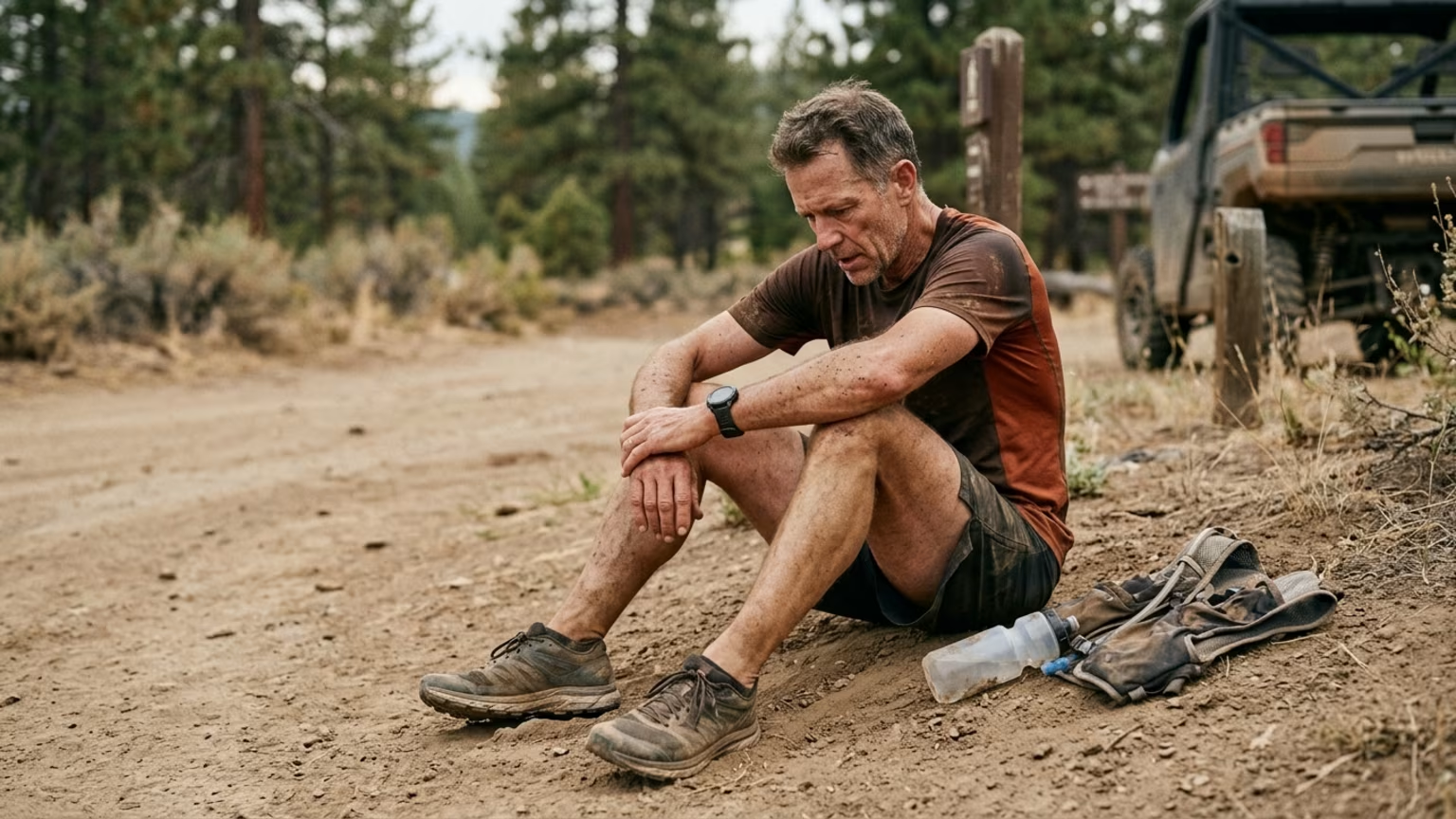
The central question for ambitious endurance athletes is whether pushing through pain builds resilience or simply accelerates physical breakdown. Traditional sports culture has long celebrated athletes who ignore their bodily warning signs to finish a race. However, true endurance resilience is not about blinding yourself to discomfort or stubbornly grinding your joints to dust. It is an active, adaptive process that combines physical recovery, functional capacity, and psychological readiness. Real toughness means protecting your physical health to keep you moving competitively for decades.
Athletes often assume that completing a workout means they are fundamentally healthy. The International Olympic Committee challenges this assumption directly through their established sports-health framework. They define a health complaint as valid regardless of whether it affects participation, causes time loss, or leads to medical attention. You can run a qualifying time, complete a century ride, and still harbor a brewing physical problem. Continuing to participate does not actually prove that an athlete is healthy.
A 2026 review of musculoskeletal injuries highlights how mechanical overload and microdamage activate inflammatory pathways. This cellular damage triggers pain-sensitization across several critical tissues, including tendons, ligaments, muscle, and fibrocartilage. Ignoring this biological reality often leads to chronic overuse injuries that bench athletes for entire seasons. Repeated loading has very real biological consequences even when an athlete can physically continue moving through the discomfort.
Adapting to what your body actually needs requires checking your ego at the door. For years, I capped my mid ride fueling at around sixty grams of carbs per hour, convinced that taking in more would wreck my stomach. Then I read a series of recent studies on gut training and higher oxidation limits for endurance athletes. I spent a three month base phase gradually increasing my intake up to ninety grams using a mix of glucose and fructose.
The difference during my next Gran Fondo was staggering. I had a late race surge that I had never experienced before, completely avoiding the usual energy crash. The lesson is that stubbornness is not a viable long term strategy for athletic success. True toughness means being willing to change your approach when the science tells you to pivot.
Endurance culture often separates the physical body from the mind, treating mental fatigue as a totally separate issue. However, a 2026 systematic review of twenty-five studies found a clear association between mental-health symptoms and later injuries. The exact same review also reported a strong association between physical injuries and subsequent mental-health symptoms. The authors cautioned that differences in study design limited their ability to confirm a strictly bidirectional relationship.
Still, this associative evidence supports a highly integrated approach to overall athlete care. Psychological readiness must be rigorously evaluated alongside your physical capacity and your current training load. When an athlete experiences prolonged stress, their physical vulnerability to tissue damage likely increases. Similarly, a physical setback can trigger profound psychological distress, especially if their identity is closely tied to racing.
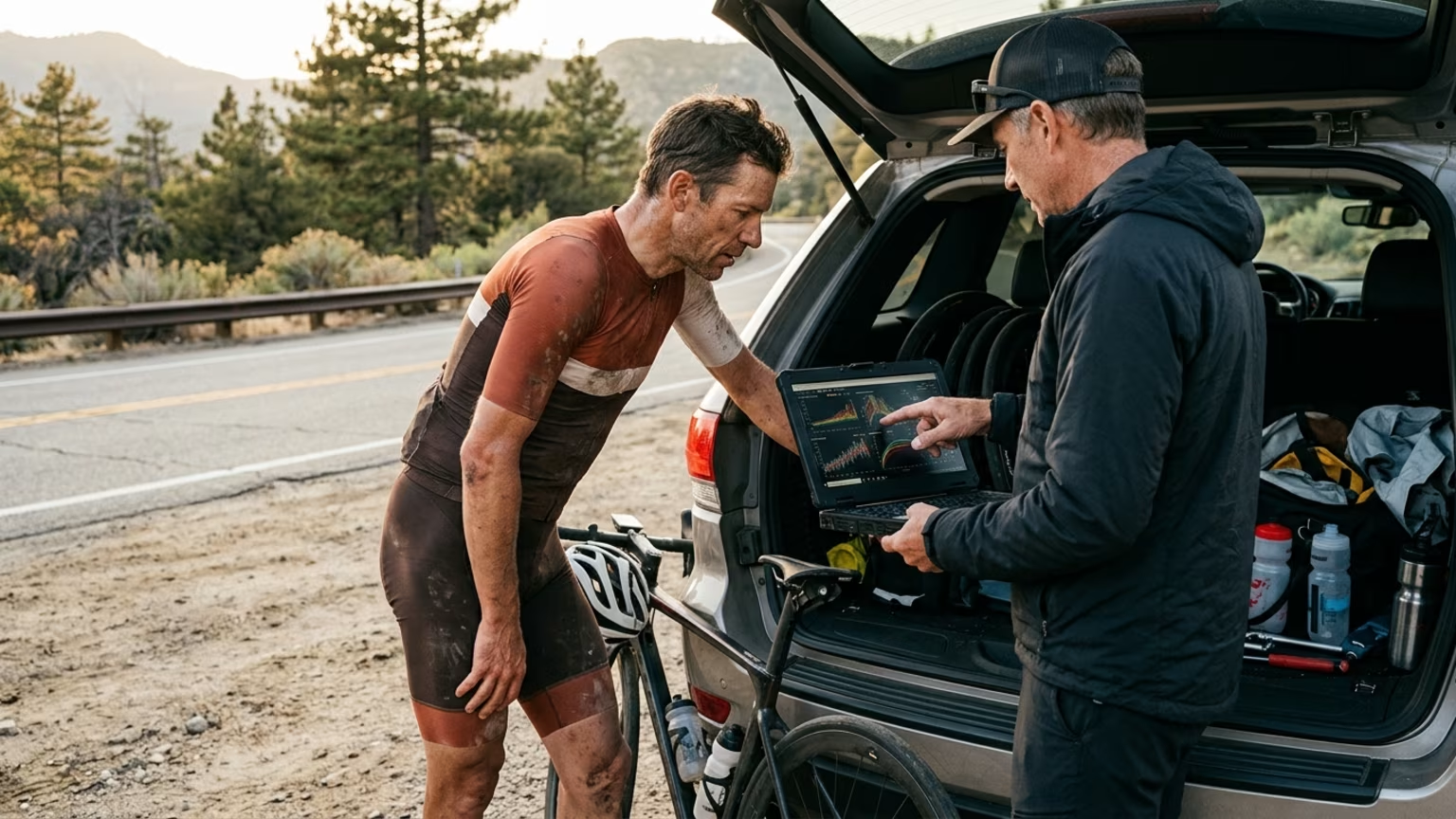
If you are feeling unusually unmotivated, you should view that as a potential warning sign rather than a moral failure. Monitoring your daily sleep, mood, and motivation can help you spot accumulating strain before it becomes a clinical issue. You should consult an adaptive training decision tree to logically adjust your schedule when these warning signs appear. Making these smart, preemptive adjustments preserves your long term training consistency much better than forcing a bad workout.
Historically, athletes relied entirely on the absence of pain to signal their readiness to run or ride again. A recent systematic review found a major shift away from this single-factor approach toward much broader multifactorial frameworks. The reviewed studies reported a median of six return-to-play criteria, with protocols ranging from four to eight specific requirements. A single green light on a pain scale is no longer considered adequate for a safe return to sport.
Commonly reported benchmarks include the total absence of pain, achieving at least ninety percent strength symmetry, and passing functional tests. This evolving standard thoughtfully incorporates biological healing, functional recovery, psychological readiness, and load tolerance into highly individualized decisions. A 2026 abstract listed in the Archives of Clinical Neuropsychology compared resilience after concussion and orthopaedic injury. This specialized research further illustrates the growing complexity and nuance of modern recovery protocols for older athletes.
When plotting your comeback from any setback, you need to combine subjective feelings with objective training data. Psychological readiness, fear of reinjury, and tolerance of sport-specific load matter just as much as basic physical healing. Relying solely on grit to artificially rush the recovery process is a well documented path to reinjury. A patient return protocol is absolutely essential for designing your athletic life for the next thirty years.
As we age, our physiological tolerance for accumulating high intensity training stress naturally changes. Coaching sources consistently argue that recovery becomes increasingly individual and vastly more important for athletes over forty. One coaching guide recommends forty-eight to seventy-two hours between high-intensity sessions for a typical fifty-five-year-old. The same coaching guide boldly suggests a maximum of two high-intensity sessions per week for this specific older demographic.
While these figures are certainly not universal clinical rules, they provide a very conservative template for older competitors. Interestingly, one coaching source notes that training-volume changes explained approximately fifty-four percent of age-related oxygen capacity decline in men. For women, training-volume changes accounted for thirty-nine percent of the decline, according to a detailed review by Hirofumi Tanaka and Douglas Seals. This data shows that maintaining appropriate training volume is crucial, provided you can adequately recover from the work.
A masters-athlete review summarized by NZ Doctor strongly emphasizes that masters competitors are a distinct clinical population. They require careful consideration of active-aging recommendations, individualized strength work, and strategic sleep management to maintain their peak performance. You must learn how to balance macronutrients alongside these shifting biological recovery demands. Your daily fueling strategy plays a massive role in how quickly your aging tissues can repair themselves after heavy loads.
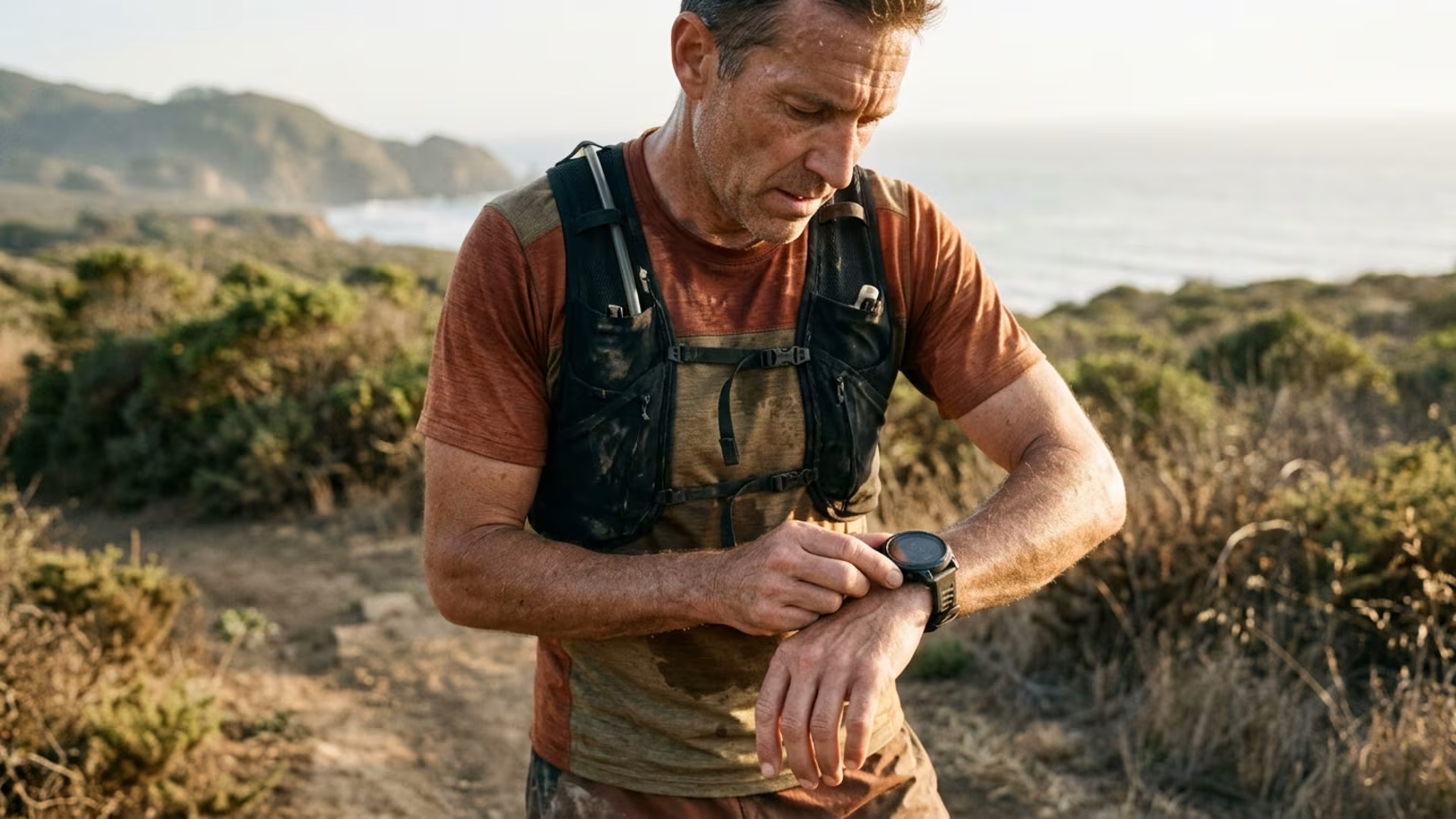
Moving away from the traditional model of blind toughness requires a structured system for evaluating your daily readiness. You need to gather practical information before deciding whether to push through a workout or pull back. This means actively considering pain behavior, movement quality, recent sleep metrics, and overall mood before starting your watch. Wearable data can certainly inform these decisions, but it should never entirely replace your own subjective self assessment.
Many successful masters athletes use a basic traffic-light decision system to guide their daily training volume. In a green light scenario, familiar symptoms are stable or improving, movement is completely normal, and recovery is broadly adequate. This indicates that your body is prepared to safely absorb and adapt to the planned training stress. You can proceed with your hardest intervals or longest endurance rides with total confidence in your structural integrity.
An amber light scenario occurs when symptoms are changing, performance is unexpectedly poor, or recovery concerns are visibly accumulating. When you see an amber light, you should immediately reduce your intensity or seek professional input from a coach. A red light involves acute injury or rapidly escalating pain. You must also treat sudden neurological symptoms, illness, or major functional loss as clear red lights. You must completely stop training and obtain a proper medical assessment when facing a red light condition.
Treating rest and altered training as active forms of resilience is the true hallmark of a mature competitor. If a planned hard session produces unusual symptoms, an easier session or rest may better preserve your long term consistency. True toughness is having the profound patience to rest today so you can successfully train again tomorrow.
Real endurance resilience requires you to completely stop viewing recovery as a sign of weakness or a lack of dedication. Being tough enough to ignore your body might temporarily win you a single workout, but it compromises your future. Adopt the traffic-light decision system for your daily training schedule starting tomorrow morning.

Follow ReEndure for practical insights on endurance training, recovery, nutrition and healthy aging. Stay connected for new articles, research led guidance and ideas to help you perform better for longer.



Read practical ideas on endurance training, recovery, nutrition and healthy aging to keep progressing for years to come.
Read the Blog