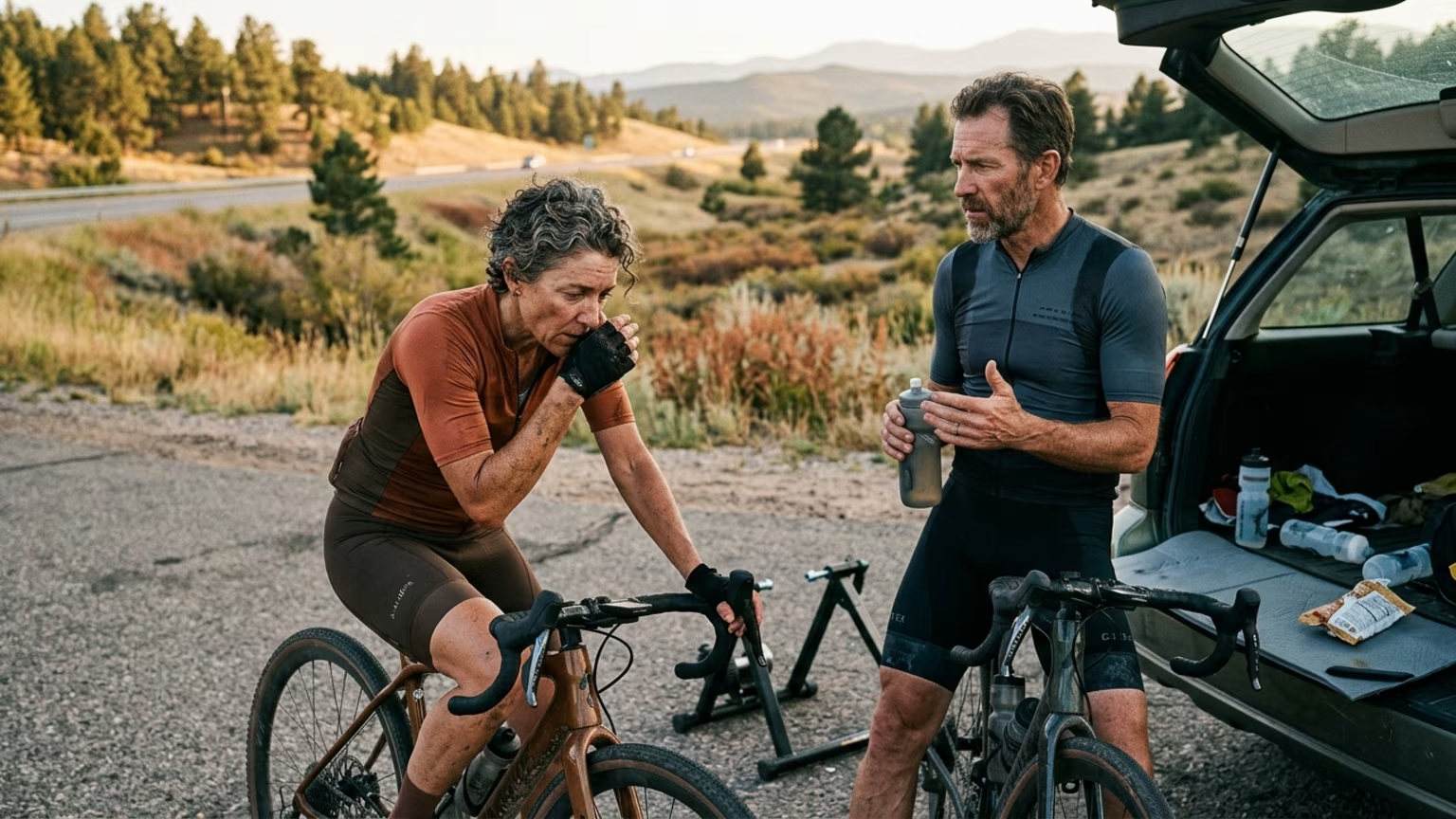

Elite cyclists like Demi Vollering countered a Novig ad by sharing heavy training footage. We break down why functional capability beats media aesthetics.





On September 16, 2026, IDL Pro Cycling reported that several elite female athletes publicly criticized a marketing campaign by sharing footage of their actual training routines. The controversy centered on a campaign for Novig, a sports prediction platform. The advertisement featured actor Sydney Sweeney, a strategic partner and equity holder in the company, posing with sporting equipment in minimal clothing. According to CNN, as cited by IDL Pro Cycling, the Instagram Reels version of the advertisement reached 37 million views within four days.
In response, athletes from multiple sports posted videos of their demanding workouts and competition highlights. The collective pushback shifted the public conversation away from superficial media representations of bodies and toward the functional reality of athletic preparation. The athlete criticism is partly normative and cultural. A sports advertisement does not necessarily have to feature an active athlete to be legitimate advertising.
However, the commercial incentives and editorial choices that determine what receives attention remain a point of contention. By centering a mainstream entertainment figure in a sports context, the campaign inadvertently united female champions around a shared message of athletic capability. The primary takeaway from this widespread athlete response is a firm defense of physical capability over visual appearance. Demi Vollering, a Tour de France Femmes winner, shared a video highlighting her training and sporting achievements.
Vollering wrote that while it was perhaps good the advertisement started a conversation, it remained sad that women still needed to have it. She emphasized that sport teaches people the body is far more than something to look at. Vollering added that sport can take people to places they never dreamed possible. Olympic team sprint champion Sophie Capewell joined the movement by sharing footage of her own gym and velodrome sessions.
Capewell noted that the issue was not really about the actor involved, but rather about what gets attention and why. According to BBC Sport, Capewell called the collective athlete response quite powerful. By showing the harsh environments where speed is built, these athletes proved that genuine performance is rooted in heavy resistance and focused preparation.
This shift in focus from aesthetics to capability carries immense value for the ambitious endurance athlete over thirty five. The cultural pressure to look a certain way often distracts older athletes from what actually matters for longevity and performance. When professionals like Capewell highlight their strength sessions and track workouts, they remind us that speed and durability are built away from the spotlight. For everyday endurance athletes, prioritizing function means tracking metrics that actually reflect physiological progress.
Our team consistently advises athletes to monitor their sustainable power, technical execution, and recovery consistency instead of focusing on aesthetic ideals. British sprinter Amy Hunt echoed this sentiment when she told BBC Sport that the genuine image of women in sport includes muscle, hard work, sweat, and blood. That raw effort is what builds a resilient engine for the long haul. This incident illustrates a growing overlap between entertainment marketing, sports prediction platforms, and women's sport imagery.
Novig's campaign was designed around a mainstream entertainment figure, while the backlash came from athletes who argued that athletic credibility should not be replaced by sexualized presentation. Four time Olympic swimming champion Ariarne Titmus described herself as infuriated by the advertisement and questioned the continued monetization of women’s bodies. American gymnast Gracie Kramer helped initiate the athlete response format by posting her own sporting highlights. Even endurance riders like Unbound XL runner up Maddy Nutty entered the debate.
The story has become international in scope, with reporting documenting responses from athletes associated with cycling, swimming, and athletics. That breadth suggests the debate is not confined to cycling’s traditional media ecosystem. For older riders, this widespread agreement underscores a critical philosophy about sustained participation. We must evaluate our training by whether it improves sustainable power, climbing ability, sprint control, and bike handling.
Hitting my forties brought a harsh reality check. The track workouts were not getting slower, but the days after them felt significantly heavier. Instead of forcing my old Tuesday and Thursday intensity schedule, I looked at the data on Masters athletes and muscle protein synthesis. I pushed my second hard session to Friday, allowing an extra forty eight hours of low intensity recovery.
My total weekly volume stayed the same, but the quality of my intervals skyrocketed. Respecting the recovery curve after forty is essential when incorporating the heavy lifting and track speed required to maintain power. Gym and track footage from elite riders serves as excellent inspiration, but it should not be treated as a direct blueprint. The reporting does not detail Capewell’s specific loads, repetition schemes, or recovery intervals.
Older athletes returning to strength work must prioritize progressive loading and excellent technique above all else. Building a solid foundation of strength training for endurance durability is far more important than attempting to mirror the volume of an Olympic champion. Track cycling provides an unusually visible contrast between image led sports marketing and performance led preparation. Capewell’s shared footage included both gym work and velodrome work, showing that elite cycling performance involves heavy preparation away from the final race itself.
Capewell’s response is more directly performance oriented because it showed the specific environments in which elite track cyclists develop their abilities. The footage highlighted the essential role of the gym and the velodrome in building raw athletic power. For ambitious adult athletes, this represents a crucial reminder that cycling performance is not built entirely on the road. Conditioning off the bike and targeted track sessions provide the neuromuscular stimulus needed to maintain powerful muscle fibers as we age.
This media moment encourages us to redefine how we measure success as we age. We often see athletes become discouraged if their physical appearance does not match a commercial ideal. By measuring progress through functional markers, you can stay motivated for decades. Learning how to measure athletic growth through improved bike handling or better pacing strategies ensures that your training remains productive.
When you structure your week, ensure that your training stress serves a specific functional purpose. If you are lifting weights, the goal should be injury prevention and power development rather than chasing a specific look. If you are doing interval sessions, the objective should be raising your aerobic ceiling or clearing lactate efficiently. The athletes who thrive into their fifties and sixties are those who train for capability, ignore superficial trends, and manage their physical stress with precision.
Recreational cyclists can use this media moment to audit whether their current plan includes more than just steady aerobic riding. A balanced approach requires appropriate resistance training, mobility work, and high intensity efforts tailored to your injury history. Track or velodrome sessions require appropriate coaching, strict etiquette, and rigorous safety procedures. You should build technical exposure gradually and avoid assuming that watching elite track footage is sufficient preparation for riding in a fast environment.
The strongest practical message is to document your functional progress meticulously. You might track your training consistency, power output benchmarks, perceived exertion, and sleep quality. Provided these chosen measures are appropriate, they will guide your long term athletic journey far better than any aesthetic metric. The overwhelming consensus across disciplines is that true athletic identity is defined by hard work and consistency.
Endurance athletes over thirty five must reject aesthetic standards driven by media and train strictly for functional capability, structural resilience, and long term performance.

Follow ReEndure for practical insights on endurance training, recovery, nutrition and healthy aging. Stay connected for new articles, research led guidance and ideas to help you perform better for longer.





Read practical ideas on endurance training, recovery, nutrition and healthy aging to keep progressing for years to come.
Read the Blog