

Eliud Kipchoge won the Melbourne Marathon in 2:09:10 while reportedly testing the Huawei Watch GT Runner 2. Learn how older athletes should evaluate new gear.





On October 11, 2026, coverage detailed Eliud Kipchoge winning the Melbourne Marathon in 2:09:10. This performance set a new course record that was two seconds faster than the previous mark. According to the Independent, Taipei Times and Dawn, the race marked his first marathon victory since Berlin in 2023. The 41-year-old athlete demonstrated remarkable endurance during the Australian event.
Following the race, industry attention quickly shifted to the technology on his wrist. Gadgets & Wearables reported that Kipchoge appeared to wear the Huawei Watch GT Runner 2 in Melbourne. The publication based this identification on visual clues rather than official verification for this specific race. Huawei had previously confirmed his use of the watch at the Porto Alegre Marathon, but that confirmation does not establish his equipment choice in Melbourne.
Gadgets & Wearables outlined several specific features of the lightweight running watch. The article gives its weight as approximately 34.5 grams without the strap. It lists dual-band GPS, running power, lactate-threshold estimates and a dedicated marathon mode among its core capabilities. The outlet also noted that Kipchoge provided feedback during development and became Huawei’s global ambassador when the partnership was announced.
When a high-profile athlete tests new equipment, recreational runners often wonder if they should upgrade their own gear. Gadgets & Wearables cautions that basic functions like GPS, pace, heart rate and readability matter most on race day. Complex navigation tools and training prompts take a backseat during a competitive marathon effort. This practical checklist is highly relevant for older athletes who want to focus on execution rather than data overload.
The watch features running-power and lactate-threshold estimates. However, the available reporting does not provide a public sports-science study that validates these specific measurements. Reendure translates complex sports science into practical training habits without relying on unverified claims. Athletes should treat these physiological outputs as estimates rather than laboratory-level diagnoses.
Many ambitious adults aged 35 to 65 deal with confusion over conflicting training advice. It is tempting to rely on a watch to dictate your recovery and pacing strategies. Yet, massive training volume outweighs wearable hardware when it comes to long-term athletic success. A device that weighs 34.5 grams is comfortable, but its real value comes from accurately logging your fundamental effort.
Older endurance athletes frequently face slower recovery times and chronic overuse injuries. Relying strictly on an unvalidated lactate-threshold estimate could lead a runner to push too hard on easy days. We recommend using wearable data to support your internal pacing feel rather than replacing it. Evaluating new heart rate accuracy claims is important before adjusting your training zones based on a single device.
Kipchoge was reported as 41 when he secured his Melbourne victory in 2:09:10. His finish highlights that athletes can maintain high ambition alongside the realities of an aging body. However, it is crucial to remember that a champion's device choice does not cause their elite result. The next two finishers were Thomas Do Canto in 2:10:35 and Reece Edwards in 2:14:13.
Proper pacing requires tactical awareness that goes beyond what a watch screen displays. Using tactical restraint at the start usually produces faster overall finish times for masters runners. A dedicated marathon mode might offer helpful prompts, but it cannot replace a well-structured training plan. We deliver clear guidance to help you perform at your best today and keep racing for decades.
Running power is becoming a popular metric for managing effort on hilly terrain. While the Huawei Watch GT Runner 2 estimates this metric, independent verification remains necessary for clinical accuracy. Reendure focuses equally on long-term longevity and immediate race performance. You should only adjust your established training protocols when new hardware metrics are backed by peer-reviewed science.
Endurance athletes must balance their high ambitions with intelligent recovery practices. Tracking basic metrics like distance, pace and heart rate provides enough data for progressive overload. Overcomplicating your regimen with unverified threshold estimates often detracts from the joy of the sport. Your primary focus should always remain on consistent effort and adequate rest.
The endurance sports media landscape is filled with exciting announcements about new gear. When a notable athlete appears to use a specific product, consumer interest naturally spikes. Our goal is to translate this news into evidence-based action without academic jargon. You can safely observe these trends without feeling pressured to immediately replace your current reliable equipment.
At Reendure, our Science Backed Training Guides provide structured plans that emphasize longevity and proper recovery. These evidence-based guides focus on progressive overload for older athletes who want to stay active for life. We integrate new wearable technology only when it clearly supports these fundamental training principles. A watch that accurately tracks core metrics can be a useful tool for following a structured plan.
Our Premium Research Newsletter serves as our flagship service for ambitious adults aged 35 to 65. This weekly email breakdown translates the latest peer-reviewed sports science into practical takeaways for everyday training. We analyse industry updates, like the recent Melbourne Marathon reporting, to filter out the noise. Subscribers receive clear insights that help them avoid confusion over conflicting fueling and technology advice.
Aging naturally brings slower recovery times that require careful management. While gadgets offer recovery scores, they cannot replace the fundamental need for sleep and proper nutrition. We are realistic and positive about the aging process while maintaining high athletic ambition. Athletes should use a watch to monitor resting heart rate trends rather than relying on algorithmic readiness scores.
Selecting the right gear involves focusing on comfort, reliability and clear data presentation. The reported 34.5-gram weight of the GT Runner 2 highlights a trend toward lighter devices that reduce wrist fatigue. However, the best equipment is simply whatever allows you to execute your training without distraction. We want to help you perform at your best today and keep competing for decades to come.
Chronic overuse injuries remain a primary pain point for endurance athletes over 35. A running watch cannot directly prevent joint strain or muscle tears during a heavy training block. Instead, you must adhere to structured rest periods and listen to your body's physical signals. Technology should serve as a supplementary log of your mileage rather than a substitute for physical therapy.
Upgrading your equipment right before a major race often introduces unnecessary stress and technical complications. Familiarity with your current device ensures you can easily read your pace during critical miles. If your current watch accurately tracks your location and heart rate, a new model will not automatically improve your finish time. The Melbourne result proves that consistent, long-term training always supersedes hardware choices.
Watching a 41-year-old athlete set a course record of 2:09:10 is highly motivating for masters runners. It demonstrates that a well-executed race plan can yield incredible results late into a career. Yet, everyday runners must avoid copying the exact gear choices or mileage volumes of professional champions. Your training must be tailored to your specific schedule, recovery capacity and personal fitness level.
For the ambitious athlete, total weekly volume, consistent sleep hours and perceived exertion are the most critical metrics. While dual-band GPS provides more precise location tracking in dense urban areas, it does not change your actual fitness. You should prioritise metrics that have a direct, scientifically proven correlation with athletic improvement. This grounded approach helps everyday athletes stay competitive without obsessing over marginal technological gains.
We deliver clear, evidence-based guidance by separating marketing claims from proven physiological science. When a device lists running-power estimates, we look for peer-reviewed validation before recommending it to our audience. Translating complex sports science into plain English ensures you only adopt habits that truly benefit your performance. Our objective is to empower you to make informed decisions about your gear, nutrition and recovery.
Ambitious adults often face confusion over conflicting nutrition and fueling advice alongside rapidly changing technology trends. Some sources suggest that you need the most advanced equipment to secure a personal best time. We counteract this by focusing on realistic principles that support the aging endurance athlete. Your most valuable asset is a clear understanding of your own bodily feedback during intense efforts.
A dedicated marathon mode is designed to streamline the information presented to a runner during a race. Gadgets & Wearables suggests that basic functions like screen readability take priority over complex data displays. By removing unnecessary metrics, a focused mode helps you stay present and aware of your perceived exertion. This simplicity aligns perfectly with our philosophy of focusing on execution rather than data overload.
Dual-band GPS technology is frequently highlighted as a major feature in modern running watches. It aims to provide more reliable pace readings when running through cities with tall buildings. However, relying entirely on a watch for pacing can be dangerous if the signal drops. Developing a strong internal sense of effort ensures you can maintain your rhythm regardless of technical glitches.
Ambitious older athletes should evaluate new wearable technology based on its execution of fundamental race-day metrics rather than unverified physiological estimates.

Follow ReEndure for practical insights on endurance training, recovery, nutrition and healthy aging. Stay connected for new articles, research led guidance and ideas to help you perform better for longer.


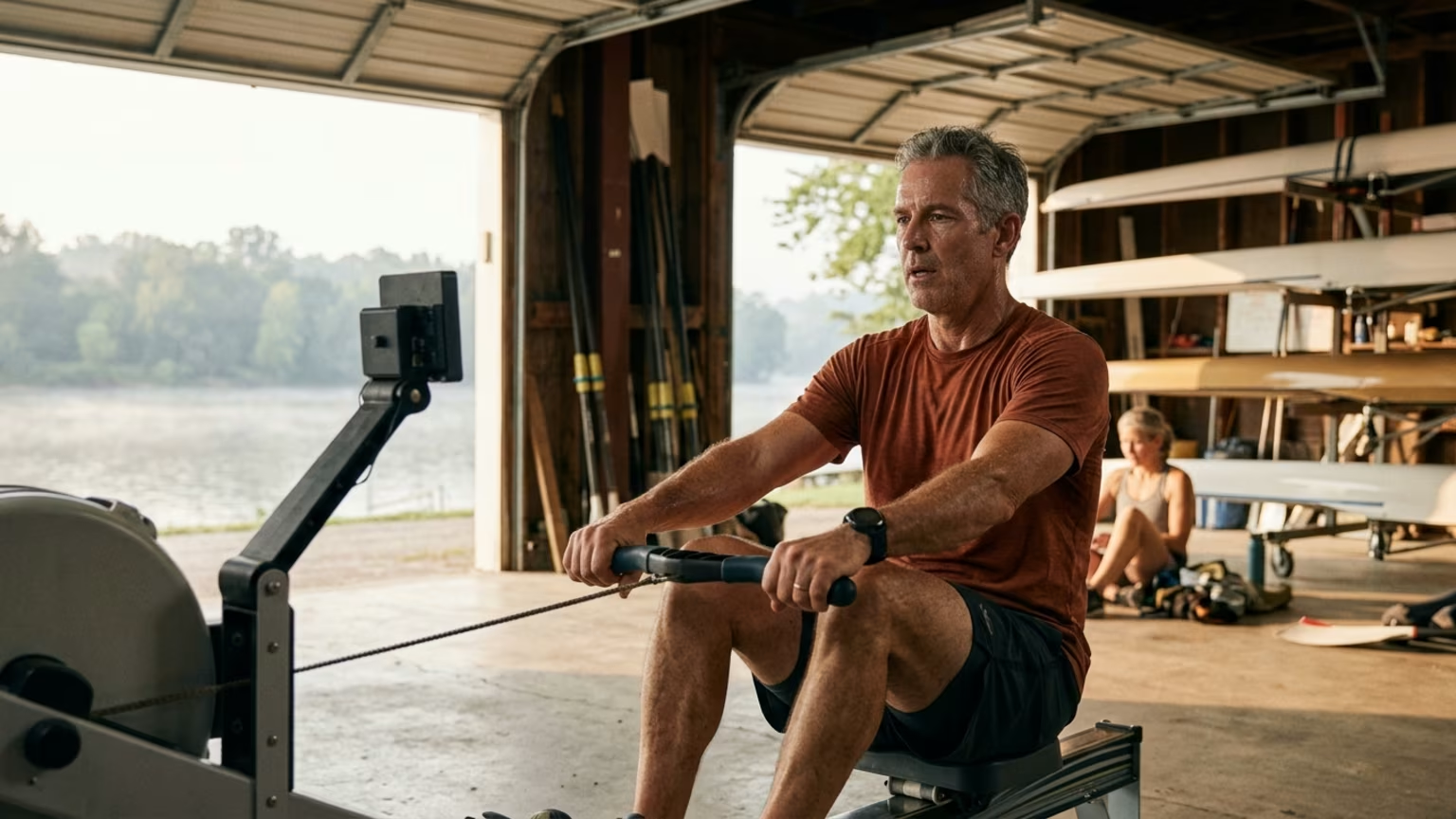
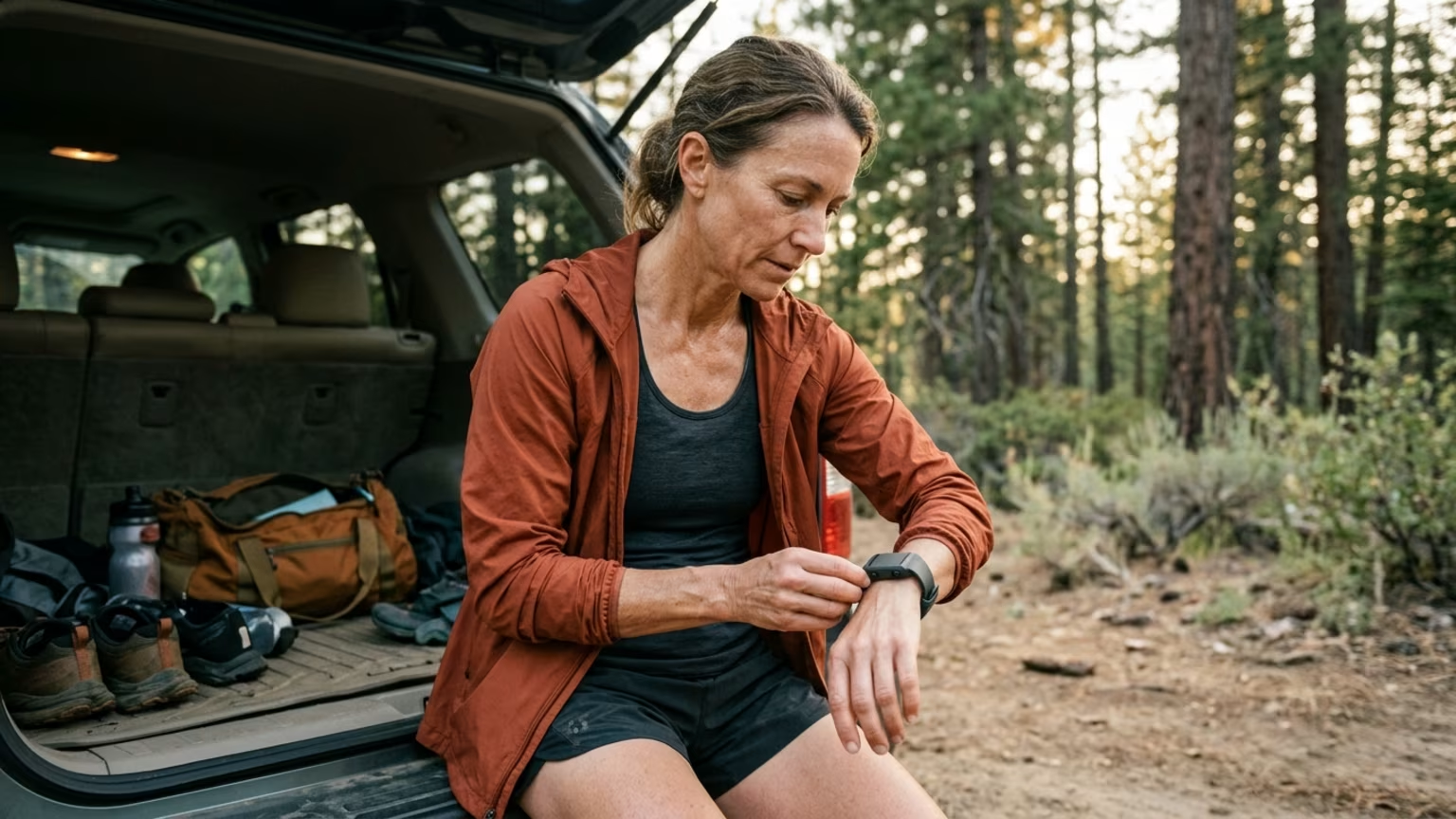
Read practical ideas on endurance training, recovery, nutrition and healthy aging to keep progressing for years to come.
Read the Blog