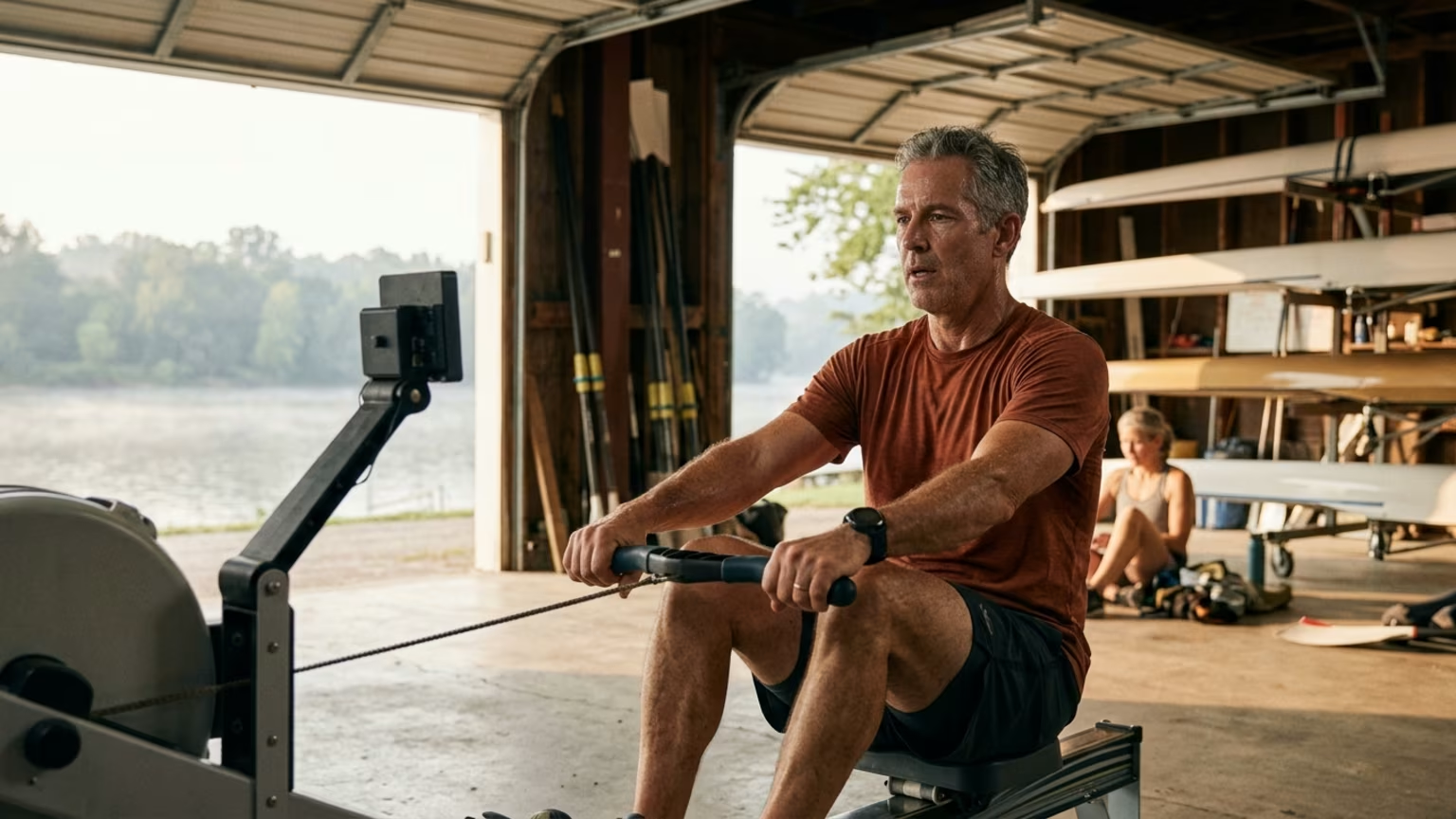

Learn how athletes over 40 can optimize their 1,000-metre rowing times by balancing low-to-moderate aerobic sessions with one focused weekly interval workout.





On October 11, 2026, Men’s Health UK published a performance guide focused on rowing benchmarks and training protocols for masters athletes. The publication presented 1,000-metre rowing times specifically for men aged 40 and 45. The guide stressed that these numbers are rough reference points rather than universal targets. The data draws from online submissions to Rowing Level rather than a population-representative survey.
This recent breakdown addresses the changing physiological realities for adults entering their fourth decade of life. It provides a clear framework for balancing volume and intensity on the rowing machine. The article emphasizes safe and sustainable training over years rather than quick performance gains. By pairing specific time benchmarks with actionable coaching advice, the guide offers a practical template for aging competitors.
The primary conclusion of the publication centers on a structured but sustainable approach to the rowing machine. Rowing coach Austin Hendrickson recommends building a larger aerobic base alongside a smaller volume of high-intensity work. He prescribes two to three low-to-moderate aerobic rowing sessions per week. Each of these aerobic sessions should last at least 20 minutes to be effective.
Athletes should then add exactly one harder workout to their weekly schedule. For that harder session, Hendrickson suggests alternating one minute hard with one minute easy. Another practical option is alternating 30 seconds hard with 30 seconds easy. He specifically advises against making every row a race and stresses that technique must remain a priority as intensity rises.
The publication also summarizes age-related research from The Journal of Physiology. That research notes peak endurance performance is generally maintained until around age 35. It then declines modestly until roughly ages 50 to 60 before dropping more steeply thereafter. The research identifies falling VO₂ max alongside reductions in training volume and intensity as contributors to this decline.
A separate 2020 Sports Medicine review provides further scientific context for these changes. That review is titled “Lifelong Endurance Exercise as a Countermeasure Against Age-Related VO₂ max Decline.” It was authored by Valenzuela and colleagues and published in volume 50, issue 4. The research spans pages 703 to 716 and underscores why maintaining consistent aerobic exercise is critical as athletes age.
The benchmarks provided in the guide require careful interpretation before athletes apply them to their own training. For age 40, the listed 1,000-metre times are 3:58.5 for beginners, 3:26.5 for intermediate rowers, and 3:11.8 for advanced athletes. At age 45, the respective figures shift to 4:03.4, 3:30.7, and 3:15.7. However, these times are not a validated standard for all endurance athletes.
The guide cautions that online rowing standards may overrepresent highly experienced rowers who actively submit their times. The source material does not define the exact criteria for categories like beginner or intermediate. Athletes should not view these specific times as a strict pass or fail standard for their own fitness. Instead, personal previous performances often serve as a much more useful and accurate benchmark.
Furthermore, the article states that a 1,000-metre time reflects much more than cardiovascular fitness alone. Technique and overall training experience heavily influence how efficiently an athlete moves the handle. Mobility and body mass also play major roles in force production. A rower's height and limb length affect the final time on the clock.
Equipment factors also play a massive role in standardizing any rowing performance. The specific machine used and its drag factor setting can significantly alter an athlete's time. Because of these variables, athletes should track their repeatable performances under comparable machine and drag-factor conditions. A slower time does not automatically establish poor aerobic fitness if these other factors are not optimized.
For the ambitious endurance athlete over 35, this guidance reinforces the importance of polarized training. Adding rowing to your routine offers a relatively low-impact way to maintain cardiovascular fitness. This is especially valuable for runners seeking to reduce cumulative impact forces on their lower extremities. However, the exact ratio of easy work to hard efforts becomes critical as recovery naturally slows.
Hendrickson's advice aligns with sustainable long-term conditioning rather than short-term peaking. Committing to two or three moderate sessions builds durability without overloading the joints. This baseline volume directly targets the age-related reduction in training capacity noted in The Journal of Physiology. You can read more about building a sustainable training strategy for masters athletes in our Long Game Goal System.
When athletes maintain their aerobic base, they can better mitigate the steep drops in performance expected after age 60. Consistent and unhurried volume allows the body to adapt and strengthen cellular energy systems. The single weekly interval session is where athletes can safely challenge their VO₂ max. Limiting high-intensity work to one day prevents the chronic fatigue that often derails older competitors.
Keeping the intervals short, such as 30 seconds or one minute, ensures high quality without compromising form. By avoiding overly long intervals, older athletes can recover faster for their next training block. Maintaining proper technique under fatigue is absolutely essential for long-term injury prevention. This structured approach prevents athletes from repeatedly testing a maximal 1,000-metre effort as a substitute for actual training.
Treating every workout as a time trial is a common mistake that leads to burnout and joint pain. Instead, older athletes must respect the intended intensity of their low-to-moderate aerobic sessions. Keeping the easy days strictly easy allows the heart rate to stay in a purely aerobic zone. If you need help managing your weekly load, review our framework for the sustainable training week.
Cross-training on the rowing machine also demands excellent hip and thoracic mobility. Masters athletes often lose range of motion long before they lose their raw aerobic engine. A stiff lower back or tight hamstrings will severely restrict your stroke length on the ergometer. If you want to row efficiently, you must actively assess and work on your flexibility.
This ties into why endurance athletes need strength training for durability, which you can read about in our guide on designing your athletic life. Athletes should treat technique and mobility as factors to assess alongside conditioning when a result stalls. If your 1,000-metre time stops improving, the limiting factor might not be your heart or lungs. Poor posture on the machine or a suboptimal drag factor setting can easily waste your fitness.
Taking the time to dial in your equipment settings pays immense dividends for older athletes. Small technical corrections often yield faster times than weeks of additional aerobic volume. Adjusting your weekly schedule to accommodate these rowing sessions requires discipline and planning. Do not simply stack intense rowing workouts on top of heavy running or cycling days.
Instead, use the low-to-moderate rows as active recovery or primary aerobic conditioning. Older athletes must prioritize functional longevity over arbitrary volume targets to stay competitive. Our concurrent training guide offers more detail on balancing heavy resistance and aerobic work safely. Consistency over years matters far more than hitting a specific benchmark time on a single day.
The guidance from Men’s Health UK provides a sensible and balanced framework for staying active. By respecting the aging process and modifying your training volume, you can continue to train effectively. Focus on the repeatable process, refine your technique, and keep your hard days genuinely hard without overreaching.
Endurance athletes in their 40s should treat rowing benchmarks as loose context while prioritizing a sustainable mix of frequent aerobic base sessions and a single weekly interval workout.

Follow ReEndure for practical insights on endurance training, recovery, nutrition and healthy aging. Stay connected for new articles, research led guidance and ideas to help you perform better for longer.






Read practical ideas on endurance training, recovery, nutrition and healthy aging to keep progressing for years to come.
Read the Blog