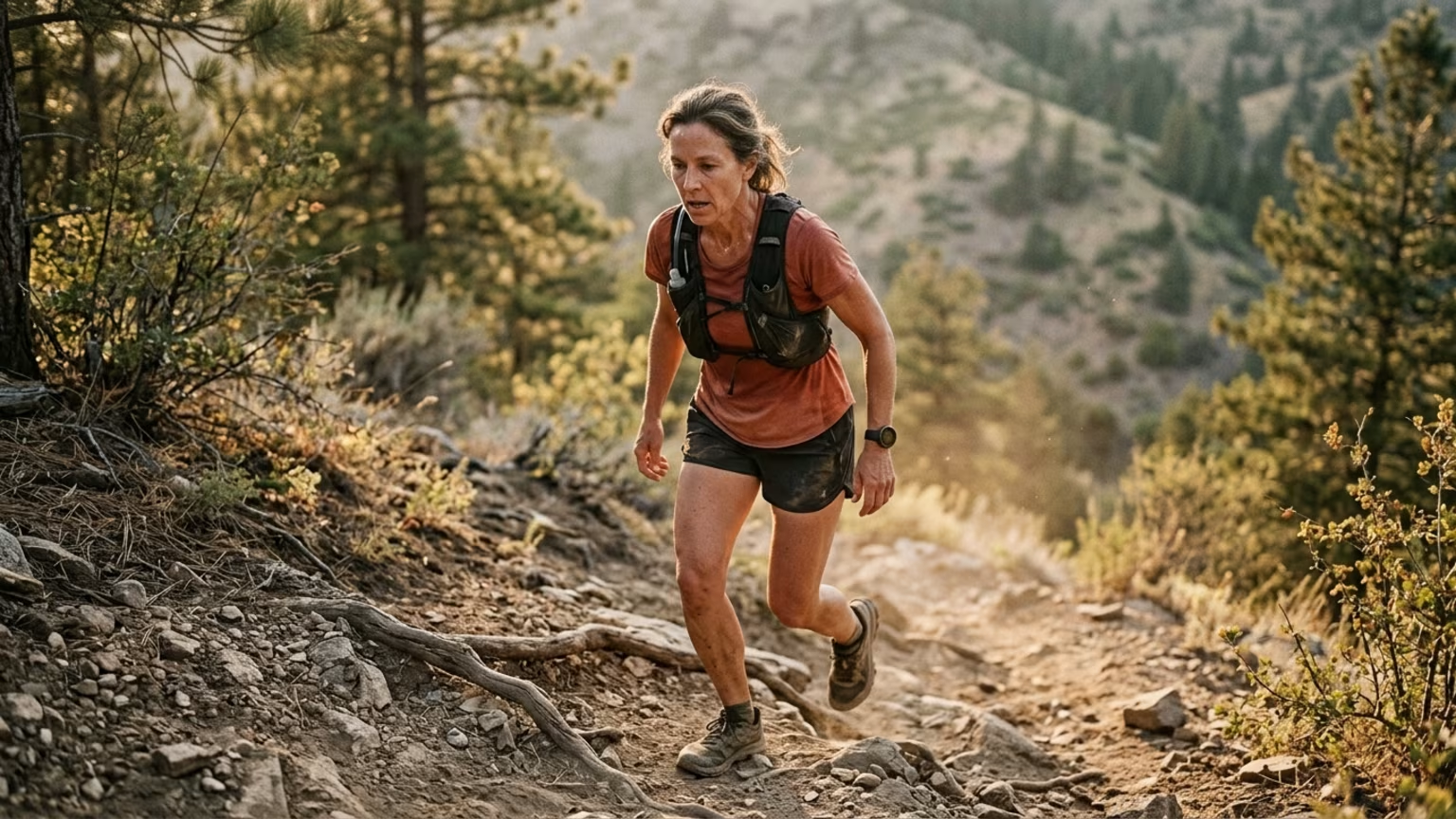

A study found that a 30-minute forest run helped athletes cover 4.6 percent more distance at the same effort. Here is what that means for veteran runners.





On October 7, 2026, Men's Journal reported on a new study examining how the physical environment affects athletic output. Endurance sports demand physical resilience, but psychological staleness is a very real threat to consistency. The sports science community often focuses heavily on structured intervals and gear choices. Yet, this research highlights how a simple change in scenery might influence a standard training session.
The core premise addresses a common question among endurance athletes who split time between city roads and local trails. We often rely on precise metrics like heart rate to dictate our training zones. However, this new data suggests that our surroundings play a subtle role in how our bodies respond to a given effort. The study measured exactly how much distance runners covered when they were asked to hold a specific intensity level.
The primary conclusion from the research is that athletes moved faster in a forest setting without feeling like they were working harder. Participants who ran in a natural environment covered about 4.6 percent more distance than they did on urban routes. Over the course of a 30-minute session, this translated to an average of 182 extra metres. They achieved this additional distance while reporting comparable perceived effort across both settings.
This finding is particularly interesting because the athletes' cardiovascular response remained steady. The average heart rate did not differ significantly between the forest runs and the urban runs. Participants were instructed to maintain a perceived effort of four out of ten, which represents a relaxed pace. At this specific intensity, the forest environment yielded a slightly faster outcome without requiring a heavier physiological toll.
The researchers concluded that forest running is associated with better performance and greater enjoyment without increased physical strain. Athletes should note that the reported distance advantage carried a small effect size. This data argues against treating natural environments as a massive performance breakthrough for competitive racing. Instead, the findings suggest a slight efficiency boost when your body and mind are engaged with natural surroundings.
Beyond the raw distance metrics, the study measured the psychological impact of the training environment. The forest runs were associated with better overall mood and greater enjoyment compared to the urban sessions. The researchers also noted that participants reported stronger intentions to exercise again after completing their natural routes. Loughborough University’s October 5, 2026 news summary described natural-environment exercise as being associated with running further, moving faster, and generating greater motivation to stay active.
The findings suggest that running in natural settings could be a useful tool for athletes struggling with routine. Maintaining consistency is one of the hardest parts of an endurance training block. When your daily loop feels stale, changing the visual stimulus can re-engage your mind. A simple change in environment provides a fresh experience without requiring you to push harder.
To gather this data, the research team designed a precise within-person comparison study. The trial involved 47 healthy adults between the ages of 18 and 31. Instead of splitting these participants into separate groups, every single runner completed both versions of the test. Each person completed a 30-minute run in a forest setting and a separate 30-minute run in an urban environment.
Lead researcher Matthew Putland described the study protocol as relying on specific 30-minute loops in both settings. The athletes simply ran these designated circuits while maintaining their target perceived effort. By using the same individuals for both terrains, the researchers established clear baselines. This methodology reduced the chances that varying athletic backgrounds among the participants would skew the final distance results.
While the findings are intriguing, the research team offered several important caveats regarding the scope of their work. They cautioned that more research is needed to identify the exact environmental factors driving these differences. They also stressed the need to study feasibility, accessibility, and long-term effects across diverse and inactive populations. It remains unclear if the benefits stem from the visual greenery or the cognitive engagement required to navigate trails.
Furthermore, the study explicitly measured intentions to exercise again rather than tracking actual long-term training habits. The researchers did not track whether the participants subsequently exercised more in the weeks that followed. Measuring a post-workout intention provides helpful insight into immediate motivation, but it does not prove long-term adherence. A feeling of motivation after one workout does not guarantee consistency over a cold winter training block.
The Loughborough University release framed the findings as relevant to larger issues of physical inactivity. However, the available sources provided no population-level data on how forest running impacts broader public health. The study design was narrowly focused on immediate, short-term outcomes in a young and healthy group. Extrapolating these specific distance gains to the general public or inactive populations requires much broader testing.
For ambitious endurance athletes aged 35 to 65, this study provides a practical strategy for managing easy training days. When you are focused on building long-term aerobic endurance, keeping your easy sessions truly easy is critical. If a forest route helps you cover slightly more distance at a low perceived effort, it can make base training feel less tedious. Incorporating natural settings might offer a mental break from the repetitive pounding of city sidewalks and concrete paths.
However, veteran athletes must read these findings with a clear understanding of their own physiological realities. The study participants were healthy adults aged 18 to 31. We cannot automatically assume that older athletes will experience the exact same distance advantage. Relying on accurate heart rate tracking during your efforts remains essential for older adults validating their actual exertion, rather than trusting perceived effort alone.
The physiological differences between a 25-year-old and a 50-year-old runner affect everything from heart rate to tissue resilience. Younger runners might adapt instantly to the shifting mechanics of a trail run. Older athletes need more time to condition their tendons and ligaments for new stresses. This means you should treat any transition to natural surfaces as a gradual process rather than an immediate switch.
Finding ways to enjoy the process is vital for athletes balancing demanding careers, family responsibilities, and aging bodies. The mental fatigue of strict, data-driven training plans can often lead to burnout. Taking a 30-minute run in the woods allows you to disconnect slightly from pacing pressure. This psychological relief is often just as valuable as any minor aerobic benefit, helping older athletes sustain their motivation across a long season.
Terrain management is a major consideration for older athletes moving their runs off the road. The study coverage notes that the forest circuit featured more uneven ground compared to the urban route. Navigating roots, rocks, and soft dirt requires increased stability and engages different stabilizing muscles in the lower legs. A natural setting is not automatically easier or safer for your joints and connective tissues.
Veterans must balance the appeal of nature against the realities of footing and physical access. You should always choose terrain suited to your current ability and check local conditions before your run. Managing the physical load of uneven surfaces is a core part of a smart approach to recovery and mobility. If a sudden shift to trail running leaves you unusually sore, you may need to rethink your traditional weekly schedule to allow adequate recovery time between efforts.
For your next low-intensity session, consider experimenting with a familiar, accessible natural route. Keep your intended effort at a conservative four out of ten and match your usual duration. Note your total distance afterward and pay attention to how your legs feel the following morning. Treating this as a personal trial fits well into a mature athletic philosophy.
Moving your easy miles to a natural setting offers a modest boost to pace and enjoyment, but veteran athletes must prioritize safe terrain and proper recovery over small distance gains.

Follow ReEndure for practical insights on endurance training, recovery, nutrition and healthy aging. Stay connected for new articles, research led guidance and ideas to help you perform better for longer.


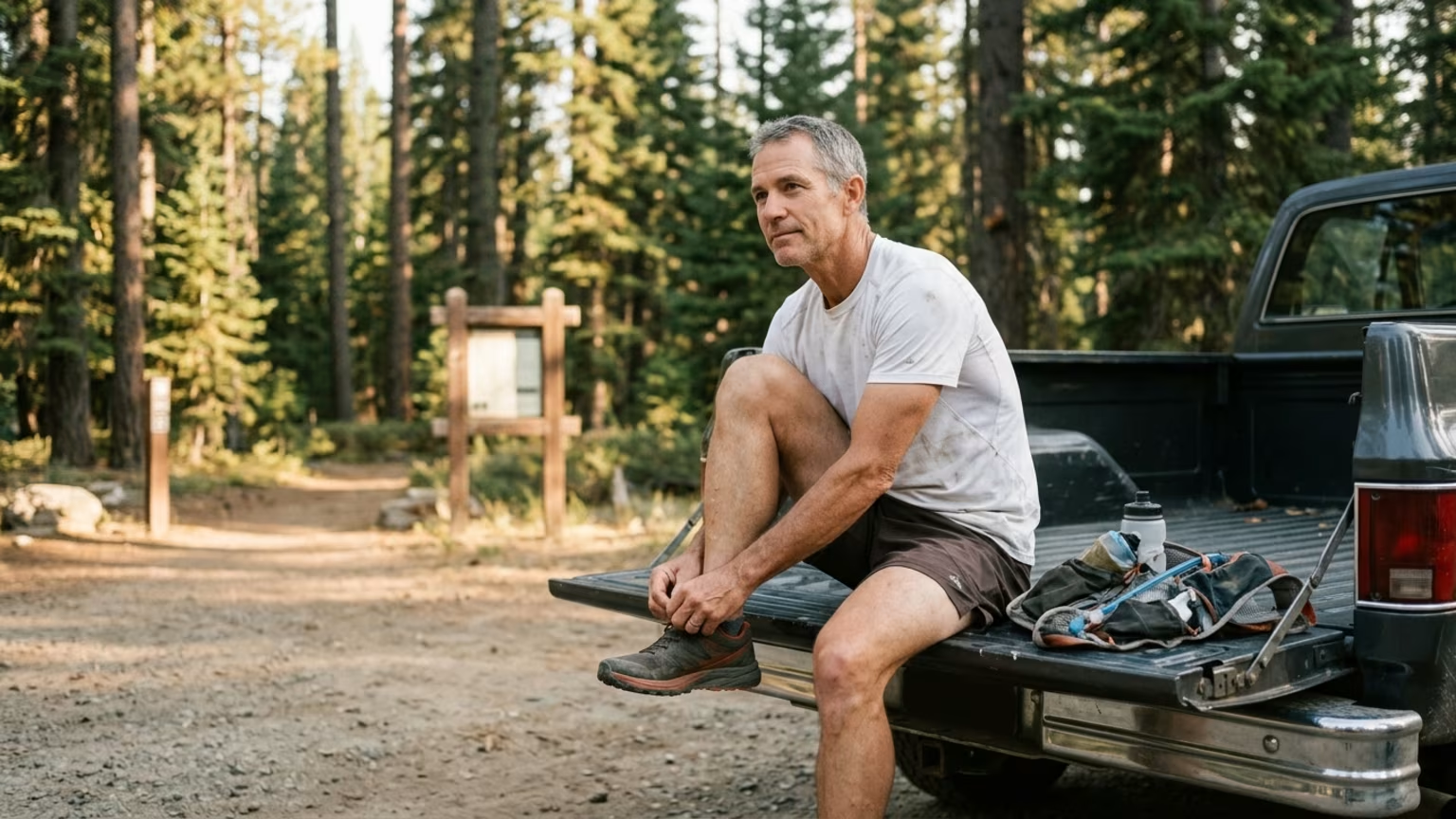

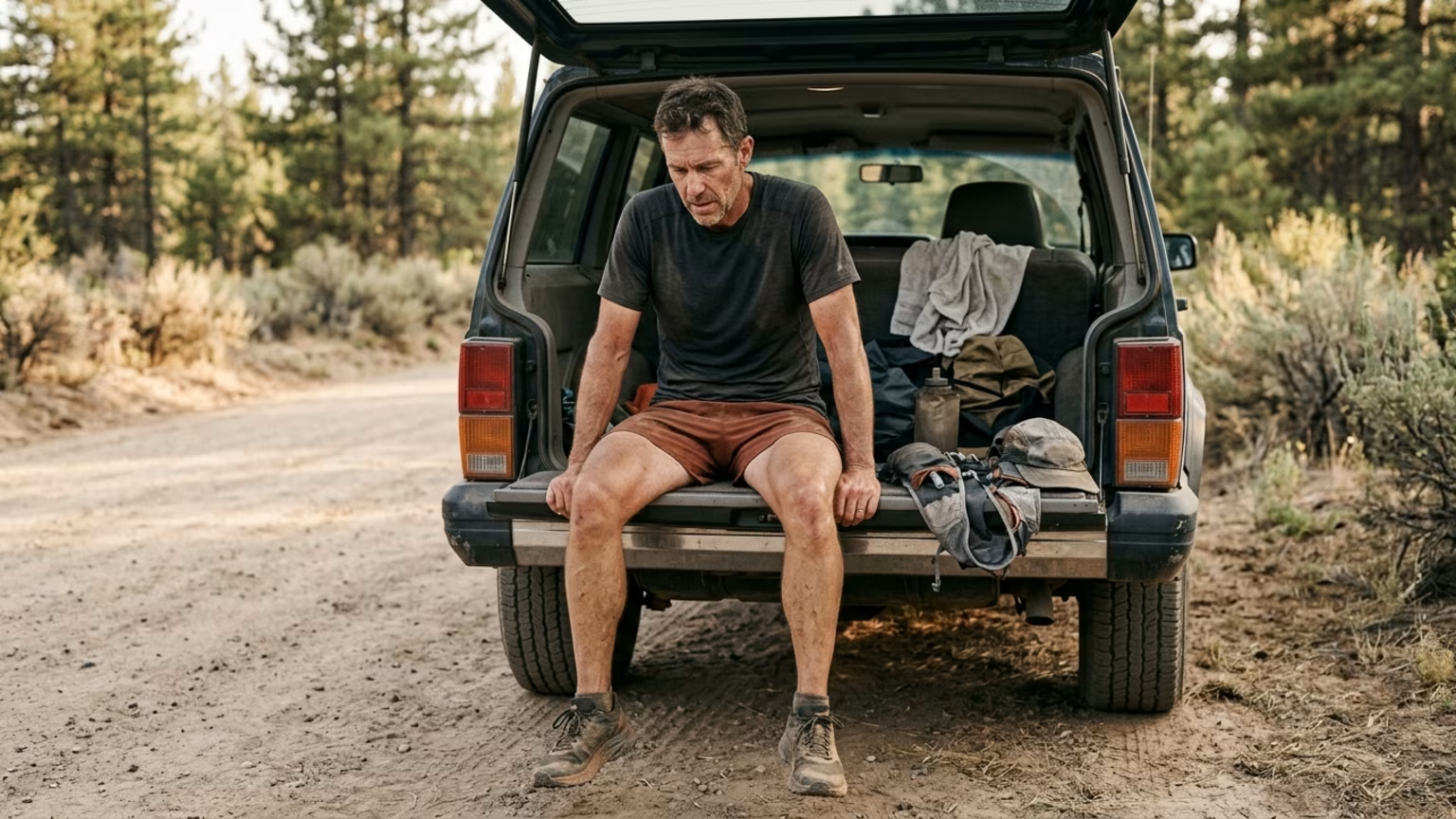
Read practical ideas on endurance training, recovery, nutrition and healthy aging to keep progressing for years to come.
Read the Blog