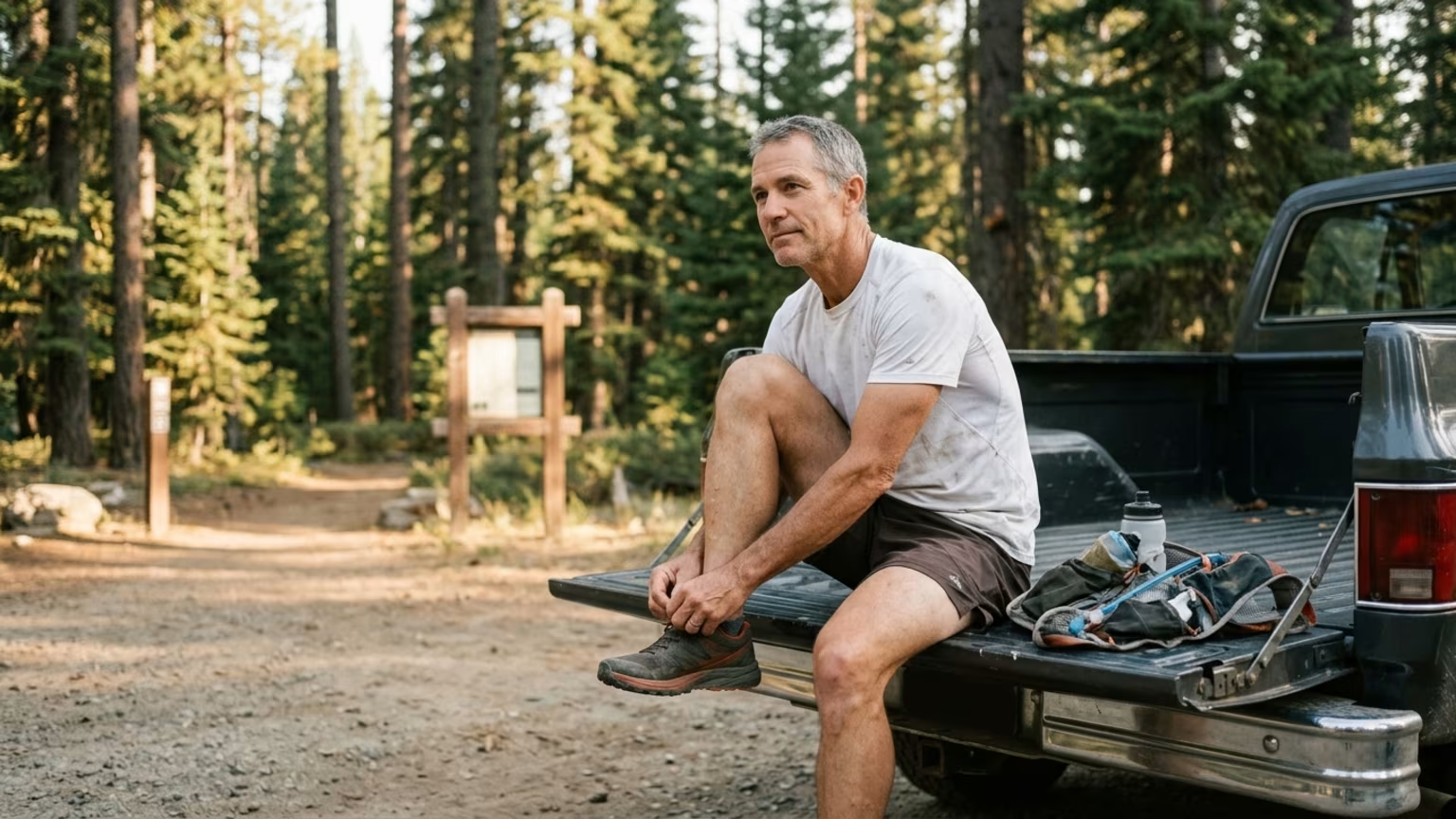

A 2024 trial shows one night of extended sleep cuts fatigue by 23% and improves sustained attention. Learn how older athletes can apply this recovery strategy.





In September 2024, the Journal of Sleep Research published a randomized crossover trial examining acute sleep extension in athletes. Researchers evaluated 22 elite youth ice hockey players from the Quebec Remparts during their training camp. The team tested whether a 10-hour sleep opportunity before practice would yield measurable physical or mental benefits. The results provided a compelling look at how extra rest impacts mental endurance over physical power.
Athletes have long known that chronic sleep deprivation severely harms performance, mood, and recovery. However, the effects of a single, strategically placed night of extra rest are less commonly discussed. By monitoring the athletes closely during a controlled training camp, researchers isolated the immediate impact of the intervention. The findings offered a clear signal about how extra rest influences sustained attention during athletic tasks.
The primary conclusion of the study centered on mental endurance and perceived effort rather than physical force. Following one night of extended sleep, the athletes reported a 23 percent reduction in perceived fatigue. Additionally, their reaction time on a demanding 30-minute cognitive task improved by 8 percent. This cognitive challenge required sustained attention while forcing the athletes to ignore distracting information, similar to a color-word interference test.
The extra sleep did not translate into broad physical improvements across all testing metrics. Researchers found no measurable difference in jump height, grip strength, or a shorter three-minute psychomotor-vigilance task. According to Guido Simonelli, a professor whose research team at the Université de Montréal was involved in the project, the duration of the task mattered. The clearest benefits emerged only when the athletes had to maintain concentration and decision-making over an extended period.
This indicates that a single longer night does not automatically improve explosive power or maximal strength. MedicalXpress noted that Simonelli described the approach as a simple, low-cost, non-drug strategy for reducing fatigue. However, it is an intervention focused on cognitive control rather than raw physical output. The researchers proposed that extended sleep might support the dorsal prefrontal cortex, a brain region heavily involved in perceived effort and cognitive control.
It is important to note that this brain-activity explanation remains a hypothesis rather than a proven mechanism. The researchers did not directly measure brain imaging or physiological mechanisms during the experiment. Regardless of the exact physiological pathway, the behavioral outcome was highly specific to prolonged mental effort. Athletes seeking an immediate increase in neuromuscular output should not treat this study as a replacement for strength training or proper fueling.
The trial methodology was straightforward, tightly controlled, and strictly monitored. Each of the 22 players, who had an average age of 17, completed two separate conditions. They experienced one normal-sleep night and one extended-sleep night during the study. The two conditions were separated by five days, and the order was randomized for each participant.
During the extended condition, the players were given 10 hours in bed. They achieved this longer window primarily by moving their bedtime earlier, while keeping their wake-up time fixed at approximately 6:45 a.m. This intervention successfully increased their actual sleep time from 424 minutes to 491 minutes. This represented a 16 percent increase in total sleep duration compared to their normal baseline.
Importantly, the additional time in bed did not degrade how well the athletes slept. Sleep efficiency, the time required to fall asleep, and nighttime wakefulness remained similar between the two conditions. This suggests the longer sleep opportunity did not measurably reduce the quality of their rest. After waking, the players completed a two-hour hockey practice before taking their physical and cognitive tests.
The trial was conducted under stable training-camp conditions with no increased academic load from examinations. Because the participants came from one unblinded male youth team, the findings should be generalized cautiously. The athletes knew which sleep condition they were assigned to, meaning expectancy effects cannot be completely ruled out. Furthermore, the trial did not establish whether the reported cognitive improvements translate into faster race times or fewer technical errors during competition.
For the ambitious endurance athlete over 35, this research provides a practical framework for managing heavy training loads. You do not necessarily need a multi-day protocol to see a benefit before a critical session. An occasional earlier bedtime is a realistic strategy that fits into a demanding adult schedule. A 2021 consensus review in the British Journal of Sports Medicine describes sleep extension as a protected nine to 10 hours in bed.
The review also points to endurance research where trained cyclists and triathletes were tested. These athletes reported better performance after approximately 8.4 hours of sleep, compared to 6.8 hours of habitual sleep. The consensus review also discusses banking sleep before an anticipated period of sleep loss. The key takeaway is to deploy this strategy strategically before cognitively demanding workouts.
You should experiment with an earlier bedtime before technical trail runs, open-water swimming, or race-pace intervals. Incorporating this tactic into your sleep and injury prevention playbook can help you manage complex training blocks. Do not expect this one-night protocol to immediately increase your maximal force production or sprint speed. The trial showed no improvement in grip strength or jump height, so manage your expectations accordingly.
Instead, judge the outcome by how manageable a complex, heavily paced training session feels. In endurance sports, the ability to maintain focus is directly tied to performance and safety. When fatigue sets in during the later stages of a race, poor decision-making can lead to nutritional errors or pacing mistakes. By utilizing occasional sleep extension, you equip your brain to handle these late-stage cognitive demands more effectively.
If your consistent daily routine provides the American Academy of Sleep Medicine recommended baseline of at least seven hours, an occasional extension serves as an acute tool. For adults managing fixed work commitments, sleeping in is rarely a viable option. The hockey trial highlights that moving your bedtime earlier is an effective way to increase your sleep window. It allows you to gain extra rest without disrupting early morning work or training schedules.
You should treat sleep extension as a personal experiment rather than a guaranteed physiological fix. Track your perceived fatigue, mood, and cognitive sharpness during technical intervals to see if the strategy works for you. This approach prioritizes long-term endurance performance by helping you make better pacing decisions under fatigue. Extra sleep remains a valuable asset for maintaining technical execution when your body is tired.
You should also maintain realistic health priorities throughout your training cycle. Consistently obtaining at least seven hours is the adult public-health baseline cited by the American Academy of Sleep Medicine. Longer sleep opportunities are particularly reasonable around heavy training, recovery from sleep loss, or demanding competition periods. Reendure consistently advises that recovery should be proactive, and an occasional extended night is a powerful, low-barrier option.
Older endurance athletes often face work stress, family responsibilities, travel schedules, and irregular training times. These daily variables can make a consistent 10-hour sleep opportunity difficult to achieve on a regular basis. However, testing an 8 to 9-hour opportunity before a complex session is a highly defensible approach. Prioritizing cognitive control will ultimately support your ability to endure longer, safer, and more effective training sessions.
Occasional sleep extension is a targeted, low-cost habit that protects cognitive sharpness and lowers perceived fatigue for endurance athletes facing complex training demands.

Follow ReEndure for practical insights on endurance training, recovery, nutrition and healthy aging. Stay connected for new articles, research led guidance and ideas to help you perform better for longer.




Read practical ideas on endurance training, recovery, nutrition and healthy aging to keep progressing for years to come.
Read the Blog