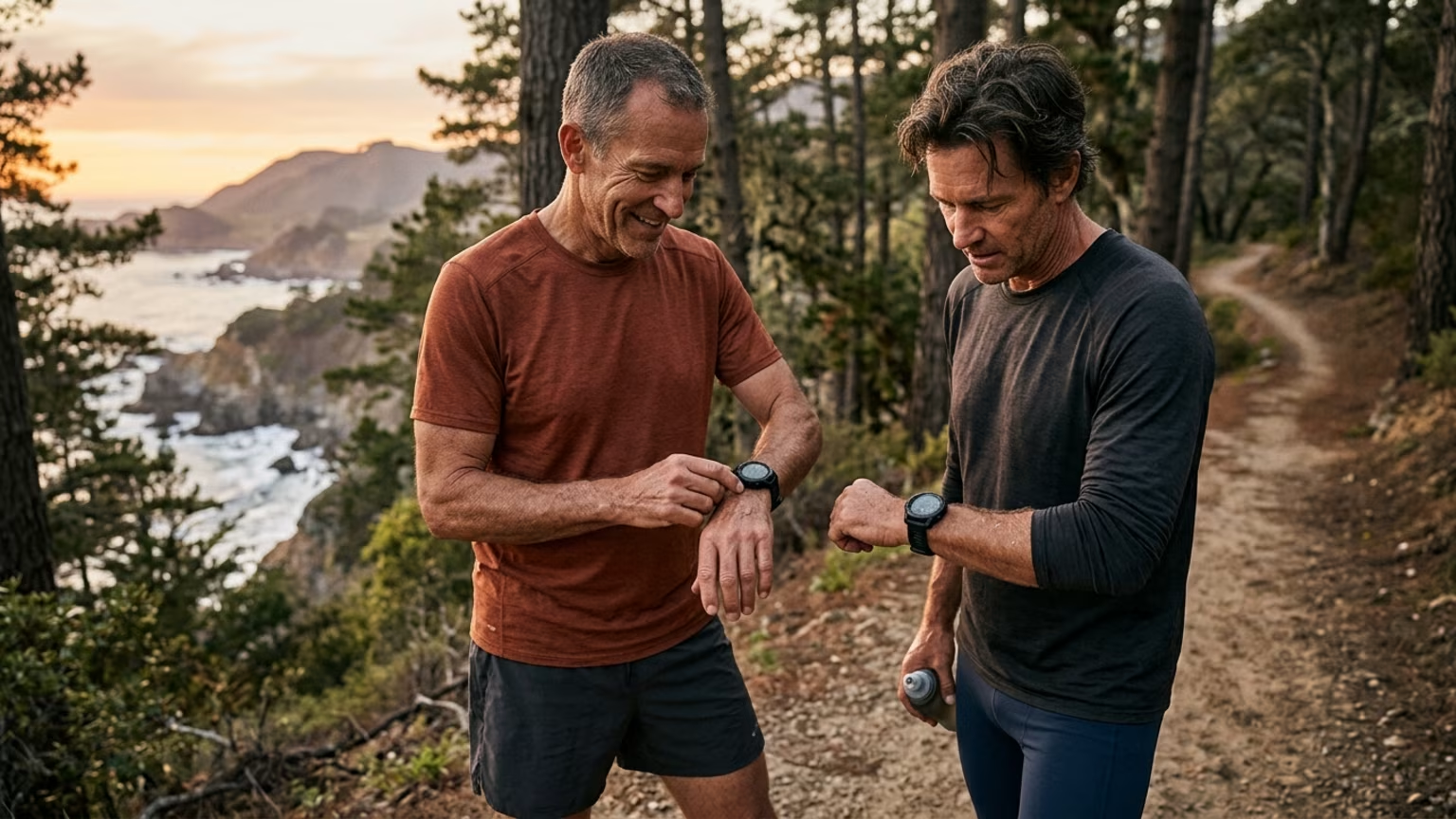

Garmin is rolling out new Fenix 9 training and stamina tracking features to existing watches. Learn how older athletes can use these updates for better pacing.





The mid-race alarm buzzes on a tired wrist. An endurance athlete checks their Garmin (also known as Garmin Ltd.) to see an endurance estimate dropping rapidly. Panic sets in as the digital feedback contradicts their race plan. A simple pacing decision suddenly feels like a heavy crisis.
Wearable technology often creates as much anxiety as it does clarity. However, a recent development might give endurance athletes better tools to manage that data. Garmin recently announced its new Fenix 9 watch family. Yet, the most impactful detail for masters athletes is a software update coming to older devices. DC Rainmaker reports that Garmin plans to bring virtually all of the Fenix 9 software updates to the Fenix 8 series and several other existing watches, with some hardware-dependent exceptions. The reported rollout covers the Fenix 8 family and the Enduro 3. The Tactix 8 and Forerunner 970 and 570 models are also included. Finally, the Fenix E and Venu X1 will receive updates.
Managing fatigue is the fundamental biological challenge of long-distance racing. When we push our bodies during a prolonged effort, metabolic byproducts accumulate and muscle glycogen steadily depletes. The central nervous system eventually attempts to slow the body down to protect it from damage. Pacing is essentially the art of managing this physiological decline over time. When an athlete misjudges their pace, they cross their lactate threshold too early. This error floods the muscles with acid and forces a dramatic drop in speed.
Garmin’s new software aims to quantify this physical decline through digital models. According to DC Rainmaker’s feature list, the update includes Garmin Epic, new stamina views, and expanded rucking tools. It also introduces endurance-time concepts. These features operate as algorithms designed to track your capacity. They use your heart rate, pacing history, and training load to estimate your current physiological ceiling. By processing this data, the watch attempts to predict when your muscles will fail.
This data helps athletes visualize their energy drain in real time. For ambitious older athletes, seeing a visual representation of stamina can confirm what tired legs are already feeling. It acts as an external check on internal perceived exertion, helping athletes avoid early metabolic burnout. While these algorithms are not flawless clinical measurements, they offer a structured way to monitor exertion.
Furthermore, athletes who use concurrent training frameworks will benefit from the new software structure. Combining heavy lifting with long trail runs requires careful energy management. The new software provides a broader view of this physical toll. By viewing stamina data across multiple sports, athletes can make better decisions about when to push and when to recover.
The first step is downloading the update when it becomes available for your specific model. The reported compatibility is broad, but rollout timing, regional availability, and model-specific support should be confirmed in Garmin’s final release notes. Once installed, configure your Stamina Zones before your next long run or ride. You should ensure your maximum heart rate and threshold values are correctly set in the application.
Use the endurance-time estimates to test your pacing assumptions during a moderate workout. Compare your planned effort with the watch’s estimated sustainable duration. After the session, review whether the estimate changed due to heat, steep hills, or poor fueling. You should treat this metric as a feedback loop for your race strategy, rather than an absolute rule.
If you incorporate strength and loaded walking into your routine, update your pack weight in the new rucking profile. DC Rainmaker reports that Garmin is adding several pack-weight-aware rucking functions. These include revised calorie calculations and weight changes during an activity. The update also brings target calculations and dedicated reports. Enter your exact load before you start your session. If you drop weight mid-session, update the watch immediately to keep the data accurate.
Finally, use the new software to review multi-day efforts and heavy training weekends. The Verge notes that Garmin Epic is described as a way to combine activities and related performance data into a multi-day story. This is highly useful for analyzing the toll of a stage race or a dense weekend block. By grouping these files, you can build a more comprehensive operating system for your athletic life. You will see the cumulative stress on your body, allowing you to plan your recovery days more effectively.
As we age, our bodies require more nuance than an algorithm can provide. Masters athletes must interpret digital estimates through the lens of their own physical reality. A single readiness or endurance estimate should never dictate your entire training plan. The long-term trend of your stamina graphs is far more useful than any isolated data point on a Tuesday morning.
We must also recognize that tissue resilience changes over time, and watches cannot track structural pain. When my Achilles flared up right before a major marathon build, the standard advice was total rest. But reading the clinical research on tendon loading changed my approach entirely. I swapped complete rest for heavy slow resistance training, specifically utilizing heavy calf raises on a deficit. It felt counterintuitive to load an injured tendon, but the science was clear. Within six weeks, the morning stiffness faded, and I was back to building mileage without the chronic ache.
That kind of targeted physical adaptation will not show up in a software application. A device cannot feel localized tissue stiffness or morning joint aches. You must manually factor your structural health into the pacing guidance your watch provides. If your stamina estimate says you can push harder, but your joints ache, you must listen to your joints. It is critical to learn how to interpret these warning signs properly.
Older athletes should also adjust their expectations regarding metabolic calculations. Added weight and terrain will affect your actual energy expenditure. Temperature and individual movement efficiency also play a major role. Garmin’s revised rucking algorithms provide better estimates, but they are not lab-verified measurements. Always fuel based on your known historical needs and personal experience. A watch might suggest you burned fewer calories than expected, but if you feel depleted, you must eat. Trust your lived experience over the digital output. Aging bodies recover slower from severe caloric deficits.
The biggest mistake an athlete can make is treating a wearable estimate as a clinical fact. The available coverage does not provide an independent sports-science validation of Garmin’s stamina or endurance-time algorithms. These metrics are helpful guides, but they should never override sensible race judgment, common sense, or medical advice. If you feel dizzy or unusually weak, you must ignore the watch and stop training.
Another common error is expecting software to replace true hardware capabilities. While older watches will gain new features, they will not gain the physical upgrades of the Fenix 9. The Verge reports Garmin’s claim that the Fenix 9 has 50% more RAM than the Fenix 8 and can pan maps up to 30% faster. If you want those exact processing speeds, you will need the new hardware. The new model still offers notable hardware differences. These include additional storage capacity and a brighter display.
Older devices also lack the premium connectivity and battery options of the newest Garmin flagship smartwatch lineup. The Fenix 9 Pro models add hardware capabilities such as optional solar charging and inReach connectivity. If you frequently navigate deep backcountry trails, those hardware-specific benefits might easily justify a hardware upgrade. Software alone cannot make your Fenix 8 communicate with satellites.
Finally, do not assume that every single software feature will smoothly translate to your older device. The rollout is extensive, but DC Rainmaker specifically notes that there are hardware-dependent exceptions. Always verify the specific capabilities of your model after the firmware is installed.
Firmware updates offer a rare opportunity to rethink how you process training data. Mastering the software tools on your current wrist can prevent costly pacing errors during your most important events.
The single best action you can take today is to review your last long workout data and compare it to how you actually felt.
Will you use these new stamina insights to refine your pacing, or will you let the numbers distract you from listening to your body?

Follow ReEndure for practical insights on endurance training, recovery, nutrition and healthy aging. Stay connected for new articles, research led guidance and ideas to help you perform better for longer.


Read practical ideas on endurance training, recovery, nutrition and healthy aging to keep progressing for years to come.
Read the Blog