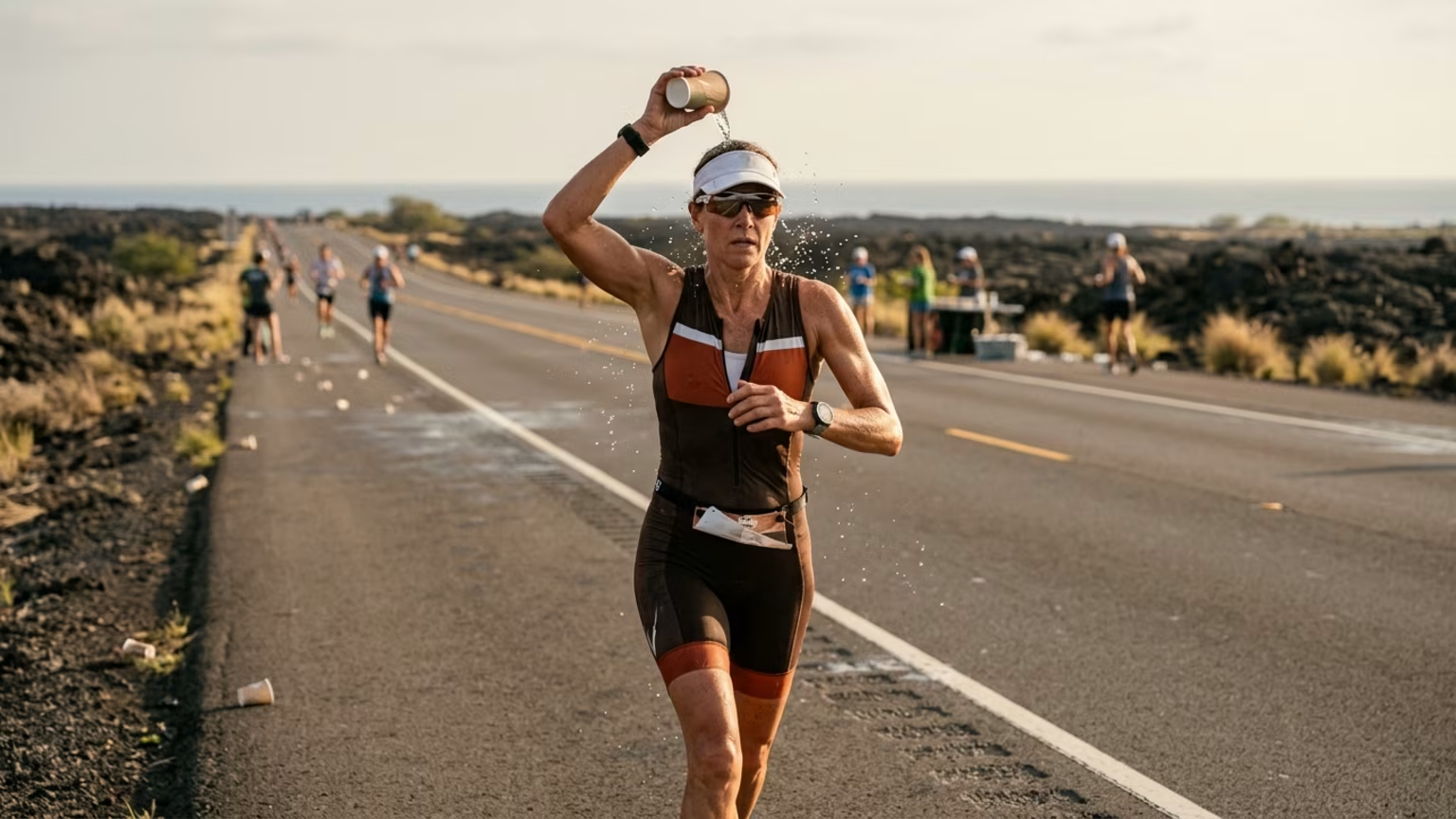

At the 2026 Kona championship, elite triathletes highlighted how flexible pacing and careful reflection on past setbacks drive long-term endurance performance.





On October 9, 2026, leading professionals gathered ahead of the Ironman World Championship in Kailua-Kona to detail their final preparations. Twelve top competitors discussed how previous failures shaped their pacing strategies and training plans. Their reflections provide clear examples of how elite athletes refine their long-term goals instead of relying solely on aggressive training volume.
The primary conclusion from these professional accounts is that athletic success requires continuous tactical evolution. Seasoned competitors do not follow a rigid, universal training formula for the full distance. They consistently adapt their expectations based on prior setbacks, and they prioritize flexible effort management across the entire event.
The October 10 championship challenged competitors with a demanding full-distance course. The event featured a 3.86-kilometer swim, a 180.2-kilometer bike, and a 42.2-kilometer run. The 3.86-kilometer swim, 180.2-kilometer bike, and 42.2-kilometer run push the human body to its absolute limits. The global race drew massive participation, with reports noting that more than 2,500 athletes from 86 countries were expected to compete.
The diverse starting field included 100 professionals. A contemporaneous preview from Ground News noted this was the first time since 2019 that both professional fields competed in Kona on the same day. Pre-race panels highlighted six women and six men, and event reports indicated eight past world champions were competing overall. The defending champion, Solveig Løvseth, returned to the course after securing her title the previous year.
Ambitious masters athletes often treat a poor race result as a definitive verdict on their physical fitness. The elite field in Kona demonstrated a much more clinical approach to competitive failure. Taylor Knibb led late in the previous year's Kona race before faltering on the run. In response, she adopted a highly cautious approach at Ironman Texas with a stated priority simply to finish.
This conservative target was a deliberate, rational response to a prior physiological setback. Lucy Charles-Barclay shared a similar perspective regarding her own previous difficulties. She did not finish the marathon in her prior Kona appearance, and she emphasized that the failure taught her to respect the island conditions. She acknowledged that she still had much more to learn about the demanding environment.
Older athletes must adopt this exact mindset when facing their own competitive disappointments. Endurance sports demand profound psychological resilience over years of consistent training. When an athlete fails to finish a major event, the natural instinct is to immediately schedule another race to seek rapid redemption. The professionals at the press conference modeled a much healthier alternative.
They analyzed their failures logically, adjusted their immediate expectations, and returned to the starting line with a renewed respect for the distance. Reendure advocates treating difficult races as objective data points rather than emotional defeats. Using a structured evaluation system helps endurance athletes refine their future strategies. A single bad marathon usually indicates a correctable flaw in pacing or fueling rather than a permanent decline.
Effective preparation requires a willingness to adjust when physiological circumstances dictate a change. Laura Philipp faced early-season difficulties and responded by completely altering her racing schedule. She chose to race much more frequently this year after prioritizing the championship race heavily during the previous season. The 2025 race saw Philipp finish third behind Kat Matthews and the eventual winner, Solveig Løvseth.
Charles-Barclay took a remarkably different path for her own seasonal preparation. She focused her training almost entirely on the full distance because she felt her existing approach was highly effective. These contrasting methods prove that there is no singular path to peak performance. Athletes must evaluate their own physiological responses and adjust their workloads accordingly.
Everyday endurance athletes over 35 often make the mistake of copying generic training plans. Aging bodies require customized stress management to balance high ambition with physical realities. If chronic overuse injuries slow your recovery, you might need a schedule with fewer races and more restorative blocks. Conversely, athletes lacking tactical sharpness might benefit from increased racing frequency.
The most critical tactical insight from the professional panel centered on disciplined effort management. Sam Laidlow stated he aimed to race to his strengths rather than pursue a fast bike-course record. He wanted to maintain strong, balanced performance across all three disciplines. Kristian Blummenfelt echoed this sentiment, noting that saving energy for the final marathon could be a highly smart tactical decision.
Elite competitors understand that an Ironman is a complete event requiring intense physiological restraint. Age-group athletes frequently sabotage their overall times by pushing too hard on the cycling segment. The mature approach involves pacing by effort rather than chasing arbitrary speed targets. When athletes overexert themselves on the bike, they accumulate excessive muscular fatigue that destroys their running potential.
For athletes over 35, the recovery cost of early muscular damage compounds rapidly as the race progresses. Learning how to properly pace the first 10 kilometres of the run is absolutely critical for long-term performance. Tactical restraint during the early hours of a race consistently produces faster finishing times.
Laidlow provided another crucial insight regarding early race dynamics on the course. He noted that more competitors are pushing the early pace than in previous years. He argued that competitive experience helps an athlete distinguish when to follow an aggressive move and when to hold back. This specific tactical judgment is often the dividing line between a successful finish and a severe physical collapse.
For ambitious adults aged 35 to 65, learning when to press the pace is a vital skill. Master athletes frequently let their competitive egos dictate their early race decisions. When younger or less experienced competitors surge ahead, the veteran athlete must possess the discipline to maintain their own rhythm. Letting an overly eager competitor go is a calculated decision rooted in a deep understanding of human physiology.
Philipp reinforced this concept of patience by noting that the race is only over at the finish line. This mindset prevents premature celebration and guards against early despair. When an athlete feels terrible at the halfway point of the marathon, they must remember that physical sensations fluctuate wildly during an Ironman. Staying engaged and continuing to move forward often results in an unexpected second wind.
Modern endurance racing features highly dynamic conditions that demand constant tactical flexibility. Gustav Iden described the professional men's race as increasingly chaotic as athletes continually adapt their racing styles. Løvseth and Kona rookie Julie Derron both expressed a strong desire to avoid over-planning their race days. They preferred to adapt to the race dynamics as the event naturally unfolded.
Masters athletes often obsess over rigid race plans and panic when environmental variables shift. A missed aid station or a sudden change in weather can mentally break an inflexible thinker. Veteran athletes must remain calm and adaptable when facing unpredictable race dynamics. Preparing exact individual hydration strategies is a necessary baseline for safety and performance in severe heat.
However, competitors must remain willing to adjust those baseline plans when conditions demand a shift. Experience teaches veteran athletes to focus strictly on their own execution when external variables become chaotic. You cannot control the pace of your competitors, but you can control your own effort and fueling.
The broader context of the Kona field highlights the ultimate goal for ambitious athletes. Patrick Lange made his final world championship appearance at age 40, proving that careful preparation yields a long competitive window. The brand promise at Reendure is to deliver clear, evidence-based guidance to help you perform at your best today. We want you to keep racing for decades to come.
Building a resilient, capable body takes priority over dominating a single season through destructive training volume. Older athletes face slower recovery times and must balance their high ambitions with physiological realities. Long-term athletic success requires a calm, intelligent approach to training and a deep respect for the recovery process.
Reendure maintains that lasting athletic performance requires disciplined effort management, adaptable race strategies, and the maturity to treat every competitive setback as a valuable learning opportunity.

Follow ReEndure for practical insights on endurance training, recovery, nutrition and healthy aging. Stay connected for new articles, research led guidance and ideas to help you perform better for longer.




Read practical ideas on endurance training, recovery, nutrition and healthy aging to keep progressing for years to come.
Read the Blog