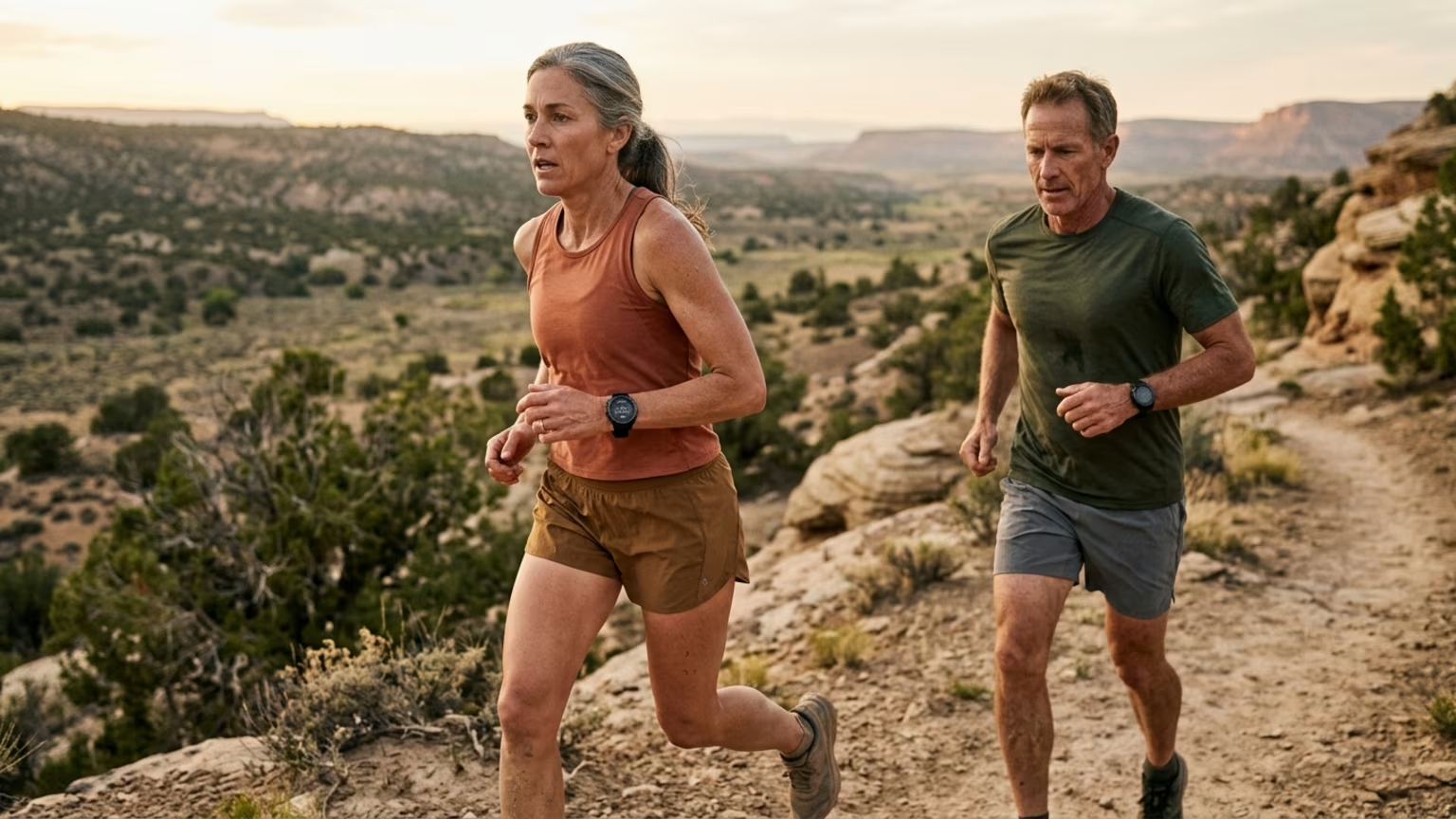

Garmin announced the new fēnix 9 and fēnix 9 Pro smartwatches. Learn what the new battery, mapping, and stamina metrics mean for masters endurance athletes.





The trailhead parking lot is often a quiet place before dawn. Runners quietly tap the buttons on their wrists while waiting for a satellite lock. The glow of an illuminated screen cuts through the dark morning air as athletes prepare for a long effort. On August 25, 2026, Garmin announced the fēnix 9 and fēnix 9 Pro multisport smartwatches.
Garmin introduced the fēnix 9 with a starting price of $999.99, while the fēnix 9 Pro starts at $1,099.99. Both models are available in 43 mm, 47 mm, and 51 mm sizes. The standard fēnix 9 features an AMOLED display that is twice as bright as the previous generation. It also includes a scratch-resistant sapphire lens, leakproof buttons, and water resistance rated to 40 meters.
Garmin claims the fēnix 9 offers 50% more RAM than the fēnix 8. This upgrade allows for map panning speeds up to 30% faster. The watch includes 64 GB of storage, which is enough to hold up to 7,000 favorite songs and twice as many maps as the previous version. The fēnix 9 Pro takes these specifications further with a titanium case and displays reaching up to 3,000 nits of brightness.
The 51 mm Pro model features a 1.5-inch AMOLED display. Garmin notes this screen is 15% larger than the fēnix 8 display without increasing the overall case size. Selected configurations of the Pro model also include solar-charging capabilities. These premium additions show a clear push toward supporting outdoor endurance athletes who spend extended hours in rugged environments.
Battery life remains a critical factor for athletes competing in long events. The largest fēnix 9 provides up to 29 days of battery life in smartwatch mode. The largest AMOLED fēnix 9 Pro pushes that metric to up to 31 days. Selected solar models are rated for up to 57 days in smartwatch mode.
These estimates assume specific conditions, particularly for the solar models. The 57-day figure requires three hours of daily outdoor exposure in 50,000-lux conditions. Athletes should remember that these are maximum estimates for smartwatch mode, not continuous GPS tracking. Utilizing continuous GPS, maps, music, and sensors will heavily influence actual battery performance on race day.
The central training upgrade is a new stamina system featuring stamina zones and a stamina curve. Garmin designed these tools to show how an athlete's endurance changes based on fitness gains and recent training history. The system aims to function as a pacing aid during activities. However, independent coverage from The5krunner cautions that stamina-curve estimates work best under steady pacing and should be treated as guidance.
Hills, unexpected surges, and aggressive attacks can reduce the accuracy of these algorithmic predictions. The watches also expand support for specific endurance activities beyond running and cycling. Indoor rowers can access new power-curve insights and VO2 max data, provided they use a power-meter-equipped rowing machine. Rucking enthusiasts can now configure pack weights of up to 100 kg and follow structured GORUCK workouts.
Selected fēnix 9 Pro models now feature built-in inReach satellite and LTE connectivity. This allows athletes to send messages, make calls, and use SOS communication directly from the wrist. For the first time in this product family, Garmin offers inReach connectivity across all three Pro size options. This feature requires an active inReach service plan to function.
Garmin explicitly warns that LTE coverage is not globally available. The satellite and SOS capabilities also carry limitations compared to dedicated, standalone inReach devices. Connected features may be unavailable in deep canyons, heavy forest cover, or remote international locations. Athletes traveling to austere environments must still verify regional coverage before relying solely on a watch for safety.
A new feature called Garmin Epic allows users to combine multiple recorded activities into a single shareable story. This tool groups health metrics, performance data, and photos collected over days, weeks, or months within the Garmin Connect app. It functions more as a storytelling and training history log than a strict performance metric.
For masters athletes, this provides a clear way to document an entire race build. You can look back at a multi-week training block to visualize the workload. Tracking progress over a long season can help older athletes identify trends in consistency. It offers a broad view of your endurance journey rather than focusing on a single isolated workout.
The fēnix 9 reflects a wider shift in endurance wearables from simple GPS recording toward integrated decision support. Garmin combines route guidance, battery management, and recovery-oriented information in a single device. Metrics like heart rate variability, training load focus, and endurance score provide a wealth of daily information. However, athletes must learn to contextualize this data properly.
A single readiness score lacks the nuance of your entire life context. It does not know if you are managing work stress, traveling across time zones, or recovering from a minor illness. The practical value of the fēnix 9 comes from pairing algorithmic recommendations with subjective feedback. Masters athletes should build a habit of rating their own perceived exertion and mood before checking the watch.
The segmented design of the fēnix 9 family allows athletes to choose features that match their specific disciplines. A dedicated trail runner might prioritize detailed topographic maps and a built-in flashlight for pre-dawn starts. In contrast, a competitive road cyclist may care more about display readability and deep integration with power meters. The standard fēnix 9 retains a strong multisport focus at a slightly lower starting price point.
The addition of specialized modes indicates an effort to serve hybrid outdoor users. Rowers must verify that their chosen indoor equipment supports the power-meter data required by the watch. Ruckers should assess whether the fixed weight increments match their exact training loads. Selecting the right model requires matching the watch capabilities directly to your primary training environment.
For the athlete aged 35 to 65, balancing training stress with age-related recovery demands is a constant challenge. The fēnix 9 offers tools to measure training load, sleep metrics, and perceived readiness. However, more data does not automatically equal better training decisions. A readiness score is a helpful input, but it should never override your actual symptoms or persistent fatigue.
The true value of this technology lies in longitudinal tracking. Rather than reacting to a low readiness score on a random Tuesday, older athletes should watch for trends over multiple weeks. If your sleep quality, resting heart rate, and subjective energy levels drop consistently, the watch provides objective data to justify an extra rest day. Understanding how to redefine success and stay competitive involves utilizing technology to support, rather than dictate, your training load. Integrating these metrics with a structured sleep recovery protocol is essential for maintaining long-term performance.
Older athletes must also consider the cost against their specific needs. The fēnix 9 starts at $999.99, making it a significant financial commitment. If you own a recent premium watch, the upgrades may only make sense if you require brighter screens, detailed offline maps, or LTE connectivity for family peace of mind. Knowing how endurance performance changes with age allows you to decide if these new features will tangibly improve your daily training routine.
Ultimately, recovery algorithms are consumer wellness features, not medical diagnostics. Garmin does not claim that these watches diagnose or treat any medical conditions. A wrist-based sensor cannot replace a clinical assessment, especially if you experience unusual pain or illness. Use the watch as a diligent assistant, but remain the chief executive of your own training plan.
The fēnix 9 series offers powerful logistical support for the endurance athlete who needs reliable navigation and deep battery life, but a smart device should only supplement your own innate understanding of fatigue and recovery.
Keep your ambition high, train with patience, and stay competitive for the years ahead.

Follow ReEndure for practical insights on endurance training, recovery, nutrition and healthy aging. Stay connected for new articles, research led guidance and ideas to help you perform better for longer.


Read practical ideas on endurance training, recovery, nutrition and healthy aging to keep progressing for years to come.
Read the Blog