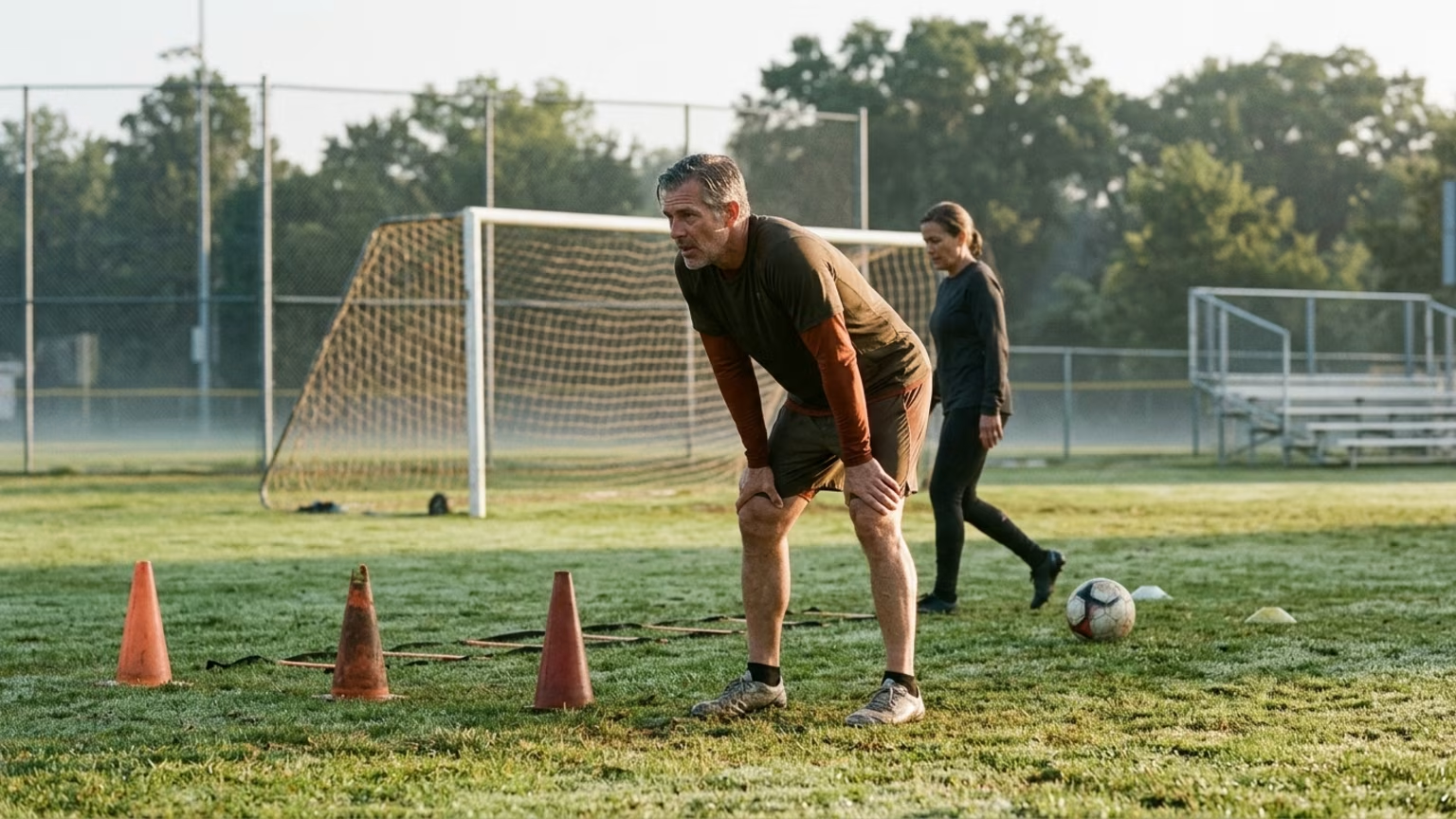

An OU soccer study links above-normal training loads with poorer next-day readiness, offering a monitoring principle for endurance athletes over 35.





On September 25, 2026, the University of Oklahoma reported that a study led by researcher Sam Moore examined training load and next-day readiness in an elite collegiate women’s soccer team. Its focus was not how much training athletes should complete in general. It was how work above their usual level related to recovery and performance the following day.
The study appeared in the International Journal of Sports Physiology and Performance under the title “Influence of Training Load on Recovery, Wellness, and Performance in Elite Soccer Athletes.” Moore’s co-authors were Elena Cantu and Abbie Smith-Ryan of the University of North Carolina at Chapel Hill.
According to OU’s report, substantially above-usual training loads were associated with poorer next-day sleep recovery and lower wellness scores. The soccer players also recorded slower maximum running speeds on average. In plain English: an unusually demanding day was followed by signs of reduced readiness the next day.
The important comparison was with an athlete’s normal workload. This was not simply a finding that athletes who trained more performed worse. The reported pattern concerned days when an individual’s previous workload was much higher than usual. That personal reference point is central to the practical interpretation.
OU reported one specific relationship among the soccer athletes: each additional 100 meters of high-speed running was associated with a 1-kilometer-per-hour lower next-day maximum speed. That is a finding about maximum running speed in this team. It is not the same as a finding that the athletes lost fitness or that their training was unproductive.
Moore cautioned against using the results as a blanket argument against heavy training. She said higher loads may be useful when building fitness matters more than maximizing speed the following day. The finding therefore raises a planning question rather than delivering a verdict against demanding sessions: what does the next day need to accomplish?
OU reports that the researchers followed the team over the season. They defined daily training load using total distance traveled and high-speed running distance during practices and competitions. This gave them a record of both overall movement and the distance completed at high speed.
The players wore GPS devices during training and matches. They also wore smart rings while sleeping and completed daily wellness surveys. Those surveys covered fatigue and stress alongside mood, soreness and sleep quality.
The researchers therefore considered recorded workload alongside overnight measurements and the athletes’ own accounts of how they felt. The practical interest is the relationship between those different kinds of information. A training total describes the work completed; the next-day observations describe the response that followed.
The evidence boundaries belong together. OU’s account does not specify the sample size, season dates or detailed statistical methods and results. The reported associations do not establish that heavy training alone caused the changes. Results from one elite collegiate women’s soccer team do not establish the same response in adult endurance athletes or an age-specific recovery rule.
The study did not test an endurance training prescription. Its speed estimate should not become a threshold or prediction for another athlete. Likewise, its surveys and wearable measurements should not be treated as validated diagnostic tools for endurance athletes on the basis of this report.
For an ambitious athlete over 35, the useful application is a monitoring principle: recognize an unusually demanding session and consider the next-day response before automatically adding another hard effort. Reendure’s position is to preserve athletic ambition while keeping recovery and long-term performance in view. Here, that means treating the session and its aftermath as part of the same training decision.
Start with the comparison the research actually used: the athlete’s usual workload. Calling a session “hard” is less informative than recognizing that it was substantially outside the athlete’s normal pattern. The relevant question is how the work compares with what that person typically completes.
For endurance training, the cautious translation is to make unusual demands visible in the training record. Note whether the session was unusually demanding relative to personal norms. Keep that observation alongside the description of what was completed rather than letting the workout’s planned label tell the whole story.
This is not an invitation to build a new formula from the soccer result. It is a way to frame the next decision around the individual rather than around a generic idea of what a serious athlete should tolerate. Another athlete’s routine is not your personal reference point.
The next useful step is to consider the kinds of responses the researchers measured. Perceived fatigue and soreness belong in that picture. So do mood and sleep quality. The aim is to notice how the athlete is responding rather than assuming that a completed workout has no bearing on the following day.
A brief note can keep those observations beside the training record. It might describe whether sleep quality or perceived fatigue differs from usual. That note provides personal context for interpreting an unusually demanding session; it does not need to become a score that dictates every decision.
Keep the questions straightforward: was yesterday outside the usual pattern, and does today’s response deserve attention before another hard effort? This is the practical connection between workload and readiness. It leaves room for judgment without pretending that the study supplied a universal recovery schedule.
That approach fits the broader task of adjusting a workout when fatigue changes the picture. The point is not to react dramatically to every uncomfortable morning. It is to avoid treating the written plan as the only information that matters.
Persistent symptoms or decisions involving an individual health concern belong with a qualified clinician rather than a training log.
Moore described the coaching question as identifying how far above an athlete’s normal load speed begins to be affected. That information could then inform planning around important games. For endurance athletes, the useful translation is to state the purpose of the next session before deciding whether its demands still fit.
If the priority is performing at high speed, the reported association deserves attention. If the broader priority is building fitness, Moore’s caveat leaves room for heavier training. These are different aims. Treating them as interchangeable would miss the distinction she raised.
The practical choice is not simply “train hard” versus “rest.” It is whether the next planned effort remains appropriate given its purpose and the athlete’s observed response. The study supports asking that question. It does not supply the answer for an individual training week.
This also keeps the conversation from becoming an automatic demand for less training. A demanding session can have a clear place in an ambitious plan. The editorial stance is to make that place intentional rather than assuming every hard day should be followed by another.
For athletes who want to keep competing for years, the value of this finding is not a new restriction. It is a reason to connect workload decisions with their intended outcomes. That is consistent with Reendure’s emphasis on immediate performance and a sustainable athletic future.
An unusually demanding session should prompt a review of what comes next. The review can consider the session’s purpose alongside the athlete’s response. It need not begin with a predetermined instruction to cancel training or push through regardless.
That perspective belongs within a training strategy built around long-term goals. It also leaves room to reconsider calendar-based training routines when discussing how a plan is organized. The relevant connection here is flexible planning rather than a fixed number of recovery days.
The strongest practical lesson is modest but useful: record the demanding work and pay attention to what follows. Keep the next session’s objective explicit. Then use those observations as context rather than allowing either a training total or a wearable reading to settle the decision alone.
For the ambitious endurance athlete over 35, this soccer study is a reason to weigh an unusually heavy session’s next-day response before stacking intensity, not a reason to abandon hard training.

Follow ReEndure for practical insights on endurance training, recovery, nutrition and healthy aging. Stay connected for new articles, research led guidance and ideas to help you perform better for longer.


Read practical ideas on endurance training, recovery, nutrition and healthy aging to keep progressing for years to come.
Read the Blog