
Jakarta race coverage links heat-adjusted pacing, bodily warning signs and individualized hydration, with practical context for endurance athletes over 35.





The Jakarta Running Festival was the setting for hot-weather running advice published by Kompas.id on October 24, 2026. Its central message was to adjust pace and intensity to the weather and course rather than force the original plan. The report paired that advice with a warning that hydration should match individual needs rather than become an invitation to drink without limit.
The report quoted University of Indonesia sports-medicine instructor Listya Tresnanti Mirtha and Runners Lab head coach Donny Tjahyadikarta. Their advice connected three decisions: how hard to run, which bodily signals to heed and how to replace fluid. For ambitious endurance athletes, the useful message is that these decisions belong together.
According to the Kompas.id report, a pace that feels comfortable in cooler conditions can become difficult as temperatures rise. The practical implication is straightforward: a familiar pace does not necessarily represent a familiar effort when the weather changes.
The experts quoted in the report advised adjusting pace and intensity to both weather and course conditions. They also cautioned against forcing a fast start simply because the runner initially feels fresh. Early enthusiasm should not settle the pacing decision for the rest of the session.
That distinction matters when a planned split starts competing with the experience of running. The report’s advice favors responding to the conditions rather than treating the planned pace as an obligation. Slowing down is an adjustment to the task in front of you, not a judgment about the value of your training.
For a broader discussion of that approach, see our guide to adjusting race effort when conditions change.
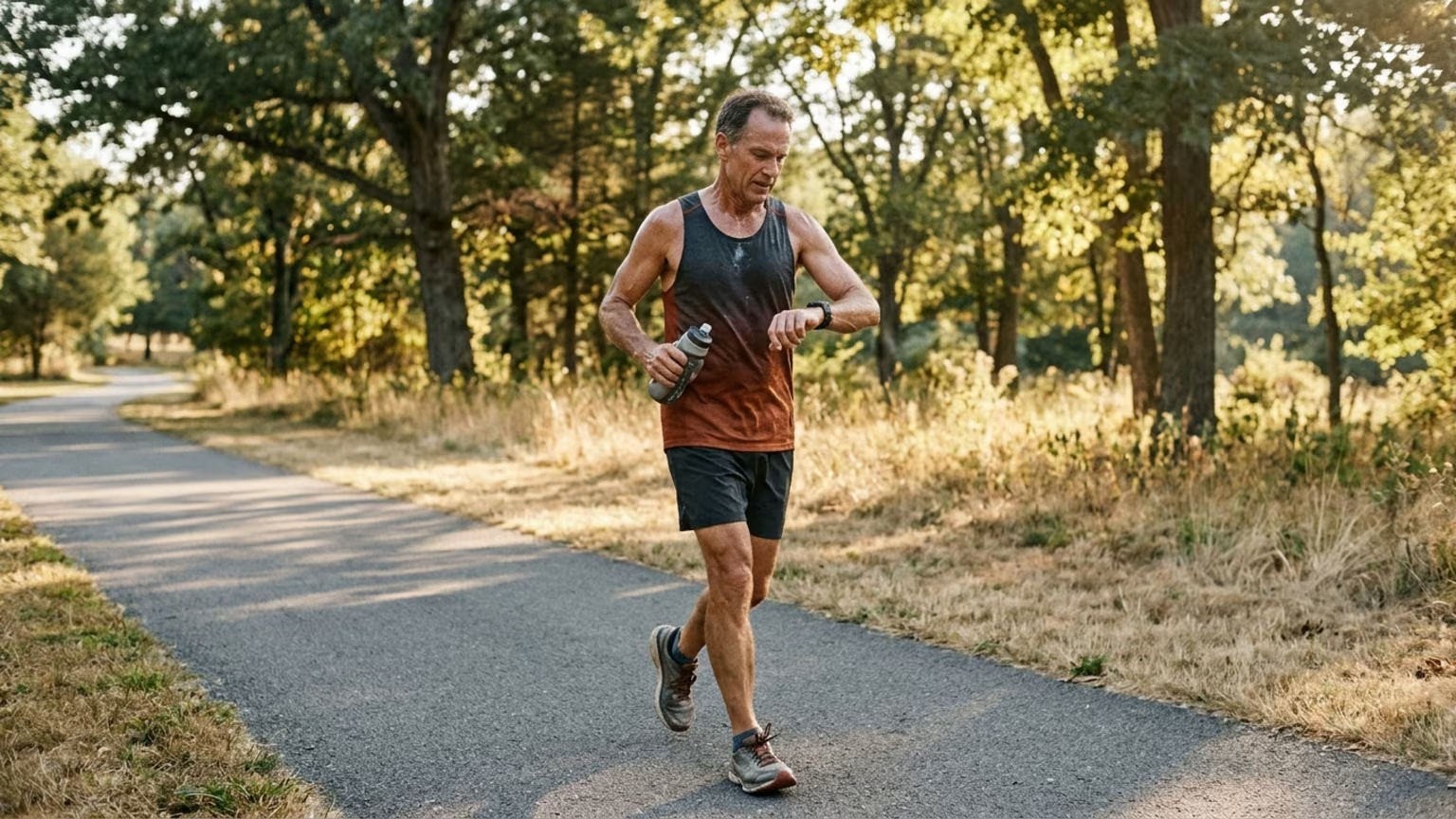
Donny Tjahyadikarta told Kompas.id that runners should not assess their condition solely through a sports watch. He identified breathing, fatigue and the ability to maintain speed as additional information that should influence whether to slow down or stop.
This is not an argument for discarding wearable data. It is an argument against allowing one display to settle every decision. A watch reading belongs alongside the runner’s physical experience rather than above it.
The useful question is therefore broader than whether the device shows an acceptable number. Is breathing changing? Is fatigue building? Is the pace becoming difficult to sustain?
Those are the observations the coach highlighted. A reassuring display should not become a reason to dismiss them. Equally, a planned split is not a reason to keep forcing an effort that the runner is struggling to maintain.
Listya’s hydration advice in Kompas.id followed a basic sequence: begin exercise hydrated, replace fluid lost during activity and continue replenishing afterward. The article linked fluid needs to duration and intensity. Environmental conditions and sweat volume also mattered.
For light activity of short duration, the report said plain water is generally sufficient. For exercise lasting more than an hour with significant sweating, sodium-containing electrolyte drinks may be considered. The duration and sweating conditions belong together in that recommendation.
That wording matters. The advice was not that every longer run automatically requires the same drink. It was that fluid choices should reflect the activity and the losses involved.
Listya also warned that drinking beyond the body’s needs can cause exercise-associated hyponatremia. This is a dangerous reduction in blood sodium. The warning makes “drink as much as possible” an unsuitable summary of the guidance.
Electrolytes should not be presented as protection against excessive drinking either. The report’s suggestion to consider sodium-containing drinks in some sessions sits alongside its warning about excess fluid. Neither point cancels the other.
Our discussion of an individualized approach to fluid balance develops the same distinction between meeting needs and maximizing intake.
The report distinguished pacing decisions from symptoms that warrant stopping. Its symptom list included unusual fatigue, dizziness and headache. It also named nausea, weakness and a sudden decline in performance.
Kompas.id described these as reasons to stop and cool down rather than continue pushing. That is a different message from simply accepting that a hot run may feel harder. The guidance does not ask runners to negotiate with warning symptoms in pursuit of a finish time.
The article also identified altered consciousness, seizures or collapse during exercise in heat as possible signs of exertional heat stroke. It described these as requiring immediate medical attention and rapid cooling. Such signs call for emergency medical help rather than a self-directed decision about whether to continue.
The distinction is important: adjusting effort is a performance decision. Responding to concerning symptoms is a safety decision. The second should take priority over the first.
The festival coverage also showed that heat management extended beyond individual runners. In its pre-event reporting, Kompas.id said organizers monitored conditions using Wet Bulb Globe Temperature, or WBGT. Indicators were available at medical tents and organizers could stop the race if conditions became dangerous.
A separate first-day report from detikHealth said the WBGT risk indicator turned orange at about 6:30 a.m. It quoted medical director Andi Kurniawan describing many runners receiving care in medical tents. Some received cooling treatment involving immersion in ice.
These accounts add an operational dimension to the pacing advice. Event warnings and medical support are part of the safety picture alongside individual decisions. Attention to breathing or fatigue does not replace attention to the event’s guidance.
The practical reading is to consider both levels of information. How the runner is coping matters. So does what race officials are communicating about the conditions.
Reendure’s focus is translating sports science into clear training and recovery guidance for endurance athletes over 35. Here, that means keeping the ambition while distinguishing a performance target from a requirement to hold pace regardless of conditions.
The evidence boundary belongs in one place. These reports contain expert guidance and event observations rather than a controlled comparison of strategies. They provide no age-specific results for older athletes and no universal fluid volume or watch-based stopping threshold. The race-day account also gives no total case count or proof that any particular strategy prevents heat illness.
The useful translation is therefore not a new rule based on age. It is a clearer way to apply the reported advice to training and competition.
The source-supported approach is to adjust pace and intensity when weather or course conditions make the intended effort harder to sustain. That preserves a role for the original plan without asking the runner to follow it regardless of what happens.
It also avoids confusing early freshness with evidence that the pace will remain appropriate. The report specifically cautioned against forcing a fast start on that basis. The plan should remain responsive after the opening stretch.
For the course side of that decision, our article on turning a course map into an effort plan offers a related planning perspective.
Donny’s advice supports using breathing and fatigue alongside watch information. The ability to sustain speed is another part of that assessment. These observations deserve a place in the decision rather than becoming explanations added after the run.
For an athlete focused on improvement, this is a way to make feedback useful. The purpose is not to reject data or abandon goals. It is to avoid treating a target as more authoritative than the runner’s changing condition.
The report supports matching fluid choices to the session and the individual’s sweat losses. It does not turn a general recommendation about water or electrolytes into a personal drinking prescription.
For athletes over 35, there is no need to invent an age-based formula from this coverage. Questions about individual hydration needs or medical concerns should be discussed with a qualified healthcare professional. General reporting can inform that conversation without replacing it.
The clearest takeaway from the Jakarta coverage is that hot-weather running calls for coordination between effort and conditions. Watch data remains useful, but breathing and fatigue deserve attention too. Hydration should meet the demands of the activity rather than follow a “more is better” rule.
For endurance athletes over 35, this reporting supports a flexible plan rather than a wholesale training change. Adjust effort when conditions demand it. Respect warning symptoms and event instructions.
Ambition can remain high without making a planned split the final authority. The evidence-grounded priority is to respond to the run that is actually unfolding.

Follow ReEndure for practical insights on endurance training, recovery, nutrition and healthy aging. Stay connected for new articles, research led guidance and ideas to help you perform better for longer.



Read practical ideas on endurance training, recovery, nutrition and healthy aging to keep progressing for years to come.
Read the Blog