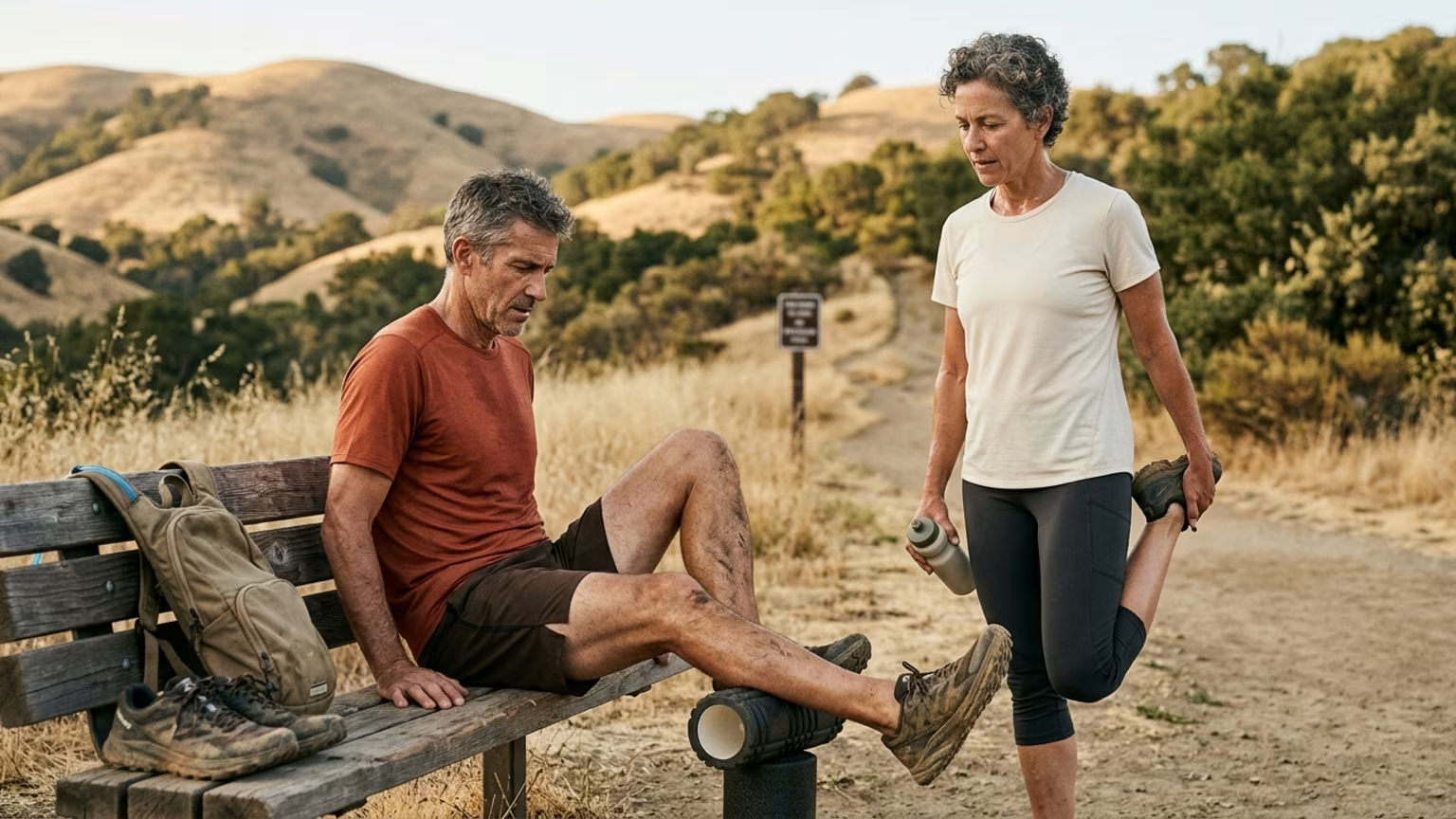

Learn how endurance athletes can adapt their running routines following Kempton Park police warnings regarding public safety and group training.





On September 15 and 16, 2026, multiple news outlets reported a widening police investigation into a series of deaths across the Ekurhuleni area in South Africa. South African police urged women in and around Kempton Park to avoid running alone or in isolated areas. They advised athletes to exercise in groups where possible. Reports detailed at least seven women found dead since July, with later coverage confirming an eighth body.
The central issue involves a severe threat to public safety that directly impacts daily training habits. Among the victims was Elizabeth “Tsontso” Moselakgomo. She was a 38 year old member of the Team Vitality running community who disappeared during an afternoon run. The Mail & Guardian reported that four earlier victims showed signs of sexual assault.
Most of the bodies were found partially clothed or unclothed with visible bruising. Police were investigating possible links between the cases but had not confirmed a serial killer or single perpetrator. National police spokesperson Brigadier Athlenda Mathe noted concerning similarities between some cases. These similarities were significant enough to justify urgent public warnings and intensified investigative efforts.
The bodies were found along roadsides, open fields, and spaces behind buildings. President Cyril Ramaphosa addressed the crisis directly on September 15. He said the killings were causing fear and uncertainty, especially among women. Ramaphosa promised that no stone will be left unturned in pursuing those responsible.
The response from the running community has included organizing larger group runs and greater use of well lit routes. The investigative response provides insight into the scale of the ongoing situation. A multidisciplinary task team was established by authorities to tackle the complex cases. This team draws on specialized detectives and experts from the Investigative Psychology Unit.
Forensic testing remained ongoing for several victims who were still unidentified at the time of reporting. One suspect remained in custody connected to a body found near the R21 on July 15. Other reported cases included a woman found in a river in Clayville near Tembisa Mall on September 7. Another woman was found on a roadside in KwaThema on September 15.
Police also offered a R400,000 reward for information leading to the arrest of those responsible. Local government authorities initiated operational changes to support the police response. The City of Ekurhuleni activated a joint operations centre to coordinate their efforts. They said they would increase metro police visibility in Kempton Park and Rhodesfield.
These patrols would focus particularly on the early morning and late afternoon hours. How does this sober reality change the game for ambitious adult athletes? Endurance training requires significant time on the road. This often happens during the darker hours of early morning or late afternoon.
For women runners especially, these warnings necessitate a tactical shift in how and where we log our miles. Police guidance clearly emphasizes group exercise and avoiding isolated routes. Hitting my forties brought a harsh reality check regarding my own routines. Instead of forcing my old Tuesday and Thursday intensity schedule, I looked at the data on Masters athletes and muscle protein synthesis.
I pushed my second hard session to Friday, allowing an extra forty eight hours of low intensity recovery. My total weekly volume stayed the same, but the quality of my intervals skyrocketed. We must apply this exact same principle of tactical adaptation to our physical safety. If an environment changes, our training structure must adapt to protect our consistency.
Runners quoted in recent coverage described avoiding solo sessions and training with a crew or partner. They also reported sharing their live locations and notifying someone of their expected return time. Replacing isolated routes with populated paths can drastically reduce exposure to vulnerable areas. For athletes who normally train alone, having fallback options is critical.
You can substitute a dark neighborhood loop with an indoor treadmill workout or a track facility with controlled access. This flexibility helps when redefining what improvement means in your training cycle. You do not need to abandon your goals to prioritize your personal security. Treating route selection as a mandatory part of workout planning is now essential.
Before heading out for a long run, athletes should actively assess lighting and foot traffic. They must also consider escape options and reliable cell phone coverage. If a route feels compromised, you should switch to a safer alternative without hesitation. Building group running into your weekly program is another highly effective strategy.
This should not be viewed as a temporary emergency measure. Group sessions can preserve your social connection and ensure long term training consistency. They significantly reduce the reliance on solitary outdoor sessions during darker hours. The incident has prompted runners to reconsider their typical timing and route choices.
Some outdoor sessions simply make more sense when moved indoors to a gym. Event organizers and clubs have started discussing secure training spaces and transport support. These logistical adjustments allow athletes to maintain their mileage while minimizing unnecessary exposure to unlit spaces. The safety concerns have naturally spread far beyond Kempton Park.
Runners and clubs in other parts of South Africa reported heightened vigilance following the news. They initiated renewed discussions about safer group runs and proper emergency tools. Some local events were reportedly being scaled back or moved to more secure venues. Parents, coaches, and club organizers expressed increased anxiety about female athletes training outdoors.
The athletic community recognizes that safety requires a coordinated group effort. Clubs are evaluating buddy systems, route marshals, and safer start and finish areas. Maintaining community awareness is a vital part of protecting our fellow runners. During critical public safety alerts, managing information is also crucial.
South African police asked the public not to spread unconfirmed information about suspects. They stated that genuine operational developments would be communicated through official channels. Sharing unverified suspect claims or speculative links only creates unnecessary panic. While athletes can take individual precautions, safety remains a broader societal issue.
A Daily Maverick report noted that 92 percent of women respondents in a cited survey expressed concern about their safety while running. This widespread anxiety highlights a systemic failure in public infrastructure. Individual route changes cannot be the only solution to community violence. The response illustrates a tension that is very important to endurance sport.
Police guidance emphasizes group exercise and the avoidance of isolated areas for immediate protection. However, runners and advocates have warned that women should not be forced to surrender access to public spaces. They argue that women should not have to abandon exercise entirely because of violence. The Commission for Gender Equality called for improvements to street lighting and surveillance.
They also requested better transport access, police visibility, and emergency assistance. Commission spokesperson Javu Baloyi stated that women should not have to be killed before an area receives heightened attention. Runners who gathered outside the Kempton Park police station echoed these calls for greater protection. Protecting athletes means investing in the public spaces they use every day.
Institutional attention is necessary to ensure women are not restricted from local streets and parks. Coaches, clubs, and event organizers must also step up their logistical planning. They can implement buddy systems, establish visible meeting points, and arrange safer start and finish areas. Such measures provide immediate support while we wait for long term civic improvements.
We can keep tracking athletic growth safely if communities work together to secure training environments. Remaining active should not compromise your physical safety. We must prioritize practical risk management while supporting initiatives that protect our running routes. Every athlete deserves to log their miles without fear.
Endurance athletes must pragmatically adapt their training environments to current safety realities while continuing to demand secure public spaces for everyone.

Follow ReEndure for practical insights on endurance training, recovery, nutrition and healthy aging. Stay connected for new articles, research led guidance and ideas to help you perform better for longer.



Read practical ideas on endurance training, recovery, nutrition and healthy aging to keep progressing for years to come.
Read the Blog