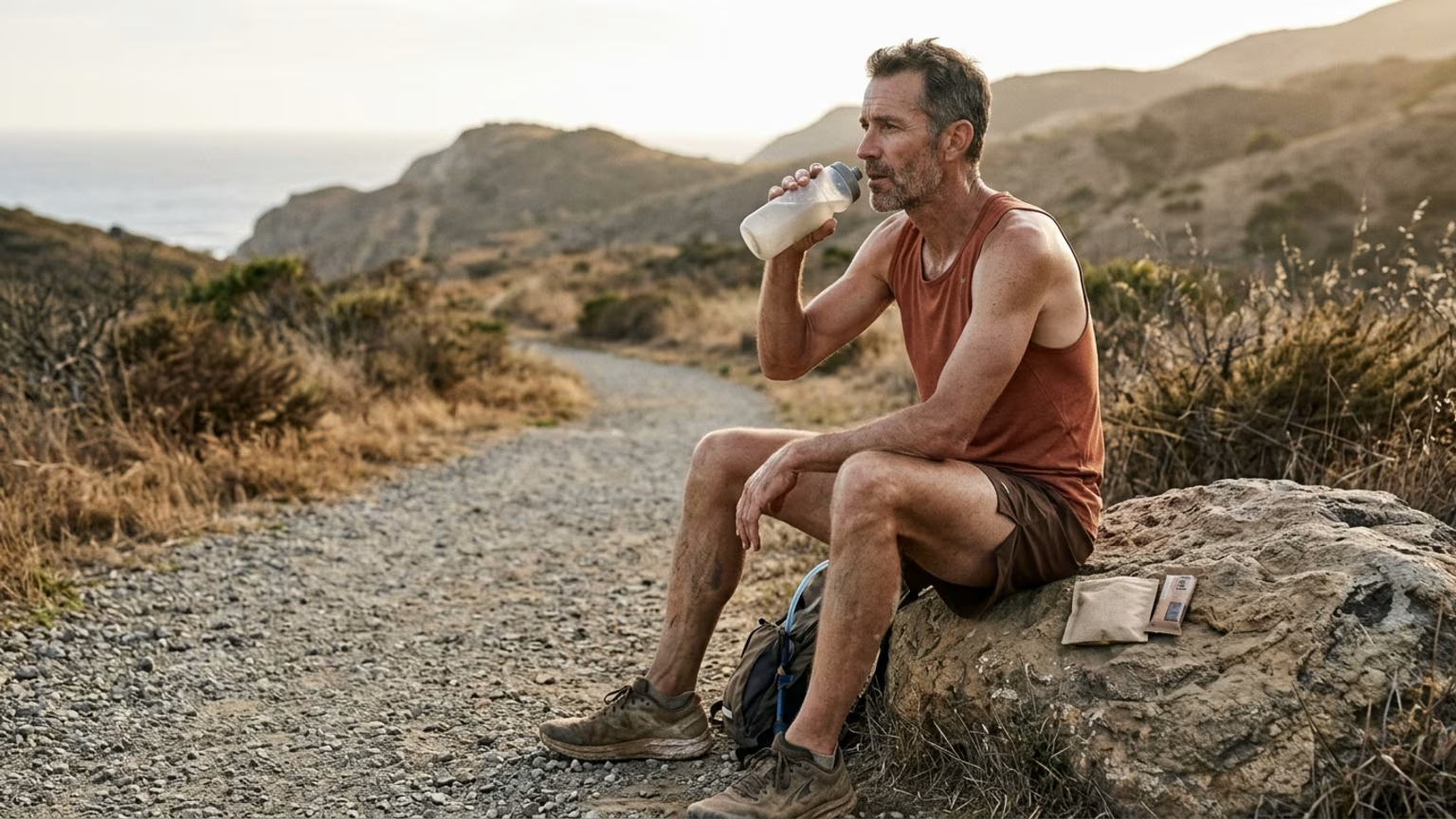

Learn how new microbiome-targeted probiotics impact endurance recovery and fatigue for athletes over 35, separating marketing claims from clinical science.





A 2026 review reports that athlete probiotic studies generally use between 10^9 and 10^11 colony-forming units daily for two to 12 weeks. This massive volume of bacteria highlights a growing obsession with the gut microbiome among active adults. Aging endurance athletes often look for any advantage to recover like they did when they were younger. Yet many older athletes are swallowing these costly capsules without realizing the science is still miles behind the marketing.
NutraIngredients identifies athletic performance and endurance as one of four emerging opportunities for microbiome modulation. The other three areas include healthy aging, metabolic health, and environmental-pollutant reduction. Following this trend, a Harvard Wyss Institute spinout named Fitbiomics is pursuing athlete-focused microbiome products. They are focusing on Veillonella atypica along with selected Lactobacillus and Bifidobacterium strains.
The proposed applications for these strains span recovery and endurance alongside digestion, metabolism and immune function. The rationale for Veillonella stems from research showing this genus increases in abundance in marathon runners after races. It sounds incredibly promising to replicate the gut profile of a highly trained finisher. However, a post-race increase in a bacterial genus does not prove the bacterium actually caused the strong finish.
The change in gut bacteria could simply reflect the extreme physiological stress of running a marathon. Differences in diet, training load, and transit time all heavily influence the microbiome after a race. We cannot assume that adding this bacteria before a race will reproduce the same microbial ecosystem. The current marketing often ignores this crucial difference between correlation and causation.
The most impressive numerical claim fueling this trend comes from a laboratory instead of a race course. Mice receiving athlete-derived V. atypica ran 13% longer before exhaustion than control mice. Translating a 13% treadmill increase in rodents to an older human runner is a massive stretch. We simply do not have a public clinical trial proving this product reduces human post-marathon soreness.
Other companies are finding different ways to market their strains. NutraIngredients notes that Synbio Tech developed and commercialized a strain called TWK10. This specific Lactiplantibacillus plantarum strain was originally isolated from kimchi. Once again, an interesting origin story does not guarantee measurable endurance improvements for an older athlete.
The biological theory behind these new probiotics is genuinely fascinating for sports scientists. A 2026 review explains that marathon-associated Veillonella can metabolize exercise-produced lactate into propionate. This creates a plausible gut-muscle pathway that might eventually support post-workout recovery nutrition. However, this metabolic function does not automatically eliminate delayed-onset muscle soreness.
Many athletes mistakenly believe that lactate itself causes next-day muscle soreness. Delayed-onset muscle soreness actually stems from a much more complex physiology than simple lactate accumulation. Therefore, a bacterium that metabolizes lactate will not serve as an instant cure for sore legs. Science supports a much more nuanced view of the gut-muscle relationship.
Human trials show that supplementing with bacteria remains highly unpredictable. In one randomized trial, trained male endurance runners took a multistrain probiotic for four weeks. The intervention did not significantly change aerobic performance, anaerobic performance, or muscle-damage markers compared with a placebo. Circulating inflammatory cytokines also showed no significant improvement during this controlled test.
There are some positive signs regarding the immune system and heavy training. A pooled analysis reported that probiotic supplementation in athletes was associated with lower tumor necrosis factor-alpha. The same analysis showed higher secretory immunoglobulin A and interferon-gamma levels in athletes. These immune markers may help with training consistency even if they do not increase raw speed.
A separate review lists several small trials reporting favorable results for selected Lactobacillus formulations. These small studies noted changes in endurance performance, antioxidant capacity, and sleep quality. However, those findings should not be generalized across all available probiotics on the market. The studies used vastly different strains, populations, doses, and outcome measures.
The researchers noted that probiotic effects are highly strain-specific and highly variable. This specificity means you cannot just buy any random probiotic off the shelf. For instance, researchers isolated Bifidobacterium longum Olympic No. 1 from a female 48-kilogram weightlifting gold medalist at the 2008 Olympic Games. Isolation from an elite athlete does not guarantee it will improve your own speed.
Endurance athletes over 35 often look for shortcuts to manage accumulating fatigue. However, a 2026 review of physical recovery modalities in competitive endurance athletes found a sobering truth. No modality examined managed to outperform passive recovery on any assessed outcome. Your body still relies heavily on the essential building blocks of rest and basic nutrients.
You should treat microbiome products as experimental additions rather than replacements for standard care. A fancy strain of bacteria cannot compensate for inadequate energy intake or poor carbohydrate availability. Prioritizing hydration recovery remains far more effective than hoping a probiotic will clear metabolic waste. At Reendure, we constantly remind athletes that consistency beats complex supplementation.
If you do decide to test a targeted probiotic, treat it as a structured personal experiment. Choose a product that names the exact strain and provides a transparent dose on the label. Never introduce a new bacterial supplement immediately before an important target race. A reasonable observation period should last a few weeks to match the current research timelines.
During your experiment, carefully track metrics that actually matter to your daily training. Monitor your gastrointestinal comfort, resting heart rate, and structured sleep quality. You should also note your perceived soreness and the frequency of any minor illnesses. These practical measures will tell you far more than a marketing brochure ever could.
Athletes with complex medical conditions should exercise extra caution with live microbes. Anyone dealing with immune compromise or significant gastrointestinal disease needs professional medical guidance. You should always consult a qualified clinician before starting a new probiotic regimen. The current research does not establish universal safety or efficacy for all older athlete populations.
The sports nutrition sector is quickly moving beyond conventional digestive-health probiotics. Companies are shifting toward next-generation probiotics and postbiotics designed around highly defined functional properties. Postbiotics aim to deliver helpful metabolites directly without introducing new live organisms into your system. This distinction will become commercially critical as athletes demand more targeted and stable formulations.
We will likely see more products emphasizing strain identity, manufacturing quality, and rigorous clinical validation. Brands will need to prove their specific formulations work in older human athletes. Until then, approach every new microbiome product with a healthy dose of scientific skepticism. Protect your training budget and focus on habits that have stood the test of time.
For now, taking between 10^9 and 10^11 colony-forming units daily remains a speculative bet. The gut microbiome is a fascinating frontier that will undoubtedly yield better recovery tools eventually. Until the human data catches up to the animal testing, focus your energy on sensible training progression. A solid night of sleep will always be your strongest asset in the long game.

Follow ReEndure for practical insights on endurance training, recovery, nutrition and healthy aging. Stay connected for new articles, research led guidance and ideas to help you perform better for longer.



Read practical ideas on endurance training, recovery, nutrition and healthy aging to keep progressing for years to come.
Read the Blog