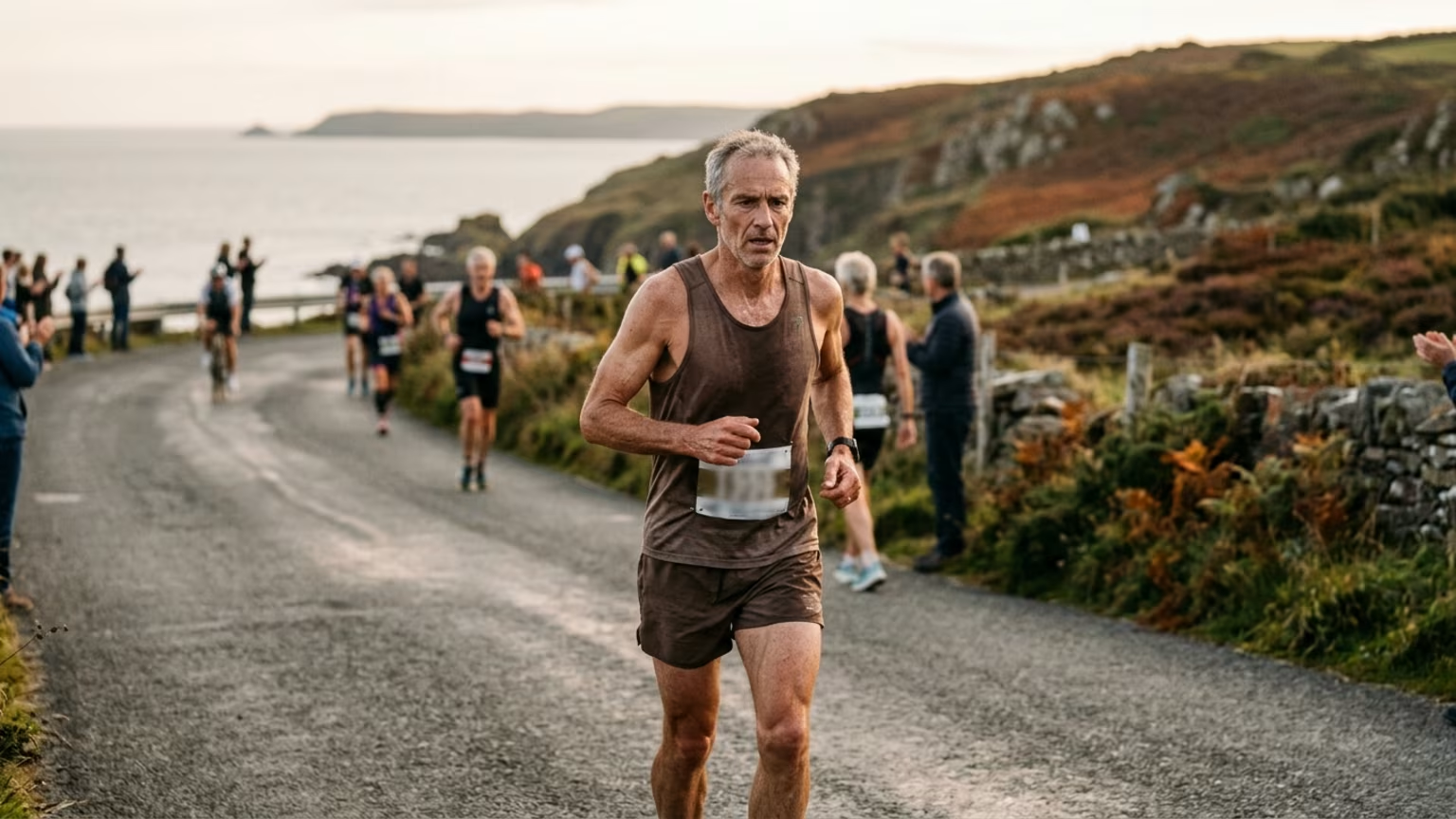

A 60-year-old athlete's completion of Ironman Wales highlights why veteran endurance athletes must prioritize fueling, pacing, and sleep over sheer volume.





On September 18, 2026, The Indian Express published an analysis of sixty year old athlete Milind Soman completing Ironman Wales. The September 13 race marked his second full distance finish. He had previously completed Ironman Zurich in 2015. He finished that prior race in 15 hours and 19 minutes at age forty nine.
Soman described the recent event in Tenby as one of the hardest Ironman races he had ever faced. The coverage featured sports medicine and dietary insights focused on extreme endurance events. Consultant dietitian Garima Goyal noted that long course success requires far more than sheer training volume. She emphasized that athletes must manage cardiorespiratory endurance alongside muscular endurance.
Competitors must execute strict energy management and deliberate pacing strategies throughout the day. Goyal highlighted the physical cost of stacking three different endurance disciplines consecutively. Her message is that high volume athletes must treat recovery as an active part of their training schedule. Adding training hours without proper recovery will sharply increase fatigue and elevate injury risk.
The core finding from this sports science breakdown is that athletic longevity relies on structured preparation. A result at age sixty reflects years of steady endurance adaptation. Goyal cautioned against viewing this achievement as a reason to jump straight into massive training blocks. It does not mean a sedentary person can immediately adopt high volume Ironman routines.
Instead, athletes must respect the distinct physical demands of each racing phase. Swimming adds heavy upper body and trunk involvement to the cardiovascular load. Cycling and running then build immense lower body muscular endurance over many hours of continuous output. You are actively fighting metabolic breakdown from the very first hour.
Goyal explicitly noted that nutrition and sleep are not secondary concerns for the aging athlete. They are fundamental performance variables. High volume endurance athletes require adequate energy intake to maintain immune function. They must consume carbohydrates specifically to replenish depleted glycogen stores after long sessions.
Muscle repair relies heavily on targeted protein intake. Fluids and electrolytes remain non negotiable for daily physiological balance. Sufficient sleep is the ultimate recovery tool for repairing cellular damage. Without these components, an athlete will eventually fail to absorb their training load.
Ironman Wales is widely regarded as a highly demanding race due to its heavy elevation and coastal exposure. The course begins with a rough 3.8 kilometre sea swim. Goyal identified this open water segment as uniquely challenging. Athletes must contend with waves, wind, and changing water conditions rather than a predictable pool environment.
Transitioning from a controlled pool environment to an open ocean swim requires specific technical preparation. Pool swimming allows for rhythmic breathing and frequent rest at the wall. Sea swimming forces the athlete to sight their course constantly while battling unpredictable currents. This disruption in breathing rhythm increases the cardiovascular strain right at the start of the race.
Managing that initial strain is vital for the rest of the event. If you exit the water in a state of deep oxygen debt, your cycling performance will suffer immediately. Goyal stresses that pacing applies directly to how you handle these opening hours. An intelligent athlete swims at a very controlled effort to preserve their legs.
The transition phase itself is a forgotten discipline in long course racing. The long run from the water to the cycling gear adds hidden physical stress. You must manage your core temperature and nutrition before even mounting the bicycle. Rushing this process often leads to severe cramping during the first major climb.
The cycling segment covers 180 kilometres across hilly terrain. Soman reported approximately 8,000 feet of climbing on the bike alone. Rain persisted throughout the day on the exposed coastal route. This variable power output drains muscular endurance rapidly.
Goyal notes that cycling heavily taxes the lower body. When you add continuous climbing, you accelerate the depletion of glycogen in your quadriceps and glutes. Failing to consume enough carbohydrates during these climbs will inevitably lead to a physical collapse on the run. Constant weather exposure drains core energy significantly faster than a controlled flat course.
Your body burns extra calories simply trying to maintain an optimal core temperature. This thermal stress accelerates dehydration even in cold and rainy conditions. The final stage is a 42.2 kilometre marathon. Soman noted that the run involved approximately 2,000 feet of climbing.
Athletes must produce a marathon effort after almost four kilometres of swimming and 180 kilometres of cycling. This sequencing means competitors are managing profound fatigue while still producing usable mechanical effort. Running a marathon with 2,000 feet of elevation after a hilly bike ride requires exceptional muscular resilience. This forces the athlete to rely on a deeply fatigued muscular system.
This news reinforces a critical shift for the ambitious endurance athlete over thirty five. You cannot simply force more hours onto an aging body and expect proportional fitness gains. Recovery must become a fully integrated performance variable rather than a post workout luxury. Your fueling strategy dictates your ability to recover and train again tomorrow.
Our team knows this reality firsthand from years of competitive racing. Hitting my forties brought a harsh reality check. The track workouts were not getting slower, but the days after them felt significantly heavier. I realized my old Tuesday and Thursday intensity schedule was breaking me down.
Instead of forcing the issue, I looked at the data on Masters athletes and muscle protein synthesis. I pushed my second hard session to Friday. This simple change allowed an extra forty eight hours of low intensity recovery. My total weekly volume stayed the same, but the quality of my intervals skyrocketed.
Goyal recommends specific interventions to support this kind of sustainable training cycle. Older athletes must protect their downtime as fiercely as their hardest intervals. Proper tissue repair requires sufficient sleep and a deliberate approach to stress management. We have seen how structured sleep recovery protocols form the foundation of true athletic longevity.
Pacing also changes as we age and take on much harder challenges. The goal in an extreme event like Ironman Wales is sustaining output across the entire day. Athletes must resist the urge to overexert during the opening discipline. Managing the physical stress of an open water swim ensures enough energy remains for the marathon.
Nutrition planning must run parallel to physical conditioning. High volume athletes cannot treat fueling as a secondary task. You must eat to support the physical work you are about to do. Understanding the muscle recovery slowdown after 35 helps athletes prioritize protein and carbohydrate intake properly.
Athletes must avoid chronic underfueling at all costs. Trying to run a caloric deficit while training for an Ironman is a recipe for physical disaster. Addressing low energy availability is critical for maintaining bone density and hormonal health. Eat enough high quality food to match your daily energy expenditure.
Environmental factors demand immense respect during long course event preparation. Coastal winds and continuous rain alter your caloric burn rate dramatically. A flat run in fair weather requires a completely different fueling strategy than a hilly marathon in the cold. You must adjust your hydration and sodium strategies based on the specific conditions you will face.
Mental resilience becomes the final deciding factor when the physical body begins to fail. Goyal cited mental resilience as a necessary component to manage the combined workload of an Ironman. You will face moments of profound doubt during a 180 kilometre hilly bike ride. A calm and logical mind helps you troubleshoot nutritional issues before they ruin your race.
Consistency over decades builds the resilient physiology required for long course racing. Trying to compress years of adaptation into a single season often leads to severe overuse injuries. We must adjust our expectations and listen to subtle recovery signals from our bodies. Managing stress for endurance performance becomes a daily discipline rather than a sporadic fix.
The achievement of a sixty year old completing a demanding Ironman provides an excellent perspective shift. It proves that biological age does not place a strict limit on endurance capacity. It does prove that you must respect the process of gradual adaptation. You can continue to push your physical limits if you are willing to manage your recovery with total dedication.
Long course endurance racing demands a holistic approach to human performance. You are not just training your heart and your lungs. You are training your gut to absorb carbohydrates while under intense physical stress. You are training your nervous system to stay calm in rough ocean waters.
Reendure focuses heavily on this intersection of aging and performance. We believe that ambitious athletes can thrive well into their sixties and beyond. The key is abandoning the reckless training methods of our twenties. We must adopt a more measured and intelligent approach to volume and intensity.
Every training block should begin with an honest assessment of your current recovery capacity. Do not copy the training program of a professional athlete who sleeps ten hours a day. Build a program that fits realistically into your daily life. Prioritize sleep, eat sufficient carbohydrates, and respect the heavy toll of consecutive training days.
The ambitious veteran athlete must treat disciplined fueling, targeted protein intake, and scheduled sleep as the primary drivers of long term endurance success rather than just piling on more training hours.

Follow ReEndure for practical insights on endurance training, recovery, nutrition and healthy aging. Stay connected for new articles, research led guidance and ideas to help you perform better for longer.




Read practical ideas on endurance training, recovery, nutrition and healthy aging to keep progressing for years to come.
Read the Blog