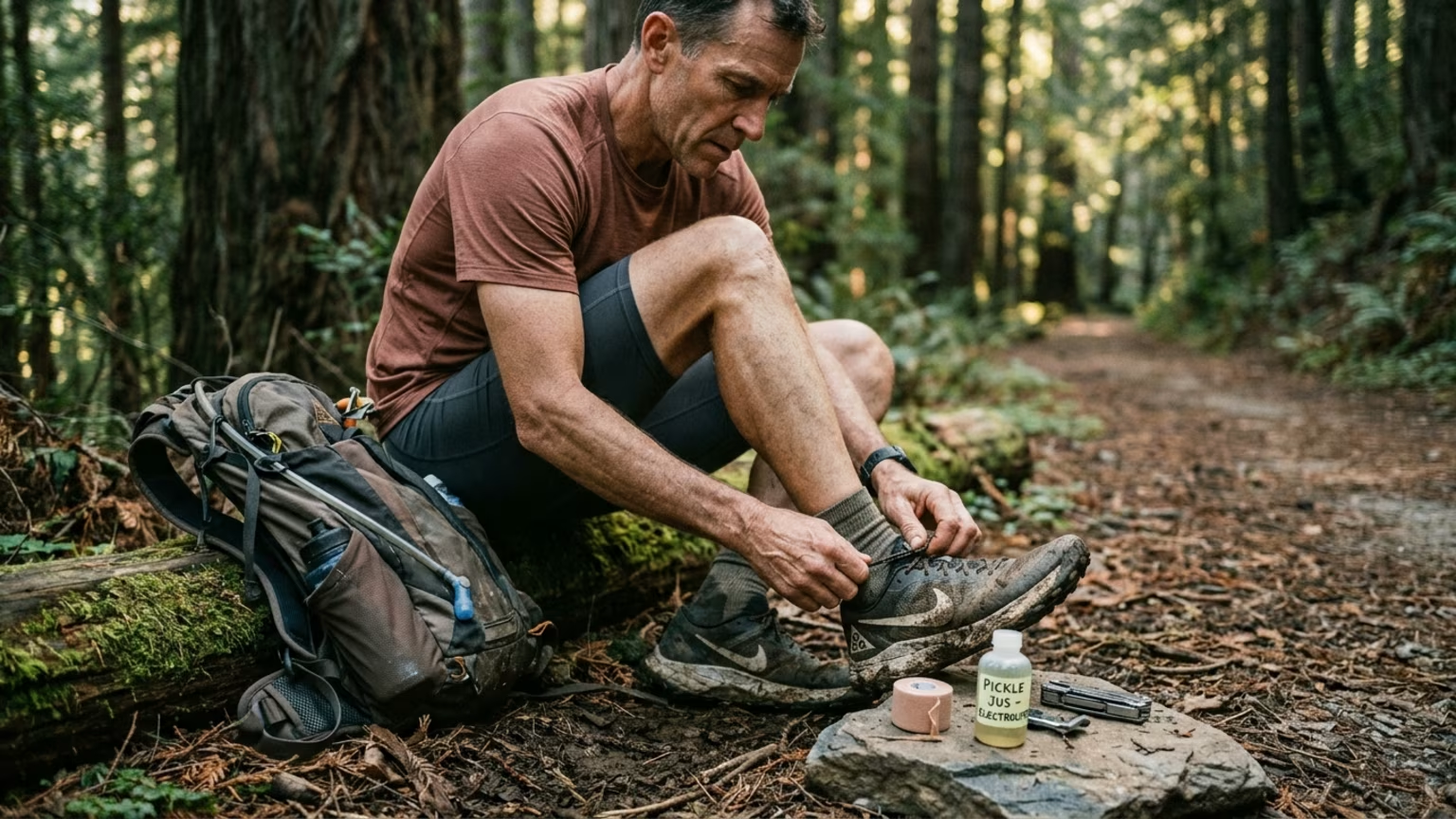

Nike ACG announced the Picklejus for 100-mile alpine races. Learn how dual-density foams and traction platforms affect endurance longevity for veteran runners.





More traction does not automatically equal fewer falls on technical trails. Grip is only one variable when navigating steep descents in late-stage ultras. Nike ACG Picklejus is an announced high-altitude trail-running shoe designed specifically for ultra-endurance races of 100 miles or more. Slated for release through Nike and selected authorized retailers in late 2027, this footwear platform attempts to solve the competing demands of alpine climbing and descending.
The timing of the announcement aligns closely with the 2026 UTMB week, an event that forces many mountain athletes to reconsider their gear choices. The UTMB course covers 174 kilometers and features approximately 9,900 meters of positive elevation gain around Mont Blanc. These extreme metrics illustrate the specific environment the shoe is built to handle. High-alpine courses demand equipment that can manage steep climbing, uneven surfaces, and rapidly changing weather over multiple days.
For athletes competing in these environments, footwear acts as the primary interface between the body and the mountain. Efforts of 100 miles create unique physiological stressors that amplify minor equipment flaws into race-ending injuries. A slight lack of grip on a wet descent can lead to a catastrophic fall. Conversely, an overly rigid shoe might protect against sharp rocks but cause severe muscle fatigue over many hours of continuous motion.
Nike developed this shoe through the Nike Sport Research Lab to balance uphill efficiency with downhill impact protection. The central engineering mechanism is a co-molded, dual-density ZoomX midsole. This is described as Nike’s first co-molded, dual-density supercritical-foam platform designed specifically for trail running. The design features a softer central core to absorb impact alongside a firmer perimeter ring to provide structural stability.
The upper construction utilizes trail-tuned Flyknit and adaptive containment cables to securely lock the foot in place. Hydrophobic yarns are woven directly into the material to limit water absorption during wet races. A gaiter-inspired high collar wraps the ankle to help stabilize the joint and keep trail debris out. These elements work together to maintain foot alignment while navigating unpredictable ground.
Beneath the midsole sits a new outsole platform called GOATEK. Nike claims this rubber compound delivers 45% more traction on wet surfaces compared with previous Nike all-terrain outsoles. The brand also states the outsole provides 25% greater abrasion resistance than its predecessors. The development process reportedly involved five long-term wear tests and more than 18,000 miles of real-world testing.
The design language connects the shoe’s name and rocker profile to pickle juice. This liquid has become associated with ultra-running culture as a supposed cramp-related remedy. However, that naming and aesthetic connection does not establish that pickle juice actually prevents cramps. It simply reflects a cultural nod to the grueling nature of long-distance events.
The integration of a gaiter-inspired collar represents a shift toward more specialized footwear components. Keeping small rocks and dirt out of the shoe reduces the risk of friction blisters during continuous multi-hour pushes. Additionally, limiting water retention through hydrophobic yarns helps maintain the original weight of the shoe. A lighter shoe requires less energy to lift with every step.
For endurance athletes over 35, the natural degradation of cartilage makes impact protection a serious priority. Older runners often lose some ankle mobility and proprioception as their training history lengthens. Navigating wet roots and loose scree becomes exponentially more difficult when neuromuscular fatigue sets in, making proper fall prevention strategies crucial. Equipment that assists with shock absorption and lateral stability can help veteran runners delay physical breakdown during long efforts.
The dual-density ZoomX construction addresses the specific biomechanical needs of aging joints on prolonged descents. A softer core minimizes the blunt force of repetitive downhill foot strikes on the knees and hips. Meanwhile, the firmer perimeter prevents the ankle from collapsing inward on off-camber sections of technical trail. This structured cushioning attempts to reduce the muscular load required to maintain proper form over 100 miles.
However, percentage gains in traction or durability require practical context before race day. A 45% wet-traction improvement is a relative comparison against older Nike models, not a verified victory over competing brands. For example, New Balance markets its Hierro v9 GORE-TEX with a Vibram Megagrip outsole and Traction Lug technology for wet and dry terrain. New Balance also describes its non-waterproof Hierro v9 as using deeper, 6-millimeter lugs for traction and a knit upper for debris protection.
Older runners must weigh these competing designs based on personal mechanics rather than marketing claims alone. Footwear selection for aging athletes should support consistent training rather than encourage aggressive overconfidence. A highly cushioned platform with a firm perimeter might feel supportive to one runner but completely awkward to another. Testing is the only way to know if a shoe matches your specific stride pattern.
Recovery times naturally lengthen as athletes enter their forties and fifties. A shoe that mitigates muscle damage during a challenging training run allows an older athlete to return to training sooner. Stable descending platforms can protect the quadriceps from excessive eccentric loading. Finding the right balance of protection and flexibility helps sustain a lifelong running habit.
Athletes should thoroughly test any new footwear platform before committing to it for a major alpine event. Once this shoe arrives in late 2027, runners must assess its wet-rock performance in realistic conditions. Testing should occur on the specific surfaces that resemble the target race rather than relying on headline percentages. Taking a new shoe onto wet roots, mud, and hard-packed trails provides a true baseline for traction claims while helping runners adapt safely to changing terrain.
Downhill control is another critical variable to isolate during field testing. Runners should pay attention to whether the firmer perimeter actually feels supportive during steep descents and awkward traverses. Long-run comfort cannot be determined during a short jog around a local park. You must test heel security, toe-box comfort, and swelling tolerance during progressively longer training blocks.
Evaluating fit after hours of use is essential for any ultra-distance runner. The upper features hydrophobic yarns and a high collar designed to reduce water absorption over many hours. Runners must still verify whether that collar rubs or creates friction points when feet swell late in a run. Inspecting lug edges and asymmetrical heel wear over time will also validate any abrasion-resistance hypotheses.
Finally, ensure your footwear matches the precise demands of your upcoming calendar. A high-altitude 100-mile design makes sense for steep alpine courses but may be excessive for flat gravel paths. Compare any new release with the shoes already proven on your target terrain. Introducing fresh footwear variations gradually will limit unexpected mechanical issues and joint stress.
Consider maintaining a rotation of trail shoes to stress the lower leg muscles in varying ways. Different heel-to-toe drops and cushioning levels prevent repetitive strain injuries from developing over a long season. Relying entirely on a maximalist shoe can weaken stabilizing muscles over time if not balanced properly. Use highly specialized tools like a 100-mile alpine shoe for their intended purpose, rather than every daily run.
True endurance longevity relies on preparing the body for the mountain rather than expecting a rubber compound to tame it.

Follow ReEndure for practical insights on endurance training, recovery, nutrition and healthy aging. Stay connected for new articles, research led guidance and ideas to help you perform better for longer.




Read practical ideas on endurance training, recovery, nutrition and healthy aging to keep progressing for years to come.
Read the Blog