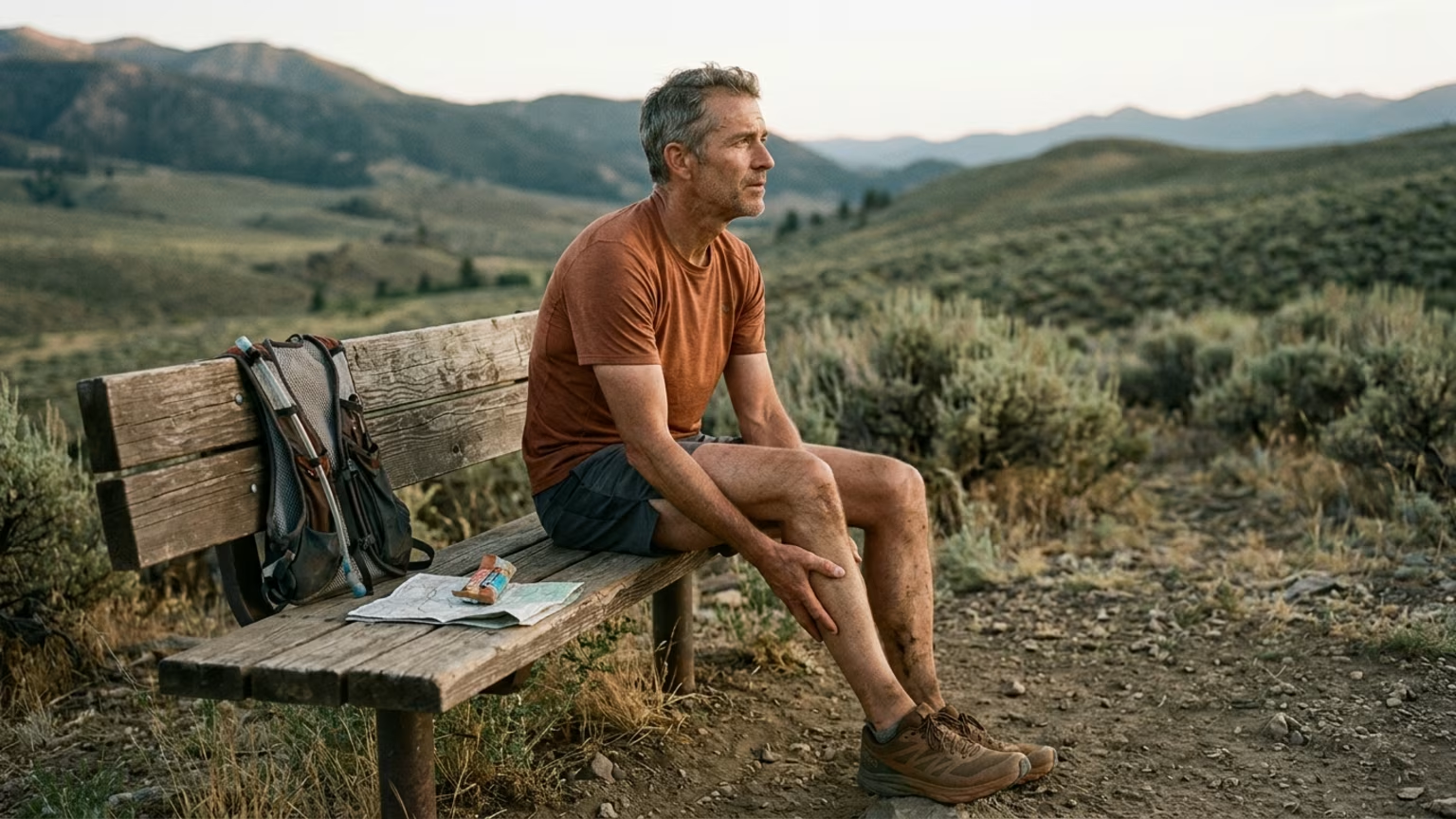

Kilian Jornet, Jim Walmsley, Tom Evans, and Katie Schide are skipping UTMB 2026. Learn how prioritizing long-term health and recovery builds better athletes.





The starting line of the world's most famous ultramarathon usually dictates the sport's calendar. This year, the silence speaks louder than the starting gun. Kilian Jornet, Jim Walmsley, Tom Evans, and Katie Schide will all miss UTMB 2026. Sarvfit reports that their absences materially change the expected competitive landscape.
The mainstream fitness industry routinely preaches that true champions never quit. We are constantly told to register for every marquee race and ignore the clear warning signs of fatigue. This aggressive mindset leads many older athletes straight into chronic overuse injuries. Yet, the smartest move an ambitious athlete can make is often choosing not to start.
Walking away from a massive competitive opportunity requires far more discipline than forcing a broken body to race. Elite athletes are finally modeling this vital restraint on the biggest stage. This behavior directly challenges the prevailing narrative of relentless, painful competition. Ambitious masters athletes must learn to adopt this exact same mindset.
Our culture glorifies the grit required to push through agonizing physical barriers. We rarely celebrate the wisdom required to rest a damaged knee or heal a strained foot. The decisions surrounding UTMB 2026 offer a rare glimpse into the mature realities of professional pacing. True athletic ambition is about sustaining performance across decades rather than just a single weekend.
The hype around major endurance events tells us that showing up is half the battle. UTMB is undeniably alluring to ambitious athletes around the globe. The event leaves a field of 846 elite entrants representing 54 nationalities across UTMB week, according to Sarvfit. The pressure to compete on that global stage is immense.
However, the reality of racing 174 kilometers with 9,900 meters of elevation gain demands absolute physical readiness. Sarvfit notes that this combination of extreme distance and climbing makes injury status incredibly relevant. Athletes simply cannot fake their way through a course this demanding. A compromised body will inevitably fail under the crushing weight of the Alps.
In our team, we often discuss how age forces adaptation. Hitting my forties brought a harsh reality check. The track workouts were not getting slower, but the days after them felt significantly heavier.
Instead of forcing my old Tuesday and Thursday intensity schedule, I looked at the data on Masters athletes and muscle protein synthesis. I pushed my second hard session to Friday, allowing an extra forty eight hours of low intensity recovery. My total weekly volume stayed the same, but the quality of my intervals skyrocketed.
Elite trail runners are clearly making similar calculations about their own physical limitations. Kilian Jornet is a four-time winner with victories in 2008, 2009, 2011 and 2022. He withdrew because of a persistent knee problem. Sarvfit reports that he chose surgery instead of racing.
Jim Walmsley, the 2023 UTMB champion, also withdrew because of a knee injury. Katie Schide is absent because of a foot injury, according to Sarvfit. She holds the reported UTMB course record of 22:09:31, which she established in 2024. Tom Evans won the men's race in 2025, but he will not start the 2026 race.
Science fully supports a readiness-based approach to competition rather than a relentless accumulation of volume. The American College of Sports Medicine recently updated its fitness framework to highlight how physiological systems overlap. It recommends individualized programs that address multiple interconnected systems. These systems include cardiorespiratory fitness, muscular fitness, body composition, flexibility and neuromotor fitness.
This holistic clinical approach proves that accumulating massive running volume is not the only path to high performance. A sports-medicine expert quoted by El Confidencial warns that injury risk rises when training exceeds what the body is prepared to tolerate. This elevated risk is especially true when load increases too much or too quickly. Athletes must actively monitor progressive pain, loss of strength, and prolonged stiffness.
The same medical expert notes that fatigue that does not resolve with rest is a warning sign requiring immediate attention. Biological adaptation actually occurs during recovery periods rather than during the workouts themselves. The expert recommends combining training with adequate sleep, scheduled rest days, and highly varied intensity. Assuming that more training automatically produces more physical improvement is a dangerous scientific fallacy.
According to a report in Sport summarizing a Freetrail interview, Evans experienced significantly slower recovery and diffuse discomfort. This physical discomfort involved both ankles, both hips, and his lower back. A subsequent gastrointestinal illness strongly reinforced his team's final decision not to race. Evans explicitly stated he was not confident he could finish the grueling race.
Evans also noted a crucial training principle attributed to his current coach Scott Johnston. Johnston believes that if you want to finish first, first you have to finish. Evans admitted a younger version of himself might have forced the decision and raced anyway. This remarkable maturity perfectly aligns with our views on healthy aging and endurance training.
For adults aged 35 to 65, skipping a highly anticipated race is often the best way to ensure years of future competition. Aging bodies biologically require more time to heal from deep tissue damage and systemic fatigue. Pushing through injuries for a single event can easily compromise an entire calendar year of structural training. The most successful veteran runners prioritize sustainable load management over immediate race day gratification.
Sarvfit argues that training harder and racing more do not necessarily produce faster athletic progress. Managing your daily training load and injury risk can be as important as improving speed or endurance. We highly recommend reviewing our guide on strategic goal setting for long-term endurance performance to properly align your race calendar. Your event selection should heavily account for recovery capacity, current injury status, and daily life demands.
The massive opportunity cost of preparation is a crucial factor for older athletes with busy personal lives. Committing to a grueling endurance build phase while battling a persistent injury is a recipe for physical disaster. Athletes must learn to evaluate their clinical symptoms and realistic finish readiness before committing to an ultramarathon. Reendure firmly believes that long-term athletic longevity requires extreme tactical patience.
The elite withdrawals from UTMB 2026 provide a brilliant public masterclass in this deeply patient approach. These professional athletes clearly understand that racing while under-recovered carries a massive physical downside. You can learn more about managing this tension by reading our article on balancing endurance sport with real life. Deep patience, progressive structural overload, and consistent recovery will always build stronger athletes over time.
The next major cultural shift in trail running will likely be a broader acceptance of tactical non-starts among highly competitive amateurs. The high-profile absence of famous athletes does not mean major events are losing their prestige or global appeal. French coverage recently characterized the UTMB 2026 men's field as unusually unpredictable. The coverage specifically noted 24 men above 900 points on the projected start list.
This fascinating dynamic creates a massive competitive opportunity for less-established contenders to confidently step forward. Athletes including Vincent Bouillard, Ben Dhiman, Caleb Olson and Baptiste Chassagne are receiving greater attention. Sarvfit highlights these runners as potential top contenders. The UTMB 2026 men’s race remains incredibly deep and fiercely competitive.
The women’s race maintains similarly high stakes despite missing its reigning champion and current record holder. As top competitors increasingly factor in their overall physical health, the start lines of major events will feature athletes who are truly ready. Expect to see more runners openly discussing their private recovery challenges instead of silently hiding them. This welcome transparency will heavily influence how ambitious masters athletes approach their own annual race schedules.
Understanding why tactical restraint produces better outcomes is fundamentally essential for anyone entering this space. Ultimately, true longevity in endurance sports requires making incredibly difficult choices about when to rest. The rare courage to step away from a prominent starting line is a definitive marker of an experienced athlete. Play the long game, prioritize your objective recovery metrics, and keep your ambitious eyes focused firmly on the horizon.

Follow ReEndure for practical insights on endurance training, recovery, nutrition and healthy aging. Stay connected for new articles, research led guidance and ideas to help you perform better for longer.


Read practical ideas on endurance training, recovery, nutrition and healthy aging to keep progressing for years to come.
Read the Blog