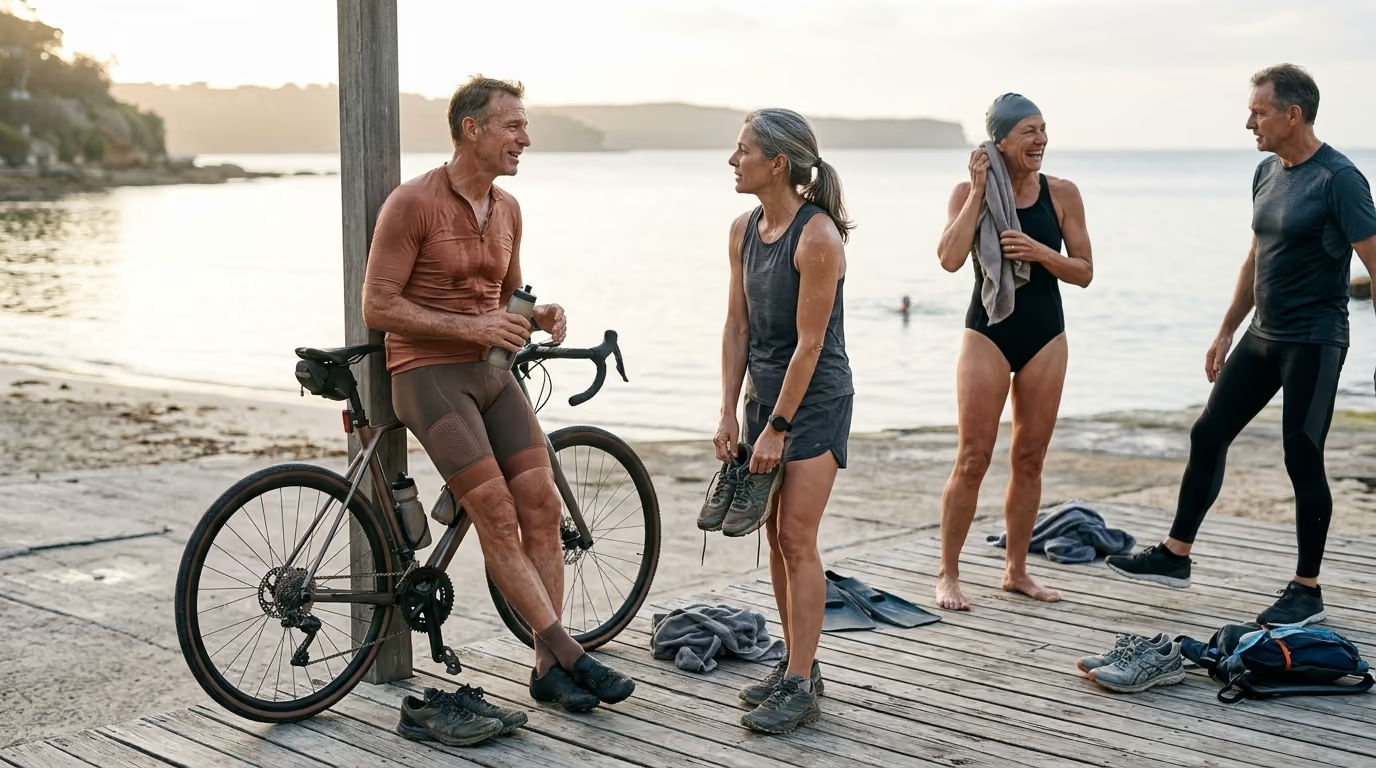

Four core training pillars help athletes adapt aerobic base, intensity, and strength work across five distinct decades of healthy aging.





A long-term endurance framework is a structured method for adapting your aerobic development, strength work, and recovery habits across a lifetime of physical activity. It is not a set of rigid chronological rules that forces you to abandon hard workouts on your fortieth or fiftieth birthday.
Aging alters the physiological cost of exercise, but it does not remove your ability to adapt. As the decades advance, the primary training objective shifts toward sustaining functional capacity, protecting metabolic health, and building musculoskeletal durability. Performance optimization occurs within that protective boundary.
Understanding how your body changes over time allows you to adjust your training volume, intensity distribution, and lifestyle support systems. By taking a proactive approach across your late thirties, forties, fifties, sixties, and beyond, you can pursue competitive goals while preserving physical independence for decades to come.
Many endurance athletes reach their late thirties or early forties and attempt to follow the exact training routines that brought them success a decade earlier. They keep the same weekly mileage, execute the same interval sessions on Tuesday and Thursday, and fit their long sessions into busy weekends.
For a period, this approach appears to work. Over time, subtle cracks begin to show in the foundation. Minor aches linger for days instead of hours. Workouts that once felt routine require intense mental effort to complete. Sleep quality often degrades, and nagging soft tissue irritations become chronic interruptions to consistency.
Hitting my forties brought a harsh reality check. The track workouts were not getting slower, but the days after them felt significantly heavier. Instead of forcing my old Tuesday and Thursday intensity schedule, I looked at the data on Masters athletes and muscle protein synthesis. I pushed my second hard session to Friday, allowing an extra forty eight hours of low intensity recovery. My total weekly volume stayed the same, but the quality of my intervals skyrocketed.
In our experience working with veteran competitors, the issue is rarely a lack of desire or cardiovascular drive. The limiting factor is usually an imbalance between total stress and systemic recovery capacity. Balancing career demands, family responsibilities, accumulated orthopedic wear, and natural biological changes requires a shift in how you organize your weekly training load.
When you view training through the lens of evidence-based training and performance strategies, age becomes a modifying variable rather than a strict limitation. The goal is to maximize your sustainable healthspan while building the specific fitness needed for your target events.
Cardiorespiratory fitness, commonly measured as VO2 max, reflects the maximum amount of oxygen your body can transport and use during intense exercise. It is determined by central factors, such as maximal heart rate and stroke volume, alongside peripheral factors like capillary density and mitochondrial capacity.
Observational data demonstrates that cardiorespiratory fitness is one of the strongest predictors of long-term health and survival. A large overview of meta-analyses involving more than 20.9 million observations from 199 cohort studies demonstrated that each 1-MET increase in cardiorespiratory fitness was associated with an 11% to 17% reduction in all-cause mortality risk. A separate meta-analysis of 42 studies comprising over 3.8 million observations confirmed this relationship, finding pooled relative risks of 0.86 for all-cause mortality and 0.84 for cardiovascular mortality per higher MET of fitness.
In an analysis of 122,007 patients undergoing exercise treadmill testing, higher cardiorespiratory fitness was inversely associated with all-cause mortality with no upper limit of benefit observed. Furthermore, a meta-analysis of 37 cohort studies encompassing 2,258,029 participants showed that individuals in the highest fitness category had a 45% lower risk of all-cause mortality compared to those in the lowest category.
While these epidemiological findings show strong associations rather than experimental proof of lifespan extension, they establish aerobic capacity as a vital health marker. In general populations, VO2 max declines by roughly 10% per decade after the age of thirty. Highly trained masters athletes who maintain consistent volume and intensity often cut this rate of decline substantially. One study tracking competitive masters athletes observed an average VO2 max decline of approximately 2.2 mL/kg/min, or about 5.5% per decade.
The decline in aerobic power with age is driven largely by reductions in maximal heart rate, small reductions in stroke volume, and decreased peripheral oxygen extraction. Crucially, research indicates that a substantial portion of the performance loss seen in older competitors is directly attributable to reductions in training volume and intensity. These reductions are often forced by orthopedic injury, prolonged recovery times, or social constraints rather than unavoidable cellular aging.
Musculoskeletal changes run parallel to cardiovascular changes. Sarcopenia involves the age-related loss of muscle mass, strength, and physical function. Dynapenia refers specifically to the loss of muscle force and power, which often declines at a faster rate than muscle mass itself. This process preferentially affects Type II fast-twitch muscle fibers, which are responsible for generating high forces and rapid movements.
Tendons and ligaments also undergo structural remodeling as you age. Decreased collagen turnover and reduced water content make connective tissues stiffer and less tolerant of rapid spikes in volume. Adapting your training involves supporting these structural components as diligently as you train your heart and lungs.
A durable training program balances several distinct physical capacities. Neglecting one pillar undermines the others and increases your susceptibility to chronic injury.
The aerobic base forms the foundation of all endurance performance. World Health Organization physical activity guidelines recommend that adults accumulate 150 to 300 minutes of moderate-intensity aerobic activity per week, 75 to 150 minutes of vigorous activity, or an equivalent combination. Older adults gain additional protective benefits by progressing toward the upper end of these ranges when their recovery allows.
A robust aerobic base expands capillary networks, increases mitochondrial enzyme activity, and enhances your body's ability to use fat as a fuel source. This work should be performed at conversational intensities where breathing remains controlled. Keeping your easy sessions truly easy allows you to absorb substantial volume without creating excessive autonomic stress.
Retaining high-intensity work is essential for preserving maximal aerobic capacity, cardiac stroke volume, and neuromuscular recruitment. Eliminating intense training entirely can accelerate the rate of VO2 max decline.
Intensity should always be defined in relative terms. A specific running pace or cycling wattage that was moderate in your twenties might represent a maximal effort in your fifties. Short, controlled intervals performed near your current threshold or peak aerobic capacity provide a potent stimulus with a manageable recovery footprint.
Strength training is not an optional accessory for older endurance athletes. It is a fundamental requirement for maintaining force production, bone mineral density, joint integrity, and movement efficiency.
A network meta-analysis revealed that structured resistance training lasting at least six weeks produced an estimated 12.8-kilogram improvement in muscle strength compared to usual care. Furthermore, a meta-analysis examining very elderly adults demonstrated significant gains in muscle strength and size from resistance exercise, even in participants aged eighty and older.
Your strength routine must emphasize two distinct qualities:
Public health guidelines advise adults aged sixty-five and older, particularly those with reduced mobility, to incorporate balance-focused physical activity on three or more days per week. Balance is a complex skill that relies on visual, vestibular, and somatosensory inputs.
Integrating single-leg balance drills, multidirectional movement, and usable joint mobility preserves the movement quality required for your sport. Dedicated work on ankle dorsiflexion, hip extension, and thoracic rotation ensures that you can sustain efficient mechanics under fatigue. Athletes can explore dedicated healthy aging movement resources to build effective mobility routines.
Chronological age provides a broad template, while your biological age and training history determine your specific day-to-day capacity.
The late thirties represent a golden window of opportunity. Most athletes retain high aerobic capacity and strong musculoskeletal resilience. Career milestones and growing family commitments frequently compress available training time.
The main priority in this decade is establishing unbreakable habits around strength training and tissue care. Athletes who rely solely on their youthful aerobic engine often run into recurring tendon issues.
In your forties, the total volume of life stress often peaks. Work demands, caregiving responsibilities, and diminished sleep combine to reduce your adaptive capacity. Athletes who try to execute grueling workouts on four hours of sleep place themselves at high risk of overreaching.
The primary adaptation in this decade is shifting from high training volume to high training value. Every session must have a defined physiological purpose.
During your fifties, you will likely notice that intense training sessions generate longer-lasting residual fatigue. You do not need to eliminate hard training. You simply need to dose it with precision and allow wider recovery margins around high-stress sessions.
In your sixties, the preservation of muscle power, bone density, and neuromotor balance becomes equal in priority to your aerobic capacity. Cardiovascular fitness remains high in lifelong athletes, but joint tolerance and rapid force production require deliberate support.
Entering your seventies and beyond does not mean giving up on endurance sport. It means orienting your training toward retaining the physical capacities that guarantee daily independence, vitality, and fall resistance.
Implementing an age-adjusted training plan requires deliberate planning across scheduling, strength integration, cross-training, and nutrition.
The traditional seven-day training week is an arbitrary social structure, not a biological mandate. As recovery requirements expand in your fifties and sixties, fitting two hard workouts, two strength sessions, and a long endurance outing into seven days can create chronic fatigue.
Consider shifting to a nine-day or ten-day training cycle. This structure allows you to place two full days of easy aerobic work or active recovery between hard quality sessions. Your monthly training volume remains virtually identical, but the quality of your hard sessions and your systemic adaptation will improve.
Lifting weights immediately before a demanding endurance session compromises your interval quality. Conversely, running hard right before a heavy lifting session increases injury risk due to neuromuscular fatigue.
To optimize both adaptations:
You do not need to log all your aerobic hours in your primary sport. If you are a runner experiencing joint sensitivity, substituting one or two weekly runs with cycling, rowing, or swimming preserves cardiovascular stimulus while reducing orthopedic impact.
When substituting modalities, match the target heart rate and duration of the planned running session. This strategy allows you to build a substantial aerobic engine while protecting your joints and tendons from cumulative trauma. Discover more practical methods inside our comprehensive recovery and mobility guides.
Aging muscle exhibits a phenomenon known as anabolic resistance, requiring a stronger amino acid stimulus to trigger muscle protein synthesis. Standard baseline recommendations of 0.8 grams of protein per kilogram of body weight per day are insufficient for active masters athletes.
The PROT-AGE position paper recommends that older adults consume 1.0 to 1.2 grams of protein per kilogram of body weight daily to help maintain muscle mass. For exercising older adults seeking to support tissue repair and adaptation, the International Society of Sports Nutrition recommends daily intakes between 1.4 and 2.0 grams per kilogram of body weight.
Distribute your protein intake across three to four meals per day, aiming for 30 to 40 grams of high-quality protein per meal. Ensure your overall energy intake matches your training expenditure to prevent low energy availability, which impairs bone mineral density, immune function, and recovery. Explore our detailed fueling and hydration strategies for additional nutritional frameworks.
Even dedicated athletes can fall into counterproductive patterns when adapting their routines for healthy aging. Avoiding these common mistakes will protect your consistency and longevity.
A common trend is the belief that older athletes should train exclusively in low-intensity zones. While low-intensity aerobic volume is essential, completely removing vigorous work leads to a rapid loss of high-end aerobic capacity, threshold velocity, and fast-twitch muscle fibers. Controlled, well-recovered intervals must remain part of your long-term plan.
Prescribing training based entirely on your birth year ignores individual biological reality. A sixty-year-old with a thirty-year history of structured endurance training has a vastly different physiological capacity than a sedentary beginner of the same age. Always match your training volume and complexity to your training age, functional capacity, and current health status.
Cardiovascular fitness does not make you immune to coronary artery disease or other health conditions. High aerobic capacity can sometimes mask underlying cardiovascular disease. Never dismiss exertional chest tightness, unexplained breathlessness, palpitations accompanied by lightheadedness, or sudden drops in exercise tolerance as simple signs of aging.
Wearable devices provide useful trend data for resting heart rate and sleep duration, but their daily readiness algorithms are estimates. Letting an algorithm dictate whether you train can lead to unnecessary anxiety or a false sense of security. Always prioritize real-world physical feedback, joint comfort, mood, and subjective energy levels over a single device score.
Many older competitors attempt to maintain their youthful racing weight by restricting calories while sustaining high training volumes. Chronic low energy availability undermines bone mineral density, increases stress fracture risk, disrupts endocrine function, and delays muscular recovery. Fuel your training adequately and prioritize bone health through weight-bearing exercise and proper nutrition.
Tracking objective markers helps you determine whether your training framework is supporting your long-term health and athletic performance.
Rather than performing exhausting maximal tests every month, track your pace or power at a fixed submaximal heart rate. For example, monitor your cycling wattage or running pace at an aerobic heart rate of 130 beats per minute on a flat, standardized course. An improving pace at the same heart rate indicates positive aerobic adaptation, while a persistent decline may signal systemic fatigue or under-recovery.
Regularly assess your functional strength and balance through simple, repeatable tests:
Monitor your rolling seven-day average resting heart rate upon waking. A sustained elevation of five to seven beats per minute above your established baseline, especially when combined with poor sleep quality, muscle soreness, and low motivation, indicates that your body needs additional recovery or a planned deload.
Schedule routine medical evaluations with your physician to monitor resting blood pressure, fasting lipid profiles, blood glucose regulation, and bone mineral density. The American College of Sports Medicine preparticipation screening model emphasizes evaluating your current exercise participation, symptoms or known cardiovascular disease, and intended exercise intensity. Routine exercise electrocardiograms in asymptomatic athletes have high false-positive rates, but targeted clinical testing is crucial for individuals with exertional symptoms or elevated clinical risk profiles.
At ReEndure, we believe that healthy aging is not about slowing down. It is about training intelligently, honoring your recovery requirements, and maintaining the physical capacities that make endurance sports rewarding for life. You can learn more about our evidence-led mission to support ambitious older athletes.
It is never too late to start endurance and resistance training. Research shows that older adults, including individuals in their eighties, make significant gains in muscle strength, functional capacity, and cardiovascular fitness when starting progressive exercise programs. Beginners should start with frequent, low-intensity sessions, gradually increase exercise duration before adding intensity, and include supervised resistance training.
The menopausal transition involves fluctuating estrogen levels that can impact sleep quality, muscle protein synthesis, bone density, and recovery capacity. Female athletes should prioritize progressive heavy resistance training to preserve bone and muscle mass, ensure adequate daily protein intake of 1.4 to 2.0 grams per kilogram of body weight, and allow flexible recovery windows between hard sessions. Significant symptoms, sleep disturbances, or recurring bone stress injuries should be evaluated by a healthcare professional.
Most endurance athletes over fifty achieve optimal results with one to two carefully dosed quality sessions per week, such as lactate threshold work or controlled aerobic intervals. The ideal frequency depends on your training history, sleep quality, and overall life stress. The primary indicator of appropriate dosing is your ability to recover within 48 to 72 hours without experiencing persistent joint pain, sleep disruption, or systemic fatigue.
Major cardiovascular guidelines do not recommend routine exercise stress testing for asymptomatic adults simply because of chronological age, due to high rates of false-positive results. Medical evaluation and targeted testing are strongly recommended if you experience warning symptoms such as exertional chest pain, unexplained dizziness, unusual shortness of breath, palpitations, or if you have known cardiovascular disease and plan to start vigorous training.

Follow ReEndure for practical insights on endurance training, recovery, nutrition and healthy aging. Stay connected for new articles, research led guidance and ideas to help you perform better for longer.


Read practical ideas on endurance training, recovery, nutrition and healthy aging to keep progressing for years to come.
Read the Blog