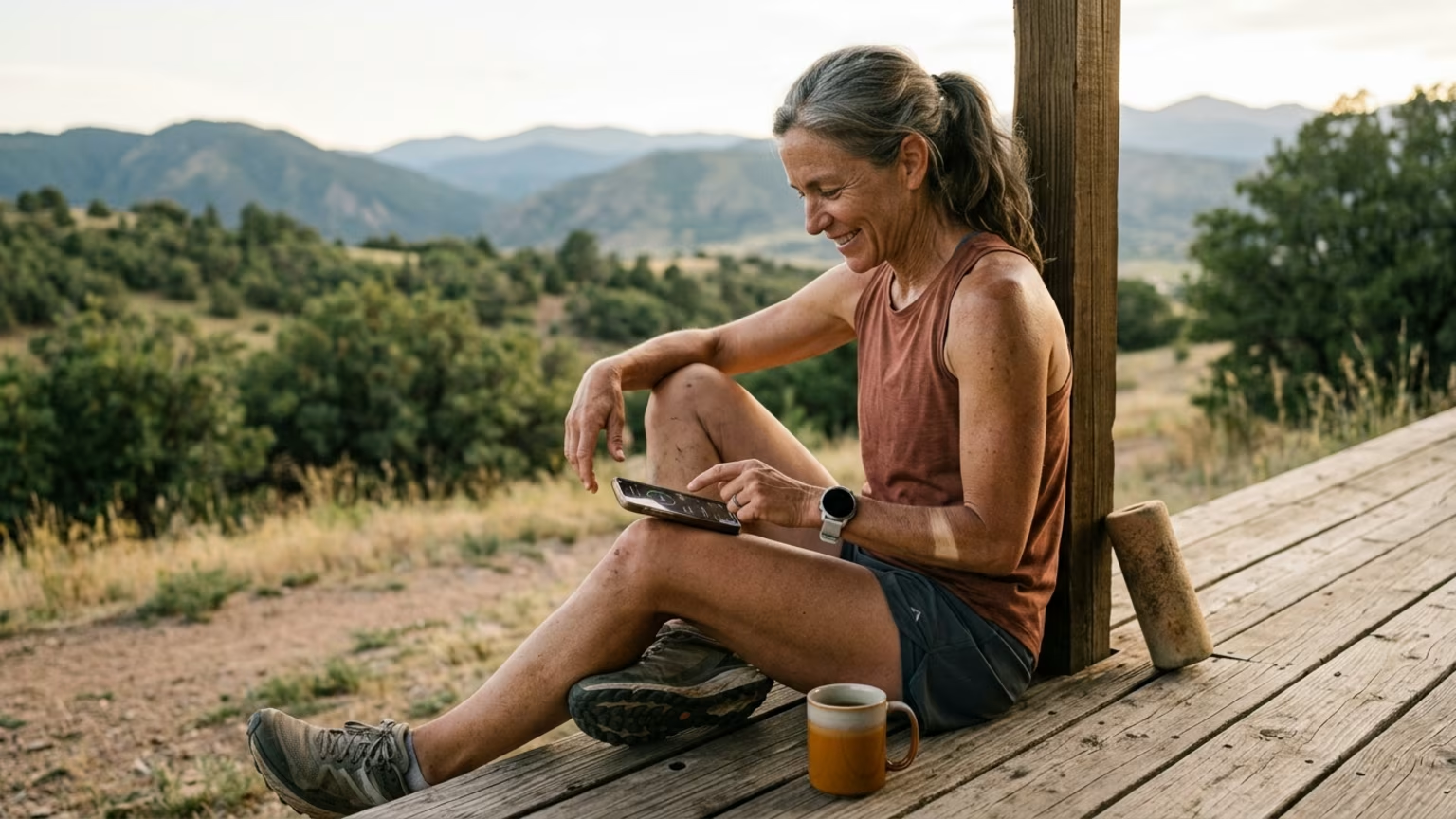

Kovr Coach recommends runners minimize data overlap by using just three functional apps alongside Garmin Connect. Learn how to streamline your recovery tracking.





On September 20 2026, Kovr Coach published a detailed comparison of endurance apps that integrate directly with the Garmin ecosystem. The report evaluated how platforms like Strava, TrainingPeaks, Intervals.icu and Runna handle training load analysis. It also reviewed recovery apps including Athlytic, HRV4Training and Kovr itself. The analysis focused on how these various tools manage structured training, social sharing, and heart rate variability tracking.
The central recommendation from Kovr is that athletes should minimize data overlap by limiting their technology stack. The publication suggests runners need no more than three functional applications alongside Garmin Connect. This streamlined approach includes one platform for social sharing, one for structured training, and one for interpreting how the body responds to physical stress. The report emphasizes that adding more apps with duplicate readiness scores creates confusion rather than actionable insight.
Kovr suggests a specific software combination for optimal results. The suggested stack features Strava, either TrainingPeaks or Intervals.icu, and its own context application. This specific combination covers community engagement, workout planning, and physiological interpretation without overlapping metrics. Maintaining strict boundaries between these functions prevents athletes from constantly second guessing their daily schedule.
For the ambitious athlete over 35, more data is rarely the answer. Garmin already supplies multiple recovery metrics like Training Readiness, Body Battery, and HRV Status. Purchasing additional apps that simply generate alternative recovery numbers can lead to absolute decision paralysis. Instead, the focus should shift to identifying what specific functions your current training system lacks.
Reendure exists to translate complex science into actionable habits for the mature competitor. We know that aging bodies require longer recovery windows and more precise stress management. Therefore, our team strongly advocates for a minimalist approach to training technology. Staring at five different readiness scores every morning breeds anxiety instead of athletic confidence.
Hitting my forties brought a harsh reality check. The track workouts were not getting slower, but the days after them felt significantly heavier. Instead of forcing my old Tuesday and Thursday intensity schedule, I looked at the data on Masters athletes and muscle protein synthesis. I pushed my second hard session to Friday, allowing an extra forty eight hours of low intensity recovery.
My total weekly volume stayed the same, but the quality of my intervals skyrocketed. This simple schedule change highlighted the importance of measuring actual physiological fatigue rather than blind ambition. When you combine age with high intensity training, subjective feeling must guide the objective data. This reality makes selecting the proper tracking software absolutely critical.
This kind of schedule adjustment requires tools that help plan and track specific workouts effectively. TrainingPeaks is presented by Kovr as a primary structured training and coaching option. TrainingPeaks documentation shows structured workouts syncing directly to compatible Garmin devices. This direct pipeline ensures that complex interval sessions appear seamlessly on your wrist.
Runna serves a similar purpose for runners seeking automated guidance. It operates as a plan generation service that sends scheduled workouts directly to a Garmin watch. Identifying your need for rigid structure versus flexible planning will dictate which tool belongs in your daily routine. Both options eliminate the friction of manually programming intervals before a difficult morning session.
According to Kovr, direct synchronization determines what information your apps actually receive. Platforms like Strava, TrainingPeaks, Intervals.icu and Runna connect directly to Garmin Connect. In contrast, apps like Athlytic and Kovr read data through Apple Health on an iPhone. This distinction matters deeply for athletes trying to avoid accumulating additional metrics without a clear physiological purpose.
Understanding data pathways is crucial for older athletes who want causal context rather than another composite score. Kovr notes that Garmin Connect writes workouts, heart rate, resting heart rate, sleep and active energy to Apple Health. However, it does not send Garmin HRV Status through that pathway. To counter this limitation, tools like Kovr require athletes to log a separate morning HRV entry.
The article describes this manual measurement process as taking about 30 seconds. While brief, this daily habit forces the athlete to pause and assess their physical state. Taking intentional time to measure systemic fatigue aligns closely with sustainable training principles. It prevents older athletes from blindly rushing into a high stress workout.
Kovr says it combines Garmin derived data with morning HRV, nutrition, and environmental context to help explain difficult sessions. The article gives examples of possible explanations that a runner might see. These include a difficult run coinciding with a 20°C dew point, being 80 grams short on carbohydrates, or having consumed wine. These contextual variables often explain a heavy training day far better than a generic fatigue score.
For athletes who prefer self directed analysis, Intervals.icu is described by Kovr as a free tool for detailed training load tracking. It tracks heart rate variability and wellness metrics when the athlete logs the relevant information consistently. However, Intervals.icu requires the athlete to interpret the data rather than automatically identifying why a session felt difficult. This makes it an excellent choice for veteran runners who already understand their basic physiological responses.
Strava remains the dominant social and community layer for endurance athletes. It offers activity sharing, route creation, and engagement rather than detailed recovery analysis. Strava supports Garmin activity synchronization and Live Segments on compatible devices. This setup provides motivation without cluttering the Garmin Connect platform with redundant performance charts.
Keeping the social aspect separate helps athletes maintain focus on their actual prescribed work. Trying to win digital trophies during a scheduled recovery run is a common trap for competitive personalities. By confining social features to a dedicated app, runners can better protect their easy days. This separation of concerns is a fundamental principle of sustainable endurance training.
Athlytic is described as an Apple Health based recovery app designed primarily for Apple Watch users. Kovr argues that Garmin users may receive an incomplete picture from it because Garmin keeps its overnight HRV data private. HRV4Training is presented as a specialist tool that uses a smartphone camera or supported device for morning measurements. This approach relies on manual daily readings rather than Garmin overnight data.
Kovr cites endurance monitoring research by Plews and colleagues when discussing the value of tracking physiological data in proper context. A 2026 Frontiers review describes HRV guided endurance training as a promising approach to individualized load regulation. However, one runner focused review recommends looking at repeated HRV readings against an individual baseline rather than reacting to a single night. Older endurance athletes must use these longitudinal trends to support basic coaching judgment.
Endurance athletes should build a lean technology stack that prioritizes longitudinal recovery trends over daily composite scores to ensure consistent performance.

Follow ReEndure for practical insights on endurance training, recovery, nutrition and healthy aging. Stay connected for new articles, research led guidance and ideas to help you perform better for longer.



Read practical ideas on endurance training, recovery, nutrition and healthy aging to keep progressing for years to come.
Read the Blog