
Learn why returning to endurance training requires a load-based plan rather than a calendar deadline, focusing on next-day symptom monitoring and progression.





The physical therapist circles a date on a wall calendar six weeks away. You are told to stop running completely and wait for that Tuesday to arrive. You walk out of the office with a generic timeline but absolutely no idea how to safely rebuild your fitness.
Resting until an arbitrary calendar date is one of the worst ways to return from an endurance injury. Time away from training does not automatically prepare your body to absorb heavy mechanical impact again. The popular belief is that injured tissue heals completely if left entirely alone. The clinical reality is that passive rest strips away your mechanical conditioning and leaves you highly vulnerable.
When you finally reach that prescribed clearance date, your cardiovascular engine might still feel strong. Your heart and lungs are ready to work hard, but your tendons and bones are completely unprepared for the road. This disconnect creates a massive injury risk for ambitious athletes over 35. You run at your old pace, flare the healing tissue, and find yourself right back on the couch.
Clinical guidance recommends using functional readiness and symptom response rather than relying only on a calendar deadline. A date on a calendar only tells you how much time has passed. It tells you absolutely nothing about whether an injured tendon can handle the repetitive force of a long run. A load-based progression protects you from this frustrating cycle of constant reinjury.
In our experience, abandoning the passive rest timeline is often the turning point for masters athletes. As one of our team members noted: "When my Achilles flared up right before a major marathon build, the standard advice was total rest. But diving into the clinical research on tendon loading changed my approach entirely. I swapped complete rest for heavy slow resistance training, specifically utilizing heavy calf raises on a deficit. It felt counterintuitive to load an injured tendon, but the science was clear. Within six weeks, the morning stiffness faded, and I was back to building mileage without the chronic ache."
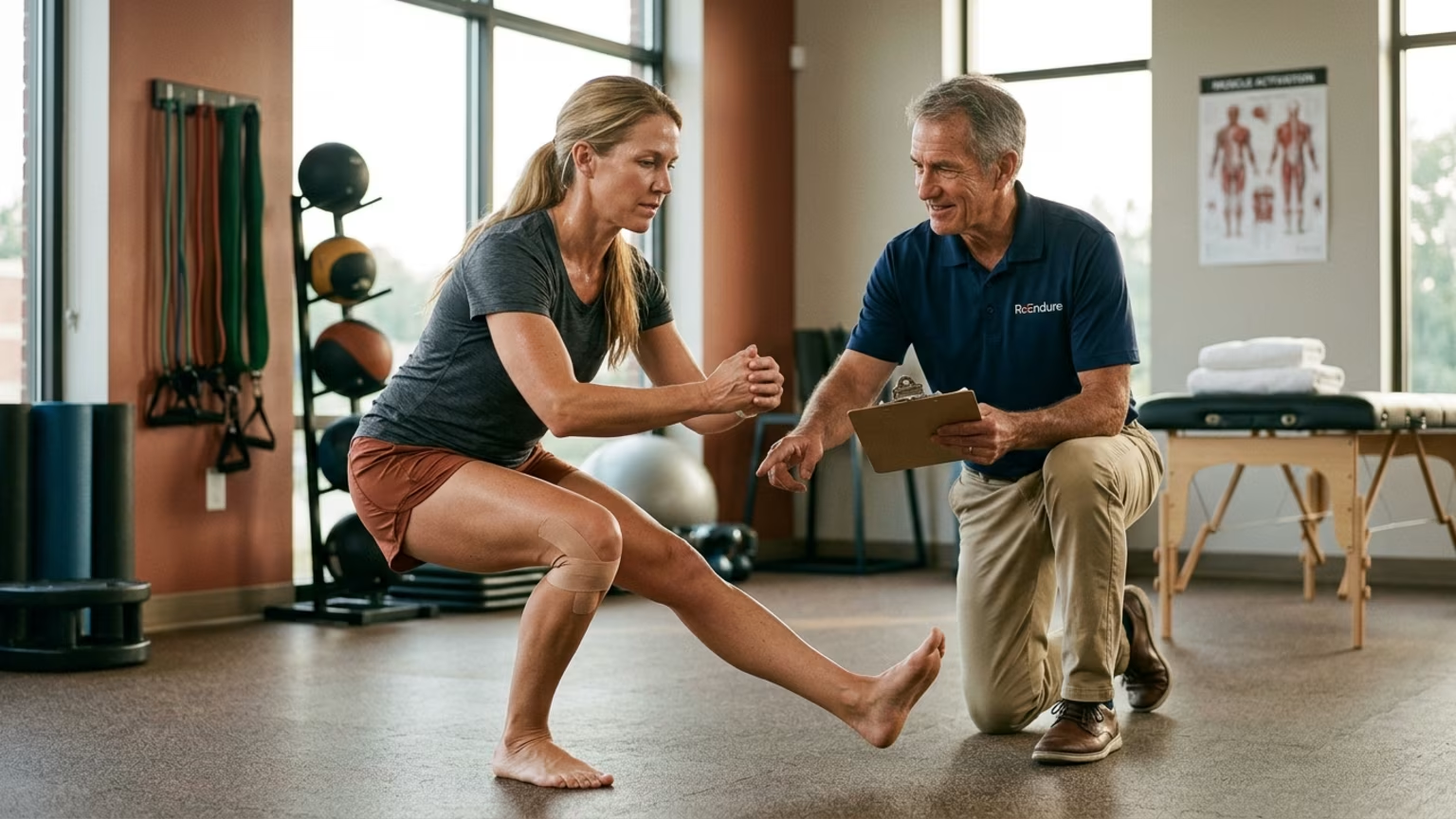
Before you attempt your first return run, you must prove your body can handle basic mechanical stress. One practical clinical framework uses walking tests, lower body strength checks, and hopping tests before reintroducing running. A runner should be able to complete a brisk walk for 30 minutes without pain or a next-day flare. If a brisk walk causes lingering soreness, your tissues are not ready for the violent impact of running.
The framework also includes specific strength and control checks for your lower body. You should be able to perform 20 to 25 single-leg heel raises on each side. Next, you need at least 10 controlled single-leg squats or step-downs per side without pain or loss of knee control. These isolated movements confirm that your musculature can support your body weight on one leg.
Finally, the screening requires 20 to 30 single-leg hops that are comfortable and quiet. Passing these checks means you have the baseline capacity to absorb landing forces safely. These checks are useful field tools rather than a guarantee of safety. You should always respect specific postoperative restrictions or clinician advice if severe bone stress is suspected.
Monitoring your symptoms during a workout is helpful but ultimately incomplete. The true indicator of tissue tolerance arrives the following morning. Delayed stiffness or soreness reveals that your previous workout exceeded your current capacity. RightPT recommends keeping pain at or below approximately 3/10 during activity, with symptoms returning to baseline the next morning.
Some specific conditions allow for slightly higher thresholds if carefully monitored. In Achilles-tendinopathy rehabilitation, pain-monitoring models have commonly allowed symptoms up to 5/10 when the next-day and week-to-week response remains acceptable. In a randomized study of 38 adults with Achilles tendinopathy, continued activity under a pain-monitoring model produced outcomes comparable to an initial period of active rest. The comparison group used active rest for the first 6 weeks, and reported improvements remained at 12 months.
This evidence suggests that carefully monitored continued activity is often compatible with recovery. If you wake up and your walking tolerance is worse than your established baseline, the previous load was simply too high. Sharp or worsening pain, swelling, night pain, impaired weight-bearing, or altered gait are sensible reasons to stop and seek assessment. You progress when the current load is tolerated, and you regress when the next-day response says it was not.
RightPT proposes repeating the last successful step after one rule violation and reducing the level after repeated violations. You do not have to abandon your entire plan just because of one poor response. A single flare requires an adjustment to your load rather than a complete halt to your training. Returning to endurance training after illness or injury requires objective feedback rather than blind optimism.
Returning to running requires extreme patience and a systematic approach to layering stress. Reendure recommends beginning with a highly conservative interval structure on a predictable, flat surface. One example is 1 minute of easy running followed by 2 minutes of walking for 6 to 8 rounds, performed every other day. You must leave a recovery day between these early sessions so you can accurately assess any delayed symptoms.
Once flat running is stable, you can build toward roughly 20 to 30 minutes of continuous easy running. Increase your total duration first, and avoid adding frequency or intensity at the same time. The frequently repeated 10 percent rule can serve as a conservative guardrail, but you should prioritize avoiding abrupt load spikes above all else. Only introduce faster running, hills, and race-specific demands after you establish a solid baseline of easy impact.
Hills should be introduced slowly because they alter your mechanical load without changing your pace. Uphill running increases muscular demand, while downhill running introduces heavy eccentric loading. Start with short, gentle uphill sections at easy effort, and return to flat running between repetitions. Add downhill exposure very conservatively to protect your joints from sudden braking forces.
Speed increases force and loading rate, so it must follow a stable base of easy endurance. You can begin with flat strides of approximately 10 to 20 seconds with full recovery. For athletes aiming to compete again, race preparation is the absolute final layer because it stacks multiple stressors simultaneously. A structured endurance training plan should reintroduce target pace, long duration, and technical surfaces individually before combining them.
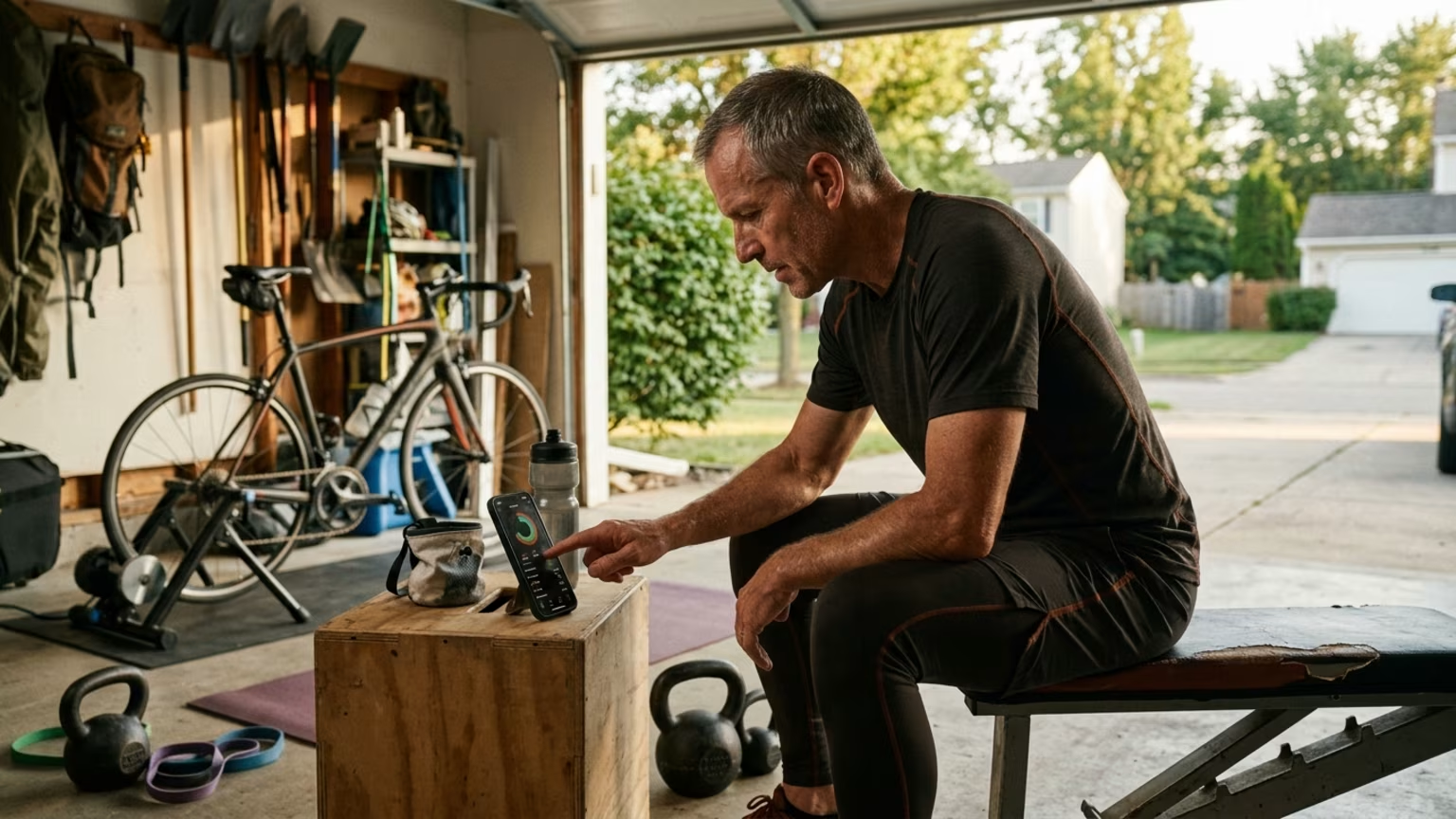
For endurance athletes over 35, recovery is a fundamental part of the load plan. Tracking mileage alone is a poor way to measure the actual mechanical stress on your body. You should monitor duration, elevation, surface type, strength sessions, and your subjective effort level. While acute-to-chronic workload ratios are popular, they are not a precise injury calculator.
A recent meta-analysis found a small-to-moderate association between elevated acute-to-chronic workload ratio and injury risk, while also reporting substantial variation between studies. The data showed an effect size of g = 0.35, a 95 percent confidence interval of 0.16 to 0.54, and an I² of 95.8 percent. Therefore, these ratios provide useful context but they do not guarantee safety. You must listen to your body rather than relying strictly on an algorithm.
Practitioners often recommend extending the recovery window to account for biological aging. One practitioner source suggests 48 to 72 hours between high-intensity efforts for many older athletes, though that is a practical recommendation rather than a universal research rule. Maintaining fitness through cross-training for injury prevention allows you to protect your aerobic engine while respecting these longer mechanical recovery timelines. You might have the same aerobic power as a younger athlete, but your tissues simply need more time to repair.
The sports science community is moving away from generic weekly mileage rules and toward individualized tissue monitoring. Expect future clinical guidance to focus heavily on tissue-specific recovery metrics rather than broad cardiovascular indicators. Wearable technology will likely shift toward predicting mechanical fatigue, giving older athletes better tools to manage impact stress.
Patience and progressive loading will always build better durability than a rushed timeline. Train smart, listen to your next-day response, and keep moving forward.

Follow ReEndure for practical insights on endurance training, recovery, nutrition and healthy aging. Stay connected for new articles, research led guidance and ideas to help you perform better for longer.



Read practical ideas on endurance training, recovery, nutrition and healthy aging to keep progressing for years to come.
Read the Blog