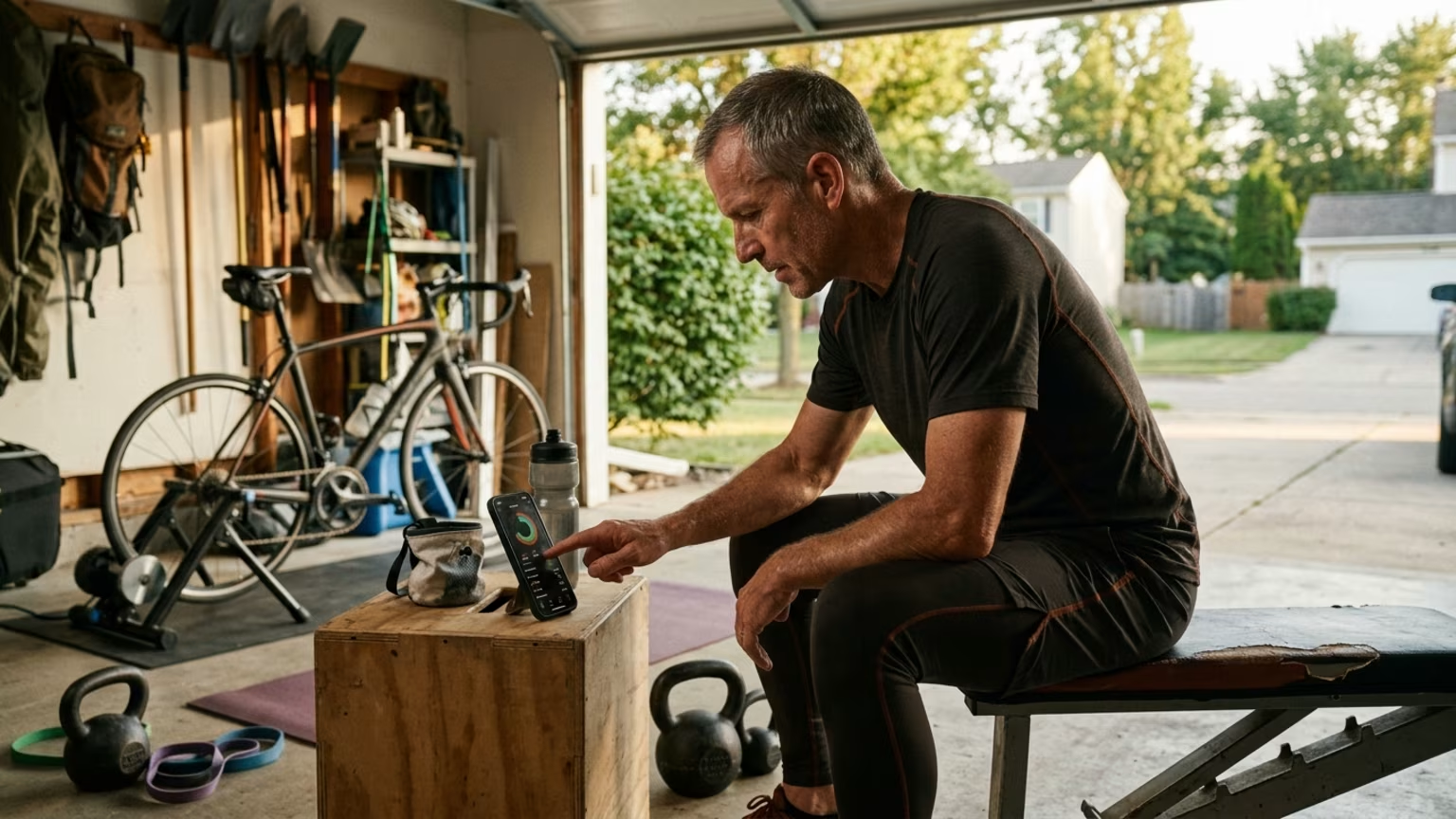

Strava adds guided strength workouts and live set-and-rep logging. A practical look at access, features and limits for endurance athletes over 35.





Strava announced coach-designed strength workouts in its mobile app on October 15, 2026. According to Wareable and T3, the update combines animated exercise demonstrations with form cues and targeted-muscle information. Users can record sets and reps during a session, with the details saved to their Workout Log.
For endurance athletes who already use Strava, the immediate appeal is convenience: guided strength sessions and their records can sit alongside running and riding. The useful question is whether that combination fits an existing training routine. A feature announcement alone is not a reason to reorganize the week.
The update connects two tasks: following a strength workout and recording what happened. Its practical value lies in bringing those tasks into the same app. Here is what the announced features include and how access is being introduced.
Wareable and T3 describe coach-designed routines supported by animated exercise demonstrations. The workouts also include form and technique cues, plus information about the muscles targeted by each exercise. That gives users a routine to follow and supporting information within the workout experience.
For someone considering the feature, the useful distinction is between the routine and its presentation. The routine supplies the exercises. The animations and cues explain how those exercises are intended to be performed. Both are worth assessing when deciding whether the app fits an established approach to strength work.
Users can record sets and reps while working through a session. Wareable also reports that weights can be logged in real time. Here, live tracking means entering workout details during the session, rather than leaving all the recordkeeping until afterward.
That distinction matters when reading the announcement. The described capability is workout logging by the user. Its practical appeal is having the recorded details attached to the session being followed, so the workout instructions and the resulting entry remain connected.
According to both outlets, workout details are saved to Strava’s Workout Log. The muscle map also updates to show the muscle groups worked. These features connect the guided session with a record that can be reviewed later.
For an athlete already recording endurance activities in Strava, this creates an opportunity to keep strength work in the same training history. Whether that is sufficient depends on what the athlete needs from a log. A useful record is one that preserves the details needed for later review.
Wareable and T3 report that the guided strength workouts are rolling out to subscribers over the coming weeks. Free users can try a sample workout. The announcement therefore describes different access for subscribers and free users, rather than full access for every account at once.
The sample offers a way to assess the instructions and recording process. For subscribers, the relevant starting point is the workout access available to their account as the rollout proceeds. There is no need to make a decision based only on the feature description.
The announcement also includes guided running workouts, extending Strava’s library of structured sessions. That is relevant to runners interested in following both endurance and strength sessions within the same app.
Separately, T3 reports that Strava is developing screenshot-based strength-plan import and a build-your-own workout tool. Those are in-development features, not capabilities included in the announced rollout. The current offering should be assessed as coach-designed workouts rather than a fully customizable workout builder.
Wareable reports that an earlier Strava strength update introduced a dedicated Workout Log, shareable post formats and integrations with 14 partner platforms. The new guided routines build on that earlier recording and sharing framework.
The outlet also reports that Strava recorded more than 500 million strength-training uploads in 2025. That is a platform-reported figure relayed by Wareable. It is not an independently audited count of unique athletes or completed workouts, and it does not establish how Strava compares with other platforms.
The figure provides context for why strength features matter within Strava. It should not be used as a measure of the new routines’ effectiveness or as evidence that a particular athlete needs them.
The reporting describes product features rather than a training study. It does not evaluate exercise quality, injury risk or training outcomes in athletes over 35. Coach-designed routines also do not establish individualized coaching or a check of the user’s actual technique.
Likewise, the coverage does not validate the muscle map as an assessment of programming needs or establish that Strava replaces a specialized strength app. Where exercise suitability or technique is a personal concern, a qualified coach or healthcare professional is the appropriate source of individual advice.
With those boundaries clear, the practical decision becomes simpler: assess the tool against the work you already do and the information you want to retain. There is no requirement to add sessions or replace a familiar system because the feature exists.
The sample workout or an available subscriber routine offers a way to evaluate the experience. Keep the assessment focused on the announced capabilities:
These are questions about usability and recordkeeping. They help distinguish an appealing feature list from a tool that fits your routine. They also keep the decision grounded in the product’s actual purpose rather than expectations attached to the word “coaching.”
Before treating Strava as the only record of strength work, compare the saved workout with the details you currently use to track progression. The relevant test is whether the information you need remains available when you return to review the session.
That comparison does not require a new training plan. It requires a clear view of what your existing record is doing for you. If Strava captures those details in a more convenient place, consolidation may be useful. If it does not, keeping another record remains a reasonable choice.
The broader goal is meaningful review rather than collecting entries for their own sake. Reendure’s discussion of tracking athletic progress beyond race times offers a related perspective on choosing information that serves your goals.
Choosing where to record a workout is different from choosing which workout belongs in your week. The first is a question of workflow. The second concerns the plan and your individual circumstances.
For an endurance athlete over 35, that distinction keeps a technology update in proportion. A convenient app can be considered on its recording and guidance features without turning its arrival into a reason to alter training. An existing approach does not become outdated because another platform adds similar tools.
Keep the decision connected to the longer view of staying competitive and active for years. The useful outcome is a system that supports your athletic priorities, whether that means consolidating records or retaining the tools already serving you.
Strava’s announcement brings coach-designed strength routines, exercise guidance and live workout logging into its mobile app. Guided running workouts broaden the update, while subscriber access and a free sample provide different ways to assess it.
For masters endurance athletes, the evidence-grounded opportunity is organizational: try the available experience and judge whether it makes strength sessions easier to follow and review. The announcement itself does not call for a change in training. Assess the workflow first, then keep the tools that serve your plan.

Follow ReEndure for practical insights on endurance training, recovery, nutrition and healthy aging. Stay connected for new articles, research led guidance and ideas to help you perform better for longer.



Read practical ideas on endurance training, recovery, nutrition and healthy aging to keep progressing for years to come.
Read the Blog