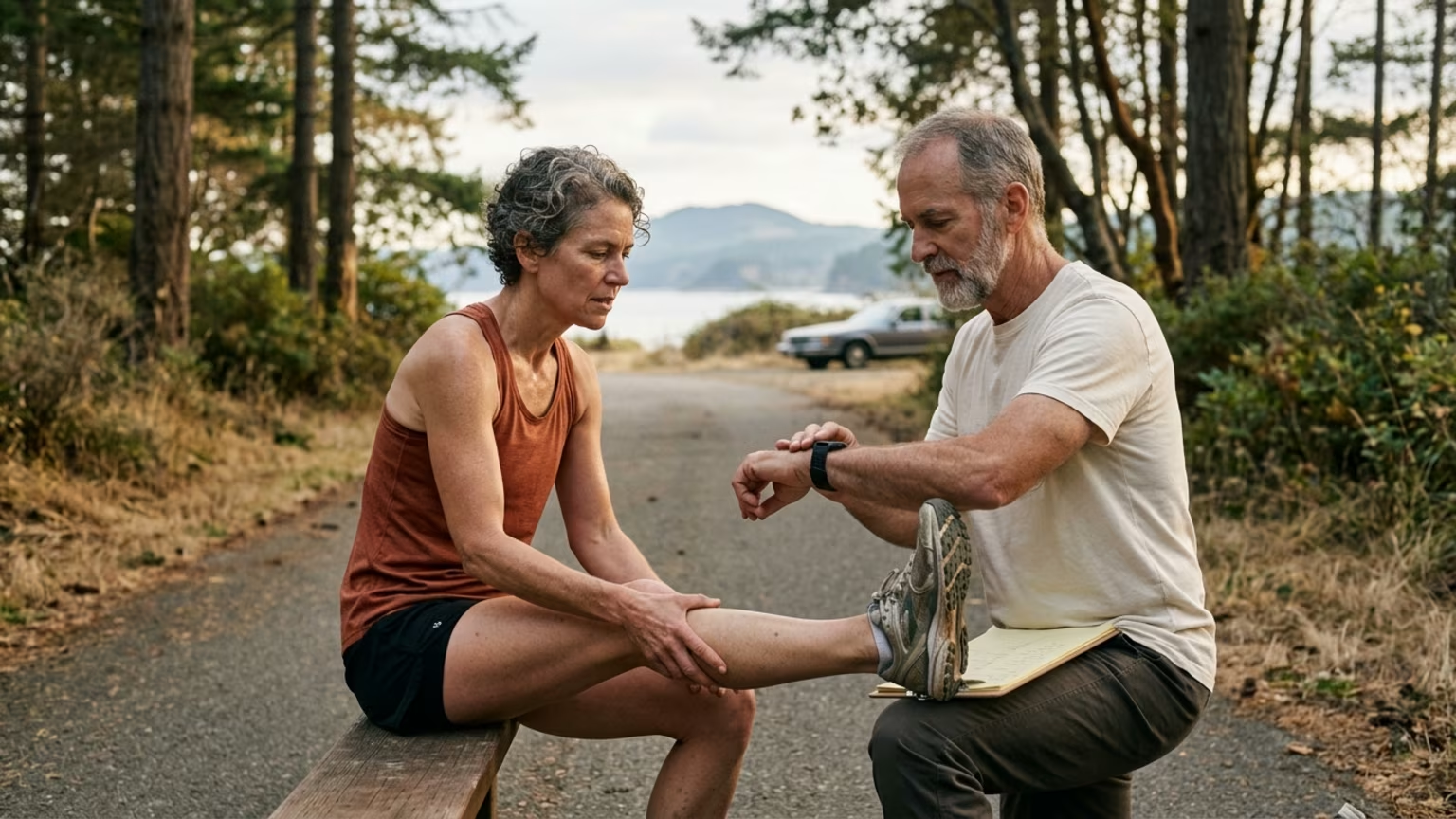

A recent NPR report monitored a reporter's marathon preparation, highlighting baseline VO2 max testing, cardiovascular adaptations, and joint stress realities.





On October 4, 2026, WHRO published an NPR report by Elissa Nadworny detailing her monitored training journey for the New York City Marathon. The article, which was updated on October 5, provided a clear window into the physical toll and cardiovascular demands of long-distance race preparation. Nadworny became the test subject to understand how the body responds to progressive mileage and eventual race-day stress. This reported case study offers a practical look at what performance testing can actually measure in real time.
The project highlights the strict separation between expected physiological adaptations and actual documented outcomes. Endurance athletes frequently assume that crossing a finish line guarantees improved health markers across the board. However, this report demonstrates that building fitness is a complex equation of calculated stress and necessary repair. By monitoring a single runner, the baseline testing sheds light on the demands placed on the cardiovascular system and the musculoskeletal framework.
The primary takeaway from the report is that marathon training creates an environment for potential physiological improvement. Intense race efforts, however, place immediate stress on the joints. Ball State University researcher Scott Trappe explained that smart marathon training should improve cardiovascular health and muscle function over the preparation period. He expects these training blocks to increase blood volume, red-cell mass, and plasma volume.
The report meticulously balances these positive adaptations against the harsh reality of physical strain and overuse injury risk. It summarizes an unnamed U.K. MRI study to illustrate how joints handle this massive workload. The study reportedly found that knee cartilage and bone actually improved during four months of marathon training. Yet, kneecap cartilage looked demonstrably worse immediately after the marathon effort itself.
This immediate post-race deterioration was then reversed at the six-month MRI follow-up. This finding underscores the profound difference between the slow adaptations of weekly running and the acute trauma of race day. Cardiovascular adaptations remain the primary goal for any endurance athlete putting in the miles. Trappe noted that marathon preparation can be highly beneficial if approached intelligently and with adequate recovery.
To quantify her starting fitness, Nadworny underwent rigorous baseline testing at Ball State University’s Human Performance Lab. This specific testing occurred about three months before her race. Her initial assessment included a DEXA scan, a blood draw, and a treadmill VO2 max test. The full DEXA scan numerical results were not published, but the report noted her bone density looked strong.
During the treadmill protocol, technicians used 10 electrodes to track her cardiovascular measures and heart rate. A breathing tube continuously monitored her oxygen use. Meanwhile, the test protocol systematically increased the treadmill speed and incline. The testing produced a baseline VO2 max score of 37 for the reporter.
Trappe characterized this specific score as good, but he noted it left clear room to improve. VO2 max is not a permanent, fixed number. Targeted endurance training is widely known to alter this metric over time. Following this assessment, Nadworny executed a gradual training build consisting of three runs per week.
Her preparation culminated in a peak 20-mile long run roughly three weeks before the race event. She also incorporated specific exercises recommended by a physical therapist to support her increasing mileage. It is crucial to note the limitations of this specific case study. The NPR piece details Nadworny experiencing back, quadriceps, hip, and foot pain during her training.
However, it does not provide a confirmed injury diagnosis or state that these issues forced her to stop training. Most importantly, the article does not report any post-marathon testing results for Nadworny. The story concludes before her planned return to Ball State. This means her individual changes in blood, muscle, or joint health remain completely unmeasured.
For the ambitious endurance athlete over 35, this monitored training experience reinforces a fundamental truth about balancing performance with longevity. We often view marathon preparation as a straightforward path to better overall health. The reality is that consistent training builds the body, while the race itself breaks it down. Trappe correctly points out that cardiovascular adaptations are expected benefits of consistent aerobic work.
However, these benefits are only secured if the training is managed smartly and without crossing into chronic overuse injuries. Many older athletes try to replicate the schedules of professional runners. This frequent mistake often leads to the exact joint pain Nadworny experienced. The schedule detailed in the report is simply one runner's account rather than a universal template.
It is not a validated blueprint for every age group or fitness level. Older runners must audit their own recovery capacity rather than forcing a rigid template. You can learn how to audit and adjust your endurance training plan to ensure your weekly volume aligns with your ability to heal.
The reported U.K. MRI study offers a vital lesson in patience for veteran athletes. The observation that kneecap cartilage worsened immediately post-marathon but recovered six months later highlights the true timeline of physiological repair. Aging tissues require significant time to rebuild after a maximal effort. Ignoring persistent pain or rushing back to high intensity will only interrupt this natural repair cycle.
Athletes must learn to read their bodies and adjust their workloads when necessary. If you are struggling to manage training adjustments during periods of fatigue, understanding an adaptive training decision tree can help protect your joints from unnecessary cumulative stress. Training must remain flexible to accommodate the biological realities of aging tendons and ligaments.
Recovery must be treated with the exact same discipline as the weekly long run. Therabody chief science officer Tim Roberts emphasized nutrition, hydration, and sleep as the ultimate recovery priorities. He described physical training as a profound stress to which the body must actively respond. This adaptation happens primarily when the body is at rest, properly fueled, and adequately hydrated.
The NPR story mentions popular consumer tools like massage guns and compression boots. However, the report provides absolutely no measured evidence that either device produced a specific recovery benefit for the reporter. Gadgets cannot replace the foundational physiological repair processes that occur during deep sleep. Older athletes must prioritize the basics of recovery before investing in supplementary tools.
Proper nutrition provides the essential building blocks for muscle repair and glycogen replenishment. Hydration supports optimal blood volume, which directly aids in nutrient transport and joint lubrication. Sleep is the critical window where the body naturally repairs damaged tissues. Without these three pillars, no amount of targeted massage will adequately prepare an aging body for its next rigorous workout.
Environmental stress also demands strict respect as athletes push into longer race distances. For a potentially hot race day, Trappe advised Nadworny to slow down, monitor her heart rate, and drink more fluids. This is highly practical advice for any master athlete facing harsh conditions. It remains true even if the report lacks a precise quantified fluid target.
Older bodies are generally less forgiving of dehydration and systemic heat strain. Pushing through extreme heat without adjusting pace is a reliable way to invite severe physiological distress. Listening to your heart rate monitor provides objective feedback on how hard your cardiovascular system is working to cool your body.
As endurance athletes face warmer climates globally, marathon runners are training in a hotter world and must adopt conservative pacing strategies to sustain performance safely. A calm, objective approach to race day conditions will always outperform stubborn adherence to an arbitrary goal pace. Hydration needs vary wildly among individuals, making strict adherence to personal effort levels absolutely essential. Master athletes thrive when they focus on the variables they can actually control.
Master athletes should view marathon training as a powerful tool for cardiovascular adaptation that requires strict respect for acute race-day stress and mandatory long-term recovery.

Follow ReEndure for practical insights on endurance training, recovery, nutrition and healthy aging. Stay connected for new articles, research led guidance and ideas to help you perform better for longer.






Read practical ideas on endurance training, recovery, nutrition and healthy aging to keep progressing for years to come.
Read the Blog