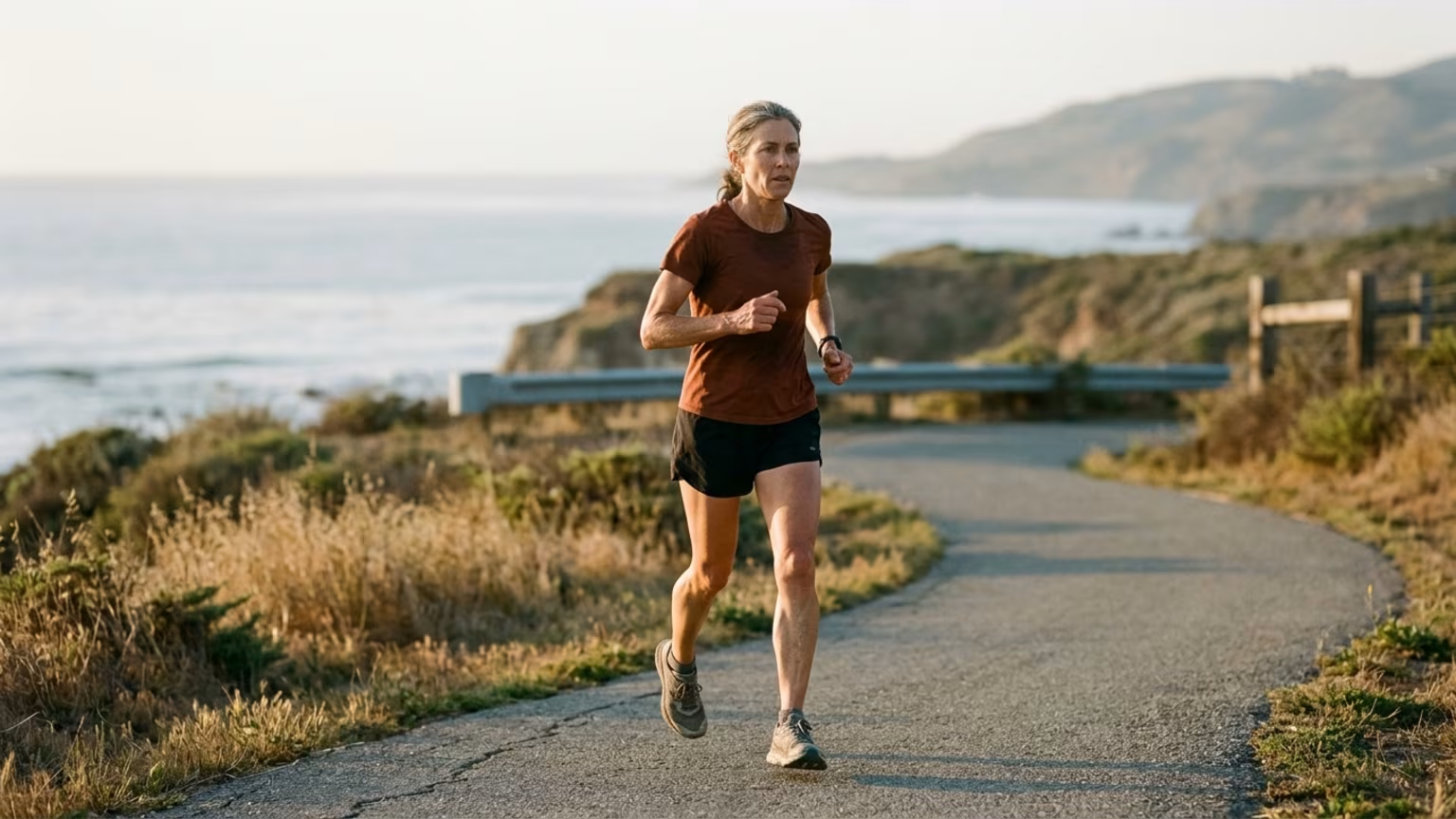

An Aging Cell study reveals how the Timeless muscle gene may coordinate exercise benefits, highlighting why athletes must prioritize optimal muscle recovery.





On September 26, 2026, Bioengineer.org reported on an intriguing study published in Aging Cell. The research investigated the biological mechanics connecting muscle activity to cardiovascular health. The study appeared in volume 25, issue 9, as article e70708. Researchers tested how a specific genetic pathway coordinates exercise benefits across the body.
The primary conclusion of the research centers on a muscle gene called Timeless. Scientists wanted to see if manipulating this gene would alter how male fruit flies age. When researchers reduced the expression of this gene in five week old flies, the outcomes were negative. The animals experienced faster heart failure under hypoxic stress.
These flies with reduced gene expression also showed a higher heart rate and a shorter overall lifespan. Furthermore, they demonstrated slower climbing and lower stroke volume. Conversely, increasing the expression of this gene in aged flies produced highly favorable results. The flies showed less nighttime restlessness, faster climbing, and a lower heart rate.
They also developed greater resistance to hypoxic heart failure and lived significantly longer. Interestingly, the researchers noted no measurable effects from this manipulation in one week old flies. This suggests the gene plays a specific role in the aging process rather than early development. The researchers concluded that exercise likely acts upstream of this specific genetic pathway.
Forced physical activity increased the expression of the gene across all tested groups. This increase occurred even in flies engineered for genetic knockdown or overexpression. The results offer early mechanistic evidence for how muscle activity influences whole body aging biology. The gene essentially acts as a switch that coordinates systemic health improvements.
The researchers designed a distinct physical protocol to test these genetic variables. The male fruit flies were placed in a rotating apparatus that prompted repeated climbing. This forced activity lasted for about an hour a day. The protocol followed a schedule of two days on and one day off.
The exercise program began when the flies were two weeks old. The forced climbing regimen lasted for four straight weeks. After the exercise period, the researchers evaluated multiple physiological markers across the test groups. They documented widespread improvements in climbing ability, cardiac measures, and hypoxic stress resistance.
The scientists also recorded changes in gene expression, mitochondrial measures, and antioxidant activity. The study noted alterations in reactive oxygen species and nighttime activity patterns. The researchers used these nighttime activity patterns as a proxy for sleep behaviors. However, the report explicitly states this should not be viewed as a direct clinical measure of human sleep quality.
The methodology contains several important limitations that prevent direct translation to human athletes. The experiments involved only male fruit flies, leaving potential sex differences unexamined. Furthermore, the report notes that the precise signal raising the gene expression remains unknown. The researchers also did not directly quantify NAD+/NADH levels during the study.
Hitting my forties brought a harsh reality check regarding my own muscle tissue. The track workouts were not getting slower, but the days after them felt significantly heavier. Instead of forcing my old Tuesday and Thursday intensity schedule, I looked at the data on older athletes. I pushed my second hard session to Friday.
This simple shift allowed an extra forty eight hours of low intensity recovery. My total weekly volume stayed the same, but the quality of my intervals skyrocketed. This personal adjustment taught me that healthy muscle tissue requires deliberate protection. We cannot simply pound our legs without giving our cellular systems time to repair.
The European Association of Preventive Cardiology reinforces the importance of maintaining muscle health. A recent scientific statement confirms that endurance training increases exercise capacity in people with cardiovascular disease. The statement also highlights that such training can support muscle function and reduce muscle atrophy. These findings align with the concept that active muscles protect our broader biological systems.
Additionally, a 2026 commentary in the European Journal of Preventive Cardiology provides valuable long term context. The piece reports that higher leisure time physical activity over two decades correlates with distinct molecular changes. This consistent activity was associated with lower concentrations of 12 proteins involved in inflammatory, immune, and metabolic pathways. These associations remind us that lifelong movement actively shapes our baseline cellular environment.
Endurance athletes often jump to conclusions when new genetic research hits the press. We see a headline about aging clocks and immediately want to change our routine. However, the defensible takeaway from this fruit fly study is scientific rather than prescriptive. The study adds a candidate mechanism for how muscle activity might relate to aging systems.
It does not provide a new human recovery protocol or a reason to overhaul your training block. We should never change our training load based on an isolated animal model alone. The exercise intervention in this study was forced climbing on a rotating apparatus. This is simply not equivalent to voluntary human endurance training.
Instead, we should view this research as a reminder of our interconnected biology. The health of your muscle tissue directly influences the health of your heart. When we prioritize smart training periodization, we are doing more than building aerobic capacity. We are maintaining a critical biological engine that sends positive signals throughout the body.
The science of cellular aging mechanisms continues to evolve at a rapid pace. While we wait for human trials on these pathways, our job remains unchanged. We must focus on the fundamental habits that we already know support healthy aging. Consistent endurance work and proper recovery are the most reliable tools we possess.
The allure of isolating a single gene is incredibly strong in sports science. If one gene coordinates sleep quality and cardiac function, we naturally want to target it. Yet, the research clearly shows that the physical work itself is the necessary trigger. Exercise acted upstream of the gene expression in every single test group.
This means you cannot bypass the physical requirement of movement. Your body still needs the mechanical stress of running, cycling, or swimming to activate these cascades. Even as we learn more about these complex molecular pathways, the basic formula remains the same. You have to put in the work to reap the physiological rewards.
This is why optimizing recovery time becomes so crucial for the ambitious adult athlete. As we age, our ability to absorb training stress diminishes slightly. We must ensure that our muscle tissue is fully repaired before we stress it again. If muscle acts as a central signaling hub, damaged muscle cannot send optimal signals.
Our team at Reendure constantly emphasizes the importance of balancing ambition with reality. We want to train hard, but we also want to stay active for decades. By respecting the recovery curve, we allow our bodies to adapt and grow stronger. This patient approach ensures that we can maintain our muscle function and strength for the long haul.
Ultimately, we must treat our active muscle tissue as a vital organ that requires consistent physical stress and deliberate recovery to preserve our long term athletic health.

Follow ReEndure for practical insights on endurance training, recovery, nutrition and healthy aging. Stay connected for new articles, research led guidance and ideas to help you perform better for longer.


Read practical ideas on endurance training, recovery, nutrition and healthy aging to keep progressing for years to come.
Read the Blog