

A UK Biobank study linked vigorous activity share with lower health risks. Here is a measured interpretation for endurance athletes over 35.





A European Heart Journal study using UK Biobank data linked a greater share of vigorous activity with lower risks of several chronic diseases and death from any cause. The association remained after the researchers accounted for total activity volume.
For endurance athletes over 35, the finding brings a familiar training variable into a broader health discussion. Harder efforts are not only a question of race preparation. This research asks how the intensity of everyday activity relates to long-term health alongside the total amount people do.
The useful interpretation is measured: intensity deserves attention within a broader routine. The study does not turn healthy aging into a competition to accumulate the most hard exercise.
The European Heart Journal authors examined eight chronic disease outcomes plus all-cause mortality. That last term means death from any cause. Their analysis covered cardiovascular conditions alongside diseases affecting several other body systems.
In the device-measured analysis, a greater vigorous share was associated with lower risk across the outcomes studied. The researchers described these relationships as non-linear. In plain language, the pattern was not a straight line in which each increase in vigorous activity corresponded to the same reduction in risk.
The authors also reported that intensity and total activity volume appeared to contribute differently depending on the outcome. This is the central detail behind the headline. There was no single pattern that made one measure consistently more important than the other.
The study abstract highlighted intensity's association with major cardiovascular events and atrial fibrillation. It reported a similar emphasis for immune-mediated inflammatory disease, chronic respiratory disease and dementia.
That is a broad set of outcomes. The researchers were not looking only at whether people who exercised harder had fewer cardiovascular events. They were examining how activity patterns related to both cardiovascular and non-cardiovascular health.
For type 2 diabetes, fatty liver disease and chronic kidney disease, the authors described more balanced contributions from intensity and total activity volume. They reported the same broader pattern for all-cause mortality.
That distinction matters when translating the findings. “Intensity matters and volume does not” would misrepresent the paper. Its findings give a more useful message: the amount of activity and the effort involved may relate differently to different health outcomes.
This was a prospective observational cohort study. Researchers examined participants' activity patterns and followed health outcomes over time. The American College of Cardiology's review reports that median follow-up varied by outcome from 8.8 to 14.6 years.
The analysis considered the proportion of activity performed vigorously while accounting for overall activity volume. That makes it different from a simple comparison between people who did more exercise and people who did less. The question was whether the vigorous share carried an association beyond the total amount.
The ACC review provides an absolute-risk illustration for major cardiovascular events. It reports an estimated 5-year risk of 10.16% in the 0%-vigorous-activity group. The corresponding estimate was 6.41% in the group whose vigorous activity share was above 4%.
Those figures describe estimated risks across observed groups. They are not a personal forecast or the measured effect of moving someone from one group into another. The above-4% comparison also does not establish a safe or optimal training target.
The central design limitation belongs here: association is not causation. As the ACC review explicitly notes, the study cannot establish that vigorous activity directly caused the lower disease or mortality risks. Accounting for total activity helps address the research question but does not turn an observational comparison into an exercise trial.
The results also do not establish an athlete-specific training prescription. The reported outcomes concern disease and mortality rather than a tested schedule of intervals or recovery days. Translating them into endurance practice therefore requires judgment rather than copying a percentage into a training plan.
For a healthy and experienced endurance athlete, the practical question is whether manageable harder efforts have a place within existing activity. It is not how to maximize the proportion of exercise labeled vigorous. That is a narrower and more useful decision than treating every easy session as an opportunity to work harder.
At Reendure, the priority is to connect sports science with both present performance and long-term participation. In this case, that means recognizing intensity as one part of the picture while keeping the larger routine in view. Ambition and restraint can sit comfortably together.
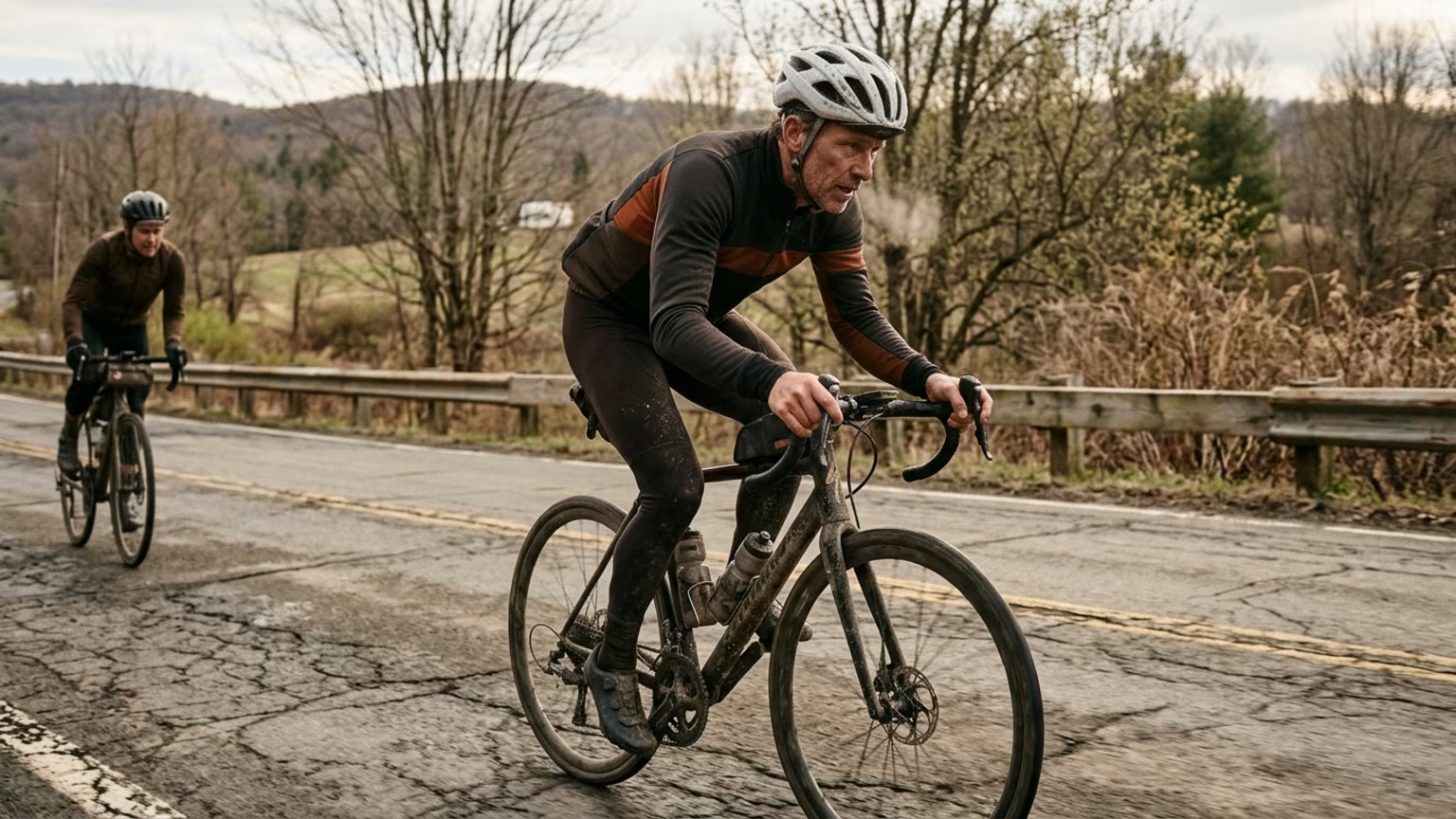
Men's Journal frames the findings as a reason to consider manageable periods of higher-intensity movement when appropriate. Its coverage gives brisk stair climbing and uphill walking as examples. It also mentions cycling hard enough to become breathless.
These examples show that the discussion extends beyond formal interval sessions. They describe forms of movement included in the coverage, not a workout sequence that every reader should follow. The practical emphasis is on a manageable place for harder effort rather than a particular session format.
For an athlete who already includes harder efforts, the research offers a reason to value that part of the routine alongside accumulated activity. For someone whose activity is entirely easy, it raises a question worth considering in the context of health and experience. Neither situation requires treating the study's comparison groups as training goals.
Men's Journal also makes clear that the findings are not a reason to abandon walking or strength training. Nor do they imply dropping longer aerobic sessions. That framing fits the paper's finding that total activity volume remained relevant across several outcomes.
A broader planning perspective helps keep a single research result in proportion. Our guide to organizing endurance training across the decades provides a useful companion to this discussion. The goal is to place intensity within long-term participation rather than make it the sole measure of a worthwhile week.
For athletes with cardiovascular conditions or limited mobility, Men's Journal advises consulting a qualified clinician before increasing intensity. It gives the same advice for people with other medical concerns. Personal decisions about harder exercise belong in that clinical context.
Readers navigating those questions can also use our framework for training alongside chronic health conditions to organize the broader discussion. It is a separate task from interpreting a population-level research finding. The first asks what is appropriate for a person; the second describes patterns across a study group.
There is also value in keeping performance goals and health goals visible at the same time. Reendure's discussion of fitness and broader health as distinct considerations offers a related perspective. A race-focused training decision and a long-term health decision need not be framed as the same question.
This UK Biobank study adds evidence that vigorous activity's share deserves attention alongside total activity volume. Its most useful contribution is the distinction between outcomes: intensity appeared more prominent for some conditions while both measures contributed more evenly for others.
For endurance athletes over 35, a reasonable takeaway is to consider preserving small and manageable harder efforts within a broader routine when appropriate. Keep easy movement and other exercise in the picture. The evidence supports thoughtful consideration of intensity, not a wholesale change in training or a universal target.

Follow ReEndure for practical insights on endurance training, recovery, nutrition and healthy aging. Stay connected for new articles, research led guidance and ideas to help you perform better for longer.





Read practical ideas on endurance training, recovery, nutrition and healthy aging to keep progressing for years to come.
Read the Blog