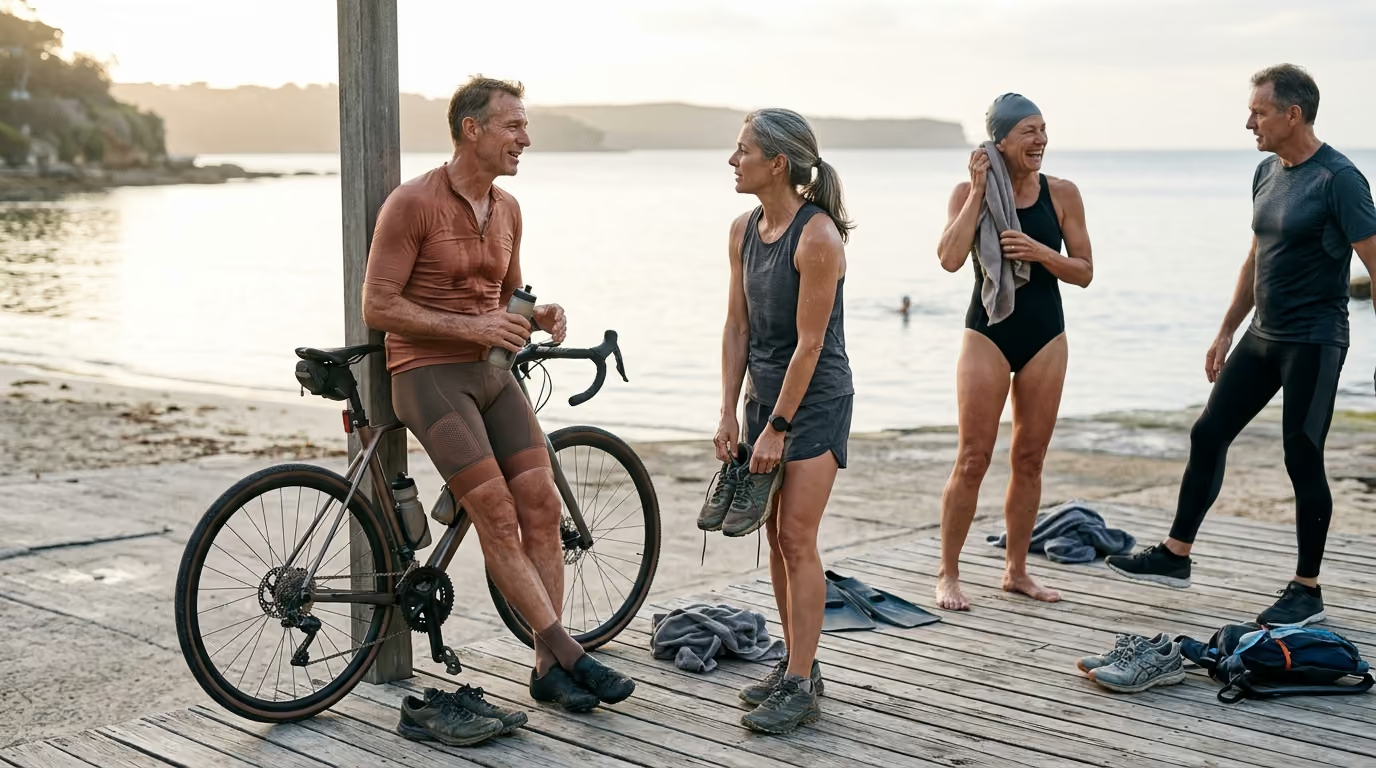

Up to 11% of competitive athletes face burnout, making the four-load stress model essential for masters competitors managing recovery and performance.





The alarm sounds at 5:15 AM on a Tuesday. You stare at the ceiling, feeling an immediate wave of heavy fatigue in your legs and a hollow dread in your stomach. It is not just the muscle soreness from Sunday's long session. It is the creeping realization that today's interval workout feels like an exhausting chore rather than an exciting challenge.
You review the day ahead. You have an eight-hour workday packed with meetings, family obligations in the evening, and an impending race on the calendar that demands peak fitness. For the past three weeks, you have forced yourself through every prescribed kilometer, yet your split times are stalling and your resting heart rate is creeping upward. You wonder if you are simply getting older, losing discipline, or sliding toward chronic exhaustion.
This scenario is common among competitive masters athletes. When athletic ambitions compete with demanding careers, family life, and the physiological realities of aging, the margin for error shrinks. Understanding how to recognize, prevent, and reverse athlete burnout is essential if you want to stay competitive and healthy for decades to come.
Athlete burnout is not a temporary lack of willpower or ordinary muscular fatigue. Sports scientists define athlete burnout as a multidimensional psychological syndrome with three distinct components: physical and emotional exhaustion, a reduced sense of accomplishment, and sport devaluation.
Physical and emotional exhaustion occurs when you feel completely depleted by the combined physical, mental, and psychosocial demands of training and competition. Reduced accomplishment is the perception that you are no longer making meaningful progress or performing to your potential, even when objective data shows you are holding steady. Sport devaluation manifests as a loss of passion, growing cynicism, or feeling that the sport no longer holds the meaning it once did.
Researchers estimate that athlete burnout affects approximately 6% to 11% of competitive athletes at any given time. Burnout represents a chronic mismatch between the demands placed on your body and the total resources available to absorb those demands. When training stress, work deadlines, poor sleep, and emotional pressure accumulate faster than your nervous system can recover, burnout develops.
To manage this condition, athletes must distinguish burnout from related states of fatigue:
This is predictable physical tiredness following a hard workout or training block. It resolves completely after a few days of planned rest, proper nutrition, and adequate sleep.
This involves a temporary, planned increase in training load that causes short-term fatigue. Performance dips briefly, but with scheduled recovery, the body adapts and performance rebounds higher than before.
This occurs when an athlete maintains high training loads without adequate recovery for weeks or months. It leads to persistent performance drops and prolonged fatigue that requires weeks or months of reduced training to correct.
This syndrome combines nonfunctional fatigue with psychological distress, specifically sport devaluation and a lost sense of accomplishment. Rest alone often fails to resolve it because the underlying cognitive and lifestyle pressures remain unaddressed.
Burnout shares characteristics with clinical depression and anxiety, but it is distinct. If you experience persistent hopelessness, severe sleep disruption, major appetite shifts, or pervasive sadness outside of sport, you should seek evaluation from a qualified healthcare provider.
The research framework developed by Thomas Raedeke and Alan Smith highlights that burnout is heavily driven by psychological needs. Applying Self-Determination Theory to sports science demonstrates that burnout increases when three core needs are compromised: autonomy, competence, and relatedness.
Autonomy means having control over your athletic choices and schedule. Competence means feeling effective and experiencing tangible mastery. Relatedness means feeling connected to peers, coaches, and family. Studies show that these three psychological factors account for 74% of the variance in global athlete burnout, including 49% of sport devaluation and 61% of reduced accomplishment. When training feels like a rigid obligation dictated by external expectations, the risk of burnout climbs rapidly.
Masters athletes can maintain remarkable cardiovascular and muscular capacity across their lifespans. Systematic training preserves aerobic fitness and protects against age-related decline far better than sedentary living. However, aging changes both how the body adapts to stress and how the mind perceives exertion.
In our work with healthy aging resources, we emphasize that age is not a mandate to stop training hard. It is a biological prompt to individualize your recovery with greater precision.
Research on trained cyclists aged 35 to 64 provides critical insights into age-related performance changes. Studies demonstrate that peak anaerobic power declines by roughly 8.1% per decade, while anaerobic capacity declines by approximately 8.0% per decade. Peak aerobic power, however, remains remarkably stable across decades in consistently trained endurance athletes.
This data explains why older runners, cyclists, and triathletes often feel strong during steady, aerobic efforts but struggle with surges, steep hill attacks, and sharp accelerations. When an aging athlete notices this shift, a common mistake is attempting to force high-intensity intervals to reverse the trend. Doing so without adequate foundation frequently leads to excessive central nervous system fatigue.
Recovery dynamics also shift with age in subtle ways. Sports science research comparing masters cyclists to younger competitors after high-intensity interval sessions revealed comparable 48-hour physical recovery rates for mechanical power and muscle damage markers. However, the masters athletes reported significantly higher muscle soreness, elevated perceived fatigue, and lower motivation at the 48-hour mark.
This finding highlights a vital principle: perceived recovery often lags behind physiological recovery in older athletes. Even if your muscular system can physically complete another hard interval session, your nervous system and motivation may still be depleted. Ignoring these subjective signals is one of the fastest paths to sport devaluation.
Aging also influences muscle protein synthesis and tissue remodeling. Older skeletal muscle can exhibit anabolic resistance, meaning it requires higher protein doses and targeted resistance training to trigger the same repair processes as younger tissue.
The American College of Sports Medicine suggests that active older adults consume roughly 1.0 to 1.2 grams of protein per kilogram of body weight daily. During periods of heavy training, protein demands can rise to 1.5 grams per kilogram per day. Meeting these nutritional targets supports tissue recovery, but nutrition cannot compensate for an unsustainable training schedule.
For years, I capped my mid ride fueling at around sixty grams of carbs per hour, convinced that taking in more would wreck my stomach. Then I read a series of recent studies on gut training and higher oxidation limits for endurance athletes. I spent a three month base phase gradually increasing my intake up to ninety grams using a mix of glucose and fructose. The difference during my next Gran Fondo was staggering. I had a late race surge that I had never experienced before, completely avoiding the usual energy crash. Proper intra-workout fueling minimizes metabolic stress and directly protects your nervous system from excessive depletion.
Endurance athletes often track mileage, vertical gain, and heart-rate variability while ignoring the broader ecosystem of daily stress. A sustainable approach requires viewing total stress through a four-load model.
The International Olympic Committee consensus statement on training load confirms that load monitoring must extend beyond physical output. It must systematically account for psychological stress, life events, well-being, and injury history.
This includes the measurable physical stress of your workouts: weekly volume, intensity zones, session frequency, race participation, heat, altitude, and travel. It is the only load that athletes consistently monitor, yet it rarely exists in isolation.
This encompasses professional deadlines, caregiving responsibilities, relationship conflicts, financial commitments, commuting, and household chores. Your autonomic nervous system does not separate the physical stress of an interval session from the emotional stress of a high-pressure work project. Both draw from the same limited recovery reserve.
This category involves acute illnesses, lingering musculoskeletal injuries, chronic health conditions, hormonal shifts, sleep fragmentation, and medication side effects. For female masters athletes, perimenopause and menopause can introduce significant sleep disturbances and temperature regulation challenges that directly impact systemic recovery.
This represents the internal psychological pressure you place on your athletic performance. It includes fear of aging, using race times to validate self-worth, perfectionism, and comparing current results to personal records set decades ago. When training becomes an emotional defense mechanism against getting older, the meaning load becomes a primary driver of psychological burnout.
Instead of asking how much training your body can physically tolerate, ask how much total stress your life and nervous system can absorb right now. When life load or health load spikes, training load must adjust downward to maintain equilibrium.
Preventing burnout begins long before the race season starts. It requires choosing goals that build intrinsic motivation rather than creating anxiety. Utilizing structured training and performance guidance helps athletes construct realistic seasonal targets.
To protect your autonomy and sense of accomplishment, organize your season around a three-tier goal hierarchy:
When an unexpected injury or work crisis disrupts your preparation, an outcome goal may slip out of reach. If your entire season is defined by that single outcome, you will experience a sharp reduction in perceived accomplishment. By anchoring your identity in values and process goals, you preserve your sense of competence regardless of race-day conditions.
A common trap for masters athletes is attempting to maintain peak race fitness across ten months of the year. Every local event becomes a high-stakes test that requires physical tapering and emotional focus.
Implement the one primary challenge rule. Select one primary target event per training cycle, designated as your A race. You can include one or two secondary B events as supported training days, and several low-stress C events purely for social connection or skill practice.
This structure gives you explicit permission to treat minor events with curiosity rather than anxiety. It preserves your emotional energy for the single objective that matters most.
When setting target times or race placements, avoid rigid all-or-nothing metrics. Instead, build a flexible framework with four clear criteria:
This flexible model neutralizes perfectionism. It ensures that an imperfect race day does not trigger sport devaluation or lead you to question the value of your entire training season.
Sustainable training requires clear rules that remove emotional bargaining from your weekly routine. When fatigue accumulates, athletes often make poor decisions, either pushing through warning signs or panicking over missed workouts. Implementing clear evidence-based recovery strategies creates consistency while protecting your nervous system.
Structure your training week with these foundational guardrails:
Use a simple daily stoplight system to guide your training execution based on your current recovery state:
The stoplight system removes guilt from recovery decisions. It reframes modifying a workout as an intelligent athletic choice that prevents nonfunctional overreaching.
Endurance fitness is built across years, not single training blocks. To sustain motivation over decades, your annual calendar must include distinct training phases that allow for both physical remodeling and psychological decompression.
Following your primary competitive season, transition into an unstructured reset phase. Remove all rigid training metrics, heart-rate straps, and power targets. Engage in low-intensity cross-training, hiking, casual swimming, or general strength work. Use this time to address lingering physical niggles and catch up on family and personal projects.
Focus on building low-intensity aerobic volume, movement quality, mobility, and progressive strength training. The emphasis is on structural durability and mitochondrial density rather than high-intensity race pace efforts.
Introduce sport-specific workouts with progressive volume and moderate intensity. Continue your regular resistance training to maintain tendon health and muscular force production.
Fine-tune race-specific pacing, tactical skills, and high-intensity demands. Keep overall volume controlled to prevent accumulating excessive systemic fatigue.
Reduce training volume by 40% to 60% while maintaining workout intensity in short, sharp bursts. This strategy sheds accumulated fatigue while preserving neuromuscular sharpness.
Take a brief physical and mental break immediately after your primary event before entering the next structured cycle.
For aging athletes, the post-season reset phase is essential. It is not wasted time or a sign of lost discipline. It is the planned biological window that allows your endocrine system, tendons, and mental focus to regenerate.
Every long-term endurance athlete encounters performance plateaus, unexpected injuries, or sudden drops in motivation. When these challenges happen, athletes often react with frustration, interpreting the setback as a permanent loss of capability. Navigating these periods requires a methodical psychological and physical reset.
Explore endurance life articles to see how veteran competitors maintain long-term perspective through these exact transitions.
When performance stalls or motivation disappears, work through a six-stage rebuilding sequence:
Temporarily eliminate all pace, power, and distance goals. Replace them with simple process targets centered on sleep quality, healthy meal preparation, and moving outdoors purely for enjoyment.
Reclaim your athletic autonomy. Choose which routes you want to run or ride, what time of day you train, and whether you listen to music or move in silence. Give yourself complete freedom over your daily athletic choices.
Schedule short, manageable workouts that you know you can complete successfully without deep fatigue. Completing a clean 30-minute easy run or a crisp 45-minute spin provides tangible proof of competence without draining your energy.
Join a relaxed group ride, volunteer at a local trail race, or mentor an athlete who is new to your sport. Shift your attention away from personal performance metrics and reconnect with the broader endurance community.
Once genuine enthusiasm returns, introduce structured workouts one step at a time. Add a single focused interval session or a weekly tempo run, keeping the rest of your training distinctly easy.
Choose an upcoming event or goal that aligns with your current life capacity. Avoid attempting to duplicate a past personal record if your current career or family commitments cannot support that level of preparation. Select a challenge that excites you for what it offers today.
Even experienced athletes fall into cognitive traps that accelerate burnout. Recognizing these common errors helps you protect your athletic longevity:
Aging alters recovery kinetics and maximum power output. If your marathon or time-trial split is stable at age 55 compared to age 50, you have actually improved your age-graded fitness. View maintaining performance as a major athletic success rather than a sign of stagnation.
Endurance athletes take pride in mental toughness. However, applying mental grit to override chronic systemic fatigue or persistent tendon pain is counterproductive. Toughness means having the discipline to rest when your body requires recovery.
When older athletes notice natural declines in anaerobic power, their instinct is often to add high-volume sprint intervals. Anaerobic power drops naturally by roughly 8% per decade. Trying to force rapid adaptations through excessive high-intensity sessions often leads directly to autonomic nervous system burnout and soft-tissue injury.
Cardiovascular adaptations, mitochondrial biogenesis, and muscular remodeling do not occur during workouts. They occur during the rest periods that follow. A rest day is not a gap in your training; it is the specific environment where your fitness improves.
Wearable monitors provide helpful data trends, but they do not measure emotional stress, work frustration, or sport devaluation. Never allow an algorithm to override how you actually feel. If your watch shows a high readiness score but you feel exhausted and unmotivated, choose recovery.
Consuming adequate protein and staying hydrated are foundational habits. However, no supplement, recovery boot, or nutritional protocol can counteract a schedule that consistently demands more energy than your life permits. Review our nutrition and fueling methods to build a sustainable daily foundation.
To detect early warning signs of burnout before they become debilitating, track both subjective psychological markers and objective physical trends.
Periodically evaluate your relationship with training using questions derived from the 15-item Athlete Burnout Questionnaire:
If you score high across these three questions for two consecutive weeks, you are likely sliding toward burnout. Take immediate steps to reduce your overall load.
Track these key metrics in your training log:
When your subjective motivation drops below 3 for several days in a row while life stress remains high, activate your yellow or red light training rules immediately.
Athlete burnout must not be confused with underlying medical or clinical mental health conditions. If you adjust your training load, improve sleep, and increase nutritional intake but continue to experience deep fatigue, schedule an evaluation with a physician.
Consult a medical provider if you experience:
Additionally, if you experience persistent feelings of hopelessness, severe anxiety, pervasive loss of interest in all daily activities, or thoughts of self-harm, contact a qualified mental health professional immediately. Athletic goals should enhance your life, not diminish your health or well-being.
Return to this guide whenever you plan a new competitive season, experience a prolonged performance plateau, or find yourself questioning your passion for your sport. Re-reading these principles before starting a major training block will keep your athletic goals balanced with your broader life priorities.
Endurance athletics should be a lifelong source of vitality, mental clarity, and joy. By respecting the balance between total life load and physical capacity, choosing values-driven goals, and honoring your recovery needs, you can pursue ambitious performance targets for decades to come.

Follow ReEndure for practical insights on endurance training, recovery, nutrition and healthy aging. Stay connected for new articles, research led guidance and ideas to help you perform better for longer.


Read practical ideas on endurance training, recovery, nutrition and healthy aging to keep progressing for years to come.
Read the Blog