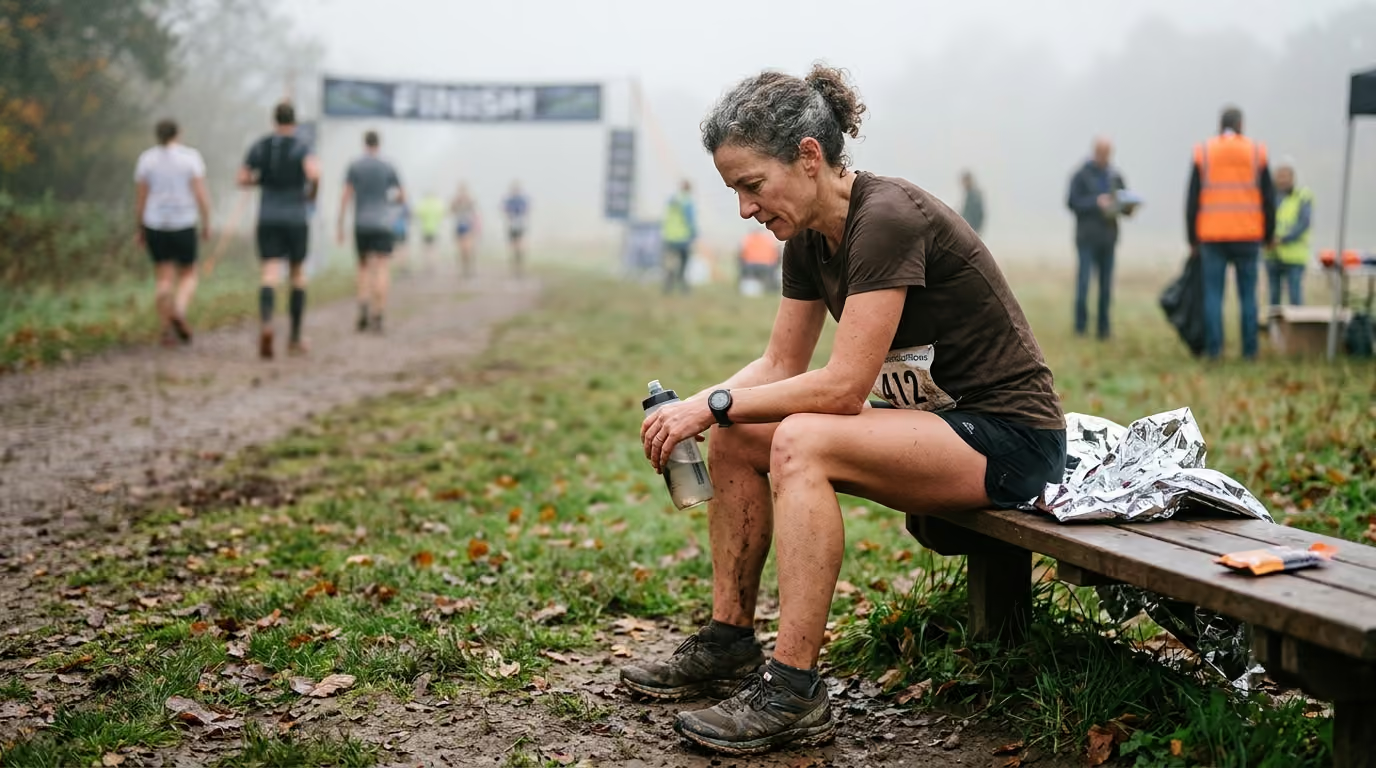

Midlife changes need not end endurance performance, as targeted strength training, smart fueling, and strategic recovery support lifelong racing resilience.





Racing through menopause is not an inevitable decline into athletic irrelevance. It is also not a minor bodily inconvenience that can be solved by simply ignoring symptoms and training through exhaustion. Menopause is a biological transition that alters recovery kinetics, thermoregulation, neuromuscular power, and connective tissue remodeling. When you understand how these underlying physiological shifts work, you can modify your training and racing architecture to remain competitive, resilient, and fast.
This comprehensive guide examines the physiological mechanisms of perimenopause, menopause, and postmenopause. It details how shifting ovarian hormones interact with aerobic performance, sleep architecture, bone density, and thermoregulation. You will learn evidence-based strategies for structured resistance training, clinical communication, and race-day execution, allowing you to train with precision through midlife and beyond.
To navigate midlife training effectively, you must first separate the distinct physiological stages of the menopausal transition. Athletes often treat menopause as a single sudden event. In reality, it is a multi-year continuum characterized by fluctuating and eventually declining ovarian hormone production.
Perimenopause represents the transitional phase preceding the final menstrual period. During this time, ovarian follicular activity becomes irregular, leading to unpredictable spikes and drops in estrogen and progesterone. For healthy individuals aged 45 or older, clinical guidance from the National Institute for Health and Care Excellence (NICE) indicates that perimenopause is identified by menstrual cycle irregularity combined with emerging vasomotor symptoms such as hot flushes and night sweats. Perimenopause is rarely linear. An athlete may experience months of predictable cycles followed by sudden bouts of heavy bleeding, skipped periods, sleep disruption, and unexpected fatigue.
Menopause itself is a retrospective clinical diagnosis. According to NICE guidelines, menopause is defined when an individual aged 45 or older who is not taking hormonal contraception has gone 12 consecutive months without a menstrual period. Menopause marks the permanent cessation of ovarian follicular activity, but it does not represent an immediate end to physical symptoms. Vasomotor issues, sleep challenges, and metabolic changes often continue well past this calendar milestone.
Postmenopause is the biological stage that follows menopause and continues for the rest of an athlete's life. In postmenopause, systemic concentrations of 17-beta-estradiol and progesterone remain at a stable, low baseline. The International Olympic Committee (IOC) recognizes menopause within its female athlete health framework as a distinct biological phase requiring specialized attention in sports medicine. For endurance racers, postmenopause brings stability compared to the unpredictable hormone swings of perimenopause. However, it requires deliberate attention to musculoskeletal integrity, bone health, and recovery timing.
Premature ovarian insufficiency (POI) is a separate clinical condition characterized by the loss of normal ovarian function before the age of 40. NICE guidelines recommend investigating suspected POI through elevated follicle-stimulating hormone (FSH) levels measured on two separate blood samples drawn four to six weeks apart. Athletes experiencing missed or irregular periods before age 40 should never assume they are undergoing typical age-related menopause. Amenorrhea in younger runners and cyclists often indicates low energy availability, thyroid dysfunction, or high training stress. These issues require distinct clinical and nutritional management.
A pervasive myth in endurance sports suggests that menopause triggers a rapid collapse in aerobic capacity. Many athletes experience a frustrating season of sluggish workouts and immediately attribute the change to irreversible hormonal decline. Sports science presents a far more nuanced picture.
Research tracking trained masters women runners demonstrates that while maximal oxygen uptake (VO2max) naturally declines with chronological age, menopausal status alone does not independently accelerate aerobic performance loss when training volume and intensity are held constant. In an observational study of 49 competitive masters runners, VO2max decreased by approximately 0.58 ml/kg/min per year as a function of age. However, menopausal status did not significantly alter exercise performance metrics after controlling for age and training volume.
To build an effective training program, you must separate four distinct variables that interact during midlife:
Systematic reviews on female athlete performance indicate that objective measurements of strength, VO2max, and lactate threshold remain relatively stable across differing hormonal environments. Subjective perceptions of fatigue and recovery often vary widely, even when objective power output or race pace remains intact. An athlete who feels uncoordinated or flat during a workout may still hit target physiological markers.
When endurance performance declines abruptly during midlife, the primary culprit is rarely a direct drop in cardiorespiratory potential. Instead, performance loss is driven by secondary symptoms that erode training consistency. Chronic sleep deprivation, altered thermal regulation, delayed tendon repair, and unaddressed nutritional gaps degrade an athlete's ability to recover from hard workouts. By targeting these specific secondary factors, you can sustain competitive speed well into postmenopause. You can explore structured methodologies for midlife adaptations in our endurance performance resources.
Sleep disruption is one of the most significant challenges for midlife endurance athletes. You might complete a demanding threshold workout, eat a balanced recovery meal, and go to bed on time, only to wake up drenched in sweat at 2:00 AM. As your heart races and your core temperature rises, you are left staring at the ceiling for two hours. By morning, your heart rate variability is depressed, your muscle soreness is elevated, and your planned morning interval session feels impossible.
Night sweats and insomnia are recognized by NICE as classic vasomotor and neurological symptoms of the menopausal transition. Estrogen modulates the sensitivity of the hypothalamus, the brain's internal thermostat. As estrogen levels drop and fluctuate, the hypothalamic thermoregulatory zone narrows dramatically. Small shifts in ambient bedroom temperature or normal nighttime metabolic heat production can trigger a massive cooling response. The body initiates rapid peripheral vasodilation, elevated cutaneous blood flow, sweating, and a sudden spike in sympathetic nervous system activity.
These nocturnal vasomotor surges fragment sleep architecture. They pull you out of slow-wave sleep and rapid eye movement (REM) cycles. Slow-wave sleep is the critical phase where growth hormone is secreted and systemic tissue repair takes place. When night sweats disrupt this restorative window, your body cannot effectively repair the microtrauma generated during high-mileage running, intense cycling, or heavy resistance training.
Chronic sleep loss also elevates resting cortisol levels, impairs insulin sensitivity, and increases your rating of perceived exertion (RPE) during exercise. A pace or power output that normally feels moderate can feel like a maximum effort after three nights of broken sleep. Recognizing this sleep-recovery connection helps you avoid the common mistake of interpreting a sluggish workout as an irreversible loss of athletic conditioning.
Midlife changes profoundly alter how the body dissipates heat during high-intensity training and competition. During perimenopause and postmenopause, the threshold for initiating sweating and peripheral vasodilation often shifts. The body may delay sweating during the early stages of a workout, causing internal heat storage to rise quickly. Conversely, sudden vasomotor hot flushes can cause unprompted vasodilation and heavy sweating, even at low exercise intensities.
When racing in hot or humid environments, you must differentiate between a standard vasomotor flush and dangerous exertional heat illness. A hot flush is a transient, self-limiting sensation of intense heat, flushing, and rapid sweating. It typically resolves within a few minutes without causing a catastrophic rise in core body temperature.
Exertional heat illness is a life-threatening medical emergency. It is characterized by central nervous system dysfunction, persistent confusion, ataxia, loss of motor coordination, vomiting, and a dangerous rise in core body temperature. If you experience cognitive disorientation or an inability to maintain your balance, you must stop racing immediately and seek emergency medical care.
To optimize thermal regulation during competition, midlife racers should implement aggressive cooling and fluid management protocols. Pre-cooling strategies lower core body temperature prior to the race start, creating a larger thermal buffer before performance-limiting internal temperatures are reached.
Practicing heat acclimation before summer races is equally essential. Performing 10 to 14 days of controlled, low-intensity aerobic exercise in warm conditions stimulates plasma volume expansion, lowers resting core temperature, and improves sweat distribution. This targeted preparation minimizes the disruptive impact of vasomotor fluctuations on race day.
Estrogen is not merely a reproductive hormone; it is a master regulator of musculoskeletal tissue throughout the body. Estrogen receptors are distributed across skeletal muscle fibers, osteocytes, tenocytes, and articular cartilage. As circulating estrogen levels decline, the musculoskeletal system undergoes structural and mechanical changes that require specific training interventions.
Skeletal muscle tissue experiences an accelerated loss of fast-twitch (Type II) motor units during midlife. Estrogen helps maintain the quality of the myosin motor protein, which generates cross-bridge cycling during muscular contraction. When estrogen declines, muscle strength and rate of force development drop faster than total muscle mass. Tendons also experience altered collagen turnover. Tendon tissue becomes stiffer, less pliable, and more susceptible to insertional tendinopathies when exposed to sudden increases in training volume.
The World Health Organization (WHO) highlights the loss of bone mineral density during the menopausal transition as a major contributor to osteoporosis and fracture risk. The rapid phase of bone loss occurs during perimenopause and the first few years of postmenopause, as osteoclast-mediated bone resorption outpaces osteoblast-mediated bone formation.
Endurance athletes often assume that running provides sufficient mechanical stimulation to preserve bone density. While running generates impact forces, it creates repetitive, unidirectional loading that provides diminishing osteogenic returns over time. Cycling and swimming are non-weight-bearing sports that provide virtually no osteogenic stimulus to the lumbar spine or femoral neck.
The UK clinical guidelines for osteoporosis prevention and the Royal Osteoporosis Society emphasize that athletes must combine progressive resistance training with multi-directional, dynamic impact loading to maintain bone mass. High-load resistance training applies powerful tensile and compressive forces that stimulate osteogenesis at vulnerable sites like the hip and spine.
Midlife athletes must also distinguish between age-related bone density loss and Low Energy Availability (LEA). When high training volume is combined with inadequate caloric intake, suppression of the hypothalamic-pituitary-ovarian axis accelerates bone demineralization. If an athlete experiences a sudden bone stress injury, clinicians must evaluate total caloric balance, bone density via DXA scanning, and training load rather than attributing the fracture purely to menopause. For comprehensive training strategies that protect connective tissue, review our injury prevention resources.
Metabolic flexibility and macronutrient utilization shift during the menopausal transition. The decline of estrogen influences insulin sensitivity, substrate oxidation during exercise, and muscle protein synthesis kinetics. Endurance athletes who follow restrictive dietary trends often find that low-carbohydrate or low-calorie diets impair recovery, worsen vasomotor symptoms, and accelerate lean mass loss.
Protein intake requires deliberate restructuring. In low-estrogen states, the anabolic resistance of skeletal muscle increases. This means your muscles require a larger per-meal dose of essential amino acids, particularly leucine, to stimulate the mammalian target of rapamycin (mTOR) pathway and initiate muscle protein synthesis. Distributing protein evenly across four to five meals is far more effective for tissue remodeling than consuming the majority of your protein at dinner.
Carbohydrate periodization must be approached with care. Fasted endurance training elevates circulating cortisol and exacerbates hypothalamic stress, compounding the sleep and recovery challenges common to perimenopause. Fueling your workouts with readily available carbohydrates stabilizes blood glucose, suppresses excess cortisol release, and preserves muscle glycogen.
Micronutrient balance is equally critical for midlife health. The 2024 UK clinical osteoporosis guideline recommends a minimum daily calcium intake of 700 milligrams, with higher targets often indicated for postmenopausal populations. Pair dietary calcium with adequate vitamin D, which facilitates intestinal calcium absorption and supports neuromuscular function. Athletes should have their 25-hydroxyvitamin D and ferritin levels evaluated annually to ensure these vital systems support peak physical performance. You can find detailed fueling and hydration frameworks in our dedicated nutrition and fueling resources.
Midlife athletes must be discerning regarding commercial supplements marketed for menopause. The Menopause Society's 2023 non-hormonal therapy position statement notes that herbal remedies such as black cohosh, red clover, and evening primrose oil lack robust clinical trial evidence demonstrating efficacy for vasomotor symptoms. Athletes should prioritize proven nutritional foundations: adequate energy intake, high-quality protein distribution, pre-workout carbohydrates, and verified micronutrient status.
Genitourinary symptoms are common during midlife, yet they remain among the most underreported challenges in endurance sports. Declining systemic and local estrogen levels lead to the thinning, drying, and inflammation of the mucosal lining of the vagina and lower urinary tract. This physiological cluster is clinically known as the Genitourinary Syndrome of Menopause (GSM).
The WHO notes that menopause weakens pelvic support structures, increasing the risk of pelvic organ prolapse and urinary incontinence. For runners, triathletes, and cyclists, GSM and pelvic floor dysfunction manifest in practical ways:
Endurance athletes often accept urinary leakage or chronic saddle sores as normal byproducts of hard training. They may limit fluid intake before races to avoid bathroom stops, or quietly drop out of competitive events due to embarrassment. This acceptance is entirely unnecessary. Pelvic floor dysfunction is a medical condition that responds well to targeted therapy.
Athletes experiencing pelvic symptoms should consult a specialized pelvic health physiotherapist. These specialists perform internal and external evaluations to identify whether pelvic floor muscles are hypertonic (overly tight and unable to absorb shock) or hypotonic (weak and requiring progressive strengthening). Pelvic health physical therapy teaches runners how to coordinate intra-abdominal pressure, breathe effectively under load, and restore pelvic floor elasticity during running gait.
For saddle discomfort and vaginal dryness, athletes should discuss local vaginal estrogen therapy with their physician. Local vaginal estrogen delivers low-dose 17-beta-estradiol directly to urogenital tissues with minimal systemic absorption. It restores mucosal thickness, enhances local blood flow, improves tissue elasticity, and reduces chronic chafing on the bike saddle. Local therapy can safely be used long-term under physician guidance and does not carry the systemic risks associated with oral hormone therapies.
Navigating medical appointments during midlife can be frustrating for endurance athletes. Many physicians lack specialized training in sports medicine, while endurance coaches rarely understand the subtleties of clinical gynecology. To get high-quality medical care, you must enter appointments prepared to advocate for your health using clear, objective data.
NICE guidelines explicitly state that for healthy individuals aged 45 and older, perimenopause and menopause should be diagnosed based on symptom history and menstrual changes alone. Routine blood tests measuring follicle-stimulating hormone, estradiol, or anti-Müllerian hormone are inaccurate because hormone levels swing wildly from day to day during perimenopause. A single normal estrogen level does not prove you are not perimenopausal.
Instead of relying on hormone blood tests, maintain a detailed symptom and training log for two to three months before your clinical consultation. Presenting clear data bridges the communication gap between athletic performance and clinical medicine:
Menopausal Hormone Therapy (MHT), formerly referred to as Hormone Replacement Therapy (HRT), is an effective treatment for bothersome vasomotor symptoms, sleep disruption, and prevention of bone loss. The Menopause Society states that for healthy individuals within 10 years of menopause or younger than 60, the benefits of systemic MHT generally outweigh the risks when prescribed for symptomatic relief. Transdermal estradiol patches or gels paired with micronized progesterone carry a lower risk of venous thromboembolism compared to older synthetic oral estrogens.
Hormone therapy should never be viewed as an athletic performance-enhancing substance. It is a clinical tool designed to treat systemic symptoms and protect bone mineral density. Athletes who have medical contraindications to hormone therapy, such as active estrogen-sensitive cancers or unexplained vaginal bleeding, can explore evidence-based non-hormonal prescription medications with their physician to manage vasomotor symptoms. You can read more about balancing long-term health and athletic performance in our healthy aging resources.
Rigid, multi-week training plans that assume identical recovery kinetics every day often fail during perimenopause. When hormonal fluctuations disrupt sleep and thermal regulation, forcing yourself to complete a grueling interval workout simply because the calendar says so increases your risk of overtraining, chronic fatigue, and tendon breakdown.
A resilient training model uses a traffic-light monitoring system to guide daily workouts. This framework matches training intensity to your immediate physiological readiness, keeping you consistent while preventing accumulated fatigue.
When time or energy is constrained, use the minimum effective dose principle. This preserves key physiological adaptations without overloading your nervous and hormonal systems.
During race week, prioritize simplicity. Keep workouts short and crisp, incorporating brief race-pace surges to maintain neuromuscular priming while avoiding accumulated fatigue. Build flexible contingencies into your race plan for cooling, fueling, and hydration, so you can execute with confidence regardless of ambient conditions or symptom fluctuations.
When endurance athletes encounter midlife changes, they often make predictable errors in their training, nutrition, and recovery strategies. Avoiding these common mistakes will protect your health, save valuable training time, and keep your racing goals on track.
Many masters athletes view fatigue as a mental weakness that must be overcome through willpower. Pushing through multiple consecutive nights of vasomotor-induced sleep loss with high-intensity interval sessions elevates resting cortisol, worsens autonomic nervous system fatigue, and increases injury risk. When sleep is compromised, pivot to easy aerobic movement or active recovery until restorative sleep returns.
Fasting before morning workouts or severely restricting carbohydrates to counter midlife body composition shifts impairs training adaptations. Fasted training elevates systemic stress hormones, exacerbates hypothalamic dysfunction, and accelerates muscle tissue breakdown. Consume carbohydrates before and during challenging workouts, and use balanced daily protein intake to preserve lean muscle mass.
Road running generates repetitive, unidirectional forces that do not provide adequate osteogenic stimulation for the spine and hips. Relying solely on running while avoiding the weight room leaves your skeletal system vulnerable to osteopenia and fractures. You must lift challenging weights and perform multi-directional jumping drills to preserve bone mineral density across the menopausal transition.
It is dangerous to attribute every instance of fatigue, tendon pain, or mood change to menopause. Hypothyroidism, iron-deficiency anemia, clinical depression, and bone stress injuries share identical symptoms with the menopausal transition. Always obtain comprehensive medical evaluations to rule out underlying clinical issues before assuming your symptoms are purely hormonal.
Stopping running due to urinary leakage or enduring severe saddle pain on the bike is entirely unnecessary. Pelvic floor dysfunction and genitourinary tissue thinning are treatable medical conditions. Working with a pelvic floor physical therapist and discussing local vaginal estrogen with your doctor will restore tissue health and keep you training comfortably. Learn more about proactive management in our recovery and mobility guides.
To determine whether your training adjustments, nutritional updates, and medical interventions are working, you must track objective and subjective metrics. Relying solely on your watch's GPS pace can be misleading, as pace is heavily influenced by heat, terrain, and cumulative fatigue.
Track your internal-to-external load ratio during aerobic workouts. If you run at an 8:30-per-mile pace on a cool morning at a heart rate of 138 beats per minute, note how that relationship evolves over several months. A stable or lower heart rate at the same pace indicates robust aerobic maintenance, even if your maximum sprint speed fluctuates.
Regularly evaluate your strength metrics in the gym. Tracking your 5-repetition maximum on fundamental movements like the trap-bar deadlift, goblet squat, or overhead press provides an objective measure of neuromuscular capacity. If your lifting numbers remain stable or increase while you maintain endurance mileage, your muscle protein synthesis and resistance programming are successfully countering age-related muscle loss.
Review your subjective sleep and recovery scores alongside resting autonomic data. A gradual reduction in nocturnal awakenings, paired with a stable morning resting heart rate, confirms that your thermoregulatory management, fueling, and stress balance are working. Use these metrics to make informed training choices, confident that you are building a resilient athletic foundation for years to come. Explore our full library of evidence-based training systems across our endurance training resources.
Yes, you can train for and complete marathons and ultramarathons throughout perimenopause. Success requires adjusting your recovery protocols, fueling adequately with carbohydrates during workouts, and incorporating heavy resistance training to protect tendons and bones. Using a traffic-light training framework ensures you absorb long runs without causing chronic autonomic fatigue.
Menopausal Hormone Therapy is prescribed to treat clinical symptoms such as hot flushes, night sweats, and sleep disruption, as well as to protect bone density. While MHT can improve sleep quality and daily energy by reducing vasomotor issues, clinical research does not show that it directly boosts VO2max or acts as an ergogenic performance enhancer. Its primary athletic benefit lies in restoring consistent sleep and recovery.
Masters endurance athletes should perform heavy resistance training two times per week. Focus on compound, multi-joint exercises such as squats, deadlifts, lunges, and presses in the 5 to 8 repetition range with challenging loads. This loading pattern provides the necessary mechanical tension to preserve Type II muscle fibers and stimulate bone remodeling.
Shifts in fluid retention, thermoregulatory sweating rates, and mucosal tissue thickness during midlife often cause cramping and saddle irritation. Ensure your hydration includes adequate sodium (500 to 1000 mg per liter of water) on rides longer than 90 minutes. For saddle pain, consult your physician to evaluate whether local vaginal estrogen therapy is appropriate to restore urogenital tissue thickness and reduce friction sensitivity.

Follow ReEndure for practical insights on endurance training, recovery, nutrition and healthy aging. Stay connected for new articles, research led guidance and ideas to help you perform better for longer.


Read practical ideas on endurance training, recovery, nutrition and healthy aging to keep progressing for years to come.
Read the Blog