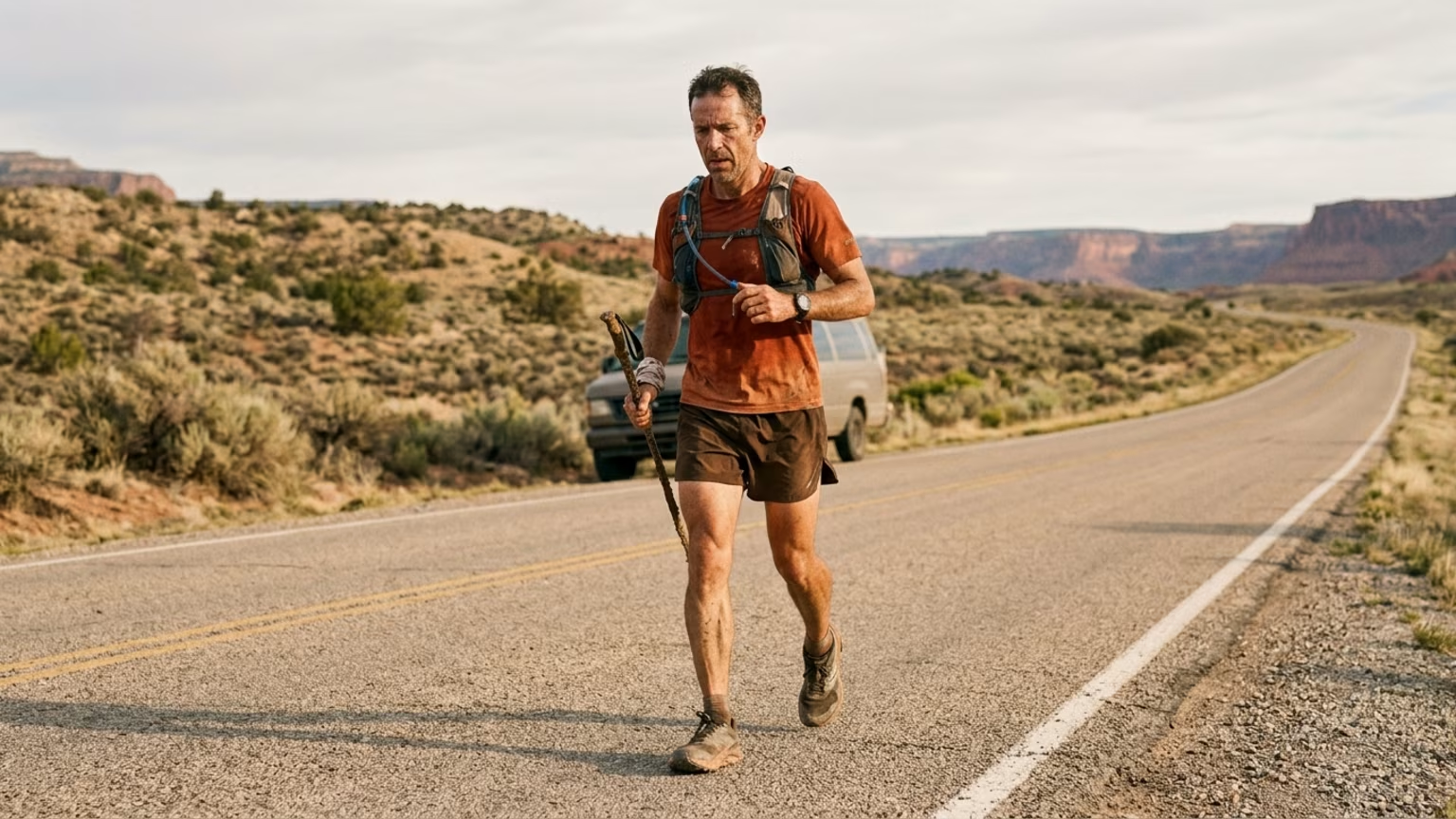

Examine Ayyoub El Osrouti's 623 km Last Soul Ultra performance. Learn how extreme backyard ultras stress physiology, pacing, and older athlete recovery.





At the Last Soul Ultra in August 2026, German ultrarunner Ayyoub "Ello" El Osrouti completed 93 consecutive loops to cover approximately 623 kilometers over 93 hours. He accomplished this massive physical feat before finally stopping on loop 94. The event utilized the notorious backyard ultra format, which requires runners to start a new 6.7 kilometer loop every hour. Competitors must finish the designated distance before the next start time to remain in the active competition.
The backyard ultra format directly measures an athlete's ability to balance physical output with rapid recovery periods. Runners face constant psychological pressure from repetitive loops and complete race uncertainty. Competitors never know in advance whether the event will last several hours or stretch into several days. The race concludes only when a single runner remains capable of completing the next scheduled loop.
El Osrouti did not simply run approximately 623 kilometers in one continuous forward push. His performance required a relentless, calculated sequence of hourly decisions under intense physical strain. Athletes must constantly manage their running pace, food intake, fluid consumption, and overall movement quality. Running a loop faster creates more downtime to sit and rest before the next hourly bell rings.
However, a faster running pace also burns more precious glycogen and increases muscular damage in the legs. Managing this delicate tension becomes increasingly difficult as severe sleep deprivation sets in during multi-day races. Sleep restriction heavily impacts human physiology during these extreme, prolonged endurance events. A small 2026 field study of 15 male ultramarathon runners observed significant fatigue in extreme conditions.
The research reported an average of about 97 minutes of sleep during a 135 to 217 kilometer mountain race. Nearly all participants reported severe symptoms like overwhelming sleepiness, balance problems, or vivid visual hallucinations. German endurance coverage of a separate 2024 backyard ultra study highlighted similar physiological declines. That research examined athletes immediately after a grueling backyard ultramarathon concluded.
The study reported slower reaction times and impairment in some executive functions after participants exited the race. These specific findings underscore the immense cognitive load required to maintain a consistent pacing strategy over days. Sleep loss fundamentally alters how the brain communicates with exhausted leg muscles. The profound lack of sleep documented in ultra-endurance research highlights a critical vulnerability.
The brain simply cannot process complex motor commands efficiently when starved of basic rest. As runners push past 48 or 72 hours, their stride mechanics often begin to break down entirely. This mechanical breakdown drastically increases the load on already exhausted ligaments and tendons.
An athlete's ability to tolerate extreme sleep restriction and physical stress changes significantly with age. In their 30s, endurance athletes often possess the cardiovascular engine to handle massive training volume. They can frequently endure highly fragmented sleep and still bounce back relatively quickly. Neurological resilience remains very high during this specific decade of life.
This resilience allows competitors in their 30s to push through acute sleep deprivation with fewer immediate athletic consequences. As athletes enter their 40s, the physiological cost of multi-day endurance events increases noticeably. Muscular recovery slows down, and the body demands more consistent sleep cycles to repair damaged tissue. Sleep disruptions compound more rapidly during continuous, multi-day physical efforts.
One field study found objectively measurable sleep disruption lasting up to four nights after an ultra-trail race. Masters athletes in this age bracket must prioritize conservative pacing to avoid severe cognitive decline. Pre-race sleep preparation becomes a highly critical component of race strategy for athletes over 40. Older runners must bank rest before the starting gun to offset inevitable sleep fragmentation later.
By the time competitors reach their 50s, central nervous system recovery requires a far more deliberate approach. The accumulation of hourly 6.7 kilometer loops places severe stress on aging joints, ligaments, and tendons. Reaction times naturally slow down, making trips and dangerous falls far more likely on dark trails. Moving into their 60s, athletes face extended recovery timelines after grueling ultra distance events.
A movement scientist quoted by Running.be noted that recovery from an ultramarathon may require one to two weeks. Older athletes must listen closely to these extended recovery timelines rather than rushing back to training. Symptoms like altered physical balance, negative mood changes, and prolonged soreness should dictate the return to activity. Ignoring these vital physical signals in your 50s or 60s often leads to chronic overuse injuries.
The 2026 Last Soul Ultra attracted substantial global attention when the final contest stretched to 94 hours. The intense competition reached an entirely new level for the challenging German endurance event. El Osrouti and American competitor Mark Dowdle successfully passed 90 loops together. Previous coverage identified 90 loops as the earlier German benchmark for this specific event type.
El Osrouti's result was described by German reporting as the second-best performance by a German backyard ultra runner. Despite covering approximately 623 kilometers, El Osrouti was officially recorded as a DNF. In the strict backyard format, failing to complete the next loop automatically eliminates the athlete. He received this official designation simply because he did not complete loop 94 before the time expired.
However, he still finished second overall in the final event standings. Mark Dowdle eventually won the race by completing 94 loops to cover approximately 630 kilometers. Dowdle's victory further illustrates the razor-thin margins of elite backyard ultra competition. Both men pushed their physical systems well past traditional markers of exhaustion during the four-day event.
Their shared progression past the 90-loop barrier redefined what is physically possible in European backyard ultras. However, such extreme performances require an incredibly rare combination of genetic durability and flawless execution. Sport1 published an interview attributing El Osrouti's withdrawal to his body eventually stopping. This framed the outcome as a physical limit rather than a conventional tactical retirement.
Older athletes reading these accounts should view extreme races as highly complex logistical problems. El Osrouti's inability to complete loop 94 highlights the sheer physical toll of prolonged sleep restriction. Endurance competitors can learn heavily from how these extreme sleep restriction tactics unfold in the field. The public coverage does not provide a complete record of his hourly pacing or medical monitoring.
This missing data makes it impossible to diagnose exactly why his physical forward progress halted. It does, however, reinforce the deep importance of meticulous, conservative race execution. Athletes attempting similar feats must establish rigorous fueling and hydration protocols long before race day. Without a highly dialed system, the compounding fatigue of a backyard ultra will force a physical shutdown.
Ambitious older athletes should use multi-day distance records as loose guidelines rather than mandatory performance benchmarks. The massive total of 623 kilometers demonstrates the absolute upper limit of human pacing capabilities. It does not automatically provide a blueprint for healthy, sustainable, long-term endurance training. Race distance strictly measures an event outcome rather than the athlete's cardiovascular health or future physical potential.
Veterans must consistently separate their competitive ambition from the deep need for training continuity. A successful ultra finish is only one single outcome on a very long athletic timeline. The more vital question is exactly how much recovery debt a massive physical effort creates. You should build a highly conservative stop protocol before entering any multi-day event.
Pre-agree on strict criteria involving confusion, severe physical pain, or a total inability to eat. Allowing a race to permanently damage your movement mechanics defeats the primary purpose of lifelong competition. Athletes over 35 must assess recovery through careful observation rather than assuming a fixed calendar return. Let physical symptoms like mood changes and muscle soreness guide your eventual return to structured workouts.
Understanding elite post-race recovery timelines is absolutely crucial for athletic longevity. You can also review general training guidance to help plan your seasonal race calendar safely. Extraordinary physical performance is thrilling to study and highly inspiring to witness. However, long-term training health is the true metric that keeps you competing for decades.
You should focus on making smart hourly decisions, prioritize high-quality sleep, and train consistently without severe interruptions. Build a robust endurance engine that allows you to perform strongly today and race confidently again next year.

Follow ReEndure for practical insights on endurance training, recovery, nutrition and healthy aging. Stay connected for new articles, research led guidance and ideas to help you perform better for longer.



Read practical ideas on endurance training, recovery, nutrition and healthy aging to keep progressing for years to come.
Read the Blog