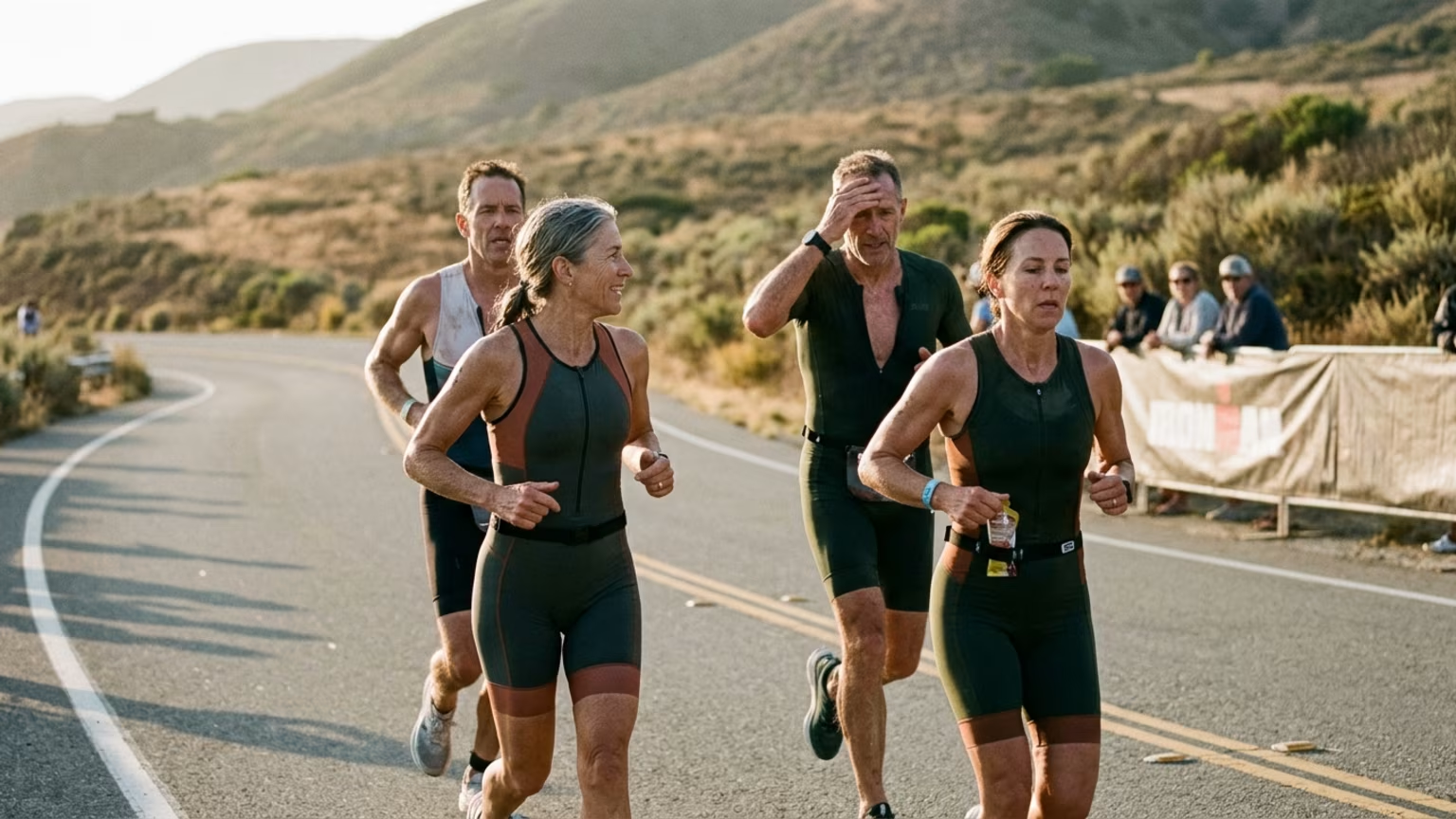

An analysis of the 2026 IRONMAN 70.3 World Championship age-group field reveals how athletes balance high-level racing with demanding adult lives.





On September 8, 2026, Slowtwitch published a detailed analysis of the age-group field preparing for the 2026 IRONMAN 70.3 World Championship in Nice, scheduled for September 12 and 13. The coverage highlighted athletes who successfully balance demanding careers, severe medical interruptions, and family responsibilities while competing at an international level. This focus shifted attention away from elite professional times and toward the sustainable habits of lifelong amateurs. The featured stories offer a pragmatic look at how older athletes maintain their competitive drive through decades of physical and personal changes.
The primary takeaway from the recent coverage is that the typical championship competitor is an experienced adult managing complex life variables. Slowtwitch reports that the start list spans 130 countries, averages 43 years old, and includes athletes aged 18 to 82. The narrative surrounding the race is defined by the massive amateur contingent rather than the professional tier. This demographic reality changes how we should view performance and longevity in endurance sports.
The profiles featured by Slowtwitch illustrate highly varied paths to the start line. Alisa Goughnour is a 66-year-old athlete who rebuilt her physical capacity after a heart transplant in December 2021. According to Slowtwitch, she resumed training with 30-second jogs and eventually qualified for Nice at 70.3 Los Cabos. Her gradual return emphasizes patience and incremental progress over aggressive timelines.
The coverage also highlights athletes who use deep personal meaning to fuel their daily preparation. Gregory Schaefer is an 18-time IRONMAN finisher who was diagnosed with early-onset Parkinson's disease at 48. He told Slowtwitch that he races for his wife and two sons. Schaefer represents athletes who build their entire competitive structure around family support.
Lacey Zuck returned to endurance competition after surviving an amniotic fluid embolism and giving birth to premature twins. She completed two half-marathons on consecutive days 34 weeks after giving birth. Zuck told the publication she chose an IRONMAN because it looked like the toughest challenge available. While these accounts represent exceptional resilience, they prove that integrating high-level competition into adult life requires clear priorities.
The sheer scale of the event provides useful context for understanding the current age-group landscape. Slowtwitch reports more than 6,300 age-group athletes, compared with 152 professionals expected to race. The amateur field includes approximately 3,000 women and 3,500 men. This distribution confirms that the core cultural foundation of long-distance triathlon remains firmly rooted in the amateur ranks.
Marine Leleu, a French endurance athlete featured in a race-week panel, provides another perspective on extreme amateur performance. Slowtwitch reports Leleu's English Channel time as 15 hours and six minutes and her Enduroman time as 69 hours and 52 minutes. While her times are exceptional, her advice to simply try translates cleanly to the everyday athlete. Setting ambitious targets does not require external validation or professional status to be a worthy pursuit.
For the ambitious athlete over 35, these championship narratives reinforce a critical truth about longevity. Sustaining high performance requires acknowledging physiological changes rather than fighting them blindly. A 2026 scoping review found that lifelong endurance training may improve several aspects of physical aging while not eliminating neuromuscular decline. The research cautions that endurance training alone does not fully prevent age-related losses in muscle mass, motor units, or power.
This evidence dictates a clear shift in training priorities for older competitors. Swimming, cycling, and running are insufficient on their own for optimal physiological aging. Older athletes must prioritize targeted strength work to preserve the power they need for late-race surges and basic injury prevention. The goal is not simply to endure the miles but to maintain true physical resilience across multiple decades of competition.
Hitting my forties brought a harsh reality check to my own training routine. The track workouts were not getting slower, but the days after them felt significantly heavier. Instead of forcing my old Tuesday and Thursday intensity schedule, I pushed my second hard session to Friday to allow an extra forty-eight hours of passive recovery. My total weekly volume stayed the same, but the quality of my intervals skyrocketed.
This shift toward respecting passive recovery is heavily supported by modern clinical literature. A PubMed-indexed systematic review found limited evidence that recovery modalities outperform passive recovery in competitive and elite endurance athletes. Before purchasing expensive compression gear or booking frequent treatments, aging athletes should optimize their sleep hygiene, basic nutrition, and rest day structures.
Relying on adequate sleep and proper programming is consistently more effective than chasing technological shortcuts. Athletes who understand how elite championship racing dictates post race recovery protocols know that true tissue repair requires time and rest. A calm, evidence-based approach to training load will always yield better long-term results than complex interventions. Reendure consistently emphasizes this focus on longevity and proper recovery for older athletes.
The presence of 152 professionals alongside 6,300 amateurs highlights a common training error. Everyday athletes often attempt to emulate professional training volumes while working full-time jobs. This approach typically leads to chronic overuse injuries and severe mental burnout. Amateurs face constraints regarding sleep scheduling, travel logistics, and occupational stress that professionals do not have to manage.
Building a successful training block requires acknowledging these external stressors. A professional can dedicate hours to passive rest between sessions. An age-group athlete usually goes straight from the track to a stressful office environment. Adjusting your training load to account for occupational fatigue is a basic requirement for staying healthy and competitive over the long term.
As athletes age, the primary driver for daily training often evolves into something more complex than pure speed. Schaefer's perspective that exercise is his primary method to slow the progression of his condition reflects a deeply personal understanding of his health. While that is his individual view and not a broad clinical recommendation, it highlights how racing motivations frequently shift. Motivations transition from chasing podiums to ensuring long-term vitality.
Understanding how to keep racing meaningful through every stage of life is a mandatory skill for the veteran athlete. You might not always chase a personal best time. Your target might shift to completing a new distance, pacing a friend, or simply executing a healthy training block. Ambitious adults must learn to build their athletic goals around the life they actually have right now.
This requires respecting career demands, family commitments, and current physical realities rather than ignoring them. The athletes profiled in Nice succeed because they integrate their sport into their broader lives. Learning to manage these variables is exactly what age group racing explained looks like in practice. For readers interested in a broader framework, mastering the complete guide to balancing racing work family and life is essential.
Goughnour's recovery journey illustrates the absolute necessity of patience. Her return began with extremely short running intervals and progressed over several years. The practical lesson for the everyday athlete is to view gradual progression as the only legitimate route back from injury, illness, or a major life event. Attempting to rush the body back to prior fitness levels usually results in secondary injuries and prolonged frustration.
A sustainable plan accounts for missed workouts, travel schedules, medical appointments, and necessary family support before a target race is even selected. We deliver clear, evidence-based guidance to help you perform at your best today and keep racing for decades to come. If you want to maintain your edge over the long haul, you must stop treating endurance sport as an isolated hobby. It must be woven into your daily existence with realistic expectations, progressive overload, and a profound respect for the recovery process.
Ambitious longevity requires older athletes to discard rigid timelines and build their competitive goals around the realities of an aging body and a demanding life.

Follow ReEndure for practical insights on endurance training, recovery, nutrition and healthy aging. Stay connected for new articles, research led guidance and ideas to help you perform better for longer.



Read practical ideas on endurance training, recovery, nutrition and healthy aging to keep progressing for years to come.
Read the Blog