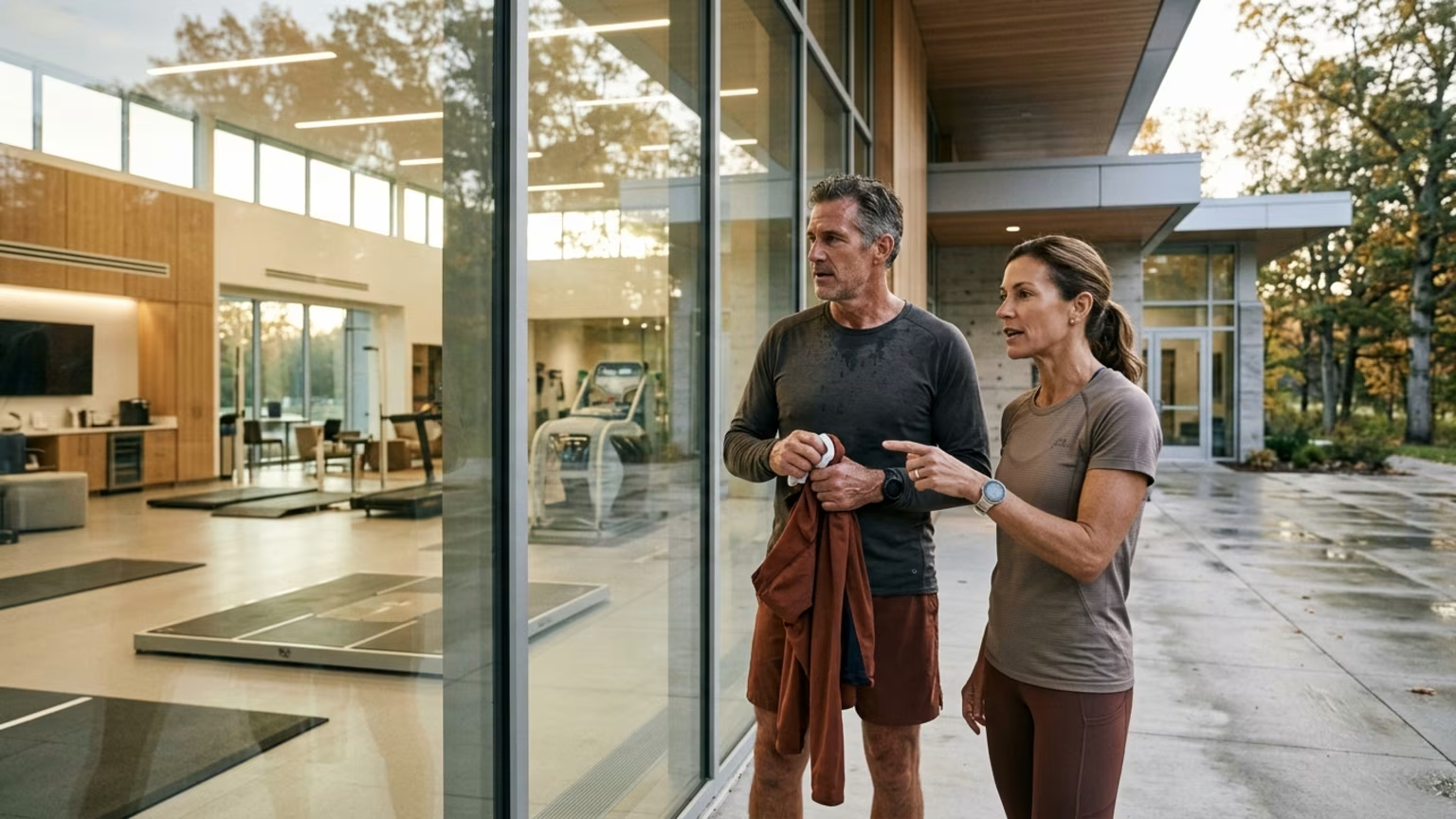

Cleveland Clinic has released a first look at its Global Peak Performance Center. Learn how this integrated sports medicine model supports aging athletes.





Walk into any pre-race corral, and you will see half the pack treating their injuries as isolated mechanical failures, while the other half swears by a fragmented web of disconnected specialists. The common wisdom says you fix a broken part and get back to training. The reality is that treating an aging body piece by piece rarely produces lasting durability.
Cleveland Clinic is signaling a shift away from this divided approach. The organization has released architectural renderings and construction progress photographs of its side of the Global Peak Performance Center. Expected to begin seeing patients in August 2027, this facility points toward a more holistic medical focus on endurance and healthy aging.
For decades, the standard approach to athletic care has relied on treating specific symptoms in isolation. When an endurance athlete develops a problem, the typical path involves seeing a primary care doctor, securing a referral to an orthopedic specialist, and addressing the localized pain. This method excels at acute triage. If a bone is broken or a ligament is torn, isolated orthopedic intervention is necessary and effective.
This compartmentalized system is highly efficient for managing acute trauma. However, it often ignores the cardiovascular status, nutritional habits, and psychological load that contribute to the athlete's overall health. Treating an injury as an isolated orthopedic problem separates the mechanical issue from the engine that drives it. For a recreational runner or cyclist, this often means bouncing between a physical therapist for knee pain and a different clinic for metabolic testing.
The traditional model addresses the immediate symptom but leaves the athlete to connect the dots on their own. This disconnected reality forces the athlete to act as their own general manager. They must try to translate conflicting advice from different practitioners into a single viable training plan. As we age past 35, recovery slows down and the margins for error shrink. Without a unified plan, an ambitious older athlete is frequently forced to guess how much training load they can safely resume.
The alternative approach brings diagnosis, conditioning, and recovery into a single coordinated ecosystem. The Cleveland Clinic project is designed to combine sports medicine, performance science, research, and advanced technology in one location. The planned facility covers approximately 210,000 square feet and is intended to become the home of the organization's next generation of performance care. Cleveland Clinic lists orthopaedics and primary-care sports medicine among the planned clinical disciplines.
Rehabilitation and physical therapy will sit alongside cardiology and nutrition. The center also plans to incorporate mental performance and exercise physiology. This integrated method looks at the entire athlete rather than just the isolated injury. Cleveland Clinic says the Global Peak Performance Center will serve athletes and active individuals of all ages and abilities.
The facility is being built at Collision Bend along the city's riverfront, located alongside the Cleveland Cavaliers' new training and practice facility. Dr. Paul Saluan is the director of Strategic Initiatives and Clinical Development for the center. He stated that the facility would bring together the expertise, technology, and data needed to help people recover and perform at their best. By housing cardiovascular care next to rehabilitation and nutrition, this model attempts to map the full picture of human performance.
Rather than scheduling multiple appointments across different cities, a patient may eventually be able to move seamlessly from injury assessment to specialized exercise testing. Co-locating these disciplines removes the traditional barriers between specialties. It creates a physical space where a cardiologist and a physical therapist can theoretically collaborate on a single patient. The sheer scale of the facility reflects a massive commitment to this unified philosophy.
For athletes aged 35 to 65, the integrated ecosystem clearly offers a superior path to maintaining durability. Performance goals for older endurance athletes increasingly overlap with long-term health questions. A 50-year-old marathoner needs continuity between injury assessment, exercise testing, and performance planning. Recent coverage of federal guidelines says adults should work toward 150 to 300 minutes of moderate activity or 75 to 150 minutes of vigorous activity weekly, along with muscle-strengthening work.
Managing that volume safely requires a broader perspective than what a single specialist can provide. Athletes often treat training programs and medical interventions as completely separate fields. The reality is that heart health, nutritional fueling, and tendon strength all influence each other simultaneously. When my Achilles flared up right before a major marathon build, the standard advice was total rest.
But reviewing the clinical research on tendon loading changed my approach entirely. I swapped complete rest for heavy slow resistance training, specifically utilizing heavy calf raises on a deficit. It felt counterintuitive to load an injured tendon, but the science was clear. Within six weeks, the morning stiffness faded, and I was back to building mileage without the chronic ache.
That shift from passive rest to integrated, data-backed rehabilitation is exactly why a multidisciplinary model matters. It aligns perfectly with the need to balance high ambition with the realities of an aging body, ensuring that athletes train for both peak performance and cardiovascular longevity.
A central feature of the new Cleveland Clinic model will be the use of performance data to create personalized recommendations. The organization says its partnership with Sports Data Labs will bring wearable technology and advanced analytics into the center's approach. A Cleveland Clinic job posting describes a $40 million investment in elite-athlete performance science connected with the center. However, the announcement does not specify which wearables will be used or how the resulting data will influence clinical decisions.
Athletes should maintain a realistic perspective on commercial device metrics. A review summarized by Infobae found that commercial wearables may help monitor health and mobility, but do not by themselves establish improved fitness or disease prevention. The review noted that proprietary algorithms, small samples, and limited long-term evidence remain important limitations. Wearable data can provide useful context for monitoring training load, but it should not replace the clinical judgment of a coordinated medical team.
Wearables create an immense volume of data that can easily overwhelm an athlete if it lacks professional context. Integrating these raw numbers into a structured medical review is intended to bridge the gap between interesting statistics and actionable health decisions. Older athletes must remember to treat a recovery score as one data point rather than a definitive medical conclusion. Incorporating technology into healthcare introduces complex questions about privacy, data ownership, and the clinical interpretation of digital readouts.
The current announcement does not explain how these practical issues will be handled once the center opens. Monitoring this data properly is crucial when you want to find your optimal training volume without risking burnout.
The Global Peak Performance Center represents an emerging care model rather than an immediately available solution. Because the facility is not scheduled to begin seeing patients until August 2027, athletes should not delay current evaluation or rehabilitation while waiting for it to open. The announcement provides a high-level description of services but does not yet disclose consultation fees, referral requirements, or specific patient eligibility rules. The true impact of this facility will depend on whether recreational runners and cyclists receive the same coordinated attention as elite competitors.
Until the doors open, the core lesson remains applicable to daily training. A recurring injury or unexplained decline in performance usually requires more than a single consultation. Seeking multidisciplinary care can help connect the physical, nutritional, and cardiovascular aspects of your routine. Exploring these integrated factors is a critical part of a complete performance review after a difficult season.
The evolution of sports medicine is slowly moving away from isolated fixes. It is learning to view the aging athlete as a complete system worthy of continuous maintenance.

Follow ReEndure for practical insights on endurance training, recovery, nutrition and healthy aging. Stay connected for new articles, research led guidance and ideas to help you perform better for longer.




Read practical ideas on endurance training, recovery, nutrition and healthy aging to keep progressing for years to come.
Read the Blog