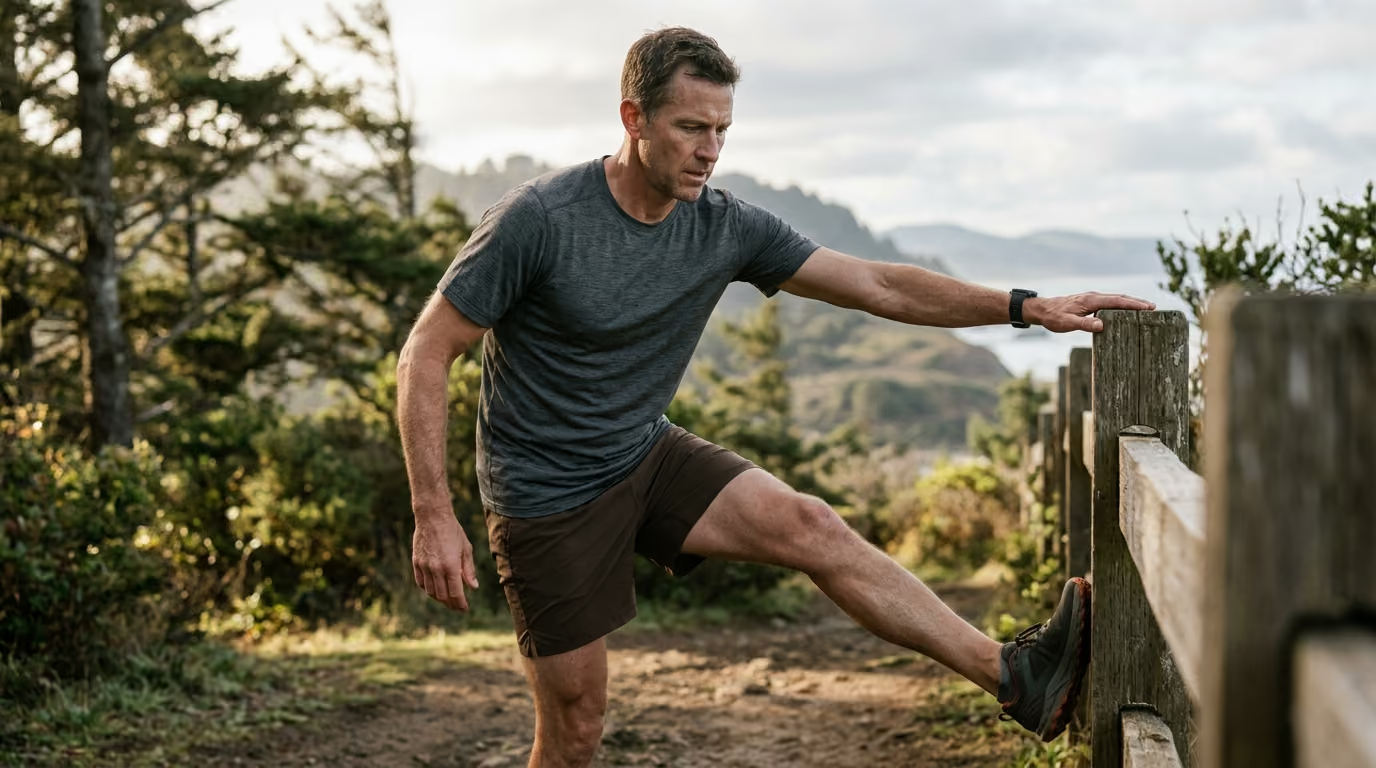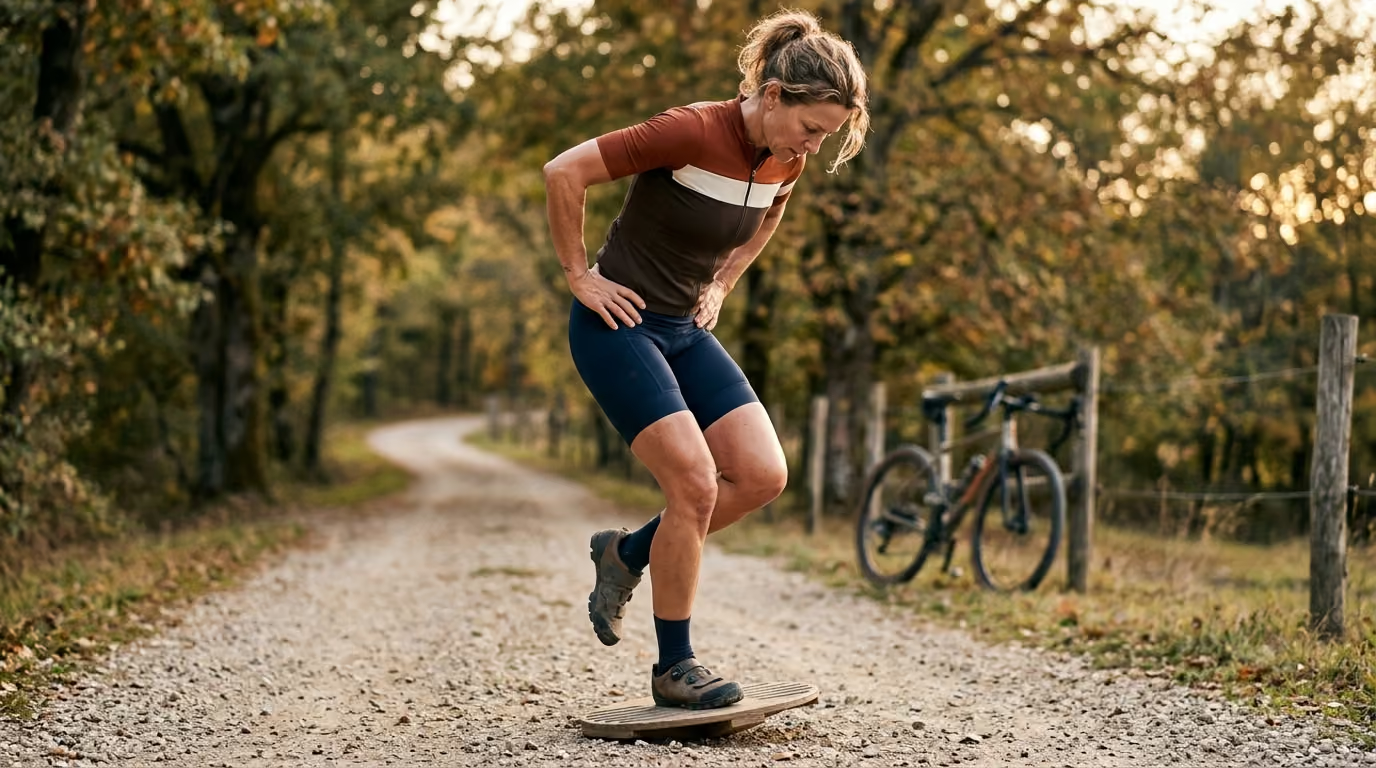

Endurance knees rarely wear out from heavy training, but injuries quickly occur when mechanical workload exceeds tissue capacity and movement control.





The prevailing belief in endurance sports is that knees are fragile hinges with a strictly limited expiration date. Runners are routinely told that road impact will wear away their cartilage. Cyclists are told that thousands of revolutions will inevitably grind down the patellofemoral joint. When pain appears, the standard response is often to blame a single faulty muscle, buy corrective footwear, or stop training entirely.
This framework is both scientifically outdated and counterproductive. Knee joints, tendons, ligaments, and surrounding musculature are living tissues that adapt positively to mechanical stress when that stress is applied systematically. Knee pain rarely stems from a single structural flaw or an unavoidable wear-and-tear process. Instead, knee injuries occur when the physical demands of training exceed an athlete's current tissue capacity, movement control, or recovery reserves.
Preventing knee injuries requires moving beyond simplistic diagnostic labels and rigid rules. It demands an understanding of how training load interacts with human biology. By approaching joint health through the dual lenses of tissue capacity and neuromuscular control, runners and cyclists can build resilient lower limbs that sustain decades of high-volume training.
A reliable model for joint health in endurance sports rests on a straightforward principle. Knee injury risk rises when applied load repeatedly exceeds the athlete's tissue capacity, recovery capacity, or movement-control capacity.
Knee symptoms rarely have a single cause. Research published in clinical sports medicine literature demonstrates that knee problems emerge from complex interactions among training volume, prior injuries, tissue tolerance, neuromuscular coordination, anatomical structure, and recovery habits. A comprehensive review of endurance runners identified previous injury, rapid increases in training load, and structural alignment variations as recurrent risk factors across the most common lower-limb conditions.
To build a durable physical foundation, athletes must distinguish between four interconnected elements:
Epidemiological research highlights the scale of this challenge. A systematic review of running-related musculoskeletal injuries reported an overall injury incidence of approximately 40.2% and an average prevalence of 44.6%. Patellofemoral pain syndrome accounted for roughly 6.3% of total injury incidence and 16.7% of injury prevalence, making it the single most frequent running complaint. Research examining gender-specific rates found patellofemoral pain prevalence reaching up to 19% to 30% in female runners and 13% to 25% in male runners. Iliotibial band syndrome represents the most common lateral knee problem in runners, with an estimated incidence between 5% and 14%.
Cycling presents a fundamentally different mechanical environment. While cycling eliminates ground impact forces, it introduces thousands of repetitive pedal strokes in a fixed, closed-kinetic-chain position. A systematic review of cycling overuse injuries established a clear association between overall cycling load and knee symptoms. However, that same review found no strong evidence that any single bike-fit measurement or anatomical quirk reliably predicts injury across all riders.
Injury prevention is therefore probabilistic rather than absolute. Addressing risk means evaluating what training load changed, which tissue capacity is lagging, and what specific movement pattern provokes irritation. Exploring targeted injury prevention resources can help athletes build a framework that replaces generalized anxiety with methodical preparation.
Effective prevention requires understanding how different knee conditions behave. Each condition responds to distinct mechanical triggers and requires specific training adjustments.
Patellofemoral pain presents as an ache behind, under, or around the kneecap. It typically intensifies during knee-bending activities under load, such as descending stairs, running down hills, deep squatting, or sitting for prolonged periods with bent knees.
This condition is not caused by the kneecap being structurally out of place. It is a load-related sensitivity of the patellofemoral joint and its surrounding subchondral bone and soft tissues. In runners, aggravating factors include sudden surges in weekly mileage, introducing steep downhill running, rapid returns after illness, or jumping directly into high-intensity track intervals. In cyclists, pushing heavy gears at low cadences during extended climbs creates similar compressive stress behind the patella.
Biomechanical research indicates that runners with patellofemoral pain frequently display greater hip adduction, increased hip internal rotation, and contralateral pelvic drop during the stance phase of running. However, these kinematic patterns are not universal. The 2019 Patellofemoral Pain Clinical Practice Guideline recommends combining hip- and knee-targeted resistance exercises to reduce pain and restore function. The 2024 clinical updates emphasize patient education paired with progressive strengthening of the quadriceps and posterolateral hip musculature.
Iliotibial band syndrome presents as sharp or burning pain on the lateral aspect of the knee. Unlike diffuse joint pain, it localizes near the lateral femoral epicondyle, roughly two centimeters above the joint line.
Lateral knee pain in runners typically becomes noticeable after a predictable duration or distance rather than immediately at the start of a run. It is heavily aggravated by downhill running, running on cambered roads, sudden increases in weekly volume, or wide changes in stride mechanics. In cyclists, repetitive knee flexion and extension between 20 and 30 degrees under high force can irritate the lateral tissues beneath the band.
A clinical assessment must distinguish true iliotibial band irritation from lateral meniscal tears, lateral collateral ligament strains, proximal tibiofibular joint dysfunction, or lumbar nerve referral. Conservative management reviews highlight that progressive strengthening of the hip abductors and external rotators improves load tolerance far more reliably than aggressive foam rolling or passive stretching of the dense fascia.
Tendon pain behaves differently from joint pain. Patellar tendinopathy localizes precisely to the inferior pole of the patella, while quadriceps tendinopathy affects the superior attachment point.
Tendon conditions are characterized by a distinct mechanical pattern. They hurt during activities that require rapid energy storage and release, such as jumping, sprinting, downhill running, or accelerating hard out of the saddle on a bicycle. Tendons exhibit a warm-up phenomenon where stiffness and discomfort decrease during moderate activity, only to ache significantly several hours later or the following morning.
Tendons require mechanical loading to maintain tensile strength and collagen alignment. When training load increases too quickly, the rate of matrix breakdown outpaces collagen synthesis. Managing tendon issues requires progressive, heavy loading to build load capacity rather than total rest, which deconditions the tendon further.
Many endurance athletes worry that cumulative mileage inevitably leads to knee osteoarthritis. Current sports medicine research shows this fear is largely unfounded for recreational participants.
A comprehensive systematic review and meta-analysis reported that the prevalence of hip and knee osteoarthritis was approximately 3.5% in recreational runners, compared to 10.2% in sedentary non-runners and 13.3% in elite competitive runners. Another systematic review found no significant difference in knee osteoarthritis prevalence between recreational runners and sedentary controls, with an odds ratio of 0.97. Running between 8 and 48 kilometers per week showed no associated increase in joint degeneration compared to non-runners.
Long-term cohort data confirms that recreational running is not associated with accelerated structural progression of knee osteoarthritis. In fact, running was associated with a pooled odds ratio of 0.46 for undergoing knee replacement surgery compared to sedentary individuals. Cartilage requires cyclic loading and unloading to diffuse nutrients through the joint capsule.
Osteoarthritis risk is driven primarily by advanced age, elevated body mass index, significant previous joint trauma, prior surgical meniscectomy, and genetic history. For athletes managing existing joint stiffness, low-impact cross-training through cycling or swimming provides cardiovascular stimulus while maintaining joint health.
Training errors are the primary driver of endurance knee injuries. When the volume, intensity, or frequency of training rises faster than tissues can adapt, microtrauma accumulates and triggers inflammatory and nociceptive cascades.
The widely cited rule that athletes should never increase weekly mileage by more than 10% lacks solid scientific validation. Systematic reviews analyzing running-related injuries demonstrate that sudden training spikes increase risk, but the 10% threshold is neither universally protective nor biologically absolute. An athlete accustomed to running 60 miles per week can safely tolerate shifts that would overwhelm a beginner running 15 miles per week.
Load is multidimensional. For runners, total external load includes weekly distance, running surface, footwear hardness, speedwork volume, and elevation gain. Downhill running places massive eccentric demands on the quadriceps and patellofemoral joint. For cyclists, load includes total moving time, normalized power, cadence, climbing gradient, and time spent in fixed indoor trainer setups.
Internal load measures how an athlete's body experiences that external work. A standard 10-mile run executed during a week of poor sleep, high work stress, or inadequate calorie intake generates significantly higher physiological strain than the same workout performed in a well-recovered state. Balancing these demands through structured training and performance planning helps prevent load spikes before they cause tissue breakdown.
Athletes should implement a daily traffic-light decision system to guide their training progression:
Passive treatments like foam rolling, massage guns, and stretching cannot replace the tissue capacity built through progressive resistance training. Systematic reviews show that stretching protocols provide negligible protection against overuse injuries. Conversely, structured strength training reduces sports injuries to less than one-third and cuts overuse injuries nearly in half.
Resistance training builds joint resilience through distinct biological adaptations:
Athletes should perform a dedicated strength routine twice per week, separated from key hard endurance sessions by at least 24 hours.
Perform three sets of 8 to 12 repetitions for each movement, using a resistance that leaves two repetitions in reserve. Focus on controlled tempos, taking three seconds during the eccentric lowering phase and one second for the concentric lifting phase.
Stand facing away from a bench, placing the top of one foot on the bench behind you. Lower your back knee toward the floor while keeping your front knee tracking over your middle toes. Drive through the front midfoot and heel to return to the starting position. This movement builds single-leg quadriceps strength, gluteal control, and pelvic stability under load.
Hold a barbell or pair of heavy dumbbells in front of your thighs with feet hip-width apart. Hinge at your hips while maintaining a neutral spine, pushing your glutes backward with soft knees until you feel a deep stretch in the hamstrings. Drive your hips forward to stand tall. This exercise strengthens the posterior chain and improves eccentric hamstring control during late swing phase.
Perform standing calf raises with straight knees on a raised step, lowering your heels into a deep stretch before pressing up onto the balls of your feet. Follow this with seated calf raises with knees bent at 90 degrees. Straight-leg calf raises target the gastrocnemius, while bent-knee calf raises load the soleus, which absorbs substantial impact force during running.
Stand on a 6- to 8-inch box or step. Slowly lower one foot toward the floor by bending the supporting knee and hinging slightly at the hip, ensuring the supporting knee stays aligned over the second toe without collapsing inward. Lightly touch your heel to the floor and press back up. This exercise directly trains eccentric quadriceps control and hip abductor stabilization.
Sit in a leg extension machine with the pad positioned across your lower shins. Extend your knees smoothly against resistance, hold for one second at full extension, and lower slowly over three seconds. This open-kinetic-chain exercise allows isolated quadriceps loading with minimal hip involvement, making it valuable for building patellofemoral capacity.
Movement control is the bridge between raw muscular strength and sport-specific mechanics. While human anatomy varies and there is no single ideal running or cycling form, certain mechanical strategies can distribute joint stress more evenly.
Overstriding is a frequent contributor to elevated knee joint stress. Landing with the foot positioned far ahead of the body's center of mass extends the knee and increases braking forces, which drives up the patellofemoral contact pressure.
Research confirms that increasing step rate by 5% to 10% at a given running speed reduces step length, decreases knee flexion at initial contact, and lowers the peak knee extensor moment. This subtle shift transfers a portion of the mechanical workload away from the knee and toward the ankle and calf complex.
To implement cadence adjustments safely:
Cycling allows high cardiovascular output without impact shock, but poor bicycle setup or improper gear selection can focus stress directly onto the anterior knee structures. A systematic review on cycling overuse injuries confirms that while no single fit metric guarantees injury prevention, specific ergonomic mismatches clearly aggravate symptoms.
Saddle height strongly influences patellofemoral joint mechanics. A saddle positioned too low forces excessive knee flexion at the top of the pedal stroke, which dramatically elevates peak patellofemoral compression forces. Conversely, a saddle positioned too high causes the pelvis to rock side to side and forces the knee into near-full extension, which can irritate the distal hamstrings and lateral iliotibial band.
Cleat alignment governs rotational knee tracking. Float allows the foot and tibia to rotate naturally through the pedal stroke. Restricting float or locking the cleat into an excessive toe-in or toe-out position introduces torsional strain across the knee joint. Riders experiencing medial or lateral knee pain should ensure their cleats provide at least 4 to 6 degrees of free float.
Cadence selection in cycling mirrors stride frequency in running. Grinding heavy gears at a cadence below 70 revolutions per minute demands high muscular torque and spikes joint compressive forces on every pedal stroke. Shifting to an easier gear and maintaining a smooth cadence between 85 and 95 revolutions per minute reduces peak pedal forces while shifting the metabolic demand toward the cardiovascular system.
Aging alters connective tissue biology in ways that require smarter training design. As athletes cross forty and fifty years of age, their bodies experience gradual declines in collagen turnover, resting muscle mass, tendon elasticity, and joint fluid production.
These biological shifts do not mean older athletes must abandon hard training or give up competitive goals. They simply require a training framework that respects recovery timelines and preserves tissue compliance. Integrating healthy aging resources for endurance athletes can help master athletes maintain high-performance training without sacrificing joint health.
Previous injury is the single strongest predictor of future joint problems across all endurance sports. An athlete who sustained a meniscus tear or severe ligament sprain twenty years earlier carries altered joint kinematics and localized tissue vulnerabilities. Training plans must reflect current physiological capacity rather than historical fitness levels or previous personal records.
Master athletes should incorporate specific programming adjustments:
Joint stiffness in the morning or during the first mile of a workout is common in older athletes and does not indicate permanent cartilage damage. Low-impact cross-training on a bicycle, rowing machine, or cross-country ski ergometer maintains aerobic volume while giving weight-bearing joints periodic breaks from impact.
When knee pain develops, athletes often react with counterproductive habits that delay recovery or create secondary injuries. Recognizing these missteps keeps minor irritations from turning into chronic, season-ending problems.
The instinct to stop all physical activity when knee pain appears is understandable, but complete rest leads to tissue deconditioning. Tendons, muscles, and articular cartilage require mechanical loading to stay healthy. Complete rest reduces the load-bearing capacity of the knee, meaning symptoms often return the moment normal training resumes. Athletes should reduce training to a comfortable baseline rather than stopping entirely.
Blaming knee pain solely on weak gluteal muscles or flat feet oversimplifies human biomechanics. While hip strength is essential for lower-limb stability, strengthening the gluteus medius will not solve knee pain if the athlete continues running 70 miles per week with frequent downhill intervals. True prevention balances localized muscular conditioning with strict overall training load management.
Athletes often spend substantial time and money on passive treatments, including massage guns, kinesiology taping, electrotherapy, and aggressive foam rolling. While these modalities can temporarily alter pain perception through neurological mechanisms, they do not increase the structural load tolerance of tendons, bones, or muscles. Active resistance training must always serve as the foundation of any injury-prevention program.
Attempting to change running technique overnight introduces new injury risks. A runner who abruptly switches from a heel strike to a forefoot strike reduces knee joint loading, but increases the mechanical load on the Achilles tendon and calf complex by up to 20%. Biomechanical modifications must be implemented gradually over several months to allow secondary structures time to adapt.
Subjective impressions of how a knee feels can be unreliable. Tracking objective training metrics and physiological indicators allows athletes to evaluate whether their capacity-building strategies are working.
Athletes should record specific markers in their daily training logs:
Incorporating evidence-based recovery and mobility routines alongside objective metric tracking provides a reliable warning system. If morning stiffness scores trend upward for three consecutive days or single-leg step-down control deteriorates, athletes can adjust their weekly training volume before minor tissue irritation turns into a clinical injury. Consulting broader comprehensive training resources ensures your overall program aligns with these recovery principles.
While most endurance-related knee discomfort reflects manageable, load-induced tissue sensitivity, certain clinical presentations require immediate evaluation by a sports medicine physician or physical therapist:
If none of these red flag symptoms are present, knee discomfort can typically be managed by adjusting training volume, modifying terrain, improving movement cadence, and building muscular capacity through progressive strength training.
Building resilient knees is an ongoing process of progressive adaptation that allows endurance athletes to train consistently, perform confidently, and stay active across their lifespan.

Follow ReEndure for practical insights on endurance training, recovery, nutrition and healthy aging. Stay connected for new articles, research led guidance and ideas to help you perform better for longer.


Read practical ideas on endurance training, recovery, nutrition and healthy aging to keep progressing for years to come.
Read the Blog