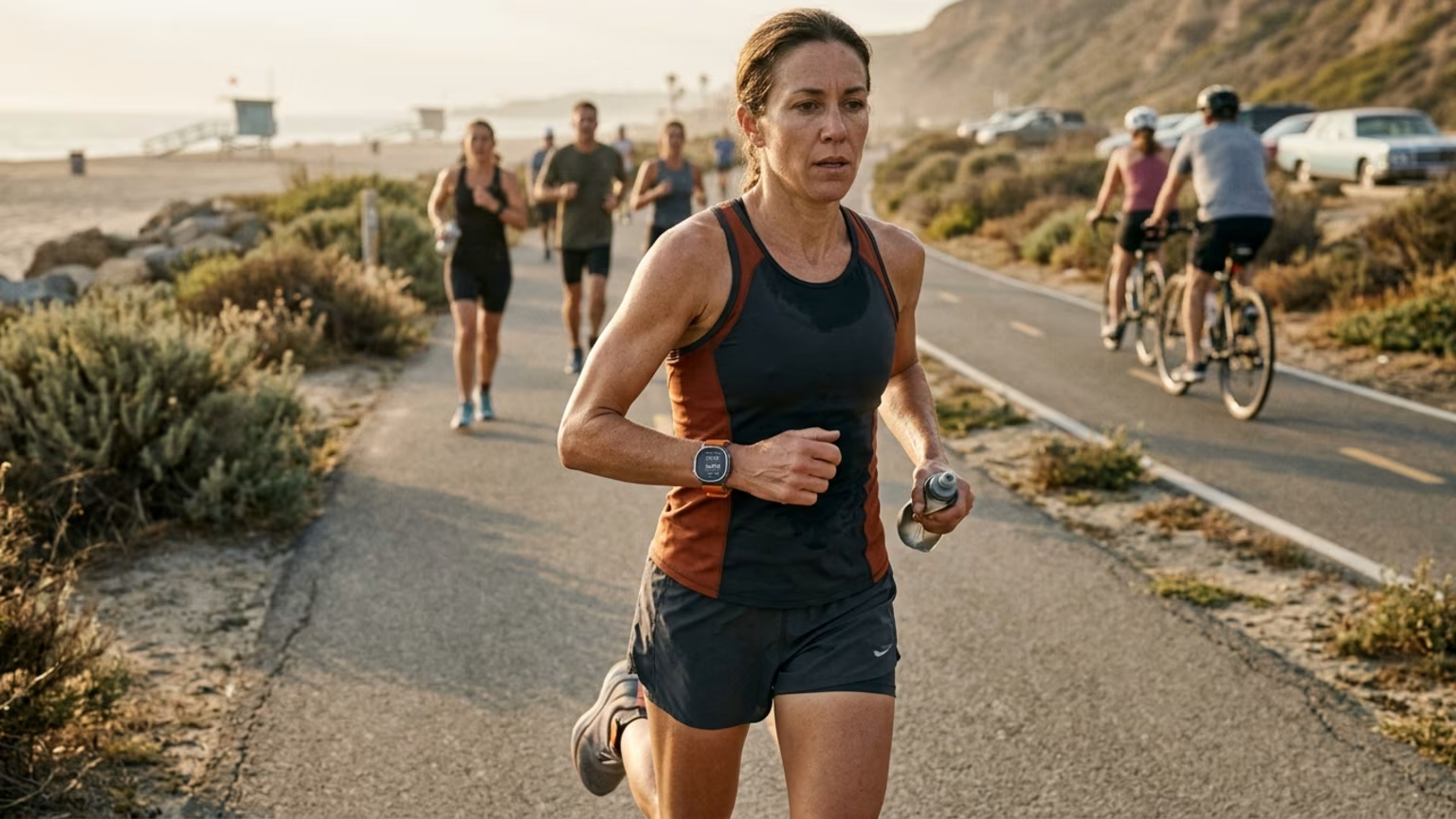

The Apple Watch Ultra 4 introduces higher-frequency HRV tracking and a new daily readiness score. Learn how older endurance athletes should apply this data.





On September 9, 2026, Apple announced the Apple Watch Ultra 4. The company positioned the new device as its flagship sports smartwatch, with U.S. pricing starting at $799 and retail availability beginning September 18. This hardware update introduces Apple’s new Health Sensing System alongside an upgraded S11 chip. The primary goal of these additions is to provide athletes with a deeper look at their daily physical state.
The major shift in this product generation is the frequency and application of physiological data. Apple says the updated optical sensor records a heart rate measurement every five seconds throughout the day. Furthermore, the company states the new system measures heart rate variability up to 24 times more frequently than the previous generation. This high frequency data stream allows the algorithm to separate biometric inputs into recovery HRV and overall HRV.
Instead of comparing your overnight recovery HRV to a generic population average, the watch assesses it against your personal baseline. This is a critical adjustment because HRV varies considerably between different people. The new Readiness feature then combines your recent activity, training load, vital signs, and sleep score into a daily output. This produces a final score ranging from zero to ten.
The number updates automatically throughout the day as new data arrives from your body. A hard morning workout or a sudden change in daytime vital signs will actively adjust your readiness number. Based on these combined inputs, the interface explains which factors are influencing the result. The watch then offers one of four specific recommendations for your day.
These text prompts are labeled as Recover, Pace Yourself, Ready, or Go For It. While Apple presents readiness as a way to understand your capacity for the day ahead, it remains a wellness tool rather than a medical diagnosis.
Apple reports that the readiness algorithm was developed using data from the Apple Heart and Movement Study. The technology company worked alongside its own exercise scientists and physicians to build the predictive model. To validate the hardware, Apple says it tested the new heart rate system against leading wearables. This internal study involved more than 1,000 participants.
According to Tom's Guide, which tested the Ultra 4 during a half marathon, this internal comparison included several competing watches. The publication also noted that the baseline standard included a Polar H10 chest strap. Apple concluded that its new device had the highest accuracy across the wearable devices tested. However, the product announcement does not provide the participant demographics, study duration, or specific numerical accuracy results.
Because the detailed testing protocol remains private, the claim of having the most accurate wearable heart rate sensing is a manufacturer statement. It is not an independently established conclusion across the entire sports market. Athletes should remember that the watch relies on continuous high frequency measurement to generate its data. Independent coverage highlights a few operational details that could affect this continuous tracking.
The Verge reported that Theater Mode reduces heart rate readings on the new Apple Watches. This specific setting could affect the completeness of background data used by the health features. A lower sampling rate during the night or at the cinema could limit the algorithm. This means athletes need to remain aware of their watch settings when relying on continuous background measurements.
For the ambitious older athlete, a high volume of data is only useful if it informs better training habits. We view this new readiness score as a helpful decision aid, rather than an automatic prescription for your daily intensity. A low score should not automatically force you to abandon a workout. Similarly, a high score is not an excuse to ignore joint pain, fever, dizziness, or a poor warm up response.
High frequency sampling can provide a detailed trend, but a readiness score is still just a model output. It compresses several imperfect measurements into a single number. Heart rate variability is sensitive to many factors beyond physical training load. Sleep disruption, psychological stress, alcohol, and illness can all alter your wearable signals.
A single score cannot identify the specific cause of a biometric change. A recent report on wearable data emphasizes that sleep, menstrual cycle phase, age, and cycle length can influence these biometric signals. A watch may identify a clear physiological pattern without identifying its actual cause. This means the athlete must remain responsible for interpreting symptoms, external life stress, and their broader training plan.
High frequency measurement supplies more data, but it does not remove the uncertainty about what a particular physical change actually means. Our team knows the reality of recovering from intense sessions later in life. Hitting my forties brought a harsh reality check. The track workouts were not getting slower, but the days after them felt significantly heavier.
Instead of forcing my old Tuesday and Thursday intensity schedule, I looked at the data on Masters athletes and muscle protein synthesis. I pushed my second hard session to Friday, allowing an extra forty eight hours of low intensity recovery. My total weekly volume stayed the same, but the quality of my intervals skyrocketed. A readiness score can help validate that kind of structural change.
If your watch repeatedly shows poor recovery after consecutive hard days, use that data to restructure your week. Athletes who invest in a strategic training reduction often return stronger. Keep your original training objective clearly visible before you check your daily score. If your plan calls for an easy aerobic day, a high readiness prompt is not a reason to run hard intervals.
Conversely, a low score may justify reducing duration, but you can preserve the habit with an easy session. The best approach is to evaluate your overall race readiness using a mix of technology, perceived exertion, and common sense. Create a firm decision rule before looking at the number on your wrist. For example, if readiness is low and perceived fatigue is high, shorten the planned workout.
If readiness is low but you feel normal and performance is stable, begin conservatively and reassess after the warm up. Use your actual performance data to challenge the algorithm. A healthy athlete whose pace, power, and perceived exertion look normal should not assume a low score proves inadequate recovery. The readiness score may become especially vulnerable to misleading conclusions when your circumstances change abruptly.
During a deliberate race taper, after a long haul flight, or during a sudden heatwave, your biometrics will inevitably shift. Following a routine vaccination or after changing your sleep schedule, the watch might register a significant drop in readiness. Apple’s product announcement does not explain how the underlying algorithm handles these specific scenarios. We suggest treating these transition periods with extra caution.
If poor sleep repeatedly coincides with a lower readiness score, athletes should treat sleep as a crucial training input. We encourage older runners and cyclists to address their bedtime consistency, total sleep opportunity, and late training habits. Addressing physical stress and alcohol intake is much more effective than simply forcing a higher metric on your wrist. True longevity in endurance sports comes from building sustainable habits, not just collecting more physiological data.
This mindset is vital when tracking athletic growth past your physical prime.
Endurance athletes also need practical hardware reliability for long races. Apple rates the Ultra 4 for up to 50 hours of everyday use and up to 84 hours in Low Power Mode. For ultra distance events, the watch offers up to 45 hours of outdoor tracking in Max Extended Workout mode. This mode records GPS data every second, which is typically sufficient to complete a 100 mile race.
Athletes tackling extreme distances, like a massive backyard ultra, must plan their hardware strategy carefully. Athletes must understand the operational trade offs required to achieve these laboratory style battery estimates. Max Extended Workout mode turns on Low Power Mode, disables certain alerts, and removes some metrics from the screen. A standard Extended Workout mode supports up to 25 hours of full GPS and heart rate tracking.
Apple notes this standard mode provides a 25 percent increase in battery life over the previous model. Charging speeds also factor into long term event planning. Fifteen minutes of charging is rated to provide up to 18 additional hours of battery life. However, actual battery performance will vary based on settings, network conditions, and the environment.
Modern smartwatches are expanding their performance features, but athletes still bear the responsibility of testing their gear before race day.
The Apple Watch Ultra 4 offers a more data rich view of your daily physical state, but older athletes must still rely on their own internal pacing and sensible training plans to achieve long term success.

Follow ReEndure for practical insights on endurance training, recovery, nutrition and healthy aging. Stay connected for new articles, research led guidance and ideas to help you perform better for longer.






Read practical ideas on endurance training, recovery, nutrition and healthy aging to keep progressing for years to come.
Read the Blog