
A 2026 Owaves study shows 37% of athletes face fatigue setbacks despite using wearables. Learn why circadian alignment matters more than raw recovery data.





Look around any early morning starting corral and you will notice a distinct division among the participants. Half the pack checks a wrist-based digital recovery score while the other half relies entirely on internal sensation. We have never had more access to personal biological data on our wrists. Yet athletes continue to lose significant training time to exhaustion and overtraining.
Endurance training places massive physical stress on the human body. The 2026 Body Clock Report found that 67% of surveyed athletes used a health app or fitness tracker to manage this load. The appeal of these digital devices is straightforward and entirely understandable. They provide objective numbers that replace subjective guesswork with concrete daily metrics.
Hardware capabilities continue to expand rapidly across the sports technology sector. A 2026 paper described an experimental electronic-textile system that combined sweat-regulating sensors and artificial intelligence. The system was trained on more than 200,000 time-resolved observations from 10 participants. It achieved 87.3% agreement with clinical assessments in validation involving three participants.
This experimental system also reported reductions in exercise fatigue and recovery time compared with controls. The broader technology trend points toward combining passive sensor data with artificial intelligence to generate personalized health recommendations. Companies continue to invest heavily in building out this digital recovery ecosystem. Owaves says its platform has recorded more than 620 million activities and generated 1.3 million organic downloads.
However this reliance on hardware often outpaces basic physiological habits. Royan Kamyar, M.D., MBA is the founder and CEO of Owaves. He describes a common modern pattern he calls product-before-protocol where athletes buy trackers before establishing consistent sleep routines. The technology provides data but it cannot force an athlete to actually prioritize adequate rest.
An alternative methodology prioritizes natural biological rhythms over hardware interventions. Owaves released its 2026 Body Clock Report on August 25, 2026 to highlight this biological alignment. The report was based on a Dynata survey of 1,000 U.S. college students ages 18 to 25. This research was conducted in May and June 2026 and included 400 current student athletes.
The study revealed that 37% of surveyed college athletes experienced a fatigue-related injury, illness or significant performance setback during the previous season. This combined definition is important because the reported figure does not represent physical injuries alone. Despite widespread technology adoption many athletes lacked basic biological awareness. The survey noted that 31% could not say whether their schedule aligned with their biology at all.
Circadian knowledge was directly associated with a lower reported setback rate. Athletes who correctly defined circadian rhythm reported a 33% setback rate compared with a 41% rate among those who could not. The difference was 8 percentage points. The report characterizes this gap as 21% fewer setbacks per season for the circadian-literate group.
Basic knowledge about the internal body clock also correlated with better daily habits. The study describes circadian rhythm as the internal clock regulating sleep and hormone release over a 24-hour cycle. Circadian-literate athletes rated their sleep duration at 4.40 on a five-point scale compared with 4.13 for those without that literacy. The literate group also rated their sleep timing at 4.18 while the other group scored 4.03.
Owaves calls the alignment of training and sleep with the body's daily rhythm rhythmmaxxing. The company identifies the University of California San Diego’s Center for Circadian Biology and Medicine as a clinical validation partner. It also lists the Scripps Research Digital Trials Center as a clinical partner in this effort. Owaves promotes its BodyClock AI platform to help users align daily schedules with these natural biological rhythms.
These survey results offer valuable lessons for ambitious adults ages 35 to 65. Masters athletes face slower recovery times and demanding professional schedules that make efficient recovery practices absolutely vital. The Owaves report focused on young students but the underlying physiology remains highly relevant for older competitors. A strong biological routine is the true foundation of endurance longevity.
Perfect scheduling is rarely possible for busy adults. Only 52% of the surveyed students reported having a lot of or complete control over when they trained. Working professionals likely have even less flexibility and cannot always wait for the perfect biological window. Athletes must learn how to safely modify workout plans when stress and fatigue inevitably build up.
Modifying training times can yield mixed results depending on the specific intervention. A 2026 randomized controlled trial involving 27 adolescent national-level swimmers found that delaying morning training from 7:00 a.m. to 9:00 a.m. increased sleep duration by one hour. However the additional sleep was still insufficient for participants to reach the recommended 8 to 10 hours. This proves that simply shifting a workout time does not automatically solve an overall sleep deficit.
Consumer wearables are generally more useful for sleep-versus-wake detection than for precise stage classification. A wearable device is an excellent tool for monitoring multi-day trends in your total sleep time. Wearable metrics should supplement rather than replace your subjective symptoms and personal coaching judgment. Reendure consistently advises prioritizing basic sleep duration over complex technology setups.
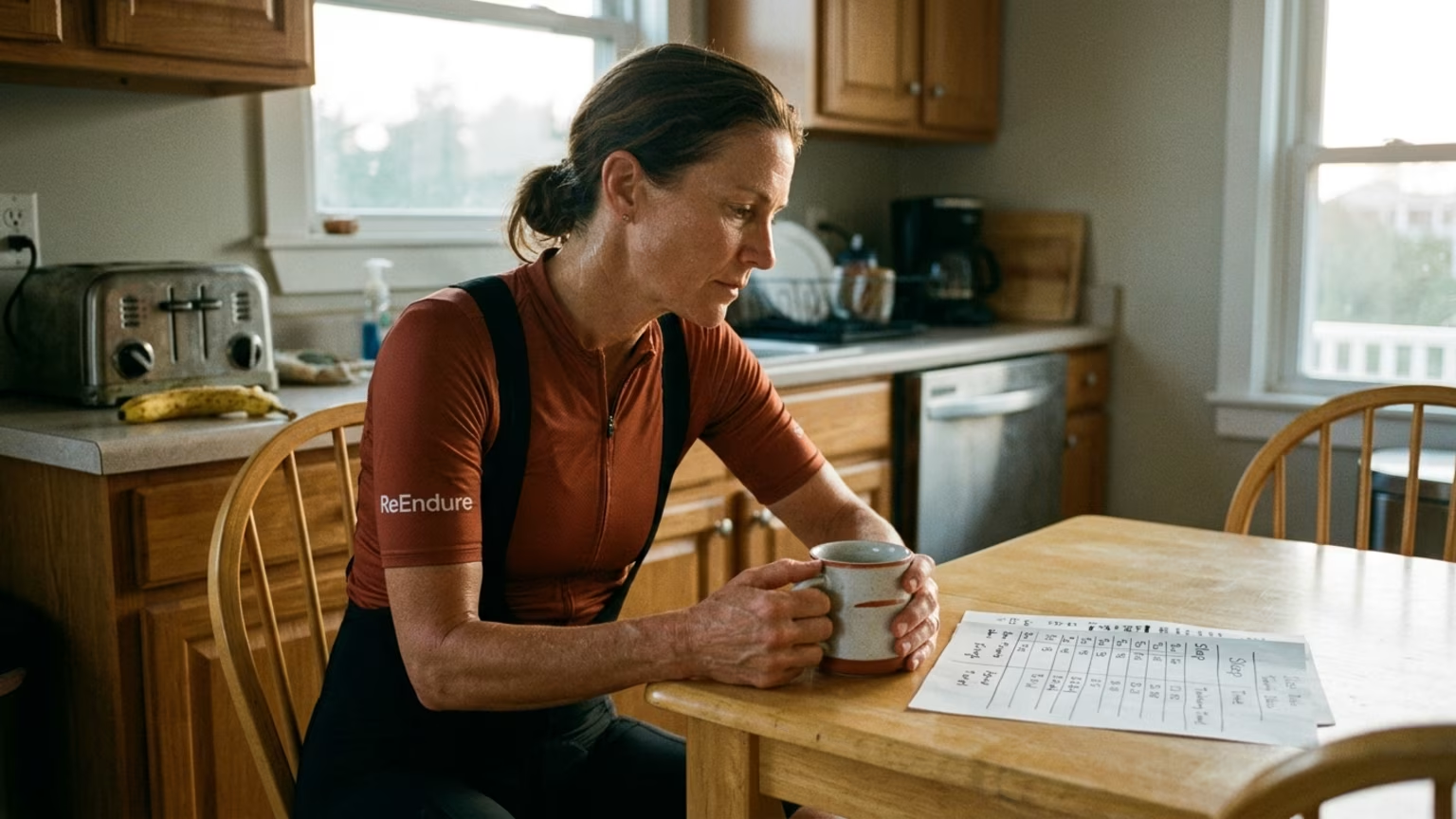
Athletes should build a personal timing profile before investing in more recovery hardware. Track your workout times alongside your bedtime and your perceived next-day exertion to find patterns. Look for clear instances where late hard sessions repeatedly precede poor training responses. The primary objective is to maximize the consistency of your sleep schedule within your daily limits.
The ReEndure philosophy emphasizes that older athletes must treat recovery with the same discipline as interval training. Access to technology does not guarantee that athletes understand or prioritize foundational sleep behaviors. For a masters athlete balancing work and training, improving sleep consistency offers a more defensible first step than adding supplements. Persistent fatigue or repeated illness requires actual clinical attention rather than just another health app.
Technology offers incredible visibility into our daily physical habits. It simply cannot replace the foundational work of sleeping enough and managing overall physical stress. The most advanced wearable on the market is useless if you repeatedly ignore your natural biological clock. Your long term athletic performance depends on a healthy relationship between training load and honest rest.
Spend the next two weeks keeping your bedtime and wake time completely consistent. Use your wearable strictly to verify that habit rather than letting it dictate your daily training choices.

Follow ReEndure for practical insights on endurance training, recovery, nutrition and healthy aging. Stay connected for new articles, research led guidance and ideas to help you perform better for longer.


Read practical ideas on endurance training, recovery, nutrition and healthy aging to keep progressing for years to come.
Read the Blog